Chiltern Firehouse
A converted Victorian fire station on Chiltern Street, Marylebone, the Chiltern Firehouse sits at the intersection of heritage architecture and contemporary hotel culture in London. The red-brick building, with its arched engine bays and original drill tower, has become a reference point for the city's design-conscious hospitality scene, drawing a clientele that treats the dining room and bar as essential stops rather than afterthoughts.
Pearl is the En Primeur Club membership app — saves, bookings, and concierge access live there. Same editors, same standards.
- Address
- 1 Chiltern St, London W1U 7PA, United Kingdom
- Phone
- +44 20 7073 7676
- Website
- chilternfirehouse.com
- Directions
- Get directions
 Saves & bookings on Pearl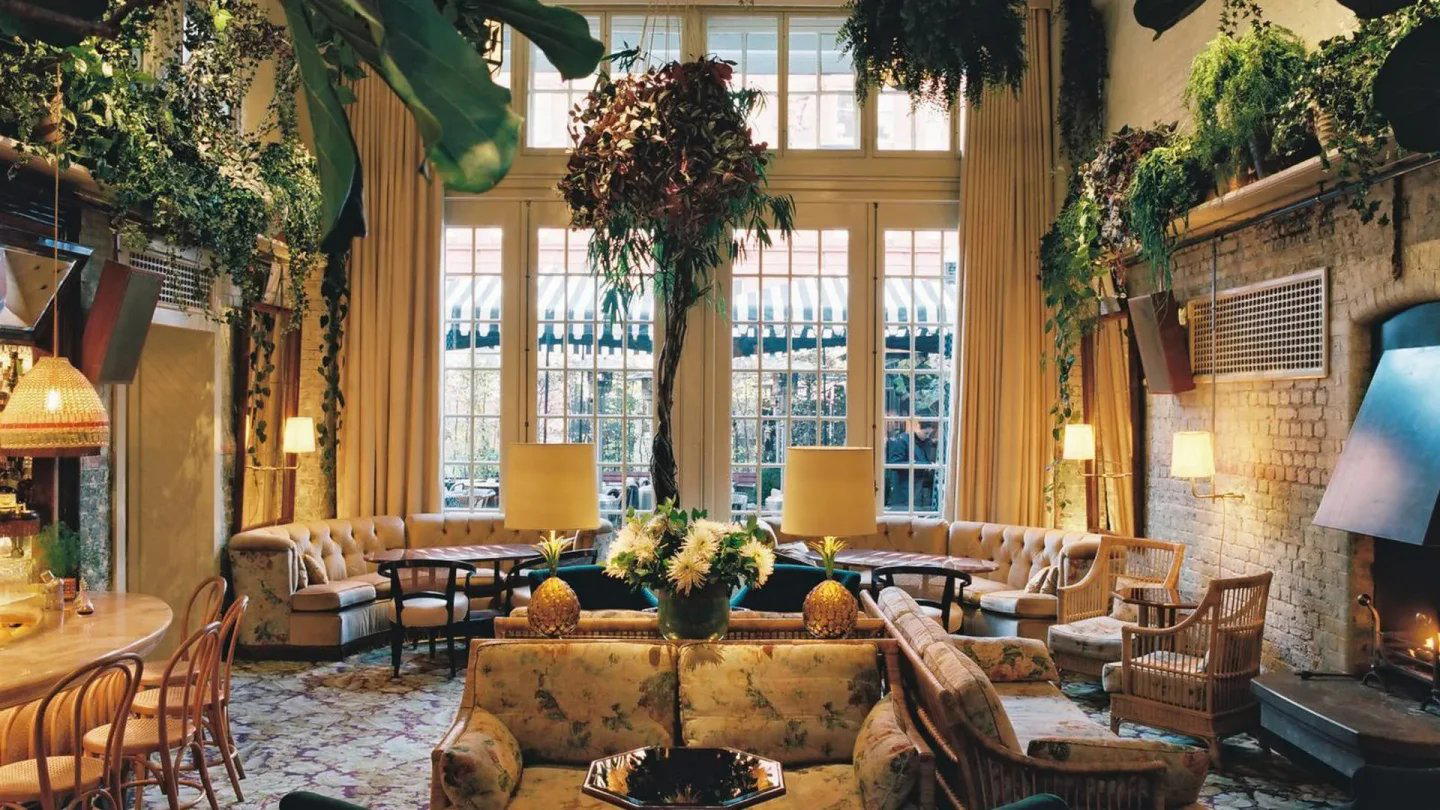
A Victorian Fire Station Reimagined
Marylebone's stock of repurposed Victorian civic buildings is slim, which makes the Chiltern Firehouse's conversion all the more instructive as a case study in adaptive reuse. The original structure, built in 1889 as a working fire station for the Metropolitan Fire Brigade, retains its commanding red-brick facade, arched vehicle bays, and the drill tower that rises above Chiltern Street. These features were not softened or disguised in the conversion; they were made the point. Where many heritage hotel projects sand down the original material until it reads as wallpaper, the Firehouse keeps its industrial skeleton visible, letting the tension between Victorian civic architecture and a contemporary luxury programme generate the atmosphere rather than relying on decorative layering.
Walking along Chiltern Street toward the property, the building announces itself through sheer proportion. The arched bays that once housed horse-drawn fire engines are now glazed, giving the ground floor a transparency that few London hotel entrances share. The drill tower, retained in full, anchors the back of the site and gives the rear courtyard its vertical drama. Inside, the conversion maintains exposed brickwork, high ceilings, and the structural rhythm of the original station plan. The design language positions the Chiltern Firehouse within a specific tier of London hospitality: properties where the architecture does primary editorial work and the furnishings play a supporting role.
Where It Sits in London's Hotel Conversation
London's upper hotel market has fragmented significantly over the past decade. On one side sit the grand establishment addresses: Claridge's, The Connaught, and The Savoy, each carrying institutional weight accumulated over more than a century. On the other sit newer entrants whose appeal is built around design distinctiveness and a particular social energy: NoMad London in its converted magistrates court, Raffles London at The OWO in the former War Office. The Chiltern Firehouse belongs to the latter cohort, but predates most of them. It opened in 2013, before adaptive-reuse luxury became a dominant format in the city, and its sustained position in the conversation reflects the durability of a project that got the architecture-meets-hospitality equation right early.
The Marylebone address matters here. Unlike Mayfair, which carries an established luxury postcode premium and draws international wealth as a default, Marylebone operates as a neighbourhood first and a destination second. Its independent retailers, medical-district character, and residential density give the street-level environment a different texture. The Firehouse benefits from that context: it reads as embedded in a real place rather than planted in a luxury monoculture. For comparison, properties like 1 Hotel Mayfair and The Emory operate in zones where the luxury signalling is ambient and universal. Chiltern Street requires the property to earn its place in the neighbourhood rather than simply benefit from postcode association.
The Restaurant as Architectural Extension
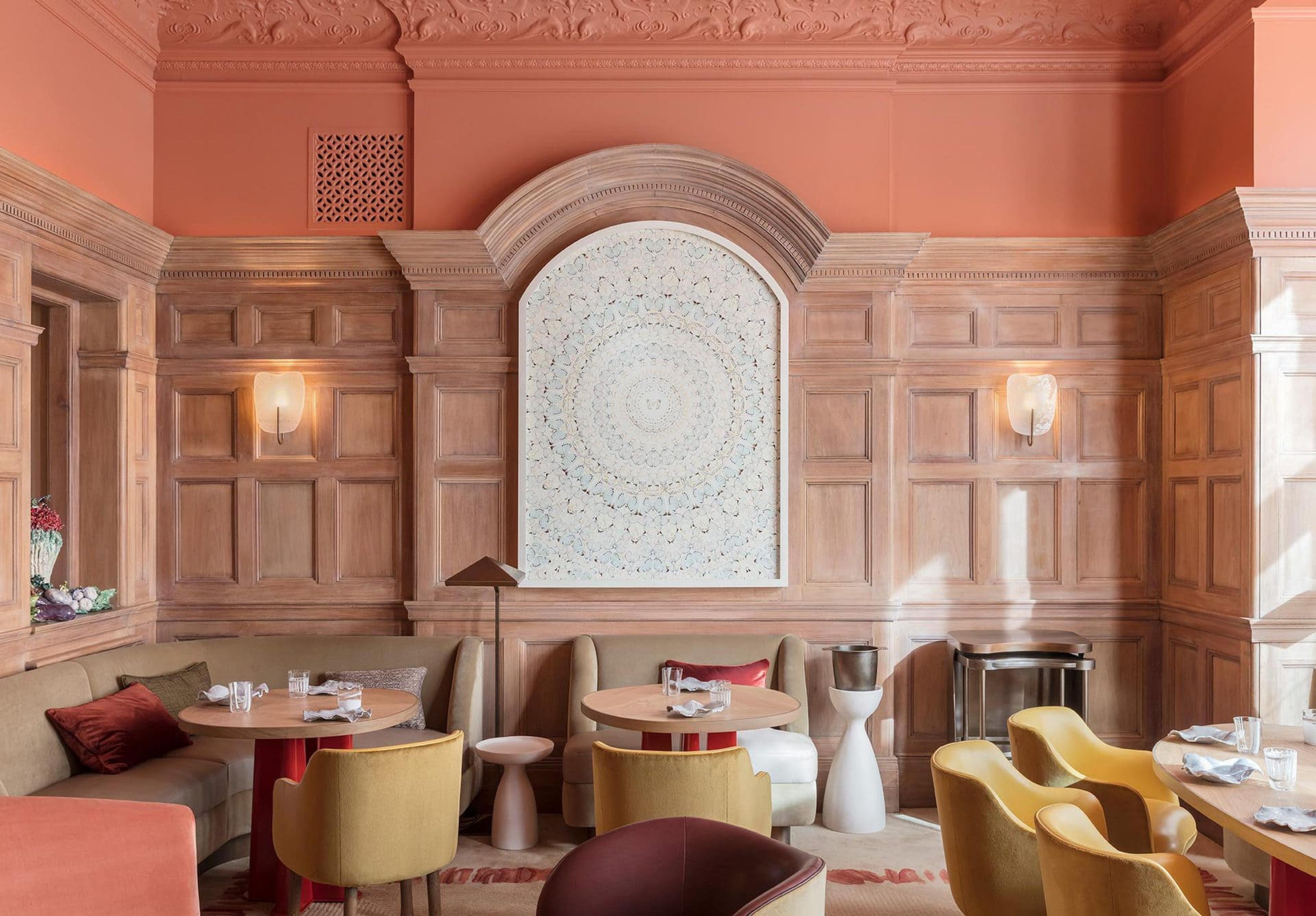
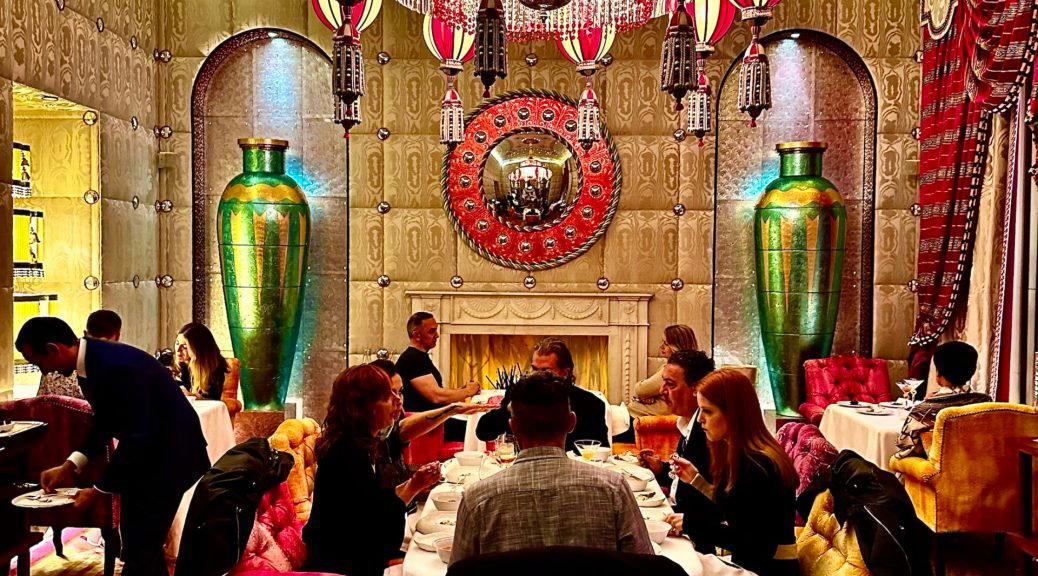
The dining room at the Chiltern Firehouse has functioned, since opening, as one of London's more closely watched tables. The room itself is a direct expression of the conversion: the original engine bay structure informs the ceiling height and spatial proportion, and the decision to retain and expose those bones gives the dining experience a physical scale that newer purpose-built hotel restaurants rarely achieve. This is not incidental to how the room performs socially. High ceilings, visible brick, and generous proportions create an environment that feels theatrical without requiring theatrical set dressing.
Kitchen's output over the years has tracked through a recognisable pattern for ambitious hotel restaurants: an opening period of high celebrity and critical attention, a middle period of consolidation, and a current phase where the room's cultural position is largely self-sustaining. The format is all-day, which suits the hotel's social function as a place people return to across different parts of the day rather than treating as a single-occasion destination. The bar, positioned to capture passing trade from Chiltern Street through the glazed bays, operates as a semi-independent social node within the property, which is a planning decision that reflects an understanding of how London's hospitality culture actually functions.
Rooms and Suites: Architecture Carried Through
Guest room count is deliberately limited, consistent with the building's original footprint and the conversion's refusal to maximise floor area at the expense of spatial quality. The rooms carry the design language of the public spaces through: exposed brick, high ceilings where the structure allows, and a palette that reads as contemporary without departing sharply from the Victorian material context. The suite tier at the top of the building benefits most directly from the drill tower structure, with volumes and ceiling heights that a purpose-built hotel of equivalent price would struggle to replicate. The asymmetries and quirks of a converted civic building are treated as assets rather than problems to be engineered away.
For context, the suite offering sits in a London tier that includes properties like 11 Cadogan Gardens, which also positions around residential scale and design specificity rather than grand-hotel volume. Both operate with room counts well below the major chain properties, and both price accordingly. The guest experience at properties in this tier trades grand-scale amenity for spatial character and a less anonymous social environment.
Planning a Stay
The Firehouse is on Chiltern Street in Marylebone, W1U, within walking distance of Baker Street and Bond Street underground stations. The neighbourhood is compact and walkable, with Marylebone High Street's independent retailers and cafes within a few minutes on foot. Given the property's consistent demand profile, bookings for both rooms and the restaurant should be made well in advance, particularly for weekend dates. The dining room draws both hotel guests and a strong local clientele, so table availability does not track exactly with room availability. Those planning stays around the UK more broadly might compare the character of the Firehouse's urban-heritage approach with rural conversion projects like Estelle Manor in North Leigh or the estate-led hospitality of The Newt in Somerset, where the design-and-heritage formula plays out across a different scale and landscape context.
For travellers covering a broader UK itinerary, the Firehouse's Marylebone location makes it a practical central London anchor before or after trips to properties such as Gleneagles in Auchterarder, Lime Wood in Lyndhurst, or further-afield addresses like King Street Townhouse Hotel in Manchester and Hope Street Hotel in Liverpool, both of which share the adaptive-reuse approach. Our full London restaurants guide covers the broader dining scene for those building out a trip around the city.
Comparable Spots, Quickly
| Venue | Cuisine |
|---|---|
| Chiltern FirehouseThis venue — the venue you are viewing | This venue |
| Raffles London at The OWO | World's 50 Best |
| The Connaught | World's 50 Best |
Continue exploring
More in London
Hotels in London
Browse all →
Bars in London
Browse all →
Restaurants in London
Browse all →



At a Glance
- Elegant
- Sophisticated
- Well Known
- Intimate
- Ornate
- Romantic Getaway
- Celebration
- Anniversary
- Historic Building
- Private Dining
- Terrace
- Restaurant
- Room Service
- Concierge
- Restaurant
- Room Service
- Concierge
Cozy and warm with sumptuous Art Deco bathrooms, fireplaces in rooms, and a glamorous yet discreet atmosphere balancing style and privacy.
Know Before You Go
- Getting there
- 1 Chiltern St, London W1U 7PA, United Kingdom