
Gault & Millau Exceptional Hotel
Château de la Flocellière earned a Gault & Millau Exceptional Hotel designation in 2025, placing it among a small tier of château accommodations in the Vendée that prioritise architectural heritage over resort-scale amenity. For travellers willing to seek out rural western France, it represents a serious alternative to the Loire Valley château circuit.

Pearl is the En Primeur Club membership app, where members save venues, book tables and use the concierge.
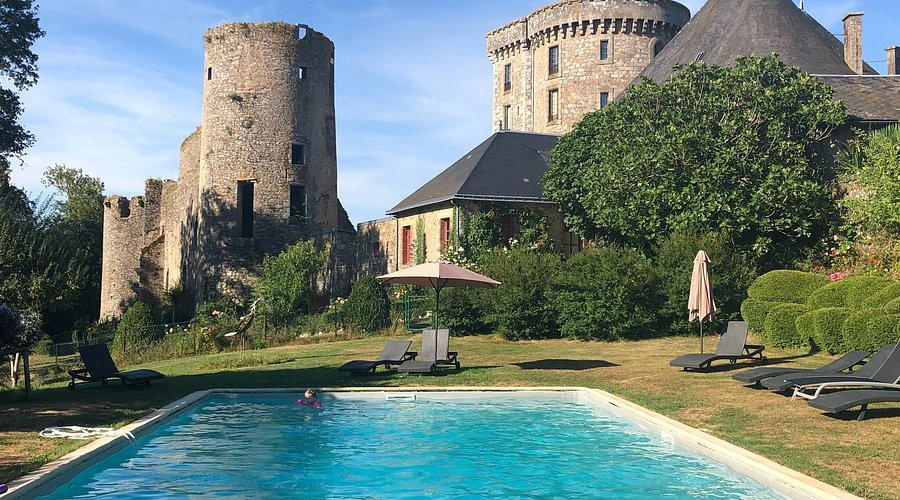
A Fortress Become a House
The approach to Château de la Flocellière establishes the terms of the visit before you reach the door. The towers are medieval in origin, the stonework carrying the particular grey-gold palette of the Vendée bocage, a range of hedged fields and sunken lanes that insulates this part of western France from the Loire Valley tourist corridor a short drive to the north. There is no resort infrastructure announcing the property from the road. What you find instead is something closer to a private estate opened to guests: a working architectural monument that happens to have rooms.
That distinction matters in France's château-hotel market, where the category spans everything from converted farm buildings carrying the château label as aspiration to genuine fortified residences with documented medieval cores. Flocellière sits in the latter group. The towers date to the medieval period, and the ensemble has been occupied and adapted across several centuries rather than purpose-built for hospitality. That layered history produces the kind of spatial complexity that purpose-built hotels cannot replicate: stairwells that turn unexpectedly, rooms that sit inside towers, proportions that belong to an era when defensive geometry took precedence over interior comfort.
What Gault & Millau's 2025 Designation Actually Signals
Gault & Millau awarded Château de la Flocellière its Exceptional Hotel distinction in 2025, a designation the guide reserves for properties it considers to operate above the standard of their category and region. For a property in the Vendée, a department not typically covered by the premium travel press at the same density as Provence or the Loire, the recognition carries additional weight as a signal that the property is not simply trading on heritage aesthetics.
For comparison, the French château-hotel tier at the upper end includes properties such as Château du Grand-Lucé in Le Grand-Lucé and Domaine Les Crayères in Reims, both operating with significant international recognition and the service infrastructure that comes with it. Flocellière operates in a quieter register: fewer reviews, a more regional profile, and a Gault & Millau signal that positions it as a serious option without the international marketing apparatus of larger château brands. Google's 4.4 average across 234 reviews is consistent with a property that delivers reliably without the occasional spectacular failures that can drag larger operations.
The Architecture as the Argument
In France's premium château-hotel sector, properties broadly divide between those where the building is the draw and those where the building is the backdrop. At properties like Château Lafaurie-Peyraguey in the Sauternes or Château de la Gaude in Aix-en-Provence, contemporary programming, Michelin-starred dining, or landscape design compete with the stone for the guest's attention. At Flocellière, the architecture is the primary argument, and the experience is built around inhabiting it rather than being distracted from it.
That creates a specific kind of stay. The towers and their medieval geometry impose themselves on the rooms in ways that a modern hotel would treat as problems to be engineered away: irregular floor plans, windows sized for arrow loops rather than views, ceiling heights that shift from floor to floor. A guest who wants consistency and contemporary spatial logic will find the Vendée's more conventional hotel stock more accommodating. A guest who wants to sleep inside the actual walls of a medieval fortress, rather than a sympathetically decorated modern building adjacent to one, will find few alternatives in this part of France at this standard.
This positions Flocellière differently from, say, Château de Montcaud in Sabran or Château de la Chèvre d'Or in Èze, both of which operate with a more polished hospitality infrastructure and a correspondingly higher international profile. The Flocellière proposition is more austere and more specific: the building itself is the amenity.
Sèvremont and the Vendée Context
Sèvremont is a commune in the Vendée created by the merger of several smaller villages, sitting in the bocage between the Atlantic coast and the Loire Valley. It does not appear in most premium travel itineraries, and that is partly why the château's Gault & Millau recognition is editorially significant. The Vendée has a strong regional identity tied to its role in the Wars of the Vendée during the French Revolution, and its built heritage reflects that history of isolation and resistance. The bocage itself, with its network of hedgerows and sunken roads, was famously difficult terrain that shaped both the military and agricultural history of the region.
For travellers routing through western France, the château sits at a point where a detour from the Loire Valley or a leg between Nantes and the Marais Poitevin makes geographic sense. It does not anchor a destination in the way that a Provence property like La Bastide de Gordes or a Riviera address like Hotel Du Cap-Eden-Roc can, drawing guests specifically to that location. Instead, it functions as a serious stop on a broader French itinerary, offering something that neither the Loire's well-trodden château trail nor the coast's resort hotels provide. See our full Sèvremont restaurants guide for dining options in the wider area.
Planning the Visit
Prospective guests should approach the château directly to confirm room availability, rates, and seasonal opening. Given its scale and regional profile, the property is unlikely to operate at the inventory depth of a large château resort, and enquiring well ahead of intended travel dates is advisable, particularly for summer stays when the Vendée sees increased regional tourism from French visitors.
Guests oriented toward medieval architecture should consider whether a room inside a tower fits their practical requirements. The spatial irregularities that give the property its character are genuine features of medieval construction, not decorative choices. Travellers looking for a different register of French château experience at a comparable recognition level might also consider Castelbrac in Dinard to the north, or for a more southerly option with a similar emphasis on architectural heritage, Baumanière Les Baux-de-Provence. Those seeking international brand infrastructure at the luxury end of French hospitality will find it more readily at Cheval Blanc Paris or Royal Champagne Hotel & Spa in Champillon.
How It Stacks Up
Comparable venues nearby, for context on price, style, and recognition.
| Venue | Cuisine | Price | Awards | Notes |
|---|---|---|---|---|
| Château de la FlocellièreThis venue (the venue you are viewing) | Medieval castle with self-catering accommodations in keep, pavilion, and cottage | $100–200 | Gault & Millau Exceptional Hotel | Not listed |
| Le Palace | Historic Parisian theatre repurposed as an well-known nightlife venue, with a strong cultural legacy tied to fashion, music, and avant-garde performance. | Not listed | Not listed | 9th arrondissement |
| Hotel Des Dunes | Charming boutique beach hotel with West Coast surf lodge inspiration. | $100–200 | Michelin Selected | Cap-Ferret |
| Le Relais de Franc Mayne | 16th-century wine château restored with contemporary elegance | $100–200 | Michelin Selected | Saint-Emilion |
| Le Bois des Chambres | Restored old farmhouse with contemporary lodges on chateau grounds | $100–200 | Michelin Selected | Chaumont-sur-Loire |
| Zoku Paris | hybrid home-office apartment hotel | Not listed | Michelin Selected | 17th arrondissement |
Recognition history
Dated appearances from independent guides and award organizations, with the underlying list record or original source where available.
Gault & Millau Exceptional Hotel
Gault & Millau
Continue exploring
More in Sèvremont
Hotels in Sèvremont
All hotels in Sèvremont →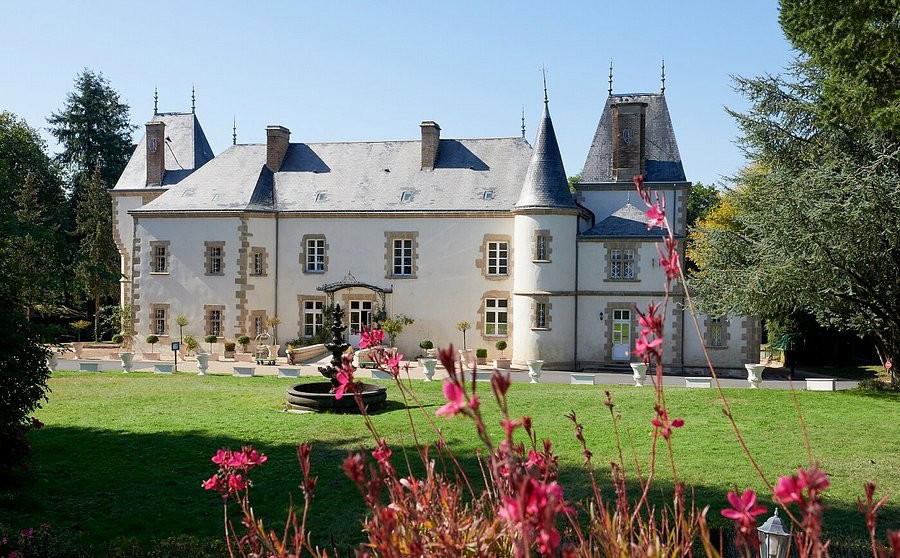
Bars in Sèvremont
Browse all →
Restaurants in Sèvremont
All restaurants in Sèvremont →


Details
- Romantic
- Elegant
- Historic
- Intimate
- Scenic
- Cozy
- Romantic Getaway
- Honeymoon
- Anniversary
- Family Vacation
- Wedding
- Weekend Escape
- Historic Building
- Garden
- Terrace
- Pool
- Wi Fi
- Breakfast Included
- Parking
- Garden
Enchanting historical atmosphere with tastefully decorated antique rooms, tapestries, comfortable bedding, and warm candlelit dinners in grand dining rooms.