Cape Fahn Hotel, Koh Samui

Cape Fahn Hotel sits on a private island off Koh Samui's northeastern coast, earning Michelin Selected recognition in 2025. The property occupies the design-led tier of Gulf of Thailand luxury, where architectural placement and spatial drama carry more weight than brand scale. It addresses Choeng Mon Beach and is listed among Surat Thani's most considered hotel addresses.
Pearl is the En Primeur Club membership app — saves, bookings, and concierge access live there. Same editors, same standards.
- Address
- 24/269, Moo 5 Choeng Mon Beach, Bo Phut, Surat Thani, Thailand
- Phone
- +66 (0)77 602 301-2
 Saves & bookings on Pearl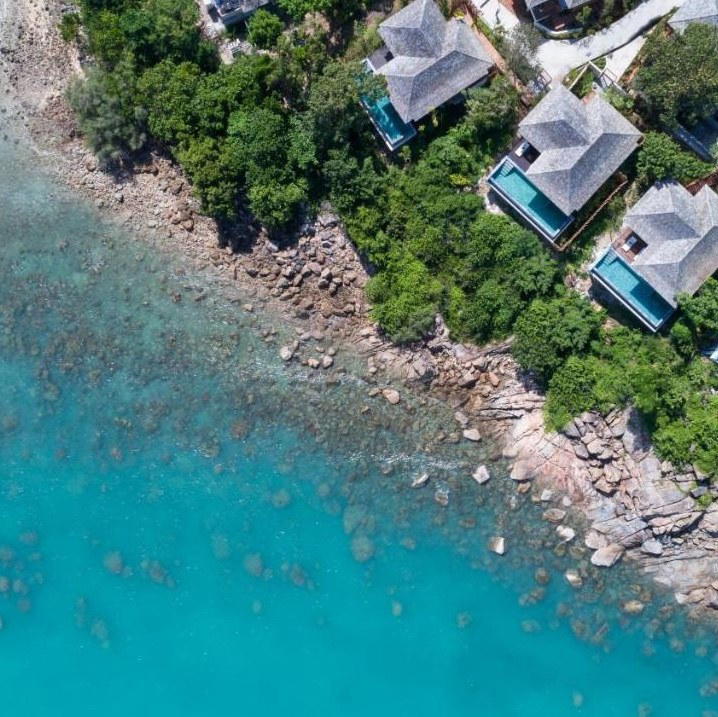
A Private Island Position in Koh Samui's Northeast
Koh Samui's luxury accommodation market has divided clearly over the past decade into two camps: the large international-brand resorts that line Chaweng and Lamai beaches, and the smaller, architecturally intentional properties on the island's quieter northern and northeastern shores. Cape Fahn Hotel falls into the second group, positioned on a private island accessible from Choeng Mon Beach in the Bo Phut district of Surat Thani province. The geography here is not incidental to the property's identity. Private-island placement in a destination already defined by beach access is a deliberate spatial statement, one that separates the hotel from the grid of conventional beachfront addresses and places it in a comparable set defined by seclusion and physical distinctiveness rather than proximity to nightlife or shopping strips.
Choeng Mon, in Koh Samui's northeastern corner, has historically attracted a quieter traveller profile than the island's busier southern and eastern coasts. The bay is shallower and calmer, and the area has seen less of the commercial density that characterises Chaweng. That context matters for understanding what Cape Fahn Hotel is positioning itself against. Comparable addresses in the broader Thai Gulf region, including Anantara Rasananda Koh Phangan Villas on the neighbouring island of Koh Phangan, share a similar logic: remove the guest from the main tourist circuit, anchor the experience in landscape and architecture, and let the physical envelope carry the premium justification.
Michelin Selected Recognition and What It Signals
In 2025, the Michelin Guide included Cape Fahn Hotel in its Selected Hotels list for Thailand, a designation that operates differently from the star system applied to restaurants. Michelin's hotel selection process evaluates quality of stay, service consistency, and contextual appropriateness rather than applying a hierarchical ranking. Inclusion signals that the property meets a threshold of considered hospitality, and in the Thai context, it places Cape Fahn in a cohort that includes some of the country's most deliberate hotel addresses. For the Gulf of Thailand specifically, Michelin Selected recognition carries weight because the region's hotel market contains a wide range of quality levels, and independent editorial validation from a named institution helps readers locate a property in the landscape accurately. The Centara Reserve Samui represents another Koh Samui address in the upper tier, and the two properties illustrate how differently a premium stay can be framed on the same island.
For broader Thai context, the Michelin Selected cohort includes properties at the level of Mandarin Oriental Bangkok and resort addresses like Phulay Bay, A Ritz-Carlton Reserve in Krabi and Keemala in Phuket. Sitting alongside those addresses in a Michelin-curated list positions Cape Fahn within a specific competitive conversation about what premium hospitality looks like in Thailand's island and resort context.
Architectural Identity and the Private Island Format
The private-island hotel format has its own design logic. When a property is separated from the mainland by water, every structural decision becomes more visible because there is no surrounding street fabric, commercial signage, or urban context to absorb or compete with. Architecture on a private island is landscape architecture as much as building design: the relationship between structure and water, between indoor and outdoor space, between elevation and sightline, defines the experience more than interior finishes alone. Properties that succeed in this format, from Soneva Kiri in Trat on the eastern Gulf coast to resort addresses in the Andaman, tend to share an orientation philosophy that prioritises view corridors and natural light over programmatic density.
Cape Fahn's address at 24/269, Moo 5, Choeng Mon Beach, Bo Phut places it within a specific topographical situation on Koh Samui's northeastern cape. The word "cape" in the property's name refers to an actual geographic feature: a headland formation that creates the kind of 270-degree water exposure that drives premium pricing in island hospitality globally. Architecturally, headland and private-island positions require buildings to respond to multiple orientations simultaneously, which tends to produce more spatially complex structures than those on flat, single-aspect beachfront sites. The site conditions at Cape Fahn are objectively advantageous for a design-led programme. For comparison, Samujana Villas in Koh Samui occupies a similar northern headland position on the island, and its architectural approach to that site has drawn sustained editorial attention.
Positioning in the Thai Island Hotel Market
Thailand's island hotel market at the premium end has fragmented into several distinct sub-categories. Large international flags such as those operating along Phuket's western coast and Koh Samui's main beaches serve a volume model with consistent service standards. Design-led independents and boutique collections operate on a different logic, where spatial experience and a sense of place matter more than loyalty programme integration. A third category, which includes properties with villa formats, private islands, or significant natural site advantages, commands price premiums based on access and seclusion rather than service volume.
Cape Fahn Hotel's private-island configuration places it structurally in that third category, regardless of its scale. Hotels operating in this tier in Thailand include Pimalai Resort and Spa in Koh Lanta and The Sarojin in Phang Nga, both of which use site seclusion as a primary differentiator. The comparison is useful because it shows that this approach to premium positioning is consistent across Thailand's different coastal regions: Andaman, Gulf, and archipelago properties alike use geographic separation as the foundation of their offer.
For travellers building a multi-property Thailand itinerary at this level, the Gulf of Thailand circuit might include Cape Fahn alongside Koh Phangan addresses, while a separate Andaman leg could reference Keemala in Phuket or properties in Krabi. Inland options at a comparable consideration level include Four Seasons Resort Chiang Mai and Anantara Golden Triangle Elephant Camp and Resort in Chiang Rai, which represent a different physical and cultural context but a similar tier of deliberate hospitality.
Planning a Stay
Cape Fahn Hotel is located on the northeastern tip of Koh Samui, accessible via Koh Samui International Airport, which receives direct flights from Bangkok and several regional hubs. The Choeng Mon area is approximately a 20-minute drive from the airport under normal traffic conditions. Koh Samui's peak season runs from December through February, when the Gulf of Thailand's northeastern coast benefits from calmer seas and lower rainfall. The shoulder months of March to May offer reduced rates and lower occupancy on the island's northern shores, while the October to November period brings the Gulf's wetter season. Advance booking is recommended during the peak December-to-February window. Guests comparing Koh Samui options at this level should also consider the Koh Phangan alternatives such as Anantara Rasananda Koh Phangan Villas for a sense of how the two islands differ in atmosphere and accessibility.
Comparison Snapshot
Comparable venues nearby, for context on price, style, and recognition.
| Venue | Cuisine | Price | Awards | Notes |
|---|---|---|---|---|
| Cape Fahn Hotel, Koh SamuiThis venue — the venue you are viewing | Luxury private island villas with traditional Thai influences and modern comforts | $$$$ | 5-Star | Not listed |
| Anantara Rasananda Koh Phangan Villas | Barefoot luxury resort styled as a traditional Thai village with mature gardens and ponds. | $$$$ | 5-Star | Thong Nai Pan Noi |
| Centara Reserve Samui | Contemporary luxury beach resort blending colonial heritage with modern Thai elements | $$$$ | 5-Star | Chaweng Beach |
| Onsen at Moncham | Japanese-Thai fusion ryokan-style cultural retreat set in misty mountains | $$$$ | 5-Star | Mae Rim |
| Hotel Indigo Bangkok Wireless Road | Boutique hotel with neighborhood-inspired design blending vintage Thai broadcast era elements with contemporary luxury. | $$$$ | 5-Star | Suan Lumphini |
| Grand Hyatt Erawan Bangkok | Contemporary luxury urban retreat with postmodern Thai architecture | $$$$ | 5-Star | Pathum Wan |
Recognition history
Dated appearances from independent guides and award organizations, with the underlying list record or original source where available.
Michelin Selected
Michelin
Continue exploring
More in Surat Thani
Hotels in Surat Thani
Browse all →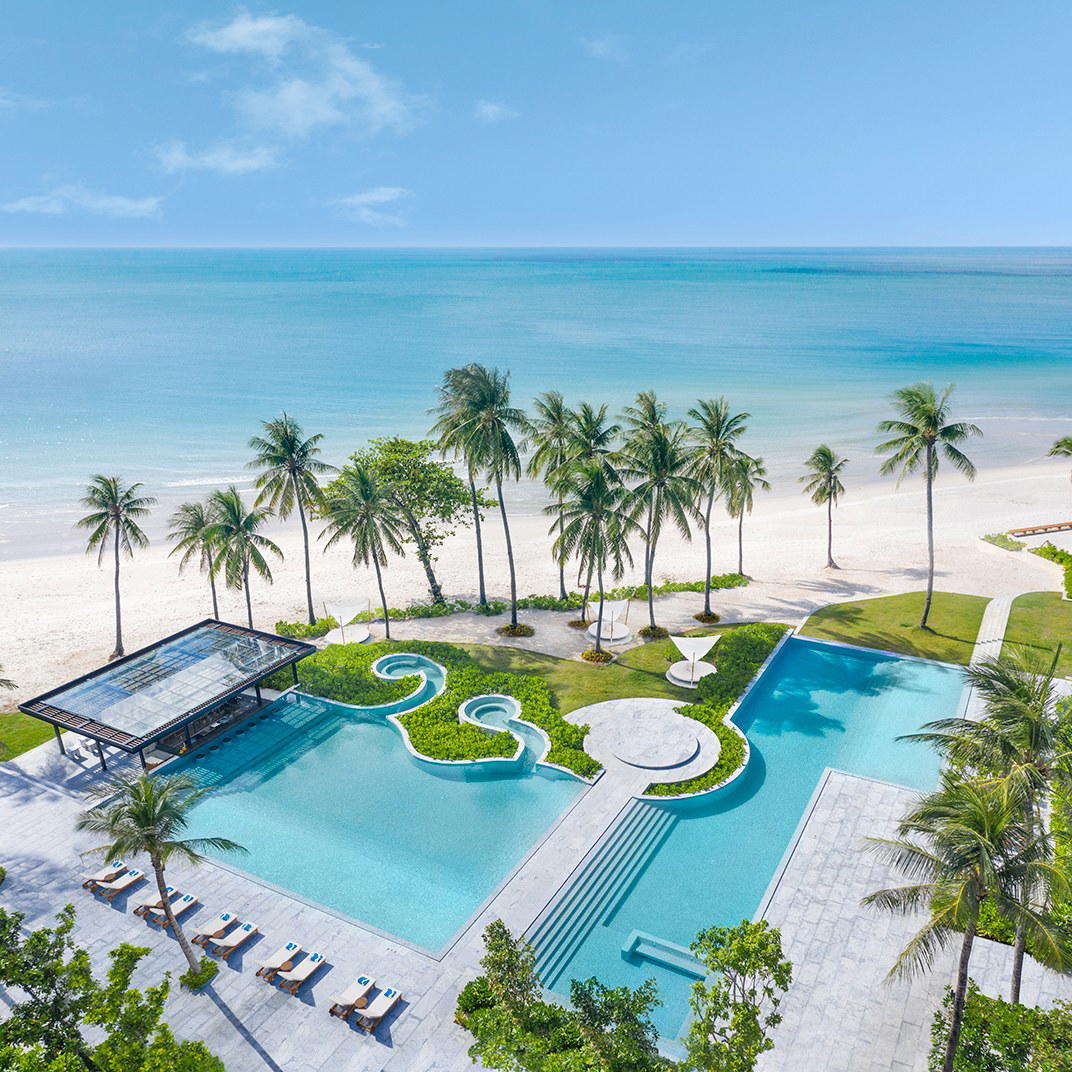
At a Glance
- Romantic
- Quiet
- Elegant
- Intimate
- Scenic
- Sophisticated
- Honeymoon
- Romantic Getaway
- Anniversary
- Destination Wedding
- Wellness Retreat
- Beachfront
- Infinity Pool
- Private Villa
- Pool
- Spa
- Concierge
- Room Service
- Beach Access
- Fitness Center
- Waterfront
- Pool
- Spa
- Concierge
- Room Service
- Beach Access
- Fitness Center
Serene and tranquil atmosphere with natural wood Thai architecture, light sea-inspired colors, lush gardens, and dramatic ocean views promoting instant relaxation.