Skip to Main Content

Google: 4.6 · 276 reviews

← Collection
Campos do Jordão, Brazil

Botanique Hotel \u0026 Spa

Size17 rooms
NoiseQuiet
CapacityIntimate
Michelin
M&

Botanique Hotel & Spa holds a Michelin One Key distinction in Campos do Jordão, Brazil's alpine resort town in the Serra da Mantiqueira. The property occupies the Bairro dos Mellos district and positions itself within a small cohort of design-led mountain retreats that have drawn serious Michelin scrutiny to a region most international travelers still associate primarily with European-style architecture and weekend escapes from São Paulo.

Botanique Hotel \u0026 Spa hotel in Campos do Jordão, Brazil
About

Mountain Architecture and the Grammar of Serra da Mantiqueira

Campos do Jordão sits at roughly 1,600 metres above sea level in the Serra da Mantiqueira, a mountain range that divides São Paulo state from Minas Gerais. The town built its tourism identity around a version of Alpine Bavarian architecture transplanted to the Brazilian highlands during the early twentieth century — the timber-frame facades along Avenida Macedo Soares remain the postcard image most visitors carry. The more interesting hospitality story, however, has been unfolding in the residential districts beyond the commercial centre, where a smaller number of properties have chosen a different visual language: one grounded in the site's own topography, native Atlantic Forest vegetation, and the particular quality of cold-season light at altitude.

Botanique Hotel & Spa, addressed on Rua Elídio Gonçalves da Silva in Bairro dos Mellos, belongs to that second cohort. The Bairro dos Mellos district sits at a remove from the town's busiest streets, in a part of Campos do Jordão where the forest cover thickens and the sound profile changes. Arriving here, the density of pine and araucária canopy signals a deliberate site choice. Properties in this tier of the market do not choose Bairro dos Mellos for convenience; they choose it for what the landscape offers the built environment and what the distance from the town centre does for the guest experience.

What the Michelin Key Signals in a Brazilian Mountain Context

In 2025, Michelin's hotel programme awarded Botanique Hotel & Spa a One Key distinction, placing it on the Michelin Guide's hotels and stays list for Brazil. The One Key category, as Michelin defines it, recognises properties that deliver a noteworthy stay experience — not simply comfortable accommodation, but a considered approach to hospitality that warrants specific recommendation.

Within Brazil, Michelin Key recipients cluster heavily in São Paulo and Rio de Janeiro. Properties earning recognition outside those two cities represent a meaningfully smaller group, and a mountain resort property in the interior of São Paulo state earning that recognition places Botanique in a selective peer set. For comparison, the properties that shape the national conversation about premium Brazilian hospitality , Rosewood São Paulo, Copacabana Palace in Rio de Janeiro, and Hotel das Cataratas at Iguassu Falls , operate in cities or destinations with established international name recognition. Botanique's recognition comes in a destination that, for most international travellers, requires deliberate discovery. That context matters when reading what the Michelin Key implies about the property's execution.

The award also positions Botanique within a broader shift in how premium Brazilian hospitality is being evaluated. Properties like Parador Casa da Montanha in Cambará do Sul and Cristalino Lodge in Alta Floresta represent a category of destination property that earns credibility through site specificity and experiential depth rather than urban amenity stacking. Botanique reads as part of that same argument.

Design, Spa, and the Logic of the Mountain Stay Format

The hotel-and-spa format in a highland setting operates under a specific logic. Cold nights, morning fog, forest proximity, and the absence of beach or city programming shift the hospitality offering toward interiors, thermal experience, and landscape relationship. Properties that succeed in this format invest in how the building mediates between the guest and the climate: the quality of materials that age well in mountain humidity, the thermal performance of rooms, the orientation of public spaces toward morning light or afternoon forest views.

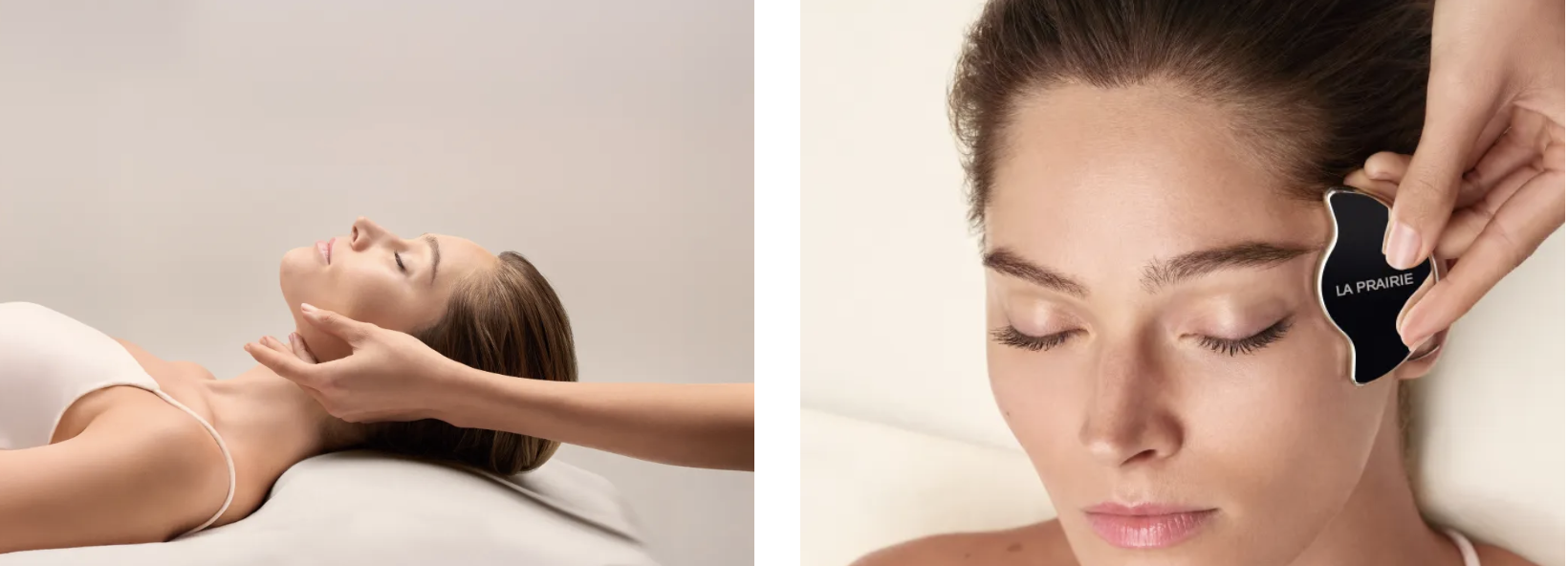
Botanique's designation as both hotel and spa signals that the wellness component carries real programmatic weight, not merely a room with a treatment table. In the mountain resort market , where Wyndham Gramado Termas Resort & Spa in Gramado represents the higher-volume end of that spectrum , the distinction between a hotel with spa amenities and a property where the spa defines the tempo of the stay is significant. The Michelin recognition implies the latter.

For the broader Campos do Jordão market, Botanique represents the upper tier of what the destination can deliver. The town draws heavily from the São Paulo weekend market , a three-hour drive in normal traffic conditions , and the majority of its accommodation inventory targets that segment at mid-market price points. Properties operating at the recognised end of the market, where Botanique sits, are relatively few.

Placing Botanique in Brazil's Design-Led Property Conversation

Brazil's design-led hospitality sector has produced a distinct set of properties over the past two decades, concentrated in coastal and jungle environments but increasingly extending to mountain terrain. Txai Resort Itacaré, Etnia Casa Hotel in Trancoso, and Casas Brancas Boutique Hotel & Spa in Búzios each illustrate how Brazilian properties have learned to use local materials, landscape integration, and a restrained scale to create a specific kind of atmospheric authority that larger international-brand properties rarely replicate.

Botanique operates in that tradition applied to a mountain context. The Atlantic Forest setting, the altitude-specific climate, and the distance from urban São Paulo all become design inputs rather than limitations. Properties in this tier tend to attract guests who have already stayed in the more obvious Brazilian luxury destinations , the coastal Belmond and Fasano addresses, the urban towers in São Paulo and Rio , and are seeking a fundamentally different register of experience. The Botanique Hotel Experience details the property's specific programming for those planning a stay.

Planning a Stay: Practical Considerations

Campos do Jordão's peak season runs from June through August, when the town draws large crowds for the winter festival circuit and temperatures drop sharply at night. Booking accommodation during those months , particularly at properties with limited inventory like Botanique , requires advance planning; rooms at this tier of the market in peak season typically move several months out. The shoulder seasons of April through May and September through October offer cooler days without the festival-season congestion and frequently represent the more considered choice for guests whose priority is the landscape and spa experience rather than the town's cultural programming.

Access is via the SP-123 highway from São Paulo, with the drive through the Paraíba Valley and the Serra da Mantiqueira approach itself constituting a meaningful part of the arrival experience. There is no commercial flight service to Campos do Jordão; São Paulo's Congonhas or Guarulhos airports serve as the practical entry points, with private transfer or rental car being the standard approach to the property. For guests travelling across Brazil and pairing Botanique with other properties, Hotel Fasano Salvador, Fera Palace Hotel in Salvador, and Zorah Beach Hotel in Trairi represent the range of recognised Brazilian hospitality options at varying points along the coast.

For international context, Botanique's Michelin Key positioning places it in a conversation that includes mountain and resort properties like Badrutt's Palace Hotel in St. Moritz , though the scale, setting, and price architecture differ substantially. The comparison is useful less for direct equivalence than for understanding the standard of hospitality attention that the Michelin key programme implies across different geographies.

Frequently asked questions

At a Glance
Vibe
  • Quiet
  • Modern
  • Scenic
  • Elegant
  • Rustic
  • Sophisticated
Best For
  • Romantic Getaway
  • Wellness Retreat
  • Honeymoon
  • Weekend Escape
Experience
  • Private Villa
  • Panoramic View
  • Destination Spa
Amenities
  • Spa
  • Pool
  • Fitness Center
  • Restaurant
  • Hiking
  • Tennis Court
  • Wifi
Views
  • Mountain
  • Garden
Dress CodeSmart Casual
Noise LevelQuiet
CapacityIntimate
Rooms17
Check-In15:00
Check-Out12:00
PetsNot allowed

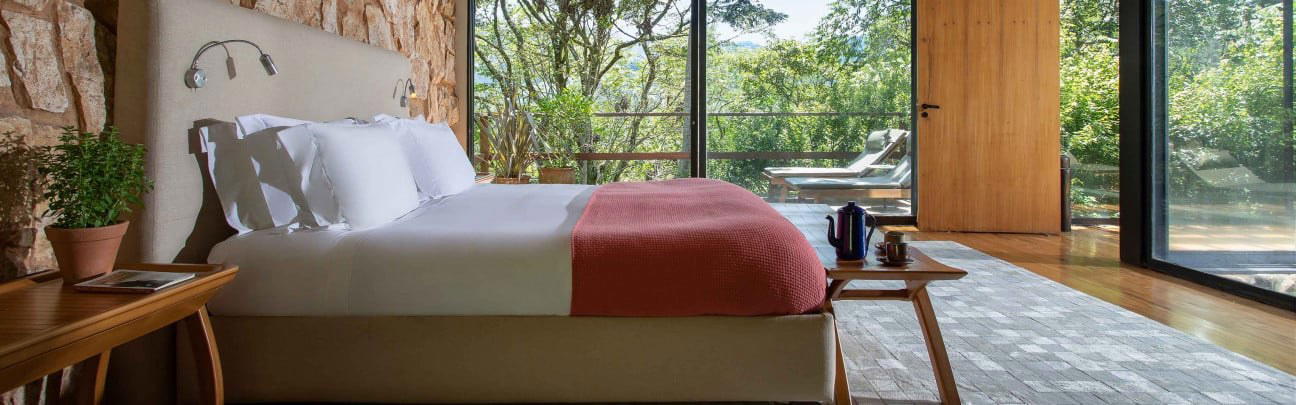
Rustic-chic with soaring beamed ceilings, fireplaces, natural light through monumental glass facades, enveloped by lush Atlantic rainforest.