Google: 4.6 · 22 reviews

Avalon Coastal Retreat sits on the Tasman Highway in Swansea, Tasmania, holding a place in the Michelin Selected Hotels 2025 list — a designation that places it among a small cohort of Australian coastal properties recognised for setting and experience. The retreat occupies the quieter, design-conscious end of Tasmanian accommodation, where the east coast landscape does most of the architectural work.
 Discover on Pearl
Pearl is the En Primeur Club membership app — saves, bookings, and concierge access live there. Same editors, same standards.
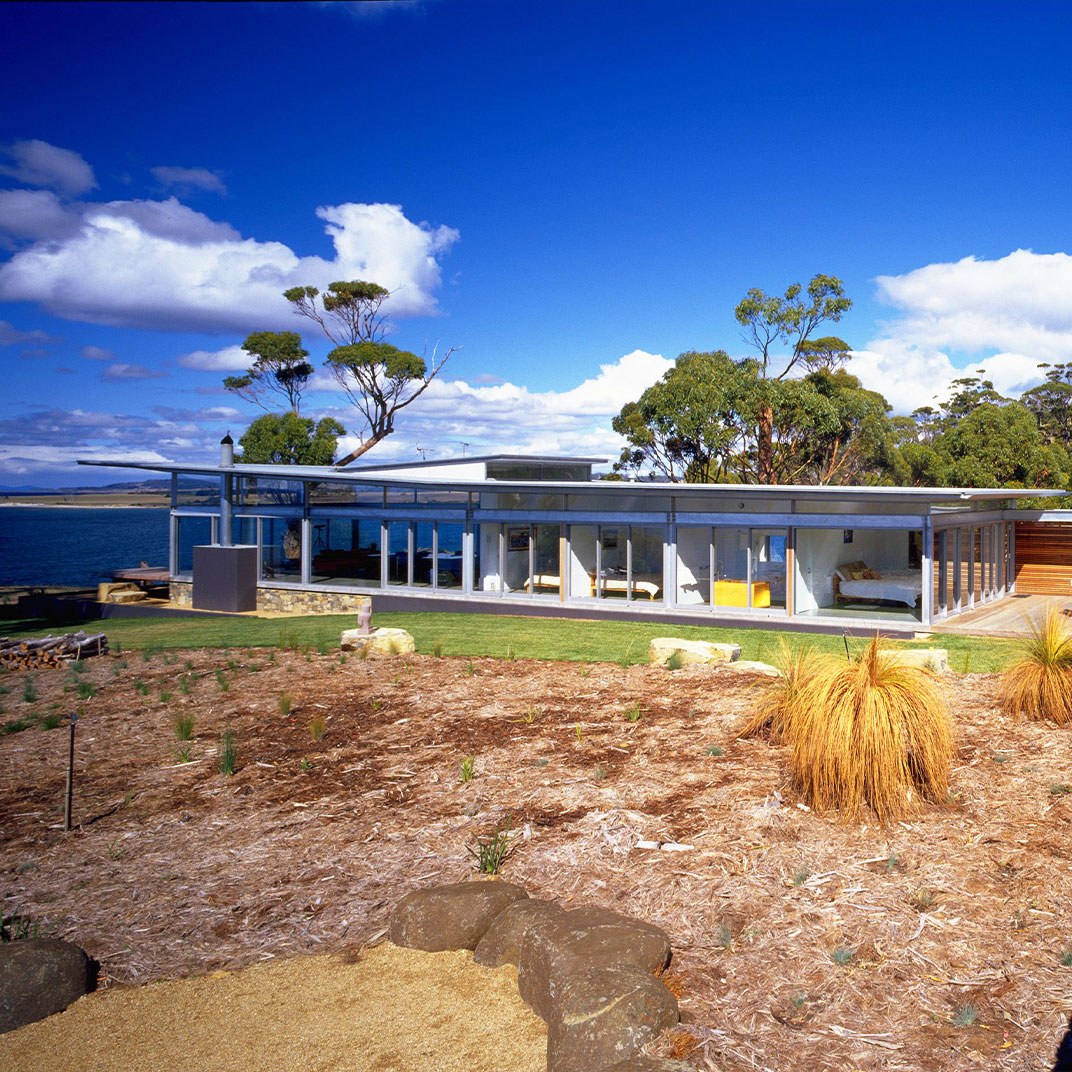
Where the Tasman Highway Meets the Water
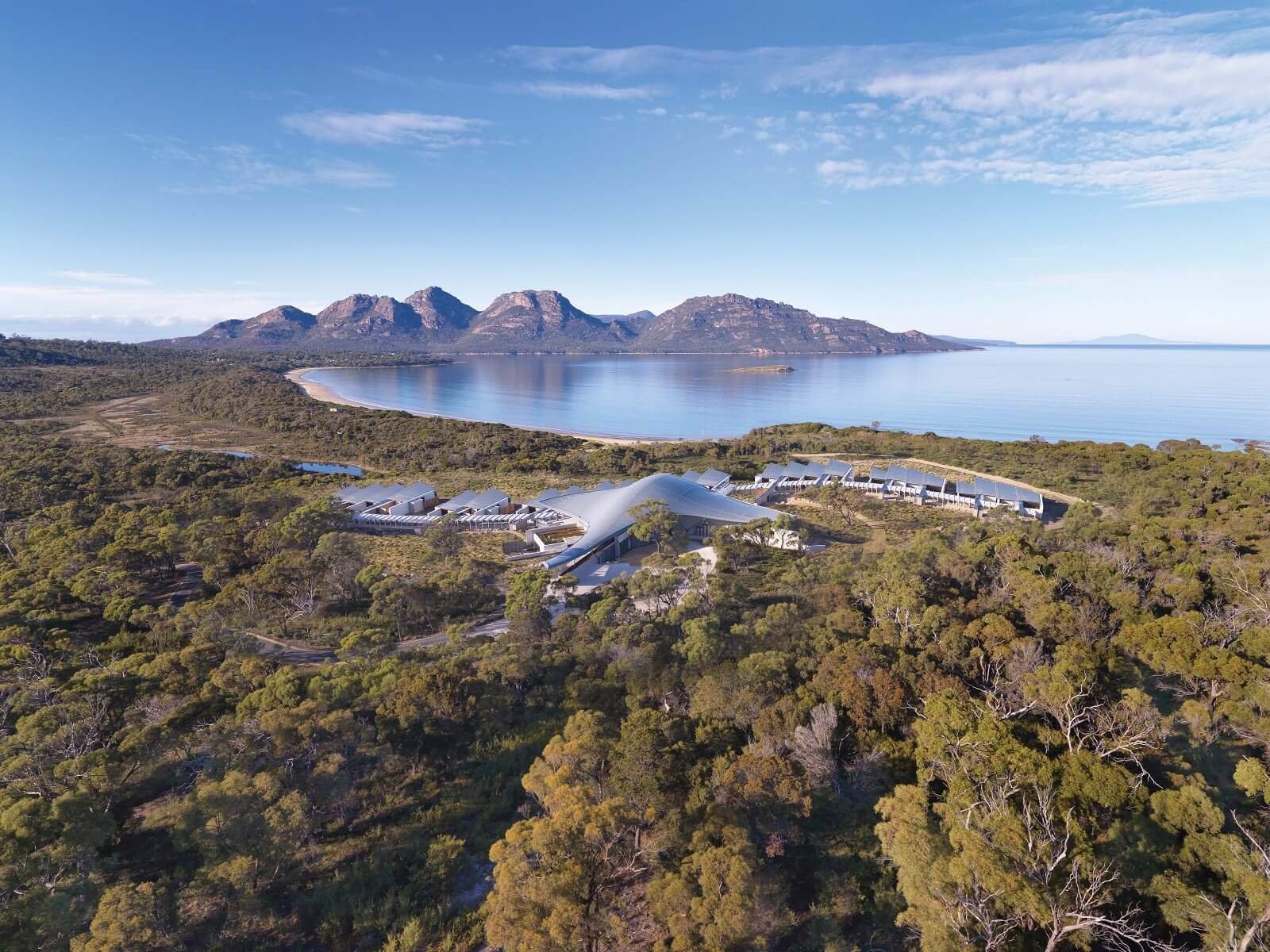
Tasmania's east coast has developed a distinct hospitality character over the past decade. The stretch of coastline running through Swansea sits at the southern edge of Great Oyster Bay, with the Freycinet Peninsula visible across the water on clear days. Properties along this corridor have largely divided into two modes: high-turnover holiday letting with coastal views as the primary selling point, and a smaller group of considered retreats where the physical relationship between building and site is treated as the product itself. Avalon Coastal Retreat, at 11922 Tasman Highway, belongs to the latter category. Its inclusion in the Michelin Selected Hotels 2025 list confirms a position that local travellers have recognised for some time.
The Michelin Selected designation, introduced as the guide extended its hotel coverage beyond Europe, applies to properties that meet a specific threshold of setting, design, and guest experience without necessarily carrying the full Michelin Key distinction. For an east-coast Tasmanian property, inclusion in that 2025 cohort places Avalon in a peer set that includes recognised Australian properties tracked by our full Swansea restaurants guide and neighbouring retreat formats across the island. It signals that the property's physical and experiential qualities have registered beyond domestic travel circles.
Architecture as the Primary Argument
On Tasmania's east coast, the design question is essentially about orientation. The water is the constant reference point, and how a building frames, filters, or opens to that view determines the quality of the guest experience more than any interior specification. Properties that get this right tend to operate with low key counts, since the economics of a site-specific design approach don't scale easily. The broader pattern is visible across Australian coastal retreats built in the last fifteen years: smaller footprints, more considered material palettes, and an emphasis on the threshold between indoor and outdoor space. Piermont Retreat in Dolphin Sands, situated further south along the same coastline, operates from a comparable logic, where the site's relationship to the estuary shapes everything about the guest sequence.
The address on the Tasman Highway places Avalon in a coastal band where the road runs close to the waterline, with little separation between the built environment and the bay. That proximity is architectural raw material. Retreats in this position face a consistent design challenge: how to give guests genuine privacy and calm while preserving the unobstructed connection to the view that justifies the location. The solutions tend to involve careful siting of accommodation volumes, screening through native vegetation, and the use of materials that weather into the coastal palette rather than contrasting with it. These are the design moves that separate Michelin Selected coastal properties from their neighbours on the same stretch of highway.
The East Coast Context
Swansea is a small town, and its accommodation market reflects that scale. The premium end of the market on this part of the east coast is not deep, but the properties that occupy it tend to draw from a consistent traveller profile: visitors combining the Freycinet Peninsula with a Swansea stop, wine-focused travellers moving between the Coal River Valley and the east coast, and international visitors treating Tasmania as a standalone itinerary rather than an add-on to a mainland trip. That last group has grown since Tasmania's profile lifted globally through the Museum of Old and New Art in Hobart and the broader cultural investment of the past decade.
The comparison set for Avalon, in terms of guest expectations and positioning, extends beyond Swansea itself. Among Michelin-recognised Australian properties, the design-led coastal retreat model appears in several formats: Southern Ocean Lodge in Kingscote on Kangaroo Island represents the high-architecture end of that spectrum, while properties like Empire Spa Retreat in Yallingup in Western Australia anchor a wellness-inflected version. Osborn House in Bundanoon shows what the format looks like in an inland Southern Highlands context. Avalon's coastal Tasmanian position gives it a specific character within this cohort: the light quality, the temperature range, and the water views across to Freycinet are not replicated elsewhere on the Australian eastern seaboard.
For travellers calibrating an Australian itinerary against major city properties, the east coast Tasmanian retreat sits in a different register to Capella Sydney or The Tasman in Hobart. The city properties offer dense programming, F&B depth, and urban accessibility. Retreats like Avalon trade that density for a more singular physical experience. Neither is a substitute for the other, and most considered Tasmanian itineraries include both modes.
Planning a Stay
Swansea is roughly two hours by road from Hobart, making it accessible as both a standalone destination and a stop within a longer east coast circuit. The Tasman Highway approach from the south runs along the coast for much of the final stretch, so the setting becomes legible well before arrival. The east coast's peak season runs from December through February, when Freycinet National Park and the Wineglass Bay walk draw high visitor volumes. March and April offer a different calculus: the crowds thin, the light shifts, and the accommodation market becomes more navigable. Michelin Selected properties at this scale and in this location typically operate with limited availability, and advance booking is the reliable approach regardless of season. For context on comparable Tasmanian and broader Australian coastal retreat formats, Wildman Wilderness Lodge in Marrakai and Lilianfels Blue Mountains represent analogous remote-setting formats in other Australian states.
Travellers building a broader Australian itinerary around design-conscious properties will find Avalon sits naturally within a sequence that might also include Melbourne Place in Melbourne, The Calile in Brisbane, or Mondrian Gold Coast for those extending to Queensland. International travellers comparing against global benchmarks in recognised small-property formats might also reference Badrutt's Palace Hotel in St. Moritz or Hôtel de Paris Monte-Carlo for the broader context of what Michelin selection implies at the leading end of the global hotel market, though the scale and setting of those properties are entirely different from a Tasmanian coastal retreat.
Quick Comparison
These are the closest comparables we have in our database for quick context.
| Venue | Cuisine | Price | Awards | Notes |
|---|---|---|---|---|
| Avalon Coastal Retreat | This venue | |||
| Capella Sydney | World's 50 Best | |||
| Grand Hyatt Melbourne | ||||
| Shangri-La Hotel, Sydney | ||||
| The Langham, Melbourne | ||||
| Sofitel Sydney Darling Harbour |
Continue exploring
More in Swansea
Hotels in Swansea
Browse all →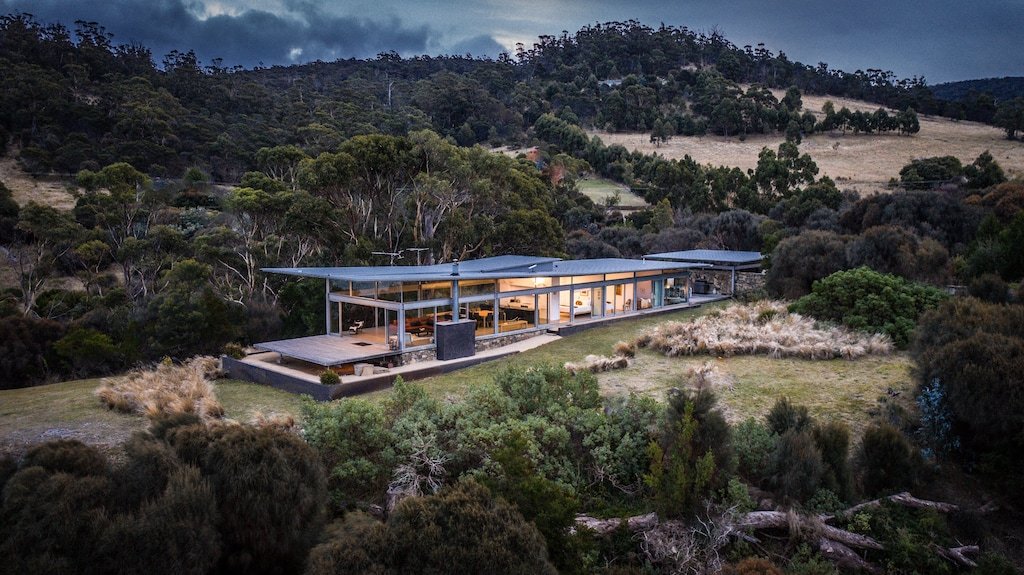
Bars in Swansea
Browse all →
Restaurants in Swansea
Browse all →
Wineries in Swansea
Browse all →
At a Glance
- Quiet
- Scenic
- Modern
- Elegant
- Minimalist
- Romantic Getaway
- Honeymoon
- Weekend Escape
- Anniversary
- Beachfront
- Panoramic View
- Wifi
- Beach Access
- Bbq
- Laundry
- Kitchen
- Waterfront
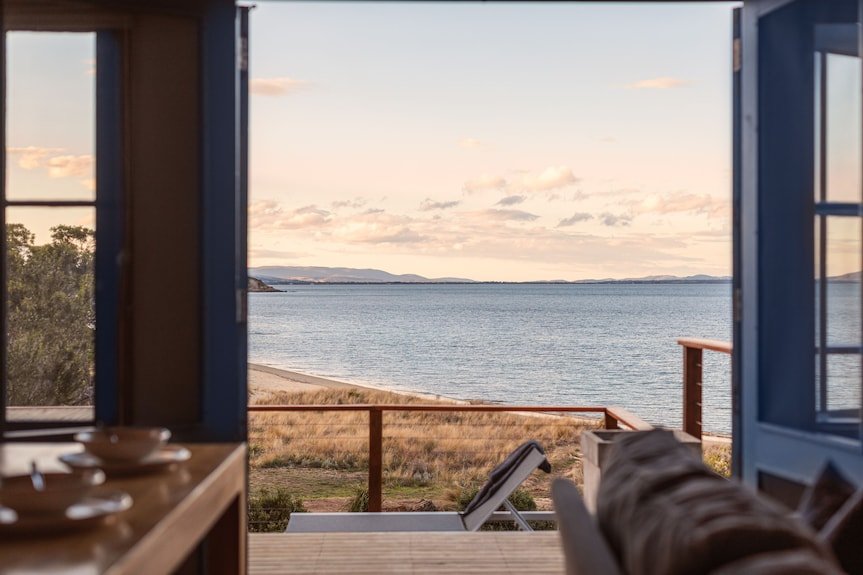
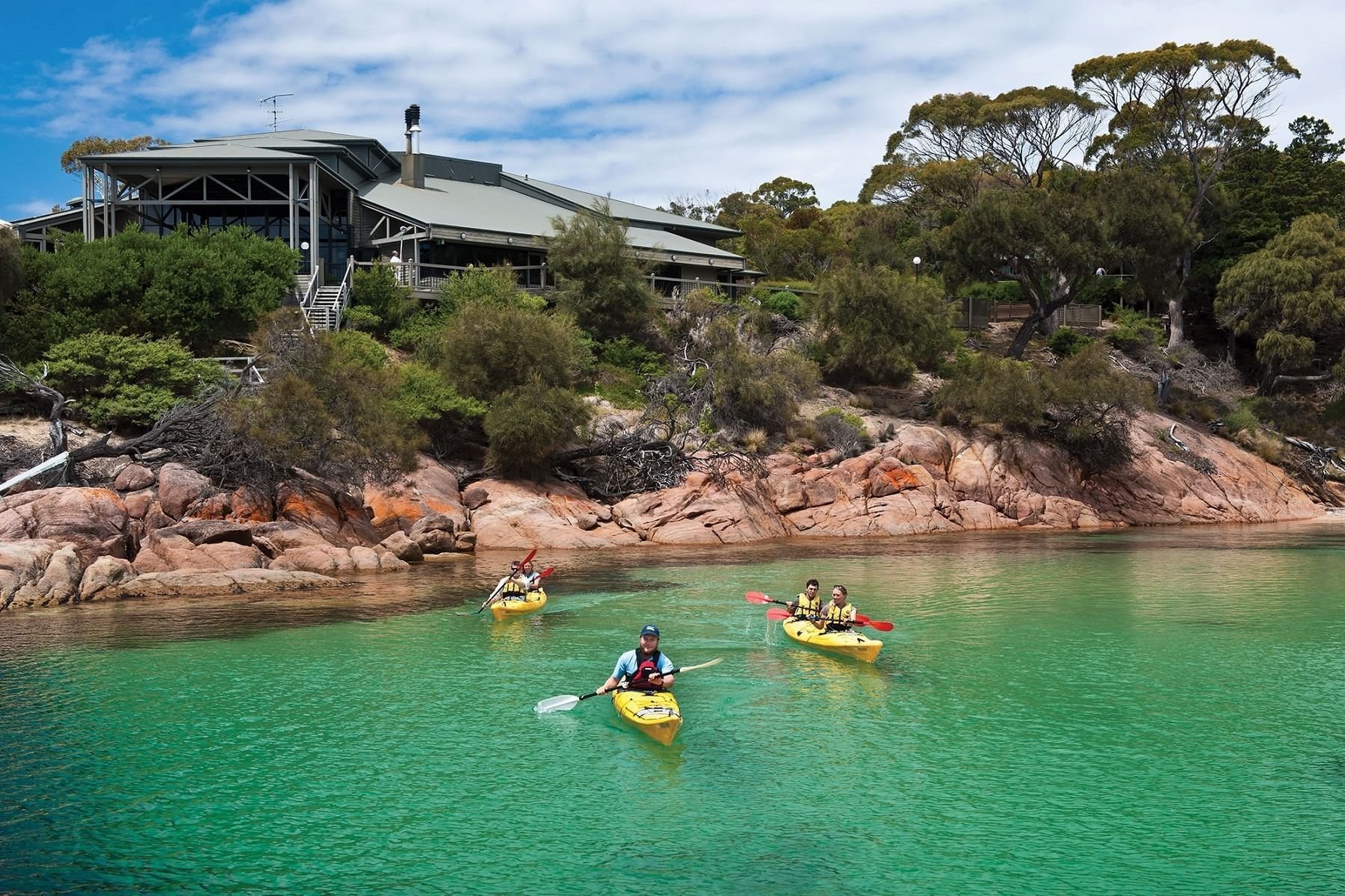
Light-filled open living areas with minimalist interiors, cozy fireplace, heated floors, and serene atmosphere enhanced by expansive glass walls framing extraordinary sea views.