


Saffire Freycinet sits on Tasmania's east coast with 20 timber-lined suites oriented toward the Hazards mountains, earning 97 points in the La Liste Top Hotels 2026 rankings and a place on Tatler's Best Hotels Asia-Pacific 2025 list. The low-profile lodge occupies former national parkland between Coles Bay and Freycinet National Park, where the dining programme draws directly on the produce and coastline surrounding it.
Pearl is the En Primeur Club membership app — saves, bookings, and concierge access live there. Same editors, same standards.
- Address
- 2352 Coles Bay Rd, Coles Bay TAS 7215
- Phone
- +61 3 6256 7888
- Website
- saffire-freycinet.com.au
- Directions
- Get directions
 Saves & bookings on Pearl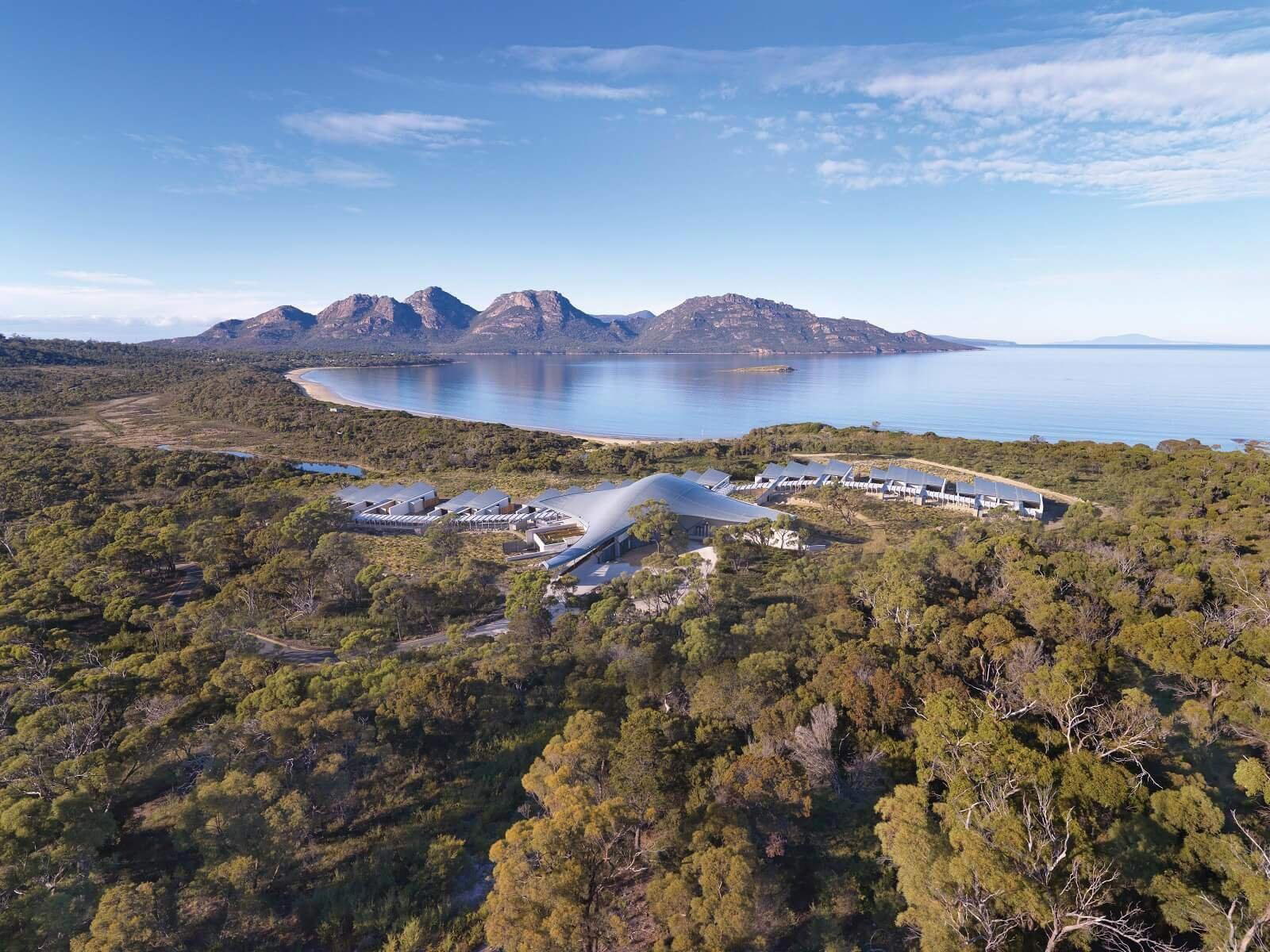
Where the Hazards Meet the Table
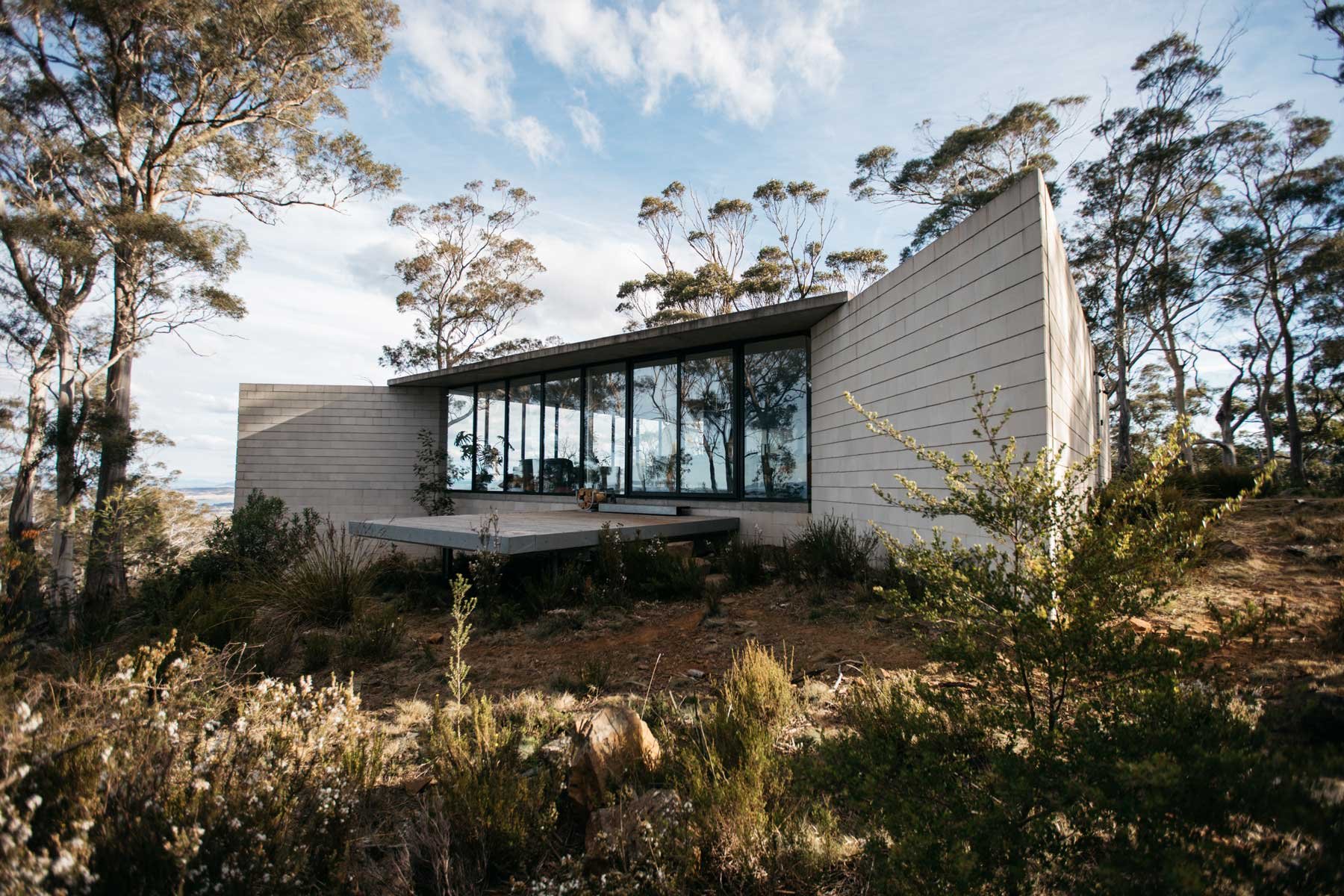
The approach along Coles Bay Road gives little away. Coastal heath, banksia, and pale granite boulders line the road until a low-slung roof appears through the scrub, its curved form catching the afternoon light before the building itself fully resolves. That roofline, shaped in reference to a stingray in flight, is the first signal that Saffire Freycinet was designed to be read from the outside in. The architecture doesn't announce itself. It recedes into the terrain, which is precisely the point. On Tasmania's east coast, where the light off Great Oyster Bay can shift from silver to deep amber within a single hour, restraint reads as confidence.
Placed on land that was originally part of a protected national park, the lodge carries that history into its operating model. The twenty suites are positioned to face the pink-granite slopes of the Hazards, the mountain range that defines Freycinet's silhouette. Interior materials lean local: Tasmanian oak and celery-leading pine appear throughout, giving the rooms a warmth that resists the interiors-magazine blankness common to many Australian luxury lodges. At this scale, twenty suites on a coastal landholding of this sensitivity, the ratio of space to guest is unusually generous.
The Dining Programme: Freycinet on the Plate
Australia's destination lodge category has split decisively in recent years between properties that treat food as an amenity and those that treat it as a primary reason to travel. Saffire Freycinet positions itself in the latter group. The dining programme at a property of this type, all-inclusive, remote, and anchored to a specific ecology, carries more editorial weight than a restaurant in isolation. Every meal is effectively a statement about what the surrounding region produces and how it should be handled.
The east coast of Tasmania is one of Australia's most productive seafood environments. Pacific oysters from Freycinet Marine Farm sit minutes from the lodge by road; abalone, sea urchin, and bivalves from the surrounding waters have made this coastline a reference point for Australia's fine dining supply chain. Properties like Saffire that operate in direct proximity to primary producers carry a structural advantage: the cold-water shellfish arriving at a kitchen here has an immediacy that even a well-sourced Sydney or Melbourne restaurant cannot fully replicate. For guests arriving from urban dining scenes at Capella Sydney in Sydney or The Tasman in Hobart, the contrast in provenance and proximity is measurable.
The lodge's all-inclusive format means the dining experience is inseparable from the stay itself. Breakfast, lunch, activities, and dinner are contained within the property's rhythm rather than parcelled out as optional extras. This model, more common in African safari lodges and a handful of Australian wilderness properties, places the dining programme under a different kind of pressure. It has to hold across multiple sittings and mood states rather than delivering a single curated peak. When it works, the format produces something closer to a sustained relationship with a place than a single restaurant visit allows.
The Lodge in Its Regional and Competitive Context
Within Australia's destination lodge tier, the comparison set is tightly defined. Southern Ocean Lodge in Kingscote on Kangaroo Island operates on a similar all-inclusive, remote, ecologically sensitive model. Wildman Wilderness Lodge in Marrakai in the Northern Territory anchors its programme to the wetlands and floodplains of the Leading End. What distinguishes Saffire's position within this peer group is the specific density of premium produce in its immediate surroundings and the national park adjacency that gives guests direct access to Freycinet without the mediation of a tourist shuttle.
The lodge's awards record reflects its standing within the broader Asia-Pacific luxury category. La Liste's 2026 ranking places it at 97 points, and its two Michelin Keys mark it as a standout stay in the region. Its recognition is current rather than historical. For a twenty-suite lodge on a remote Tasmanian peninsula, these results place Saffire in a competitive cohort that includes much larger urban properties.
The nearest comparable property within the immediate region is Freycinet Lodge, which operates at a different price positioning and scale inside the national park boundary. The two properties serve broadly different traveller profiles: Freycinet Lodge draws guests who want park access with comfortable accommodation; Saffire draws guests for whom the lodge itself is the destination. For anyone building a broader Tasmanian itinerary, The Tasman in Hobart offers a logical bookend at the island's urban end, with the east coast drive between Hobart and Coles Bay functioning as part of the experience rather than transit to be minimised.
The Activity Programme as Context for the Table
Destination lodges at this level now treat their activity programmes as part of the culinary identity rather than a separate amenity layer. Guided walks through Freycinet National Park, kayaking on Wineglass Bay, and wildlife encounters in the surrounding bush all feed back into how guests engage with the food. When a guest has spent a morning on the water above the same oyster leases that supplied the night's first course, the provenance story becomes physical rather than abstract. This integration of activity and table is where the all-inclusive remote lodge format earns its price differential over urban alternatives.
Planning a Stay
Saffire Freycinet sits at 2352 Coles Bay Road. The twenty-suite inventory means availability is constrained year-round. Tasmania's east coast runs cooler than mainland coastal destinations.
For travellers building a wider Australian lodge itinerary alongside Saffire, Cape Lodge in Wilyabrup in Western Australia's Margaret River region and Lake House, Daylesford in Daylesford in Victoria both operate on a food-first destination model with a similar emphasis on regional produce and intimate scale.
Budget Reality Check
Comparable venues nearby, for context on price, style, and recognition.
| Venue | Price | Awards | Notes |
|---|---|---|---|
| Saffire FreycinetThis venue — the venue you are viewing | $$$$ | Michelin 2 Key | Not listed |
| Freycinet Lodge | $$$ | 4-Star | Coles Bay, Luxury eco-lodge reimagining of classic camp cabins with contemporary design elements; timber structures integrated into natural landscape with grounded elegance. |
| The Tasman | $$$$ | Michelin 1 Key | Hobart CBD, Blends Georgian heritage, Art Deco, and contemporary Pavilion buildings |
| The Henry Jones Art Hotel | $$$$ | Michelin 1 Key | Hobart CBD, Restored 19th-century waterfront warehouse turned luxury art hotel |
| The Islington Hotel | $$$ | Michelin 1 Key | Hobart CBD, Heritage boutique with modern extensions |
| MACq 01 Hotel | $$$$ | Michelin 1 Key | Hobart waterfront, Waterfront storytelling luxury hotel celebrating Tasmanian heritage |
Recognition history
Dated appearances from independent guides and award organizations, with the underlying list record or original source where available.
La Liste Top Hotels
La Liste
Michelin 2 Keys
Michelin
Tatler Listed in Best Hotels Asia-Pacific
Tatler
Continue exploring
More in Coles Bay
Hotels in Coles Bay
Browse all →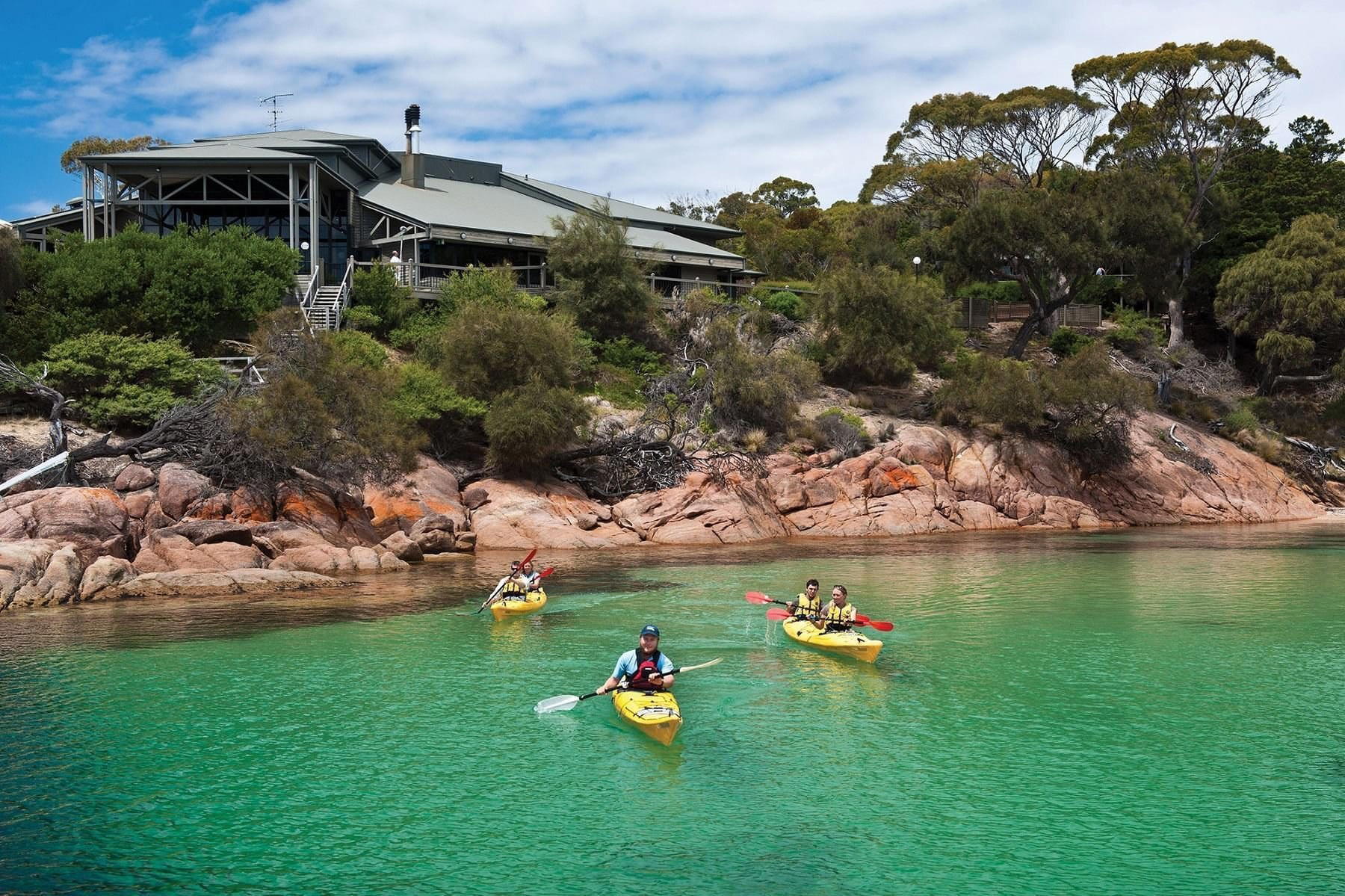
Bars in Coles Bay
Browse all →
Restaurants in Coles Bay
Browse all →
Wineries in Coles Bay
Browse all →
At a Glance
- Romantic
- Scenic
- Elegant
- Sophisticated
- Intimate
- Honeymoon
- Romantic Getaway
- Wellness Retreat
- Anniversary
- Weekend Escape
- Panoramic View
- Spa
- Pool
- Wi Fi
- Room Service
- Restaurant
- Fitness Center
- Concierge
- Mountain
- Waterfront
- Spa
- Pool
- Wi Fi
- Room Service
- Restaurant
- Fitness Center
- Concierge
Soothing and elegant with natural light, panoramic views of mountains and bay, and a serene, immersive atmosphere.