Abadia Retuerta LeDomaine

A 12th-century Premonstratensian abbey on the Duero's edge, Abadia Retuerta LeDomaine operates at the intersection of heritage architecture, Michelin-starred dining, and wine production with its own Protected Designation of Origin. The Refectorio restaurant holds both a Michelin star and a Green Star for sustainability, while the estate's vineyard ranks 29th on the World's Best Vineyards list. Thirty rooms and suites, each hung with original Joan Miró lithographs, occupy the abbey's carefully restored ancient halls.
Pearl is the En Primeur Club membership app — saves, bookings, and concierge access live there. Same editors, same standards.
- Address
- N-122 km 332.5, Sardon de Duero
- Website
- abadia-retuerta.com
- Directions
- Get directions
 Saves & bookings on Pearl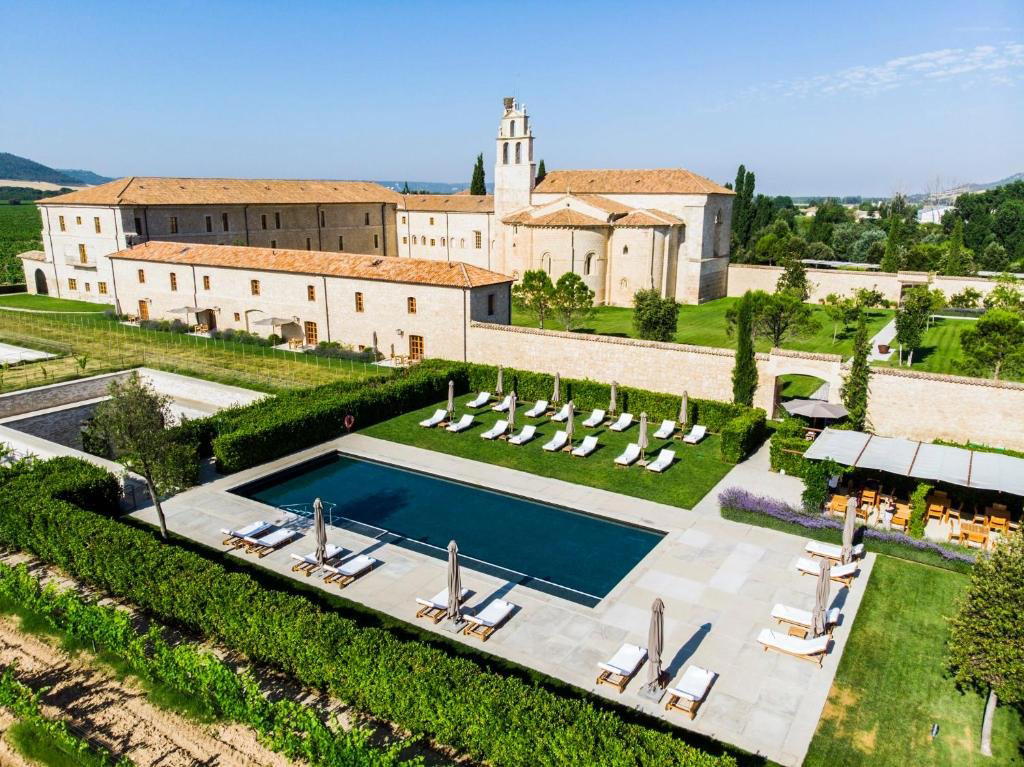
Stone, Vine, and Eight Centuries of Accumulated Weight
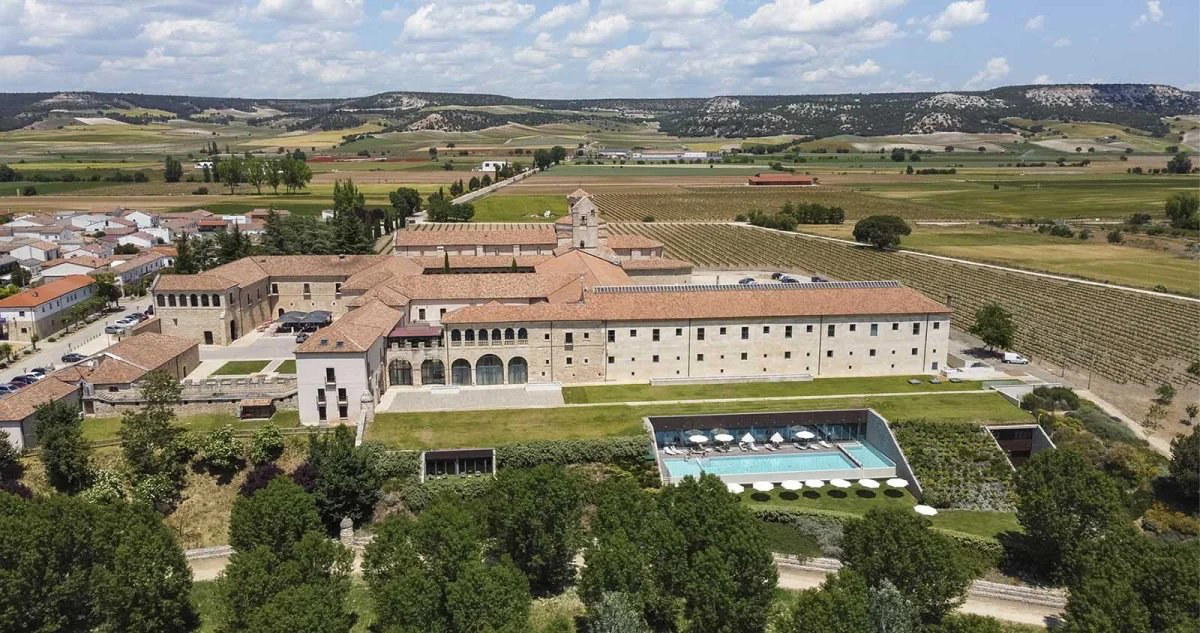
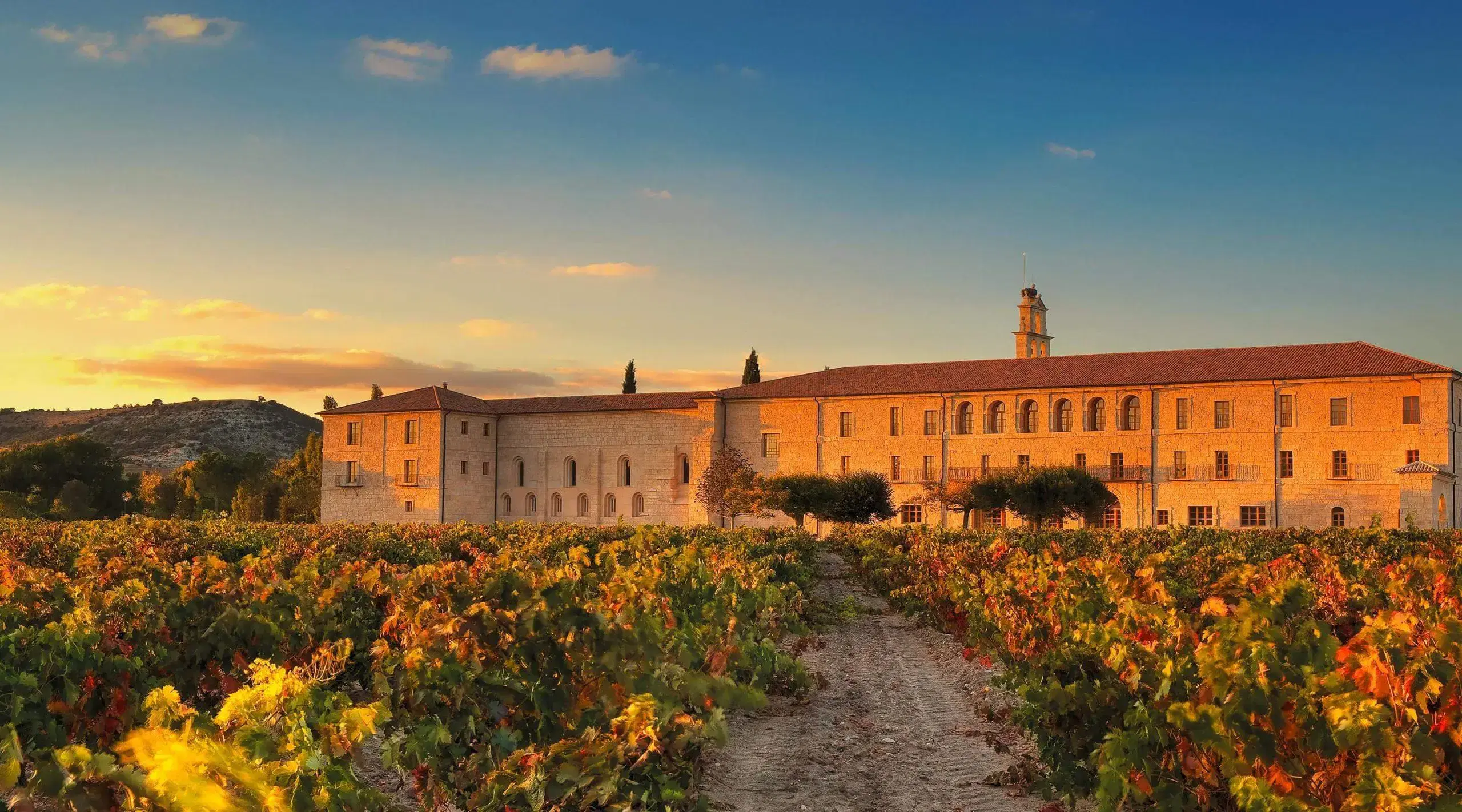
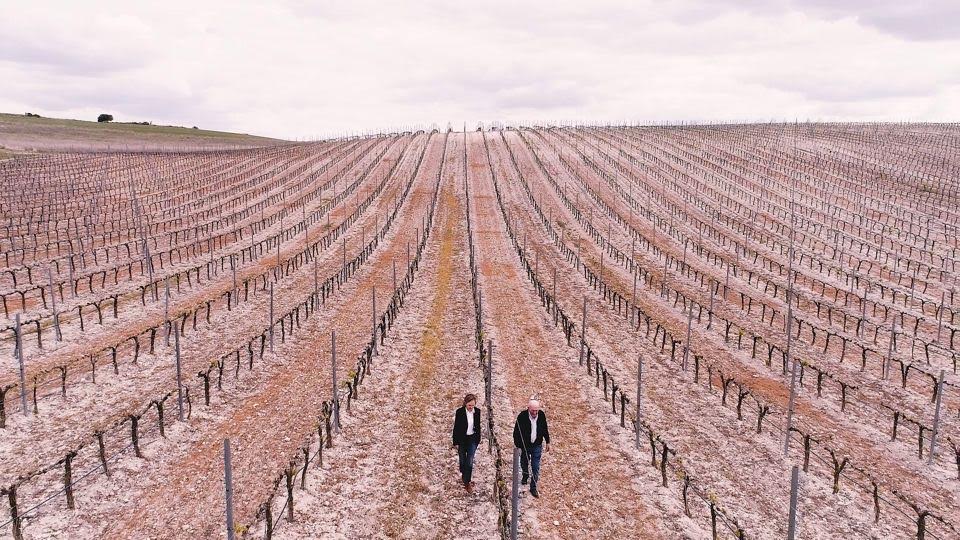
Abadia Retuerta LeDomaine is a five-star hotel in Sardón de Duero, Valladolid, set within an abbey founded in 1145. Approaching Abadia Retuerta LeDomaine along the N-122, kilometre marker 332.5, that quality announces itself well before the abbey comes into view: the Duero plateau opens into a sea of vines, the road narrows, and the Baroque-Romanesque silhouette of a structure founded in 1145 resolves against the sky. It is an entrance sequence that few purpose-built luxury hotels could replicate, because it depends entirely on eight centuries of accumulated stone and history that cannot be manufactured.
The abbey was established when Doña Mayor, daughter of the Lord of Valladolid, donated terras et vineas to the church, bringing land and vines together in the same founding document. The Premonstratensian Order built Abadía Santa Maria de Retuerta on that donation, and The complex is recognised as a cultural heritage site. The hotel that exists within those walls today carries that legal designation alongside its five-star classification, which creates an unusual constraint and an unusual advantage: the architecture is largely non-negotiable, which means the design brief was always about working with the fabric rather than imposing on it.
Architecture as Editorial Statement
The conversion of historic religious buildings into luxury accommodation is a well-established format across Spain, and the results vary considerably. Some properties preserve the shell and gut the interior. Others retrofit modern comfort with such enthusiasm that the original structure becomes wallpaper. Abadia Retuerta's approach leans toward careful restoration: the 27 guestrooms and 3 suites occupy the ancient hall with contemporary five-star amenity standards, but the spatial character of the building, its proportions, its light, its material weight, remains the dominant experience. The former stable block has been transformed into the Santuario Wellness and Spa, a conversion that reads as architecturally coherent rather than opportunistic.
Spain has produced several comparable monastery-to-hotel projects that handle this tension with varying degrees of success. Castilla Termal Monasterio de Valbuena operates on a similar heritage premise in the same Valladolid province, placing it in the closest geographic comparable set. Further afield, Terra Dominicata in Escaladei combines wine estate with historic religious architecture in Catalonia, and Atrio Restaurante Hotel in Cáceres places Michelin-level dining inside a UNESCO heritage setting. These comparisons matter because they define the category: wine-anchored, heritage-listed, dining-serious properties that compete on depth of place rather than resort amenity scale.
Joan Miró on the Walls, Michelin Stars in the Kitchen
Every guestroom at Abadia Retuerta includes original lithographs by Joan Miró. This is a detail that belongs in the architecture conversation as much as the art conversation: the decision to hang original works rather than reproductions in every room is a statement about the property's relationship with materiality. It aligns with the weight of the building itself, where nothing is simulated.
The dining program operates on the same principle. The Refectorio restaurant, housed in what was the abbey's refectory, earned its first Michelin star within three years of opening, with Head Chef Marc Segarra building a program around creative interpretations of tradition and locally sourced ingredients. Holding both awards simultaneously positions the Refectorio as part of a broader shift in Spanish fine dining, where sustainability credentials now sit alongside culinary ones as markers of seriousness.
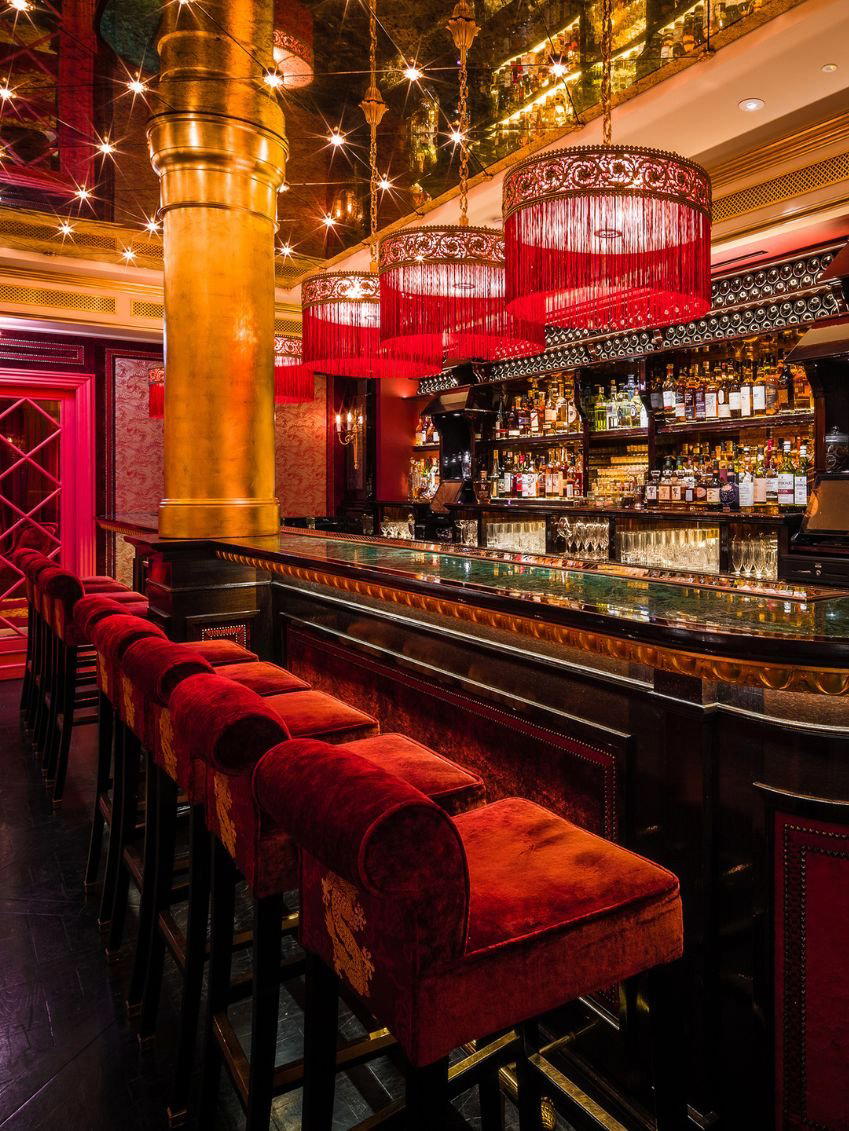
The estate's food and beverage range extends well beyond the starred restaurant. The Vinoteca offers tapas and informal Mediterranean cuisine. The Abbey Cloister Garden opens as an outdoor terrace during summer. The Calicata wine bar sits directly adjacent to the winery, making the connection between production and consumption as literal as possible. For visitors using this property as a base for exploring the wider Valladolid food and wine scene, the range of formats across a single estate covers most dining registers without leaving the grounds.
The Wine Estate as Founding Document
Terras et vineas of the 1145 donation were not merely symbolic: Abadia Retuerta's vineyard has operated in some form since the abbey's founding, making it among the older continuously wine-producing estates in Castile. The modern operation carries that history into a contemporary framework: the vineyard now holds a Protected Designation of Origin seal, awarded from 2022, which gives Abadia Retuerta its own appellation distinct from the surrounding Ribera del Duero DO. This is a significant credential. Most estates in the region operate under the broader Ribera del Duero designation; having a standalone PDO reflects a level of geographic and qualitative distinction that required formal regulatory recognition.
That positioning places it in a specific competitive conversation: not the volume-led bodegas that define Ribera del Duero's commercial identity, but the smaller, estate-focused producers whose reputations rest on place-specificity and controlled output. The Calicata wine bar, opened as a branded space next to the winery itself, functions as one direct access point to that program during a stay.
Wellness Inside a Former Stable
Santuario Wellness and Spa occupies the abbey's former stable block, a conversion that works because stables and spas share certain spatial qualities: generous ceiling heights, solid construction, and a separation from the main building that creates the sensation of arrival. The facilities include an indoor swimming pool, sauna, steam room, thermal contrast showers, and five treatment cabins, one of which operates as a private spa suite designed for couples.
Spa's programming includes a Spa Sommelier Experience that draws on the estate's wine production, combining aromatherapy with Abadia Retuerta wines. The Tibetan Bowls meditation experience is among the listed signature therapies. The Santuario received a Wellness Travel Award in 2021 from Organic Spa Media in one Distinctive category. These awards position it within the heritage-spa niche rather than the resort-spa category, which is the more appropriate frame: the experience draws its authority from the building's history as much as the treatment menu.
Planning a Stay
Abadia Retuerta LeDomaine sits at kilometre 332.5 on the N-122, in Sardón de Duero, within driving distance of Valladolid city. The combination of starred dining, estate wine production with its own PDO, and a spa recognised at the European level makes this property function most naturally as a destination stay of two or more nights rather than a single-night stop. The Refectorio's Michelin credentials mean advance booking for dinner is essential, particularly during spring and autumn.
For wine-estate hotel comparisons specifically, Torre del Marqués Hotel Spa and Winery in Sardoncillo offers a closer geographic reference point. Further afield, Cap Rocat in Cala Blava, La Residencia, A Belmond Hotel, Mallorca, and Mandarin Oriental Barcelona represent how Spanish luxury hospitality handles heritage and design at the upper end of the market in different regional contexts.
In Context: Similar Options
Comparable venues nearby, for context on price, style, and recognition.
| Venue | Cuisine | Price | Awards | Notes |
|---|---|---|---|---|
| Abadia Retuerta LeDomaineThis venue — the venue you are viewing | Restored 12th-century abbey blending historical architecture with modern luxury | $$$$ | 5-Star | Not listed |
| Castilla Termal Monasterio de Valbuena | Historic 12th-century Cistercian monastery with modern luxury wellness facilities | $$$$ | 5-Star | Ribera del Duero |
| Palacio de Sancti Petri, Gran Meliá | Andalusian palace resort | $$$$ | 5-Star | Novo Sancti Petri |
| Seaside Grand Hotel Residencia | Low-rise villa-style resort integrated into palm groves with Spanish-colonial elegance. | $$$$ | 5-Star | Maspalomas |
| Vincci Selección Rumaykiyya | Authentic Alpine lodge with rustic charm and five-star refinement positioned as a luxury mountain sanctuary. | $$$$ | 5-Star | Sierra Nevada |
| Hacienda Zorita Wine Hotel & Spa | Historic monastery converted into a luxury wine resort blending 14th-century heritage architecture with contemporary design and modern amenities. | $$$$ | 5-Star | Valverdon |
Recognition history
Dated appearances from independent guides and award organizations, with the underlying list record or original source where available.
Virtuoso Luxury Hotel Partner
Virtuoso
Continue exploring
More in Valladolid
Hotels in Valladolid
Browse all →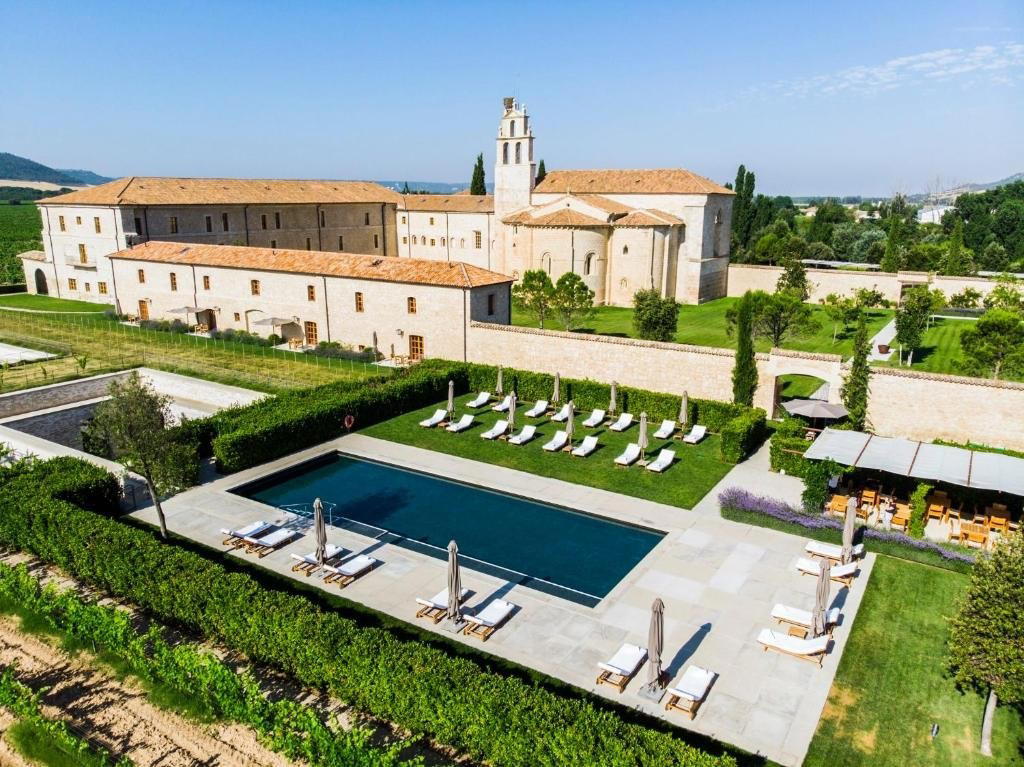
Restaurants in Valladolid
Browse all →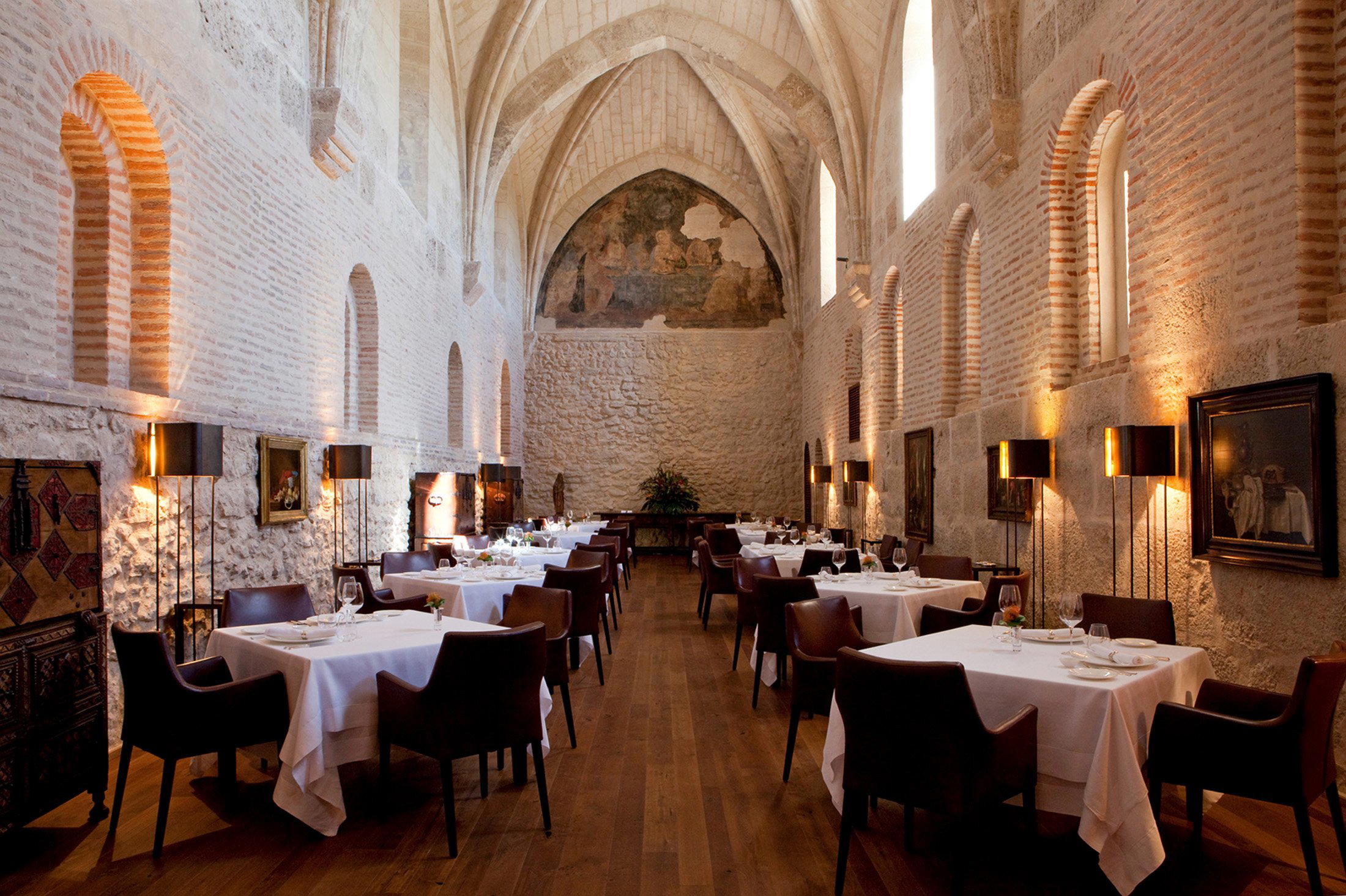
At a Glance
- Romantic
- Elegant
- Sophisticated
- Scenic
- Rustic
- Honeymoon
- Romantic Getaway
- Anniversary
- Wellness Retreat
- Weekend Escape
- Historic Building
- Panoramic View
- Private Dining
- Terrace
- Wi Fi
- Pool
- Spa
- Fitness Center
- Room Service
- Concierge
- Valet Parking
- EV Charging
- Vineyard
- Garden
- Mountain
- Wi Fi
- Pool
- Spa
- Fitness Center
- Room Service
- Concierge
- Valet Parking
- EV Charging
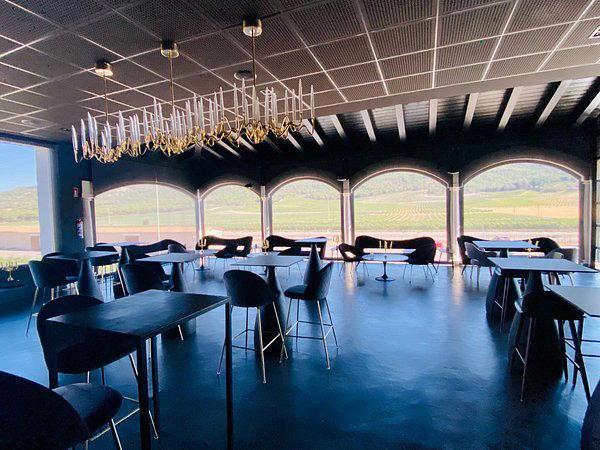
Serene and elegant with natural light from expansive windows overlooking vineyards, cozy fireplaces, and a peaceful, sophisticated atmosphere.