← Guides
Yvonne Seier Christensen's Maison Les Cinq Filles just won Grand Master at the 2026 Global Rosé Masters, a rare feat for a Champagne house founded less than a decade ago by a Danish outsider with no winemaking lineage.
Yvonne Seier Christensen's Maison Les Cinq Filles just won Grand Master at the 2026 Global Rosé Masters, a rare feat for a Champagne house founded less than a decade ago by a Danish outsider with no winemaking lineage.
In Champagne, a surname can open a cellar door before the first cork is drawn. Yvonne Seier Christensen arrived without inherited vineyards, without a centuries-old cellar, and without a family name that carried weight in Reims or Épernay. What she did bring was a career in banking and luxury business, co-ownership of Geranium and Alchemist in Copenhagen, three and two Michelin stars respectively, and a palate trained to think first about the table. Her route into the appellation is less about heritage branding than the patient, technical work inside the bottle.
Ten years ago, Seier Christensen was sitting in a lecture hall at Plumpton College, studying the decisions that shape wine long before it reaches a glass. She had Nigerian heritage, was brought up in England, and had Danish family connections, a set of perspectives that would later inform how she approached French terroir. She also had a clear mandate: she did not want to just build a brand.
"I didn't want to just build a brand, I was determined to understand every technical, dirt-under-the-fingernails decision that goes into a bottle."
, Yvonne Seier Christensen, founder and winemaker, The Drinks Business1
That appetite for the work itself shaped the founding of Maison Les Cinq Filles in 2017. The name, "The Five Daughters", carries her personal intent: to build a legacy for her five daughters in a region where legacy is usually counted in centuries rather than years. Without name recognition or generations of resources, Seier Christensen began with a simple proposition: quality would have to be present from the first release.
Her background in banking and luxury business gave her a precise feel for how premium products earn their place in demanding markets. In Michelin-starred dining and high-end hospitality, she learned that when you ask guests to spend more, quality, precision, and positioning must be visible in every detail. That discipline moved naturally into her winemaking. Champagne needs time to disclose itself, and as Maison Les Cinq Filles approaches its 10-year anniversary, that patience is beginning to show in the glass.
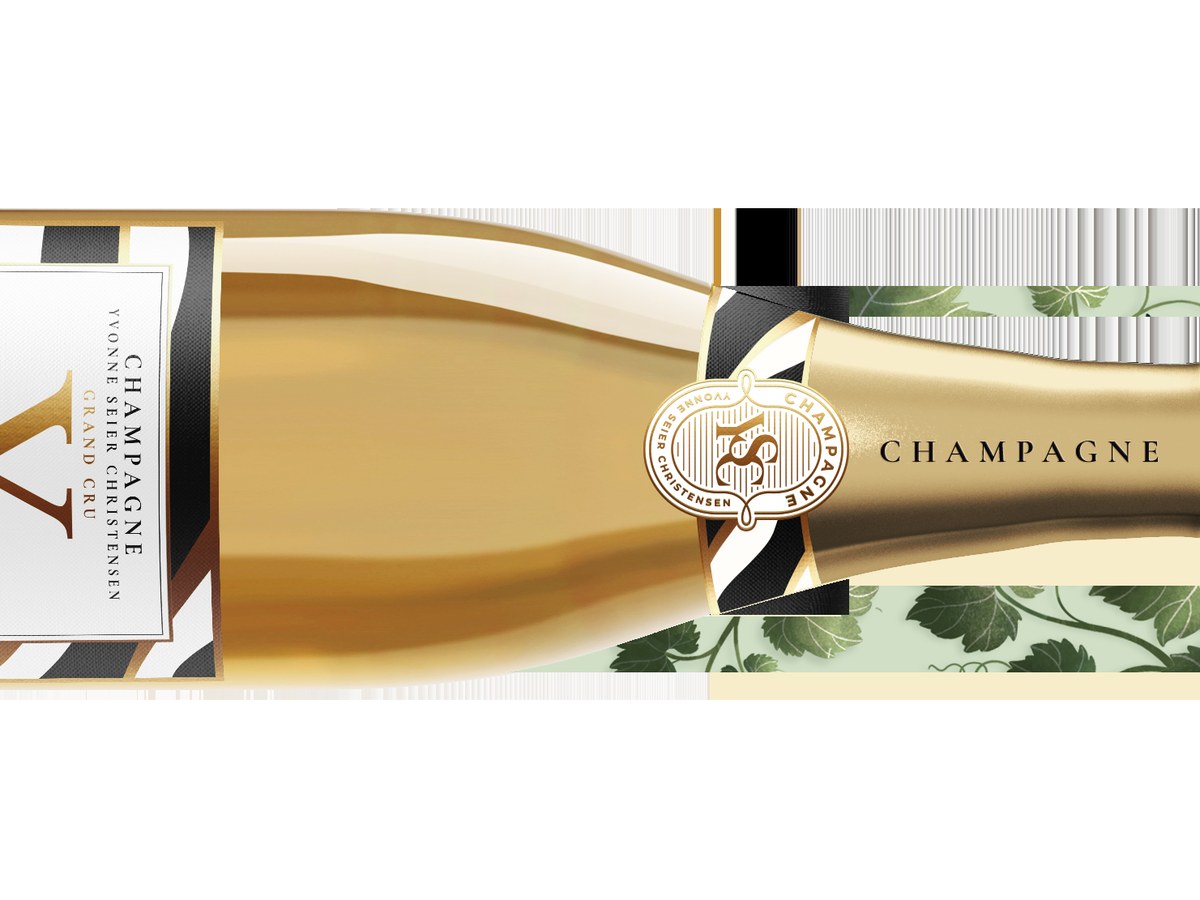
The 2026 awards give that progress a clear marker. Gold at The Champagne Masters 2026 for Cuvée Les Chapelles. Grand Master at The Global Rosé Masters 2026 for Rosé de Saignée. These are not courtesy medals. They place her wines in conversation with houses that have centuries of history and vineyard holdings far larger than her production scale.
Seier Christensen co-owns Geranium and Alchemist, two of Copenhagen's most acclaimed restaurants. Geranium holds three Michelin stars; Alchemist holds two. That pedigree is not a footnote to her winemaking. It is part of the architecture. In restaurants, she learned what happens when every glass has to perform beside a precise plate, in a room where the smallest imbalance is noticed. Her Champagnes belong to that world rather than to the idea of Champagne as decoration alone.
Gastronomy asks more than polish. It asks for structure, acidity, balance, and the ability to sit beside complex flavors without crowding them. A wine that charms in a tasting room can lose its footing at the table. Seier Christensen builds with pairing in mind, not only celebration. That is a technical choice as much as a philosophical one, touching harvest timing, dosage levels, and the parcels that finally enter the blend.
Her outsider perspective also lets her ask questions that older houses may not need, or want, to ask. She is not bound by inherited decisions about which grapes to plant, which cooperage to use, or which markets to court first. Paired with her technical training at Plumpton College and her experience in luxury hospitality, that freedom gives her room to test, adjust, and refine without preserving a house style set generations earlier.
The result is a portfolio shaped by intent rather than inheritance. Cuvée Les Chapelles and Rosé de Saignée do not try to echo the grandes marques. They show what happens when Champagne is built for gastronomic precision and technical rigor. The 2026 awards suggest that judges could taste the distinction.
Gold at The Champagne Masters 2026 deserves attention. Grand Master at The Global Rosé Masters 2026 deserves even more. Grand Master is the comprehensive accolade, a leading award in a competition that draws entries from established producers across Champagne, Provence, and beyond. For a house founded in 2017 to earn that recognition in 2026, the wines are not merely promising. They are already competing at the highest level within a single decade of founding.
That timeline matters. In Champagne, patience is not optional. Base wines need time to develop. Reserve wines accumulate over vintages. Blending decisions reveal their wisdom only after years in the cellar. A house launched in 2017 is still building its reserve library, still refining its house style, still establishing relationships with growers and négociants. To win upper-tier awards during that climb suggests that Seier Christensen's technical decisions are landing earlier than the traditional model might predict.
The Rosé de Saignée is especially revealing. The saignée method, bleeding off juice from red grapes after a short maceration, leaves little room for imprecision. It requires exact timing, careful temperature control, and a willingness to trade volume for intensity. The method produces rosés with more structure and depth than the blending method, but it is riskier and less forgiving. Seier Christensen's choice of saignée for her rosé program says plenty about her priorities: technical winemaking before the safer commercial route.
The Grand Master award supports that choice. It also marks Maison Les Cinq Filles as a house worth following for collectors who care more about what happens in the cellar than what appears on an old family crest. The awards are recognition, yes, but they also show that an outsider without generational resources can make serious Champagne through gastronomic intent and technical precision.
Maison Les Cinq Filles is not a grande marque with global distribution. It is a small producer with limited production and a clear preference for quality over volume. Access is therefore constrained, and the 2026 awards will only sharpen demand. If you collect gastronomic Champagne, this is a house to watch before allocation windows tighten further.
The connection to Geranium and Alchemist also matters if provenance is part of how you buy. Wines designed for Michelin three-star dining have faced among the more exacting contexts in wine service. If a Champagne works at Geranium, where every element of the tasting menu is calibrated to the millimeter, it works anywhere. That credential speaks more clearly than marketing copy or heritage narratives. The three Michelin stars at Geranium represent the highest level of gastronomic achievement, and the wines served there must meet that standard.
Seier Christensen's background in luxury business also suggests she understands the collector market. She knows how to position a premium product, how to manage scarcity, and how to build attention without leaning on centuries of name recognition. That is not common in Champagne, where many producers either lean heavily on heritage or struggle to explain what makes their wines distinct.
The 2026 awards offer a clean entry point if you are new to the house. Cuvée Les Chapelles, Gold at The Champagne Masters 2026, and Rosé de Saignée, Grand Master at The Global Rosé Masters 2026, are both on allocation now. As Maison Les Cinq Filles approaches its 10-year anniversary, the reserve library will deepen, the house style will sharpen, and the wines will gain complexity. Securing allocations now puts you close to that next chapter.
Champagne is a region where tradition gives and tradition limits. Heritage houses draw on centuries of accumulated knowledge, established vineyard holdings, and brand recognition that opens doors. The same history can also make it harder to question assumptions, test new techniques, or move quickly when market conditions shift.
Seier Christensen's position as an outsider gives her another set of tools. She does not have inherited custom dictating every decision. She does not have to maintain a house style established in the 19th century. She does not have to manage family politics or generational succession. That freedom lets her focus on the wine, the technical decisions that shape quality, the gastronomic potential that makes Champagne work at the table, and the precision that separates good from excellent.
Her success also pushes against the assumption that Champagne requires generational resources before serious quality can begin. Without inherited vineyards, without a centuries-old cellar, and without a regional surname, she has built a house that competes with established names on what is in the glass. That path gives other outsiders a model to study, and it gives the region another current of energy.
The 2026 awards show that the model has substance. Maison Les Cinq Filles is not a curiosity on the edge of the appellation conversation. It is a house earning recognition on merit. Collectors who value technical winemaking over heritage branding should follow the next releases closely.
As Maison Les Cinq Filles approaches its 10-year anniversary, the next phase will show how Seier Christensen's vision scales. The 2026 awards establish the quality baseline. The question now is how she builds from it, whether she expands production, deepens the reserve library, or refines the house style further.
Her background in luxury business suggests she will choose quality over volume. That is the model that works in Michelin-starred dining, and it is the model collectors tend to reward when scarcity is matched by precision. If Maison Les Cinq Filles keeps its focus on gastronomic potential and technical rigor, the wines should gain as the reserve library deepens and the house style matures.
The Rosé de Saignée is already on collectors' radar. Grand Master at The Global Rosé Masters 2026 sets a high bar, and holding that standard across future releases will require consistency and discipline. If Seier Christensen delivers that consistency, the rosé program could become a signature, a wine that defines the house as clearly as any prestige cuvée.
Her connection to Geranium and Alchemist also opens space for collaboration and experimentation. Wines designed for Michelin three-star dining can take risks that more commercial Champagnes often avoid. That is where Seier Christensen's outsider perspective and technical training give her an edge. If you value innovation and gastronomic precision, watch for limited releases and special cuvées that carry that intent.
The broader lesson is that Yvonne Seier Christensen has shown how an outsider can make serious Champagne by joining gastronomic vision to technical rigor. The 2026 awards support that approach. The next decade will reveal how far it can travel, and whether Maison Les Cinq Filles becomes a reference point for building a Champagne house without generational resources or heritage branding.
Get the App
Take the shortlist into the En Primeur Club app for concierge access, saved places, and the next step after discovery.
Get Exclusive AccessMore from the editors