← Guides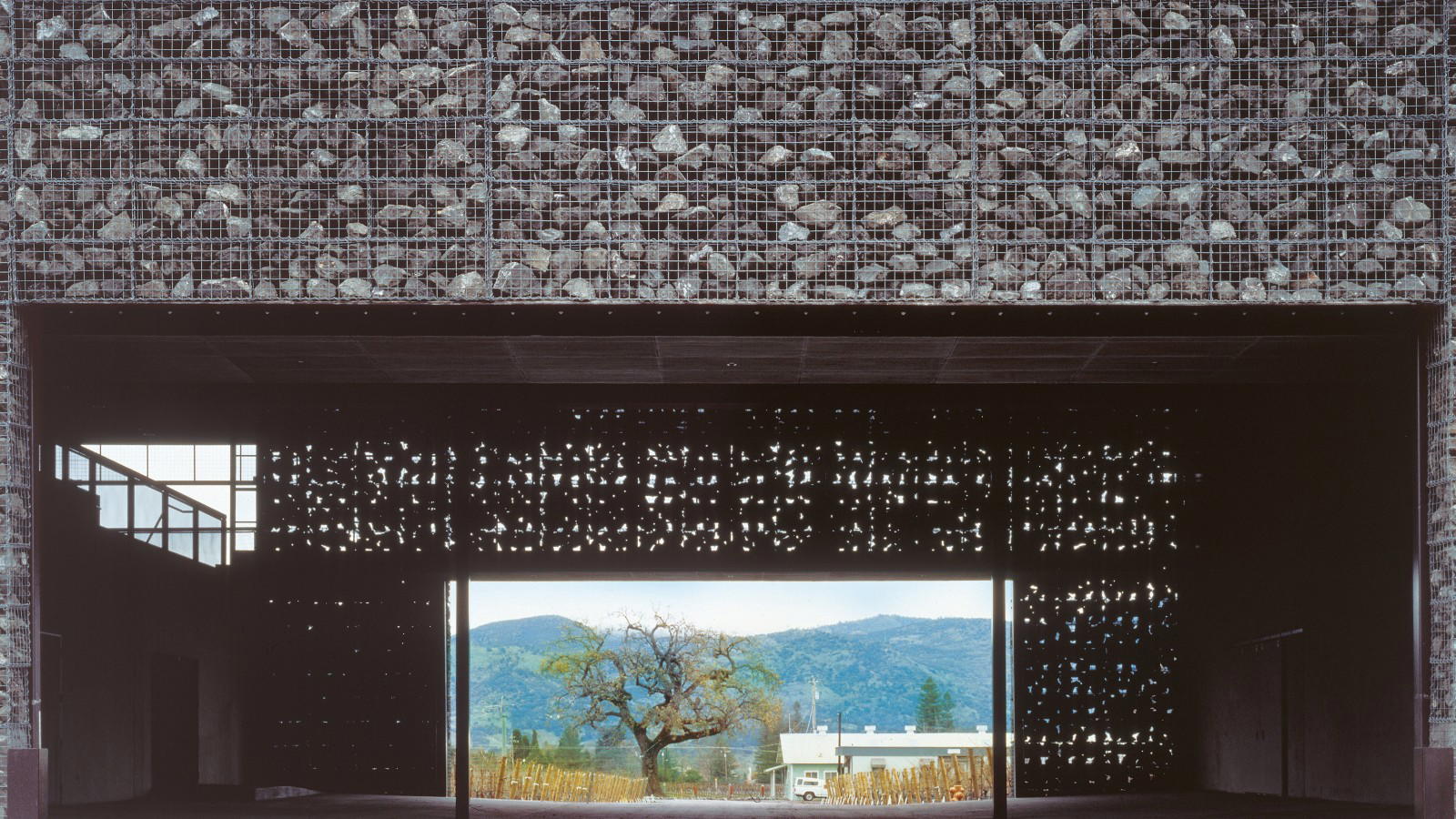
Dominus Estate visits are not open to the public, but collectors can still access the wine through allocations, merchants, Napanook, and auction channels.
Dominus Estate visits are not open to the public, but collectors can still access the wine through allocations, merchants, Napanook, and auction channels.
No, you cannot walk into Dominus Estate. The Yountville property does not operate a tasting room, does not list on Resy or OpenTable. The estate is run with the same deliberate closure that has defined the Moueix family's Pomerol holdings for generations, Pétrus, Trotanoy, La Fleur-Pétrus. For most collectors, the wine is the access point, not the cellar door.
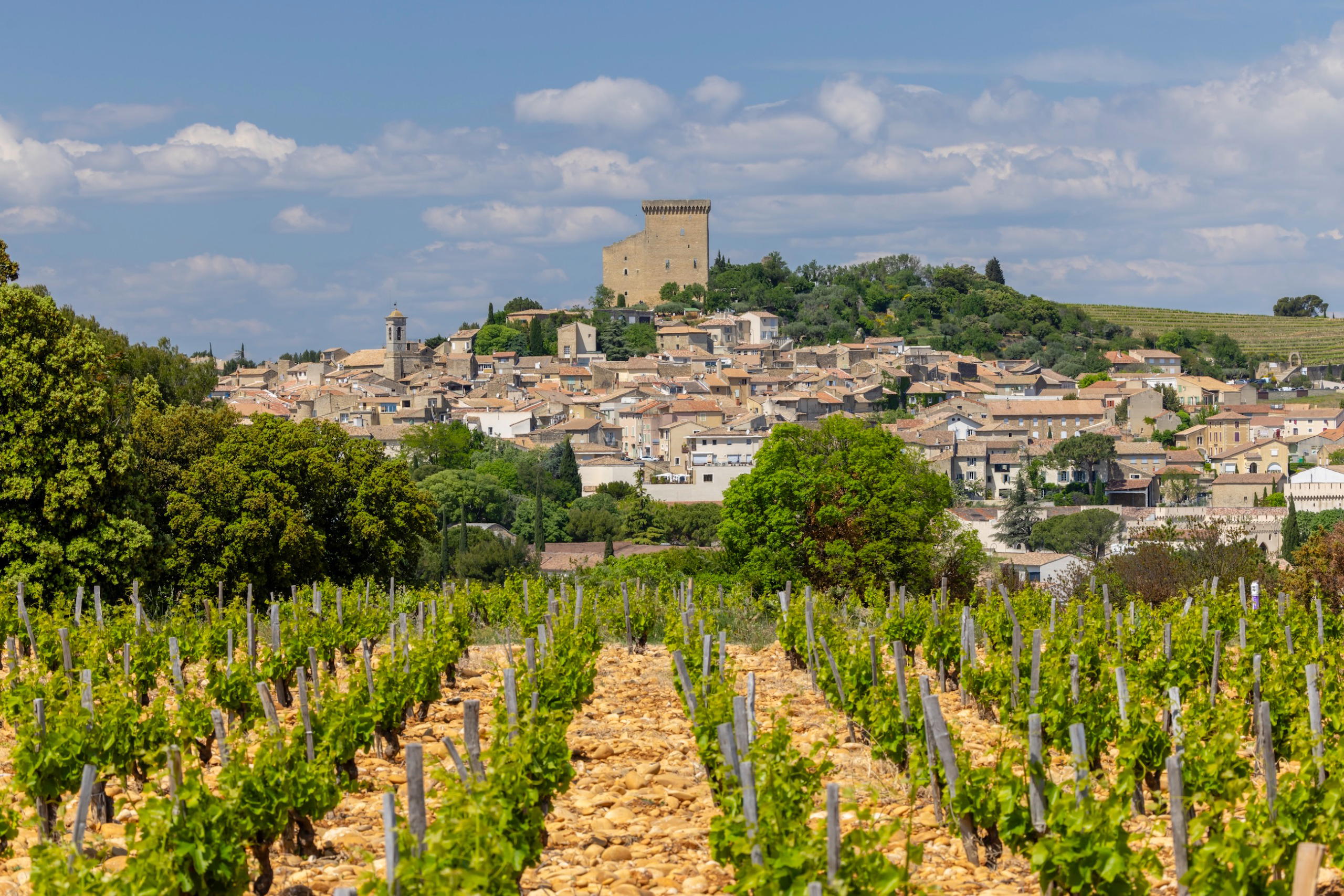
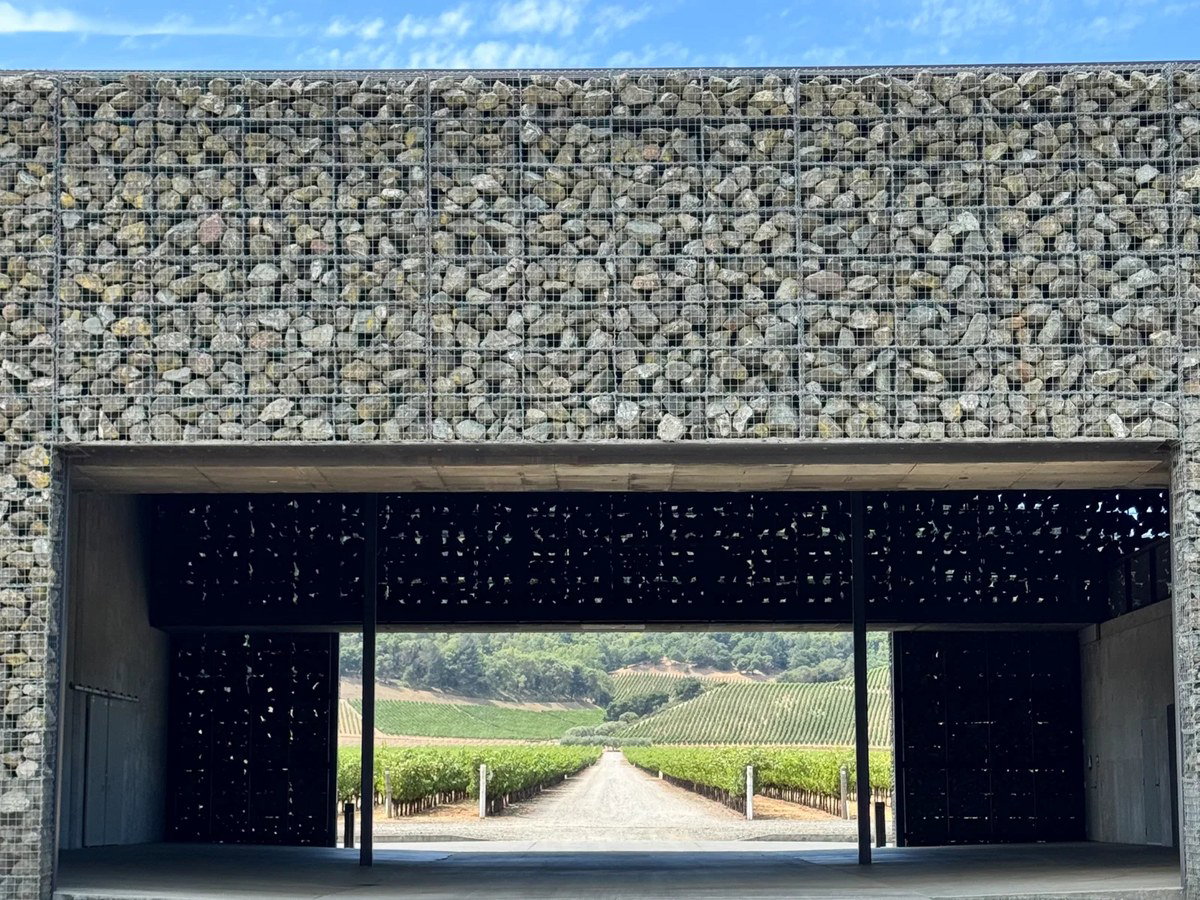
The logic traces back to Pomerol. At Pétrus, at Trotanoy, at La Fleur-Pétrus, the Moueix family has never courted walk-in visitors. Dominus Estate is closed to the public due to strict enforcement of Napa county regulations,1 and that closure fits the estate's operating philosophy: the Napanook Vineyard exists to grow Cabernet Sauvignon, Cabernet Franc, and Petit Verdot, not to host tastings. The Herzog & de Meuron-designed winery includes a degustation room where guests are received to taste wine,2 but that room is reserved for trade, not the public. The gabion walls filled with local basalt rock make the structure among the more photographed in Napa Valley, yet it functions as a working winery, not a visitor center.
Demand compounds the closure. Allocation is absorbed almost entirely through a network of fine wine merchants and the estate's own mailing list before a single bottle reaches retail shelves. There is no surplus capacity to justify a tasting room, and the estate has shown no interest in creating one.
The takeaway is simple: do not build a Napa itinerary around the gate. Build your access through bottles, merchants, and patience.
Trade visits, for sommeliers, importers, and established merchant accounts, are arranged privately through the estate's U.S. importer, Maisons Marques & Domaines (MMD). These are not consumer-facing appointments.
If you are not in the trade, the window for a cellar visit is effectively closed. Confirm directly with the estate before planning any trip around a visit; the estate can be reached at info@dominusestate.com.3
The allocation list is the primary channel. Dominus maintains a mailing list that interested parties can join,3 through which bottles are offered to established customers. Confirm directly with the estate.
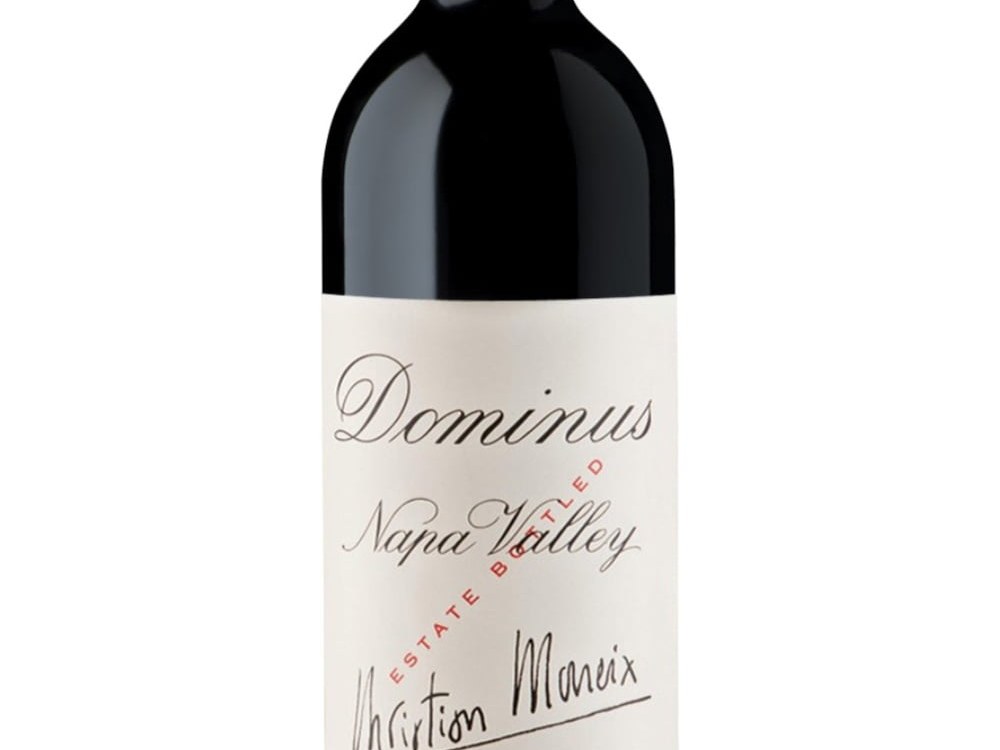
For collectors who cannot wait for a mailing-list position, the merchant channel is the practical route. Dominus is distributed nationally through Maisons Marques & Domaines (MMD), and fine wine retailers, K&L Wine Merchants in San Francisco, Wally's in Los Angeles, Crush Wine & Spirits in New York, carry allocations of both the grand vin and Napanook. Availability at retail is limited and moves quickly after release, but it is one accessible route for a collector without an existing estate relationship.
The secondary market, Acker, Hart Davis Hart, Zachys, and the Liv-ex exchange, carries back vintages reliably. Specific vintages have traded actively at auction; confirm current market pricing directly with auction houses before bidding.
There is no verified en primeur program for Dominus in the Bordeaux sense. The wine is released after bottling, not as a futures offer.
Build merchant history first. Fine wine retailers who hold Dominus allocations from Maisons Marques & Domaines (MMD) typically prioritize customers with a purchase record across multiple vintages. Buying Napanook, the second wine, which draws from the same vineyard and the same Cabernet-dominant blend at a lower price point, establishes that history without requiring the grand vin budget. Merchants who see consistent Napanook purchases are more likely to offer grand vin allocation when supply allows.
The off-vintage entry point matters. In years where Napa's reputation was complicated by weather, Dominus has traded at lower prices at auction than in celebrated vintages, yet the estate's characteristic structure, firm tannins, dark fruit, and the graphite note that Napanook's gravelly clay-loam benchland soils consistently produce, has remained. Buying an off-vintage at auction builds familiarity with the wine's arc and signals seriousness to merchants. Confirm current auction pricing directly with Acker, Hart Davis Hart, or Zachys before bidding.
The practical route is to contact the estate directly to inquire about joining the mailing list,3 do not assume a purchase through a third-party retailer automatically enrolls you.
Mistakes that cost collectors access:
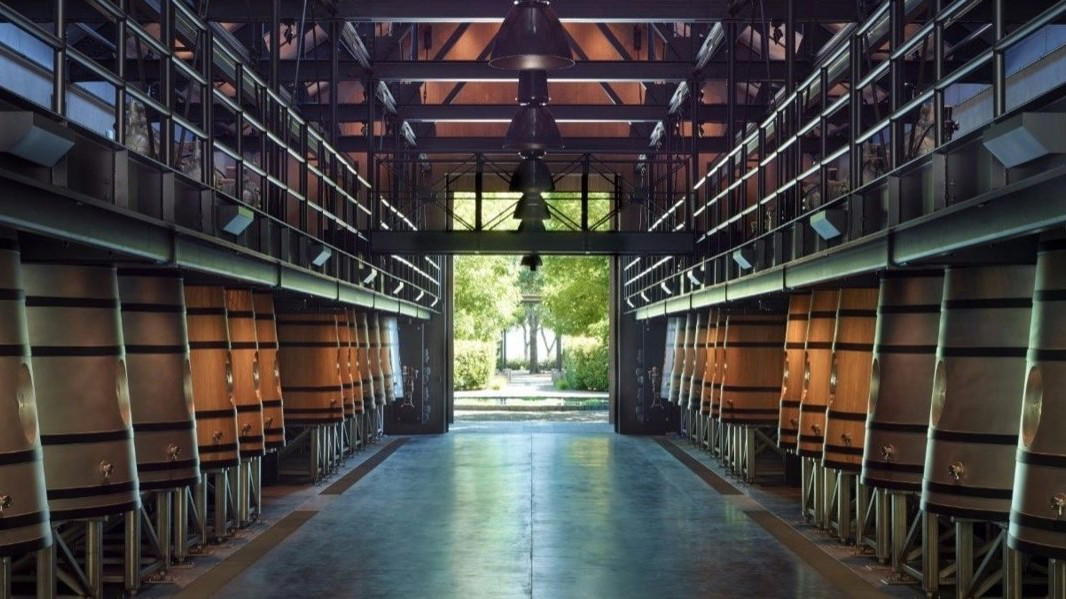
Based on publicly documented accounts from trade visitors, a visit to Dominus centers on the winery building itself. Trade guests taste in the building's degustation room,2 and the gabion walls, which filter light and regulate temperature passively, make the barrel hall feel more like a cave than a conventional winery. Herzog & de Meuron designed the stone-filled wire cages to absorb heat during the day and release it at night, eliminating the need for conventional insulation.
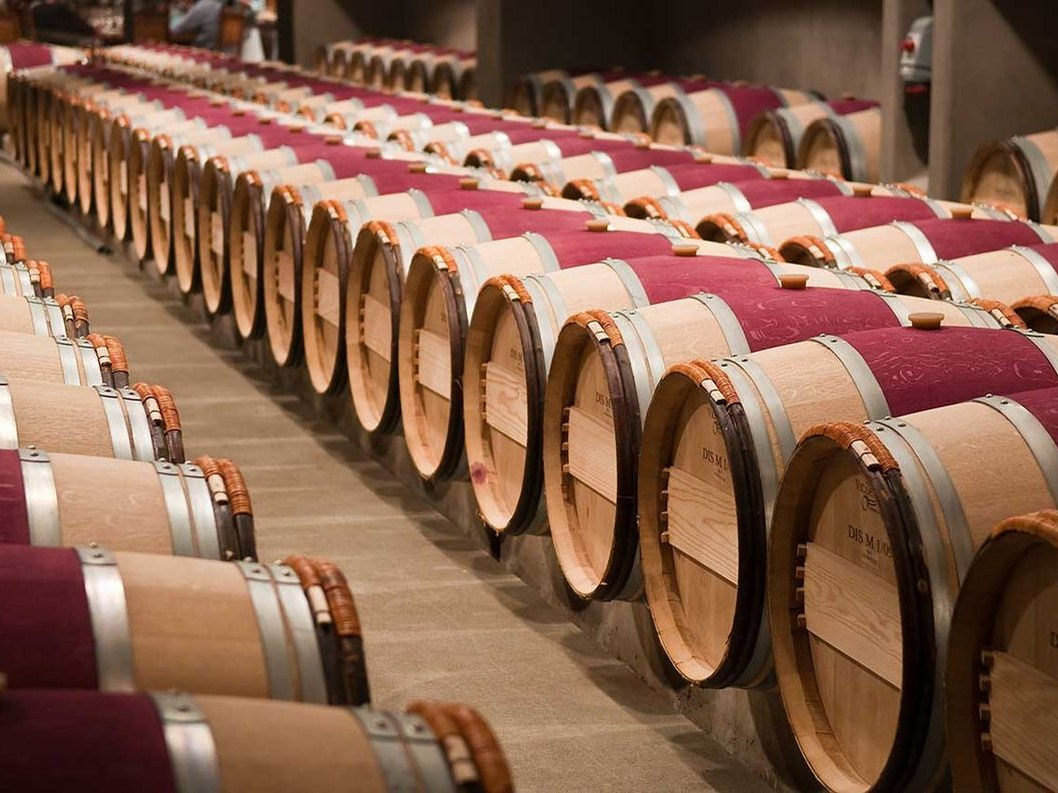
The Napanook Vineyard stretches across the western benchland of Yountville, with the Mayacamas range as the backdrop. Trade visitors who have documented their visits describe barrel tastings of the current vintage alongside older library wines, with the winemaking team walking through the blend decisions for that year's grand vin and Napanook.
The experience is working-winery rather than hospitality-forward. There is no curated flight, no retail shelf. The focus is the wine in barrel and the vineyard outside. For a trade visitor, that directness is the point. For a consumer hoping for a Napa tasting-room afternoon, it is the wrong venue entirely.
Verify trade-visit details with Maisons Marques & Domaines (MMD) or the estate directly.
| Estate | Visitor Access | Booking Channel | Approximate Cost | Lead Time |
|---|---|---|---|---|
| Dominus Estate | Trade only; no consumer visits | Via Maisons Marques & Domaines (MMD) (trade) or estate directly | N/A (no consumer program) | N/A |
| Opus One | Yes, by appointment | opusonewinery.com | Reported around $60 (Courtyard) to $125 (Opus One Experience); verify with venue | Advance booking advised; confirm with venue |
| Stag's Leap Wine Cellars | Yes, by appointment | Direct via estate website | Varies by experience tier; confirm with venue | Several days to weeks; confirm with venue |
| Darioush | Yes, by appointment | Direct via estate website | Varies; confirm with venue | Advance booking advised |
Opus One, Oakville. The joint venture between Robert Mondavi and Baron Philippe de Rothschild operates a formal visitor program with guided tastings and cellar tours. The Cabernet-dominant blend shares Dominus's benchland ambition, and the architecture, a gravity-flow winery designed by Scott Johnson, is worth the visit on its own terms. Book through the Opus One website directly.
Stag's Leap Wine Cellars, Stags Leap District. The estate behind the 1973 Cabernet Sauvignon that outscored Bordeaux's first growths at the 1976 Paris Tasting offers appointments in the FAY Outlook & Visitor Center. The SLV and Fay vineyard blocks are visible from the tasting area, a rare chance to see the specific parcels behind the wine. Confirm tasting fees directly before booking.
Darioush, Silverado Trail. A more hospitality-forward experience than either of the above, with Persian-influenced architecture and a tasting program that covers the estate's Shiraz and Cabernet alongside library pours. For collectors who want the Napa benchland experience with a confirmed appointment, Darioush delivers it reliably.
Napanook itself, via the bottle. Particularly direct alternative to visiting Dominus is opening a bottle of Napanook, the second wine from the same Napanook Vineyard, the same winemaking team, and the same Cabernet Franc and Petit Verdot co-plantings. At a lower price point than the grand vin, it is the clearest window into what the estate is doing on that benchland soil.
The allocation list rewards patience and merchant loyalty. If you are a collector building a Napa Cabernet cellar over a decade, establishing a Dominus position, through Napanook purchases, consistent merchant relationships, and a direct inquiry to the estate, is worth the effort. The grand vin is structured for long aging; consult current critical assessments for specific vintage guidance.
If you are planning a Napa trip and hoping to add Dominus to a tasting itinerary, redirect that energy. The estate will not accommodate consumer visitors,1 and the Yountville corridor has enough appointment-based wineries, Opus One, Stag's Leap, Darioush, to fill a serious day without the frustration of a closed gate.
The wine is for collectors who think in decades. The visit is for the trade.
Dominus is one of the few Napa estates where the closure is not a marketing posture; it is an operating philosophy inherited from generations of Pomerol winemaking. The estate stays closed to the public,1 and nothing suggests that is changing.
For collectors, the allocation list is the only route that reliably works. Build it through merchant history, start with Napanook, and contact the estate directly to inquire about mailing-list enrollment.3 A direct conversation is the only way to know where you stand. The secondary market fills the gap for back vintages; confirm current pricing with auction houses before bidding.
For travelers, Yountville offers a full day of serious Cabernet without Dominus: Opus One's gravity-flow cellar, the SLV block at Stag's Leap, a bottle of Napanook opened over dinner at Bouchon. The grand vin belongs to the collector who builds toward it methodically, and that patience, more than any single vintage, is what defines a Dominus relationship.
No. Dominus does not operate a consumer tasting room or a public visit program. The estate is open to trade visitors arranged through its U.S. importer, Maisons Marques & Domaines (MMD), but there is no published route for consumer appointments. Contact the estate directly through its official website to confirm whether any exceptions exist.
The practical route is to contact the estate directly and to build purchase history through authorized fine wine merchants who hold Maisons Marques & Domaines (MMD) allocations, retailers like K&L Wine Merchants or Wally's. Consistent purchases of Napanook, the estate's second wine, are one accessible way to establish that history.
The winery was designed by the Swiss architecture firm Herzog & de Meuron. Its gabion walls, wire cages filled with local basalt rock, regulate temperature passively and give the structure its distinctive appearance. The building is visible from the Yountville area and has been widely published in architecture and wine media, but it functions as a working winery. Confirm historical details directly with the estate or Herzog & de Meuron. There is no public viewing area or exterior access point.
Napanook is the second wine of Dominus Estate, sourced from the same Napanook Vineyard in Yountville. It uses the same Cabernet Sauvignon-dominant blend with Cabernet Franc and Petit Verdot, made by the same team. It is more widely available at retail than the grand vin and is one practical entry point for collectors building a relationship with the estate's allocation network. Confirm current vineyard details directly with the estate.
Authorized fine wine retailers who hold Maisons Marques & Domaines (MMD) allocations, including K&L Wine Merchants in San Francisco, Wally's in Los Angeles, and Crush Wine & Spirits in New York, carry both Dominus and Napanook around the time of release, though availability moves quickly. The secondary market (Acker, Hart Davis Hart, Zachys, Liv-ex) carries back vintages reliably; confirm current pricing and availability directly with auction houses before bidding.
Get the App
Take the shortlist into the En Primeur Club app for concierge access, saved places, and the next step after discovery.
Get Exclusive AccessMore from the editors