← Guides
Klaus Wittauer's curated embassy tasting pours nine Austrian wines across five regions — from Kamptal Erste Lage to near-extinct Rotgipfler.
Klaus Wittauer's curated embassy tasting pours nine Austrian wines across five regions — from Kamptal Erste Lage to near-extinct Rotgipfler.
Rotgipfler, a white grape native to the Thermenregion south of Vienna and found almost nowhere else in the world, was poured at a recent embassy tasting curated by Klaus Wittauer alongside eight other Austrian wines spanning five distinct regions. That single fact reframes the evening: this was not a promotional overview of Grüner Veltliner. It was a structured argument, nine bottles deep, that Austria's fine wine story is far more complex, and far more compelling, than its flagship variety alone can carry. The Fine Wines from Austria embassy tasting curated by Klaus Wittauer covered Kamptal, Wagram, Kremstal, Thermenregion, and Burgenland, a flight that moves from loess-driven whites to limestone-rooted reds, from field blends older than any living winemaker to a one-liter Zweigelt bottled for the table.
Austria has spent the better part of three decades rebuilding its international reputation after the 1985 diethylene glycol scandal, and the rebuild has largely succeeded on the back of Grüner Veltliner and, to a lesser extent, Riesling from the Wachau.
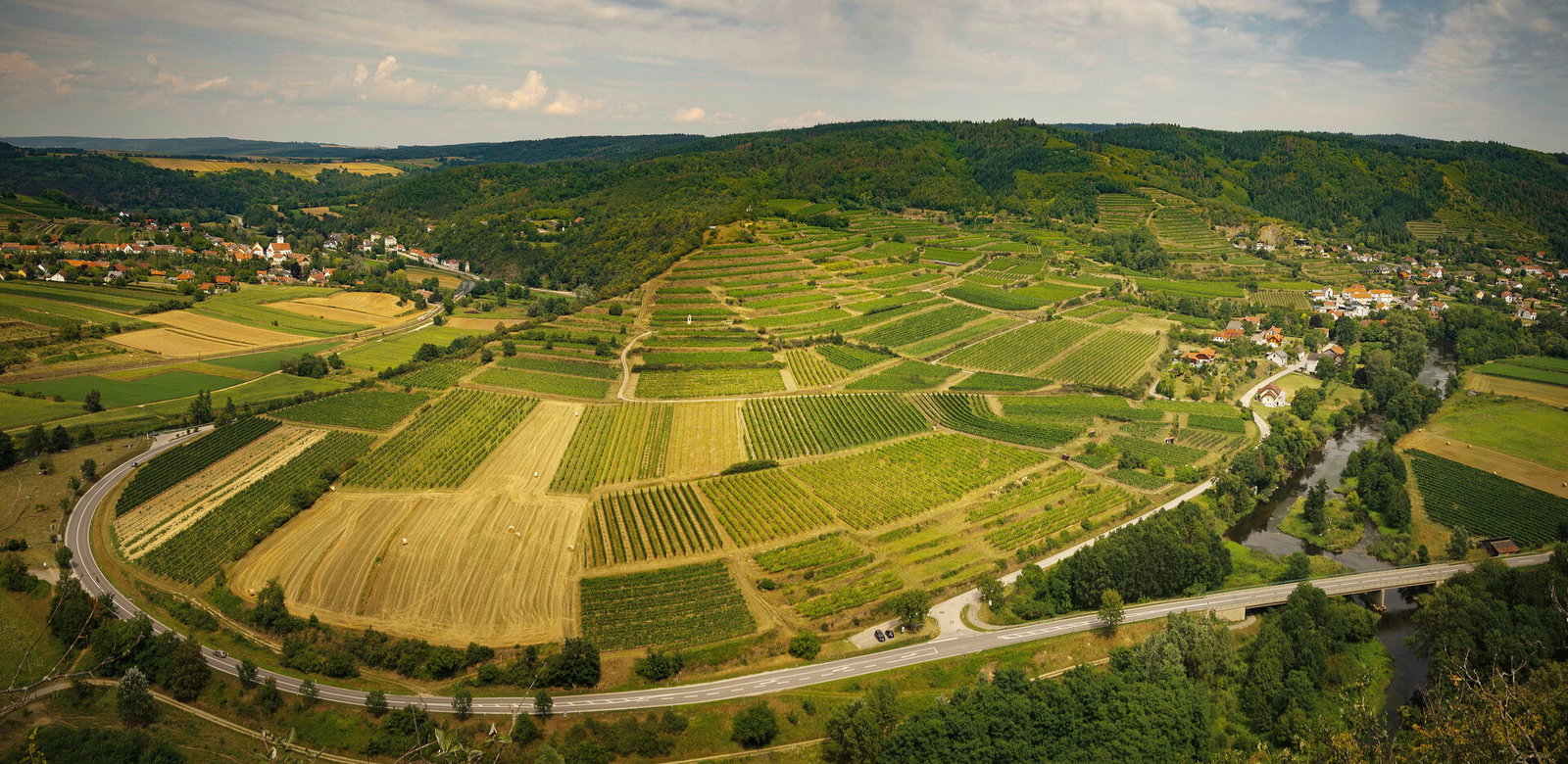
The DAC (Districtus Austriae Controllatus) appellation system, which ties specific varieties to specific regions, has given the trade a framework: Kamptal DAC means Grüner Veltliner and Riesling. Kremstal DAC means the same. Thermenregion DAC now formally recognizes both its indigenous whites and its emerging Pinot Noir.
The system works, but it has also, unintentionally, flattened the narrative for export markets that default to the shorthand of a single grape.
What the Fine Wines from Austria embassy tasting does differently is refuse that shorthand. By placing a Thermenregion Rotgipfler beside a Kamptal Erste Lage Grüner Veltliner beside a Burgenland red blend, Klaus Wittauer's selection forces a side-by-side comparison that no single-region tasting can achieve. For U.S. trade buyers and collectors, that kind of structured breadth is rare, and the embassy format, which positions the event within a diplomatic and cultural context, signals a coordinated effort to present Austrian wine at a fine wine level rather than a category-price level.
Austria's DAC system is worth a moment's context for anyone approaching it from a French or German reference point.
Unlike the German Grosse Gewächs classification, which operates within the VDP's private framework, or the French AOC, which is administered nationally, Austria's DAC designations are region-by-region and variety-specific, each appellation council decides which grapes qualify.
Kamptal DAC Reserve requires a minimum of 13% alcohol and one year's aging before release. Erste Lage, the Austrian equivalent of Premier Cru, is a ÖTW (Österreichische Traditionsweingüter) classification applied to specific registered vineyard sites.
When you see both terms on a Steininger label, as you do on the Ried Kittmannsberg Grüner Veltliner 10WT Erste Lage 2023, you are reading a wine that has passed two separate quality thresholds.
| Wine | Producer | Region / Appellation | Grape(s) | Vintage |
|---|---|---|---|---|
| Ried Loisium Grüner Veltliner Kamptal DAC Reserve | Steininger | Kamptal | Grüner Veltliner | 2024 |
| Ried Kittmannsberg Grüner Veltliner 10WT Erste Lage | Steininger | Kamptal | Grüner Veltliner | 2023 |
| Gemischter Satz | Paul Direder | Wagram | Grüner Veltliner, Riesling, Weissburgunder (field blend) | 2025 |
| Rotgipfler | Unspecified Thermenregion producer | Thermenregion | Rotgipfler | Unspecified |
| Red Blend | Unspecified Burgenland producer | Burgenland | Zweigelt-based blend | Unspecified |
The internal logic of the flight rewards attention. Wittauer pairs two Steininger Grüner Veltliners, the single-vineyard Loisium 2024 Kamptal DAC Reserve and the Erste Lage Kittmannsberg 2023, to demonstrate site variation within a single estate. The Loisium vineyard sits adjacent to the LOISIUM wine center in Langenlois, on a mix of primary rock and loess; the Kittmannsberg sits higher, with cooler airflow and loess over ancient bedrock. Same grape, same producer, meaningfully different wines. That kind of within-appellation granularity is the argument for Kamptal as a serious fine wine region, not a category, but a place.
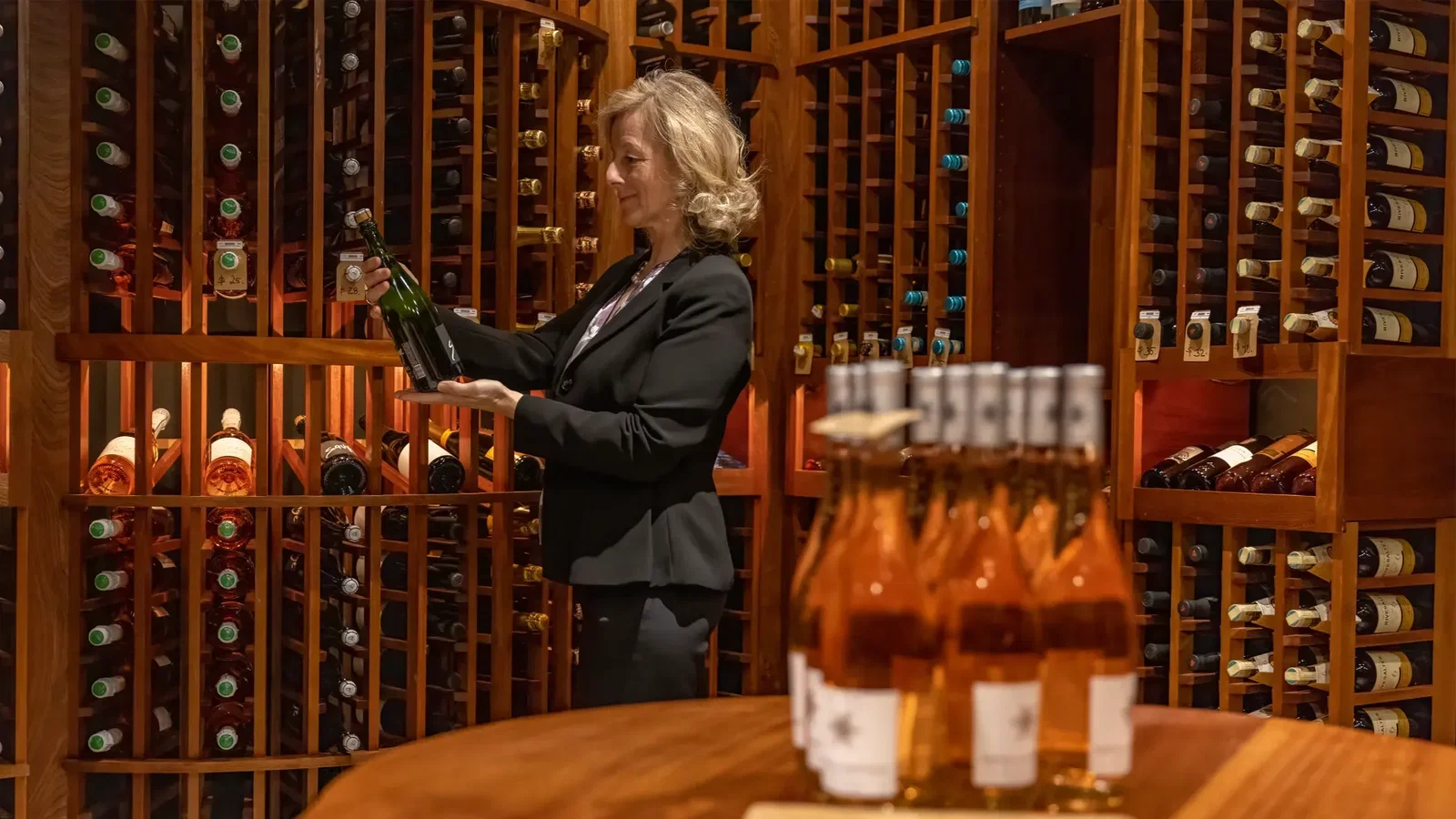
The Wagram entry, Paul Direder's Gemischter Satz 2025, adds historical depth.
Gemischter Satz is one of Austria's oldest wine styles: a true field blend in which multiple varieties, in Direder's case, Grüner Veltliner, Riesling, Weissburgunder, Müller-Thurgau, Fruhroter Veltliner, and others depending on the vineyard, are harvested and fermented together rather than separately.
The style predates modern varietal winemaking by centuries. Wagram's deep loess soils give Direder's version its characteristic texture: round and lightly creamy, lifted by the acidity of the Riesling component.
It is the kind of wine that makes a collector pause, not because it is rare in the way Rotgipfler is rare, but because it carries a living record of how Austrian viticulture worked before variety selection became the organizing principle of the industry.
If the Fine Wines from Austria embassy tasting has a structural backbone, it runs through Kamptal. Weingut Steininger, a family-run estate in Langenlois, contributes three of the nine wines, a rosé, a DAC Reserve, and an Erste Lage, and the cumulative effect is a portrait of what Kamptal does better than almost anywhere: translate cool-climate precision into white wines with genuine aging architecture.
The Steininger Ried Loisium Grüner Veltliner 2024 Kamptal DAC Reserve is the entry point into that portrait. The Loisium vineyard's combination of primary rock and loess produces the grape's classic profile, white pepper, citrus, green apple, a clean mineral line, with enough structure to develop over several years in bottle. For collectors new to Austrian white wine, this is the reference: a single-vineyard Grüner at DAC Reserve level from a producer with a clear track record in the appellation.
The Steininger Ried Kittmannsberg Grüner Veltliner 10WT Erste Lage 2023 asks more of the drinker and rewards it.
The higher elevation of the Kittmannsberg site, with its cooler airflow and loess-over-bedrock soils, produces a Grüner with more concentration and a deeper mid-palate, stone fruit and subtle smokiness alongside the peppery finish that defines the variety.
Erste Lage classification means the vineyard is formally registered and assessed; the 10WT designation is Steininger's own internal quality marker. This is a wine to cellar rather than open immediately.
For anyone tracking Austrian fine wine at auction, Erste Lage Grüner Veltliner from established Kamptal producers remains undervalued relative to comparable single-vineyard whites from Alsace or the Rhône.
The Ruttenstock Riesling Alte Reben 2023 from Kremstal extends the white wine argument eastward. Weingut Ruttenstock is a family estate whose Alte Reben, old vines, draws from two named sites: Himmelreich and Steinleiten. Kremstal Riesling grows on steep terraces of primary rock and gravel, and the resulting wines are taut and mineral-driven in a way that distinguishes them from the broader, more ornate Rieslings of the Wachau immediately to the west. The 2023 shows citrus, peach, and crystalline acidity, a wine with both immediate appeal and the structural integrity to age.

Heinrich Hartl's contribution to the tasting is the one that most demands a collector's attention. Hartl is among the handful of producers in the Thermenregion who still vinify Rotgipfler as a single-variety wine, a grape native to the region and found almost nowhere else in the world. The Heinrich Hartl Rotgipfler Gumpoldskirchen Thermenregion 2023 comes from limestone-rich soils warmed by Pannonian breezes, conditions that give Rotgipfler its characteristic profile: ripe tropical fruit, floral aromatics, and a creamy texture undercut by lively acidity.
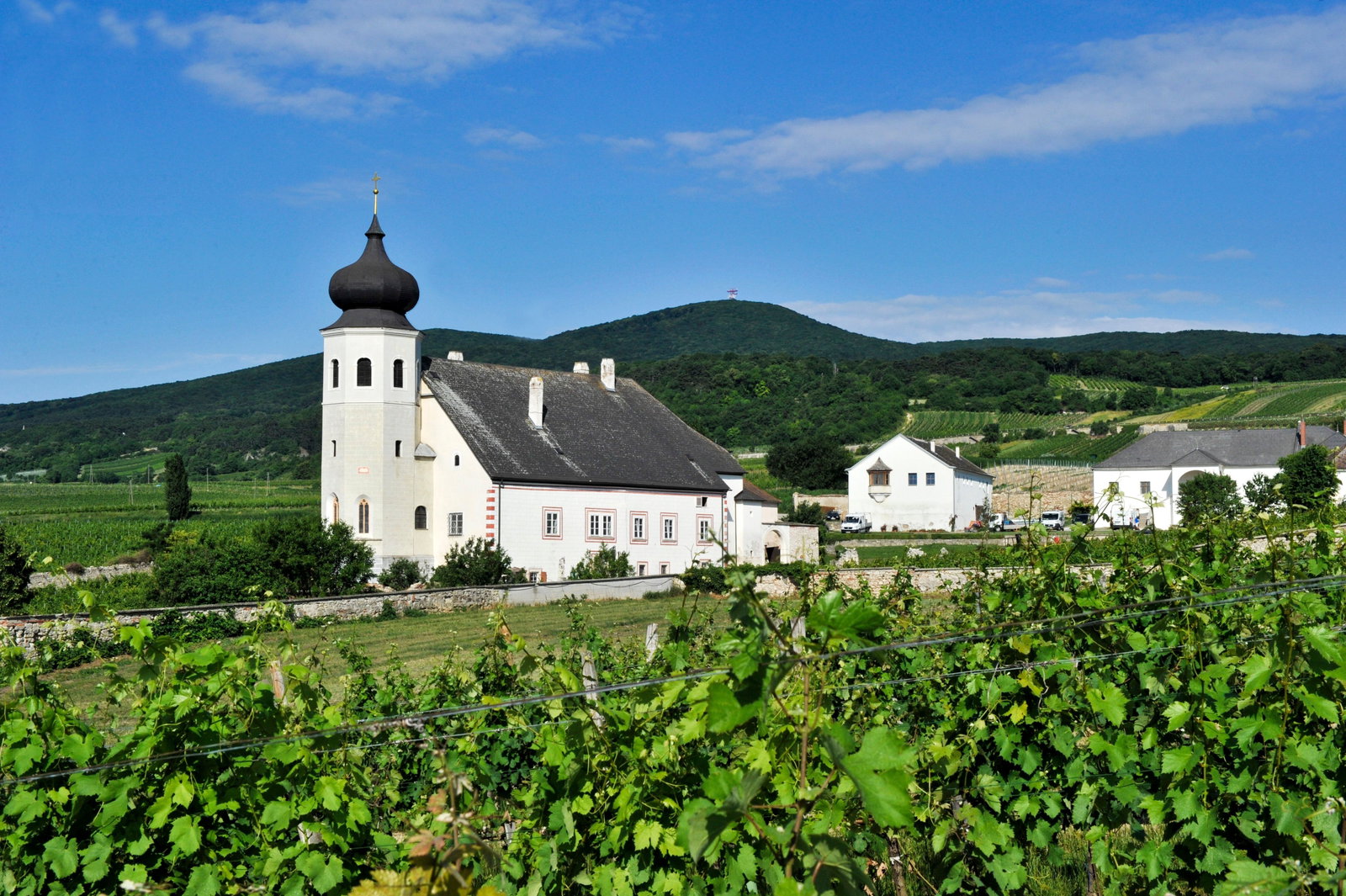
The scarcity here is not manufactured. Rotgipfler's plantings across Austria are concentrated almost entirely in the Thermenregion's Gumpoldskirchen zone. The variety's survival owes more to the commitment of producers like Hartl than to any market incentive, Rotgipfler commands no premium at the supermarket level, and its name recognition outside Austria is minimal. What Wittauer's inclusion of this wine in the embassy flight signals is that the variety deserves to be evaluated at a fine wine level, on its own terms, rather than as a regional curiosity.
Hartl also contributes the Heinrich Hartl Ried Kräutergarten Pinot Noir Thermenregion DAC 2021, a wine that makes a different kind of argument. The Kräutergarten vineyard's limestone soils and favorable exposure produce a Pinot Noir with red cherry, forest floor, and subtle herbal notes. The Thermenregion DAC classification for Pinot Noir reflects the region's growing confidence in cool-climate reds. For collectors whose Pinot Noir reference points are Burgundy or the Willamette Valley, a limestone-rooted Thermenregion example at this quality level is worth adding to your watchlist.
The southern end of the tasting shifts to red wine country. The Steindorfer Apetlon Rouge 2022 comes from Apetlon, a village in Burgenland near Lake Neusiedl, a shallow body of water whose moderating influence extends the growing season and softens diurnal swings across the surrounding vineyards. Weingut Steindorfer blends 40% Blaufränkisch, 30% St.
Laurent, and 30% Zweigelt into a wine that shows dark berries, gentle spice, and soft tannins. The Blaufränkisch component provides structure; the St. Laurent adds aromatic lift; the Zweigelt, Austria's most widely planted red grape, a crossing of Blaufränkisch and St.
Laurent, contributes the juicy, approachable fruit that makes the blend accessible without sacrificing complexity.
Paul Direder's Zweigelt 2024, bottled in a one-liter format, occupies a different register entirely. This is not a cellar candidate, it is a table wine in the European sense, designed for immediate pleasure. Wagram's loess soils give it a round, supple texture; the grape's natural cherry fruit and soft tannins do the rest.
The one-liter format is itself a statement: Direder is not positioning this as a collector's wine, but as the kind of bottle you open on a Tuesday without ceremony.
That honesty is part of what makes the overall tasting selection coherent, Wittauer has included wines at every register, from Erste Lage Grüner to everyday Zweigelt, and the range makes the case that Austrian wine functions as a complete fine wine culture rather than a niche category.
For collectors and enthusiasts approaching Austrian wine through the lens of the Fine Wines from Austria embassy tasting, the five producers Wittauer selected offer a practical starting point.
Weingut Steininger's Kamptal DAC Reserve and Erste Lage Grüner Veltliners are especially accessible entry into the appellation's fine wine tier, both are available through specialist Austrian importers in the U.S. market, and neither carries the price premium that comparable single-vineyard whites from Burgundy or Alsace command.
The Ruttenstock Riesling Alte Reben 2023 from Kremstal is the sleeper in the flight: old-vine Riesling from two named sites, with the structural integrity to develop over a decade, at a price point that reflects Austria's continued undervaluation at auction.
Heinrich Hartl's Rotgipfler is the allocation to pursue. With plantings confined to the Thermenregion and only a handful of producers still working the variety as a single-varietal wine, supply is genuinely constrained. The 2023 vintage is the current release; future vintages will depend on Hartl's continued commitment to a grape that the broader market has largely ignored. If Rotgipfler follows the trajectory of other rediscovered indigenous varieties, Timorasso in Piedmont, Savagnin in the Jura, the window for buying at current prices is finite.
For those planning travel around the wines, the five regions covered by Wittauer's selection are within a two-hour drive of Vienna.
Langenlois, home to Weingut Steininger and the LOISIUM wine center, is especially visitor-ready destination in Kamptal, the LOISIUM sits adjacent to the Loisium vineyard itself, making it possible to taste the Steininger Ried Loisium Grüner Veltliner 2024 within sight of the vines that produced it.
The Thermenregion's Gumpoldskirchen, where Hartl farms Rotgipfler and Zierfandler, is a short drive south of Vienna, close enough for a half-day excursion, compelling enough to warrant an overnight.
Burgenland's Apetlon sits on the eastern shore of Lake Neusiedl, where the flat terrain and the lake's reflective light make for a wine region unlike anything else in Central Europe.
The broader takeaway from Wittauer's curation is that Austrian fine wine has moved well past the single-variety narrative that carried it through the 1990s and 2000s.
The DAC system has given the regions the appellative structure they needed; producers like Steininger, Hartl, Ruttenstock, Direder, and Steindorfer have filled that structure with wines that can stand beside Europe's best at a fraction of the price.
The embassy format, and the deliberate five-region, nine-wine architecture of the flight, suggests that the people closest to Austrian wine are ready to make that case directly to the trade, and the collectors who pay attention now will be ahead of the curve when the rest of the market catches up.
Klaus Wittauer curated a nine-bottle flight spanning five regions: Kamptal, Wagram, Kremstal, Thermenregion, and Burgenland. The selection included two Steininger Grüner Veltliners, a Wagram Gemischter Satz, a Thermenregion Rotgipfler, and a Burgenland red blend, among others.
Rotgipfler is a white grape native to the Thermenregion south of Vienna and found almost nowhere else in the world. Its inclusion at the tasting signaled that the evening was a structured argument for Austria's full wine complexity, not simply a showcase for Grüner Veltliner.
Kamptal DAC Reserve is a regional appellation designation requiring a minimum of 13% alcohol and one year's aging before release. Erste Lage is a separate ÖTW (Österreichische Traditionsweingüter) classification applied to specific registered vineyard sites, equivalent to Premier Cru, a wine bearing both terms has passed two independent quality thresholds.
Rather than focusing on a single region or flagship variety, Wittauer placed wines from five distinct regions side by side, forcing direct comparison across styles and terroirs. The embassy format also positions the event within a diplomatic and cultural context, presenting Austrian wine at a fine wine level rather than a category-price level.
Gemischter Satz is one of Austria's oldest wine styles, a true field blend in which multiple varieties are co-planted and co-harvested. Paul Direder represented the style with his 2025 Wagram bottling, which includes Grüner Veltliner, Riesling, and Weissburgunder among its varieties.
Get the App
Take the shortlist into the En Primeur Club app for concierge access, saved places, and the next step after discovery.
Get Exclusive AccessMore from the editors