← Guides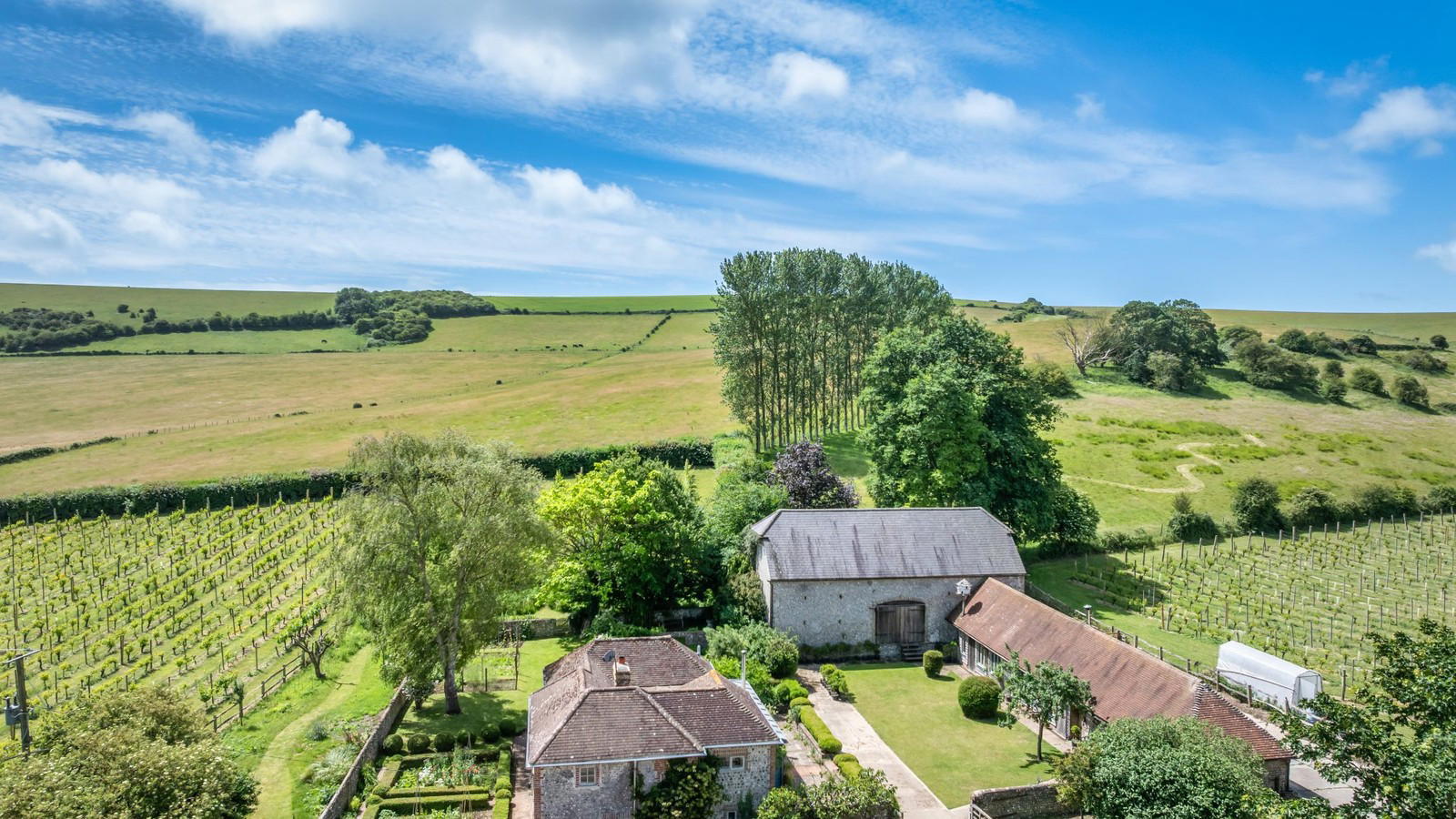
Breaky Bottom Vineyard near Lewes is on the market for £4 million, marking its first sale since Peter Hall planted it in 1974.
Breaky Bottom Vineyard near Lewes is on the market for £4 million, marking its first sale since Peter Hall planted it in 1974.
Six acres under vine, around 10,000 bottles a year, and a £4 million guide price: the Breaky Bottom sale brings Peter Hall’s South Downs vineyard near Lewes to market for the first time since he founded it in 1974. Knight Frank’s viticulture team is handling the listing after Hall’s death in October 2025, and the buyer will inherit one of English sparkling wine’s early reference points, a Sussex estate planted when Britain had just seven vineyards.
Breaky Bottom Vineyard sits in a South Downs valley near Lewes, in East Sussex, with a four-bedroom brick and flint farmhouse, a traditional Sussex barn used as the winery, agricultural buildings and a working vineyard business. The Drinks Business reports that the estate produces around 10,000 bottles annually, a scale that has kept the wines close to the hands that made them. Scarcity here is not a line in a brochure. It is arithmetic.
The sale follows the death of Peter Hall, whose name sits near the beginning of the modern English wine story. The executors of his estate are managing the process alongside the lasting powers of attorney for his widow, Christine Hall, according to The Drinks Business. The next owner inherits more than a rural holding: bottles from Breaky Bottom have been poured at King Charles III’s coronation, Queen Elizabeth II’s Platinum Jubilee celebrations and the London 2012 Olympic Games.
In 1974, English wine was still a small pursuit rather than a confident category. The Drinks Business notes that Britain had just seven vineyards when Hall founded Breaky Bottom. That number gives the Breaky Bottom sale its charge: one of the early plantings is changing hands at a moment when the wider sector has grown to more than 1,300 vineyards.
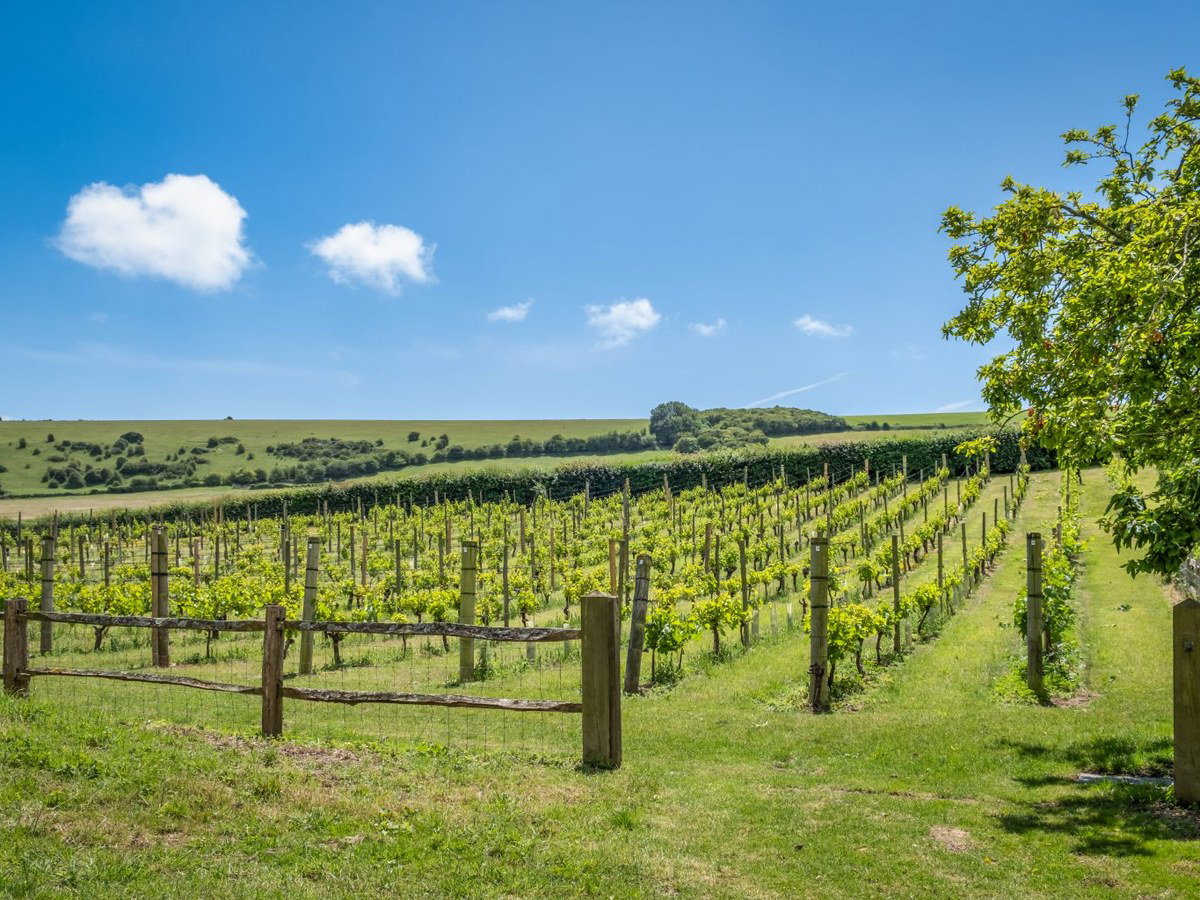
Hall planted the original six-acre vineyard himself and oversaw production for decades. That continuity matters because English sparkling wine is often discussed through expansion, outside investment and new plantings. Breaky Bottom followed another rhythm: a small vineyard, an identifiable valley, a founder who stayed with the work, and annual production of around 10,000 bottles.
The South Downs setting matters in practical terms, too. Breaky Bottom is near Lewes, a useful anchor for wine-minded travellers moving through East Sussex. The estate’s valley location gives the property a clear sense of place, and the sale places a working winery, vineyard and residence into the hands of a buyer who will have to decide how visibly to open that place to visitors, collectors and trade buyers.
Knight Frank’s viticulture team has brought Breaky Bottom Vineyard to market with a guide price of £4 million, according to The Drinks Business. The listing covers a fully functioning vineyard business, not a bare parcel of land waiting for a concept. For buyers used to assessing vineyard opportunities through plantings, production and visitor potential, Breaky Bottom arrives with the physical vocabulary already in place.
The property includes a four-bedroom brick and flint farmhouse. Brick and flint belong to the visual grammar of Sussex, and the farmhouse places the estate firmly in its county rather than making it feel like a transplanted wine project. A traditional Sussex barn currently used as the winery, plus additional storage and labelling facilities and agricultural buildings supporting vineyard operations, are also included.
The estate extends to around 15 acres, including approximately six acres under vine. That ratio tells you something before a single bottle is opened. Breaky Bottom is a complete, compact estate whose reputation has been built on a small vineyard footprint and an annual output around 10,000 bottles.
For collectors, that number is one useful detail in the listing. Ten thousand bottles across an annual production does not leave much room once private buyers, restaurant accounts, trade relationships and cellar-door demand take their share. The Breaky Bottom sale will therefore be followed closely by anyone who has treated the wines as a Sussex bottle to buy when seen rather than a brand to find in volume.
The guide price sharpens the insider-access angle. Vineyard sales rarely give drinkers such a clean look at how heritage, residence, agricultural buildings, winery use and an established sparkling wine name sit inside one valuation. The £4 million figure is not only a buyer’s number; it gives collectors a rare point of reference for a founding English estate whose bottles have reached state occasions while production remains around 10,000 bottles a year.
Knight Frank’s involvement adds another practical point. The firm’s viticulture team is handling the process, which signals a sale aimed at buyers who understand vineyard operations rather than only residential acreage. The Drinks Business reports that Knight Frank expects interest from around the world, a detail that raises the stakes for anyone hoping the next custodian keeps Breaky Bottom’s small-scale rhythm intact.
Peter Hall died in October 2025. The sale now under way is inseparable from that fact. Hall founded Breaky Bottom in 1974 and remained associated with the estate across five decades, long enough for English wine to move from a handful of producers to a sector counted in more than 1,300 vineyards, according to The Drinks Business.
That timeline gives Hall’s work its weight. A six-acre vineyard planted in the 1970s is not merely an early English wine address; it is a surviving example of what the category looked like before its present confidence. Hall’s decision to plant, stay, make sparkling wine and keep production at a modest scale created a continuity that larger, newer estates cannot buy outright.
Hall is one of the founding fathers of English wine and oversaw every aspect of production for decades. That producer identity matters to drinkers because it collapses the distance between vineyard, cellar and bottle. With Breaky Bottom, the story has not been one of anonymous scale. It has been one of a named person making wine from a named place, year after year.
There is also a British ceremonial thread running through the bottles. Breaky Bottom sparkling wines were poured at King Charles III’s coronation, Queen Elizabeth II’s Platinum Jubilee celebrations and the London 2012 Olympic Games, according to The Drinks Business. Those occasions do not tell you how a wine tastes, but they do tell you where it has been invited. For an estate producing around 10,000 bottles annually, such placements carry a different resonance than they would for a producer operating at many times that scale.
Hall’s legacy is visible in what the estate did not become. Breaky Bottom is defined by small production, meticulous winemaking and consistency rather than scale. Six acres under vine and 10,000 bottles a year already say enough about the working discipline of the place.
The Drinks Business reports that production at Breaky Bottom centres on two sparkling cuvées. One is made from Seyval Blanc, long considered the estate’s signature wine. The other is produced from Chardonnay, Pinot Noir and Pinot Meunier, varieties introduced in the early 2000s.
That detail places Breaky Bottom across two phases of English sparkling wine thinking. Seyval Blanc belongs to the earlier English vineyard story, when growers worked with varieties suited to cool conditions and uncertain ripening windows. Chardonnay, Pinot Noir and Pinot Meunier connect the estate to the later surge in English sparkling wine, where Champagne’s principal varieties became central to the category’s ambitions.
The sale therefore includes a producer identity built on both continuity and adaptation. The Seyval Blanc cuvée carries the estate’s longer memory. The Chardonnay, Pinot Noir and Pinot Meunier cuvée points to changes Hall made as English wine gained confidence in those varieties. Those details should remain out of the discussion. What is clear is the shape of production: two sparkling cuvées, a small annual output and a vineyard footprint of approximately six acres under vine.
For collectors, the immediate question is less about speculation and more about continuity. Will the new owner keep the same cuvée structure? Will the Seyval Blanc remain central to the estate’s identity? Will the Chardonnay, Pinot Noir and Pinot Meunier bottling continue as a second pillar? But the questions themselves explain why the sale reaches beyond real estate pages.
Breaky Bottom’s bottles have always had built-in scarcity because of production size. Around 10,000 bottles annually is a different proposition from a label designed for broad distribution. If the next owner maintains that scale, existing demand may remain tightly supplied. If production changes, collectors will watch how the estate communicates that change through cuvée names, grape sources and release patterns.
Breaky Bottom’s location near Lewes gives the estate a travel dimension that matters for the next owner. The South Downs already draws visitors for walking, villages and proximity to the coast; wine adds a more deliberate itinerary. A working vineyard with a farmhouse, Sussex barn winery and agricultural buildings offers a different experience from a tasting room appended to a larger operation.
Travellers should avoid assuming a visitor programme until a future owner says so. What the property details do show is the physical base for a more personal form of wine hospitality, should the next custodian choose it: a valley site, existing winery space, labelling and storage facilities, and a vineyard scaled for close attention.
For an oenophile traveller, that scale is part of the appeal. A six-acre vineyard invites a different kind of visit than a large estate map with multiple blocks and hospitality zones. You can understand a place like Breaky Bottom through a shorter walk, a conversation in a barn winery, and a bottle whose production run is limited by the size of the vines outside. It simply shows why access, if offered, would matter.
Lewes also gives practical context. The estate’s proximity to the East Sussex town places it within reach of a wine weekend rather than a single-purpose pilgrimage. For visitors who already plan around English sparkling wine, the Breaky Bottom sale adds a point of watchfulness: future ownership may shape whether the estate remains largely production-led or develops a more defined visitor presence.
The next stage of the Breaky Bottom sale belongs to Knight Frank, the executors of Peter Hall’s estate and the powers of attorney for Christine Hall. Until a buyer is named and a post-sale plan is shared, the only responsible reading is based on the disclosed facts: £4 million guide price, around 15 acres in total, approximately six acres under vine, a working winery in a traditional Sussex barn and production around 10,000 bottles annually.
For collectors, the practical move is to track release information rather than assume immediate change. Founder transitions can be quiet in the bottle for a time, especially when vineyards, facilities and existing stocks remain in place. They can also mark the beginning of new labelling decisions, distribution changes or visitor-facing projects. No such details have been announced yet. The absence of those details is precisely why this sale has the attention of English wine drinkers who prefer to know the provenance of what they cellar.
For prospective buyers, Breaky Bottom offers a rare combination: a South Downs address near Lewes, an operating vineyard business, buildings already tied to production, a history stretching to 1974 and wines served at national occasions including King Charles III’s coronation. Those facts do not need embroidery. They define the opportunity and the responsibility that comes with it.
The estate also arrives on the market at a point when English sparkling wine has moved from novelty to a category with its own internal hierarchy. New plantings may have scale and capital; older names have memory. Breaky Bottom has the second in abundance, and only about 10,000 bottles a year through which to express it.
What matters now is stewardship. The next owner will decide how much of Hall’s small-estate model remains visible in the wines, the buildings and the way visitors encounter the valley near Lewes. The first post-sale releases will be read closely, not for slogans, but for whether Breaky Bottom still tastes and feels like a vineyard shaped by six acres, a Sussex barn and five decades of one founder’s work.
Get the App
Take the shortlist into the En Primeur Club app for concierge access, saved places, and the next step after discovery.
Get Exclusive AccessMore from the editors