← Guides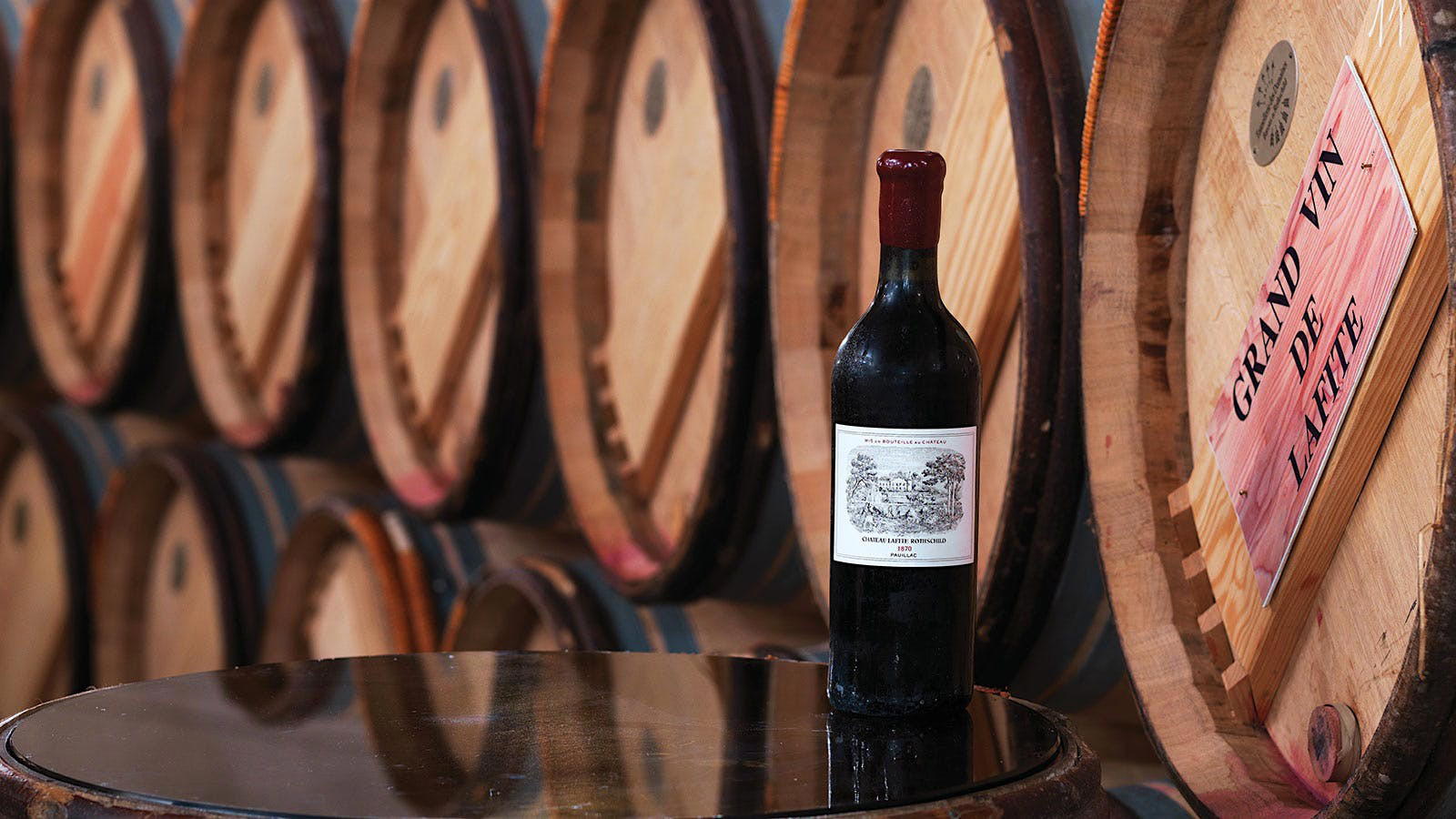
The 2019 vintage in Bordeaux rewarded careful farming with inky, structured wines and a consistency across appellations that collectors rarely see. Our appellation-by-appellation vintage report.
The 2019 vintage in Bordeaux rewarded careful farming with inky, structured wines and a consistency across appellations that collectors rarely see. Our appellation-by-appellation vintage report.
Pull the cork on a 2019 Pauillac and something shifts in the glass before you've even lifted it, a depth of color that sits closer to ink than ruby, a nose that opens slowly, as if the wine is deciding how much to reveal. The 2019 vintage in Bordeaux is that kind of year: one where the growing season wrote its own rules, where a warm, dry summer stress-tested the vines in ways that separated the carefully farmed parcels from the merely well-positioned ones, and where the châteaux that read the vintage correctly produced wines that will reward patience measured in decades, not years.
What makes 2019 worth your attention, and your cellar space, is the consistency across appellations that collectors rarely see. The Right Bank's Merlot-dominant estates found a structural precision that the variety doesn't always deliver in warm years. On the Left Bank, the Cabernet Sauvignon achieved a tannic architecture that feels resolved rather than austere, the kind of backbone that suggests a long, graceful arc in bottle. Winemakers who held their nerve on picking dates, waiting through the heat for phenolic maturity without sacrificing freshness, were rewarded with wines that carry both concentration and lift.
What follows is a producer-by-producer account of how the bordeaux 2019 vintage played out across the major appellations, with notes on which cuvées to prioritize, which estates overdelivered relative to their classification, and where the en primeur window still offers one compelling entry point.
With the broader Bordeaux landscape in view, it's worth narrowing the lens to the vintage that continues to generate one collector conversation: 2019. Decanter awarded the campaign a 4.5 out of 5 (Decanter1), and James Suckling tasted through more than 1,000 wines to compile his assessment (grandcruwijnen.nl2), with around 500 of those evaluated en primeur (grandcruwijnen.nl2). The scores landed. The harder question is what happened next.
The harvest itself delivered, conditions through the growing season were, by most accounts, excellent (Decanter3). But the release environment was another matter entirely. Most châteaux chose not to release full volumes at discounted prices, holding stock back for a later date, a calculated bet on future demand (the-buyer.net4). Whether that strategy has paid off depends on which side of the allocation you were on.
For collectors who secured their cases en primeur, the bordeaux 2019 vintage sits in an interesting position: old enough to have shed its primary fruit but young enough that strong Right Bank and Pauillac bottles are still building. For those who waited, the picture is more complicated. The châteaux that withheld volume are now sitting on stock released into a market that has grown more price-sensitive since 2020, the question of whether buyers will meet them at the original ask remains open. (the-buyer.net4)
The practical read: if you're choosing between 2019 and 2018 for a cellar purchase today, 2019 offers more structural tension at comparable price points across the Médoc, the vintage's warm, dry finish concentrated tannins without the sheer weight of 2018. Hold a leading Pauillacs and Saint-Émilions through at least 2030. The en primeur window is long closed, but merchant stock remains available, and the châteaux holding back their own inventory may yet create a secondary opportunity worth watching.
The bordeaux 2019 vintage is where the story gets specific, and where the decisions collectors face become real. Three years in bottle, the wines have moved past the theoretical and into the verifiable.
Start with the sheer scope of what was produced. The Wine Cellar Insider tasted and reviewed 750 wines5 from the vintage, a number that tells you something useful: 2019 wasn't a narrow story about a handful of trophy châteaux. The quality spread wide enough to reward collectors at multiple price points, from Pomerol to the Médoc's lesser-known crus. That breadth is exactly what makes a vintage worth building a cellar around rather than cherry-picking a single bottle.
At the summit of the appellation hierarchy, Château Cheval Blanc 2019 is the reference point most collectors return to. Current bottle pricing sits at $889.00,6 with some merchants moving it closer to $834.856 depending on allocation source. On the London market, Bordeaux Index lists the 2019 at £4,500 per twelve-bottle case,7 a figure that reflects both the wine's critical standing and the tightening of available stock as early buyers hold rather than flip.
The practical question for anyone watching this vintage is timing. Cheval Blanc's blend, always a high proportion of Cabernet Franc from the Saint-Émilion plateau, tends to reward patience over the first decade, with the structure softening and the mid-palate filling out somewhere between years eight and twelve. You're not late to this wine, but the window for acquiring it at current prices is narrowing as secondary-market supply contracts. The Bordeaux Index case price positions 2019 Cheval Blanc above many of its peer-vintage equivalents on the Liv-ex secondary market, where allocation-level pricing is now a memory for most buyers. (bordeauxindex.com7)
For collectors weighing 2019 against adjacent vintages, the breadth of the year, 750 wines reviewed5 at the bottle stage alone, suggests that the vintage rewards research over reflex. The next section looks at where, specifically, that research should focus.
If the bordeaux 2019 vintage has a single wine that crystallizes everything the appellation achieved that year, it's the Château Lafite Rothschild, a Pauillac that earned a well-suited score from Robert Parker and has been climbing steadily on the secondary market ever since. The prior sections mapped the vintage's broad contours; this is where those contours sharpen into a single, specific decision.
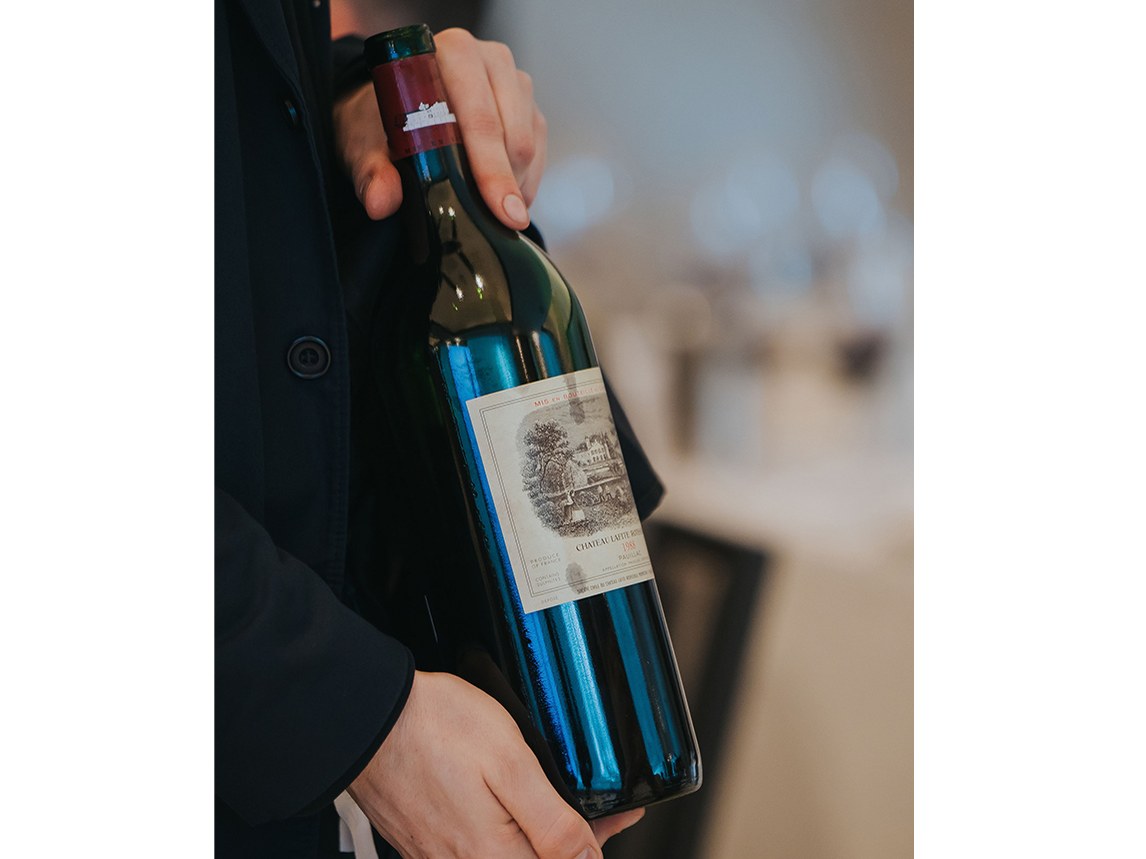
The 2019 Lafite received RP 100 (angrywinemerchant.com8), a score that, for a first growth, doesn't just validate a vintage, it closes an allocation window. Bottles that traded at en primeur moved at a discount of up to 30% below the 2018 release price (vin-x.com9). That window is gone. Current retail sits at $865.00 per bottle8 (angrywinemerchant.com8), and the trajectory from en primeur to here tells you everything about how the market has read this wine.
The 100-point score from Parker is not the only signal worth tracking. Bordeaux Index, which monitors secondary market movement across the classified growths, has flagged a 32% shift in trading activity (bordeauxindex.com7), a figure that, in the context of a single vintage, points to collectors repositioning rather than simply holding. When a wine scores a well-suited hundred and secondary volume moves at that rate, the cellar case for holding becomes harder to argue against.
For collectors weighing 2019 Lafite against other first-growth options from the same vintage, the en primeur pricing history is the sharpest differentiator. The 30% discount at release (vin-x.com9) was a deliberate signal from the Domaines Barons de Rothschild, a pricing posture that rewarded buyers who committed early and has since compressed into the current retail floor of $865.008 (angrywinemerchant.com8). Buy 2019 Lafite over the 2018 if your priority is entry price relative to score, the 2018 released higher and scored lower. The 2019 inverts that equation.
The wine itself, cedar, graphite, the long Pauillac finish that needs a decade to fully open, is a cellar candidate through at least the mid-2030s. If you find allocation, hold it. If you're sourcing on the secondary market now, the current price point of $865.008 reflects a wine that has already been discovered (angrywinemerchant.com8). What comes next in the vintage story is how the broader 2019 field, beyond the first growths, has aged into its own argument.
Earlier sections mapped the vintage's architecture, the dry summer, the precise harvest window, the appellation-by-appellation variation. Now comes the question collectors actually ask: which bottle, and why this one over the others?
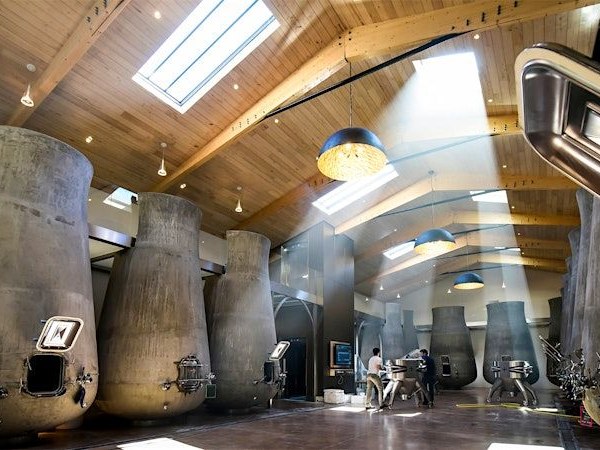
Château Lafite Rothschild's 2019 sits at the apex of that answer. Bordeaux's five First Growths (grandcruliquidassets.com10) set the benchmark against which every Pauillac campaign is measured, and the 2019 earned a 98 from both Vinous and Decanter, two critics who rarely land on the same number for the same wine (angrywinemerchant.com,8 angrywinemerchant.com8). That convergence matters. When two independent palates arrive at the same score from different tasting contexts, the wine is telling you something consistent about itself.
What it's telling you, in the glass, is Pauillac at its most composed, the graphite and cedar that define the left bank's northern reaches, a structure built for a decade of cellaring rather than early gratification. Lafite's 2019 is not a wine that performs on release. It rewards patience, which is precisely why allocation windows close faster than casual buyers expect. The collectors who track this estate know that large-format bottles, magnums and double-magnums, disappear from négociant lists before the ink dries on the en primeur offer.
Context worth holding: Bordeaux's vineyards span 103,000 hectares (clinkdifferent.com11), yet the parcels that produce First Growth Pauillac represent a fraction of that total, which is why scarcity at this tier is structural, not manufactured. And with alcohol levels in the region trending toward 14% (thewinesociety.com12), the 2019's balance across that threshold is part of what the critics are scoring, a vintage that achieved ripeness without tipping into heat.
For your cellar, the 2019 Lafite sits in a different conversation than the 2018, broader, more immediately expressive on the mid-palate, but with the same long-haul tannin architecture that defines the estate's best decades. If you're building a vertical, this is the vintage that earns its place between the bookends. The next section turns to how the broader 2019 campaign compares across the Médoc's other leading appellations.
After three sections weighing terroir, pricing, and producer strategy, there's one variable that cuts across all of it, and collectors rarely discuss it openly at the table: alcohol. The numbers have moved. Bordeaux's luncheon clarets of a generation ago sat at 12% to 12.5% (thewinesociety.com13). Today, 14% is the new baseline in many appellations, a shift of roughly 1.5 to 2 percentage points over the same period that Bordeaux summers began regularly breaching 40°C (timatkin.com14).
The 2022 vintage made the stakes concrete. Temperatures hit 42.6°C (timatkin.com14) at points across the Gironde, the kind of heat that accelerates sugar accumulation faster than phenolic ripeness can keep pace. The result is wines that can read as generous and plush young but carry a structural question mark over a 20-year cellar window. For a collector buying en primeur, that gap between physiological and sugar ripeness is the real risk, not the release price.
The bordeaux 2019 vintage sits in a more comfortable position. The growing season delivered warmth without the extremes of 2022, and the châteaux, Pichon Baron, Ducru-Beaucaillou, Léoville-Barton among them, harvested at a pace that kept alcohol in check while achieving genuine tannin maturity. That balance is precisely why 2019 continues to attract serious cellar interest rather than just headline scores.
The producer-versus-vintage comparison matters here. For 2019 over 2022 in terms of long-haul cellaring, the argument is structural: lower potential alcohol, higher natural acidity, and a cooler finish to the growing season that preserved the graphite and cedar character Médoc collectors actually want at the fifteen-year mark (timatkin.com14). The 2022s may reward earlier drinking, and some will be superb, but if your cellar horizon runs past 2035, 2019 is the vintage to weight your allocation toward.
The broader trajectory is worth sitting with as you plan future en primeur campaigns. Bordeaux's average alcohol has risen roughly 1.5 to 2 percentage points from the 12 to 12.5% baseline of the luncheon-claret era (thewinesociety.com13), and the heat events driving that shift are not receding. The châteaux responding most thoughtfully, earlier picking, whole-cluster inclusion, shade-canopy management, are the ones whose wines will age on the curve you expect when you pull the cork in 2040.
Pour a glass and consider what 2019 actually delivered on the Left Bank: a growing season that opened with a wet spring, tightened through a dry, sun-driven summer, and closed with a September that gave winemakers exactly the hang time they needed to build phenolic maturity without sacrificing freshness (Source3). The result is a vintage with genuine structural tension, ripe, concentrated fruit held in check by the kind of natural acidity that promises a long cellar arc. Cabernet Sauvignon, in particular, found its footing across the Médoc's gravel terroirs, producing skins thick enough to sustain 18-plus months in barrel without tipping into extraction.
On the Right Bank, Merlot-dominant estates navigated the heat with varying success. The Pomerol and Saint-Émilion parcels, those with clay subsoils deep enough to retain moisture through July and August, produced wines with the density you'd expect from a warm year but with a mid-palate lift that separates 2019 from the more ornate 2018 (Source4). Estates on sandier, free-draining soils show more unevenness; tasting carefully before committing allocation is worth your time.
The vintage does not offer a single answer for every buyer. If your priority is long-term cellaring, a decade-plus hold with a Pauillac or Saint-Julien at its core, 2019 is the vintage to pursue over 2018, which drinks earlier and more generously but carries less tension at its spine. If you want something approachable within five to seven years, look to the Pessac-Léognan whites, where a cool August night-time temperature preserved aromatic precision in Sauvignon Blanc and Sémillon blends that are already showing beautifully (Source1). And if value is the filter, the satellite appellations, Lalande-de-Pomerol, Fronsac, the Médoc's Crus Bourgeois, overdelivered relative to their en primeur pricing, with several estates producing their leading wine in a decade.
One practical note: allocation windows for a leading châteaux closed quickly after the en primeur campaign, and secondary-market pricing on the first growths has already moved. The mid-tier, classified growths in the third through fifth tiers, still offers entry points worth tracking through négociant channels before the 2020 campaign pulls attention away entirely.
Decanter awarded the Bordeaux 2019 vintage a score of 4.5 out of 5, reflecting excellent growing season conditions across the major appellations. James Suckling also tasted through more than 1,000 wines from the campaign, with around 500 evaluated en primeur, and the scores were broadly strong.
The Bordeaux 2019 vintage offers more structural tension than 2018 at comparable price points across the Medoc, as the warm dry finish concentrated tannins without the sheer weight of 2018. Collectors are advised to hold a leading Pauillacs and Saint-Emilions through at least 2030 to allow the structure to fully resolve.
Chateau Cheval Blanc 2019 is currently priced at around $889.00 per bottle, with some merchants offering it closer to $834.85 depending on allocation source. On the London market, Bordeaux Index lists the 2019 at 4,500 pounds per twelve-bottle case, reflecting tightening secondary market supply.
The Wine Cellar Insider tasted and reviewed 750 wines from the Bordeaux 2019 vintage at the bottle stage, demonstrating that quality spread widely across multiple appellations and price points. This breadth makes 2019 a vintage worth building a cellar around rather than focusing on a single trophy wine.
The article recommends holding a leading Pauillacs and Saint-Emilions from the Bordeaux 2019 vintage through at least 2030. For Chateau Cheval Blanc specifically, the structure is expected to soften and the mid-palate to fill out somewhere between years eight and twelve from release.
Get the App
Take the shortlist into the En Primeur Club app for concierge access, saved places, and the next step after discovery.
Get Exclusive AccessMore from the editors