← Guides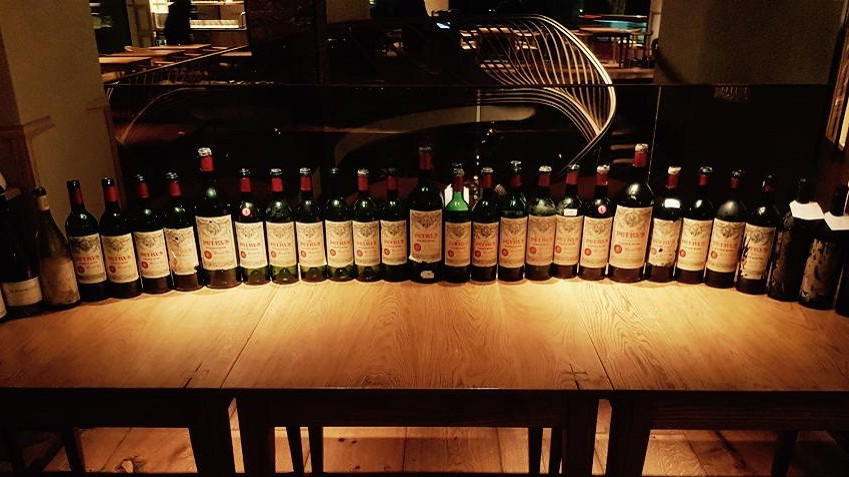
A practical guide to buying Pétrus in 2026 through allocations, en primeur, specialist merchants, or auction.
A practical guide to buying Pétrus in 2026 through allocations, en primeur, specialist merchants, or auction.
You can buy Pétrus,1 but not easily, and almost never at the price you hope for. The estate produces approximately 30,000 bottles per year2 from its blue-clay parcel in Pomerol, and every bottle is spoken for before it reaches the open market. Your three realistic routes are a négociant with a standing Bordeaux allocation, a specialist merchant with direct Place de Bordeaux relationships, or the secondary market via auction. Each comes with a different cost, wait, and provenance risk.
Pétrus does not sell direct to consumers, does not maintain a public mailing list, and does not operate a cellar-door allocation.1 All wine moves through the Place de Bordeaux, the négociant system that has governed Bordeaux's fine wine trade for centuries. The Moueix family, who manage the estate, release wine through a circle of négociants, who then allocate to importers and retailers worldwide.

The production constraint drives everything. Approximately 30,000 bottles per year2 emerge from Pomerol's blue clay plateau, while collectors in Hong Kong, New York, London, and Geneva compete for the same stock. The result is that most retail merchants receive allocations measured in single cases, and many receive nothing at all in weaker commercial years.
The crowd competing for those bottles is not casual: it is the same pool of collectors who hold Romanée-Conti allocations, buy Screaming Eagle en primeur, and have spent decades building merchant relationships. If you are new to this market, assume you are starting at the back of a long queue and act accordingly: build with the merchant before you ask for Pétrus.
Pétrus is sold en primeur in the spring through négociants,1 with offers typically emerging in the months following harvest. The Moueix family set the release window, pricing, and allocation size and communicate them to négociants. Ask your merchant when they expect their en primeur offer to land, and how many bottles they received in the prior two campaigns. That answer tells you whether they have a real Place relationship or are passing on a sub-allocation from a larger négociant.
Bottled stock surfaces throughout the year, though timing is unpredictable. Auction appearances are more regular: Christie's, Sotheby's, Hart Davis Hart, and Acker all handle Pétrus with some frequency, and their sale calendars are published months in advance.
After the 2012 vintage, Ets JP Moueix lost exclusivity on export sales, and the wine began to be sold through a larger number of négociants.1 In practice, the same limited supply spread across more hands, so the retail allocation battle remained as competitive as before.
This is the primary-market route. Merchants such as Farr Vintners, Berry Bros. & Rudd, Justerini & Brooks, and Millesima3 have long-standing Place relationships and receive Pétrus allocations, though allocation size varies by year and is never guaranteed. To access one, you typically need to be an existing client with a purchase history that shows you are a serious buyer, not a speculator looking to flip.
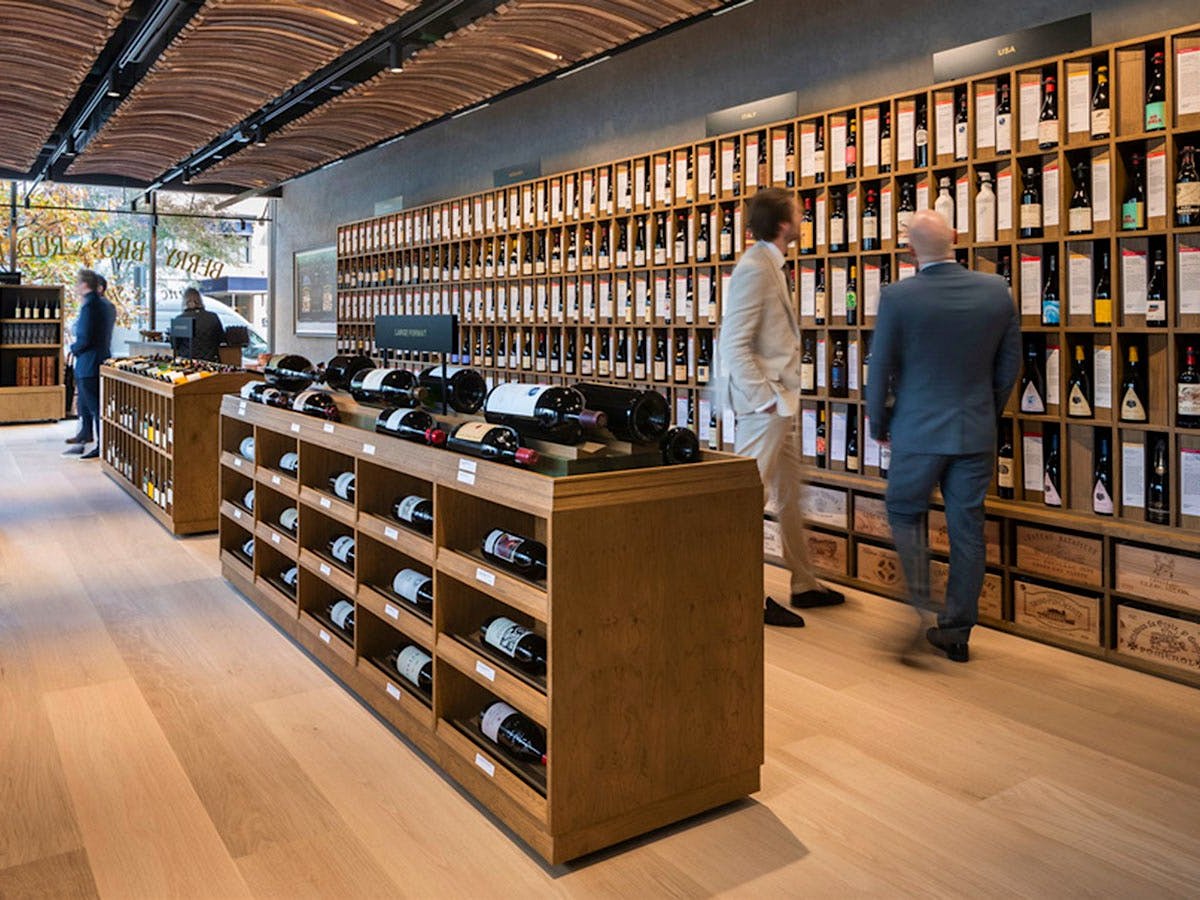
The practical move is simple: open accounts with two or three of these merchants, buy regularly across their Bordeaux range, including other Pomerol and Saint-Émilion, and make your interest in Pétrus explicit. Merchants allocate to clients who have shown loyalty and volume. Buying a case of Château Clinet or Vieux Château Certan, both serious Pomerol estates, signals that you understand the appellation and are not chasing only the label.
Some French private customers receive small direct allocations,1 but for most buyers, en primeur means committing capital through a merchant before bottling. The advantage is price: en primeur releases are generally below the eventual physical market price for sought-after vintages, though this is not guaranteed and has not always held for every Pétrus vintage. The risk is counterparty: you rely on your merchant's financial stability over several years. Use a merchant who participates in the Liv-ex trading platform, which gives some market transparency on pricing.
The secondary market is one accessible route if you lack merchant relationships. Christie's, Sotheby's, Acker Merrall & Condit, and Hart Davis Hart all handle Pétrus regularly. Provenance is the critical variable: look for bottles with documented château or négociant provenance, ideally in original wooden cases. A 2015 Pétrus is listed by Millesima at $7,985 per bottle, with Wine-Searcher’s June 2026 average around $5,988.3 A clean OWC lot with négociant provenance is not the same proposition as a single bottle with a retail sticker and no storage history. Auction buyer's fees, typically 20 to 25 percent on top of the hammer price at major houses, materially affect the effective cost per bottle, so calculate them before comparing against merchant offers.
Pétrus is planted overwhelmingly to Merlot on a singular pocket of blue clay above the iron-rich subsoil of the Pomerol plateau. The harvest is restricted to late-morning and afternoon hours to avoid picking grapes carrying morning dew that would dilute the must. Vinification takes place in concrete vats; the wine then spends an extended period in new French oak before bottling without filtration in most vintages.
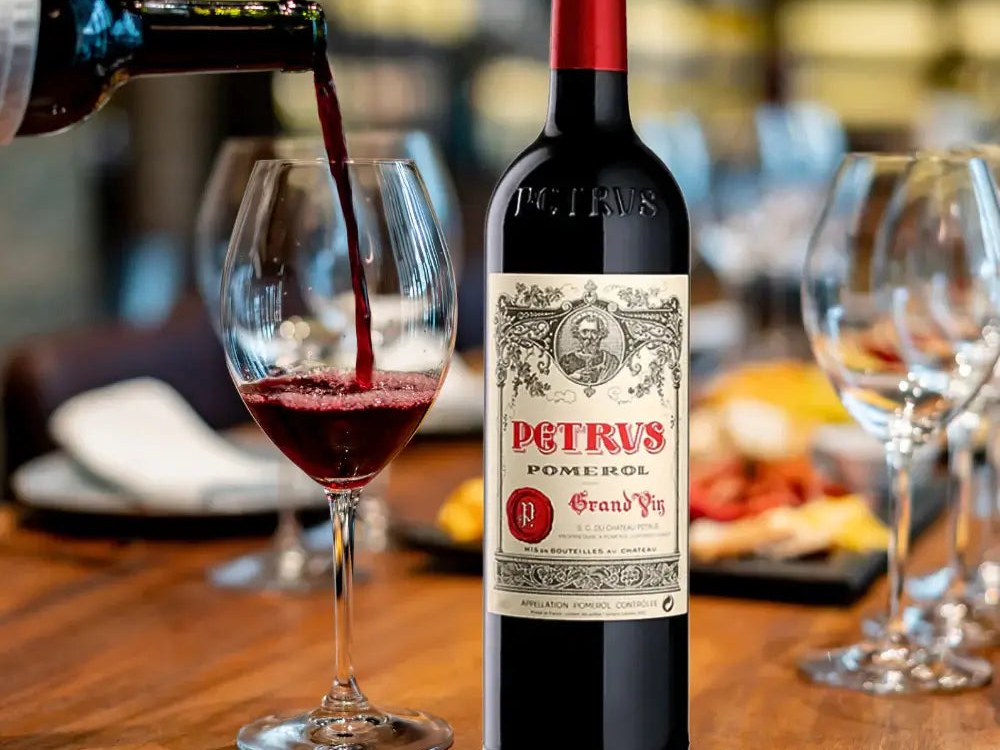
The 2015, retailing at approximately $7,985 per bottle,3 and the 2018 at $7,200,3 are the vintages most frequently cited by merchants as the current sweet spot: drinking well now but with decades ahead. The 2012 and 2014, less celebrated on release, have developed into wines that offer more immediate pleasure, and merchant consensus places them as more approachable now than the headline years.
A mature Pétrus, the 2000 retails at $10,750 per bottle,3 delivers black-fruited density and iron-inflected earth that is unmistakably Pomerol, with a texture no other estate in the appellation quite replicates. That specificity is what the price is paying for.
The immediate route is auction. The 2018 Pétrus retails at $7,200 per bottle3 through specialist merchants, secondary-market hammer prices for the same vintage vary by provenance and format, and buyer's fees add materially to the effective cost. You get the wine without waiting, but you pay for immediacy.
The patient route is building a merchant relationship, buying consistently across their Bordeaux range, and waiting for an en primeur allocation offer. This can take several campaigns, but the price differential versus auction can be substantial for a sought-after vintage.
There is no second wine of Pétrus. The estate produces one wine. But the Moueix family also manages Trotanoy and Hosanna, both serious Pomerol estates that share some of the same blue-clay terroir logic and are far more accessible in allocation terms. Buy these wines through the same merchant to show appellation commitment and build the relationship that may eventually yield a Pétrus offer.
The 2004 Pétrus retails at $4,900 per bottle,3 a meaningful discount to the headline years, and offers a way to understand what the wine tastes like without paying 2018 prices of $7,200.3 Vintages from more challenging years are not lesser wines in any absolute sense; they are Pétrus made under different conditions, and for a buyer focused on drinking rather than cellaring, they are the logical starting point.
| Wine | Allocation Difficulty | Primary Market Route | Auction Availability | Indicative Retail Cost |
|---|---|---|---|---|
| Pétrus | high, merchant relationship required | Place de Bordeaux négociant only1 | Regular; provenance critical | $7,200/bottle (2018)3 |
| Le Pin | high, similar scarcity | Place de Bordeaux; extremely limited | Less frequent than Pétrus | N/A |
| Trotanoy (Moueix) | Moderate, same négociant network | Place de Bordeaux; wider allocation | Available; less contested | N/A |
| Vieux Château Certan | Moderate, direct + Place de Bordeaux | Direct + Place de Bordeaux | Regular | N/A |
| Hosanna (Moueix) | Low to moderate | Place de Bordeaux | Available | N/A |
Vieux Château Certan. The Thienpont family farms the Pomerol plateau with a blend that runs a higher proportion of Cabernet Franc than most Pomerol estates, unusual for the appellation and a source of structural complexity. The 2019 Pétrus retails at $8,450 per bottle;3 Vieux Château Certan from the same vintage trades at a fraction of that through the same merchant channels. Allocation is more accessible, and the estate maintains direct relationships with some importers.
Trotanoy. The Moueix family's other flagship comes from a parcel of clay and gravel just west of the Pétrus plateau. The 2015 and 2018 vintages have drawn serious critical attention. Buying Trotanoy through the same merchant you are cultivating for Pétrus is not a consolation; it is a strategy.
Lafleur. The Guinaudeau family farms a small parcel of Pomerol with a roughly equal split of Merlot and Bouchet, the local name for Cabernet Franc. Production is limited. Prices have risen sharply, but allocation is slightly more accessible than Pétrus through specialist merchants.
Le Gay (Pomerol). A less-discussed estate that has improved steadily under new ownership. For buyers who want Pomerol clay-terroir character without the allocation battle, it offers a more open door.
Pétrus makes sense for collectors who are already active in Bordeaux, have established merchant relationships, and are buying for a cellar with a long horizon. It is not a wine for the impatient or occasional buyer. If you are buying a single bottle for a specific occasion, auction is your only realistic option; budget for the buyer's premium and examine provenance carefully.
If you are new to Bordeaux collecting, spend two or three years building merchant relationships through broader Pomerol and Saint-Émilion buying, then position yourself for a Pétrus en primeur offer when your purchase history justifies it. Pétrus is distributed in the United States through Vineyard Brands,4 which makes the importer network in your country a fixed starting point. Ask your local fine wine merchant which importer they work with, then trace the chain from there.
Pétrus is not impossible to buy, but it is impossible to buy casually. The Place de Bordeaux system means there is no direct route, no public mailing list, and no cellar door.1 Every bottle passes through a négociant, and every allocation goes to buyers who have earned it through years of merchant loyalty or are willing to pay auction premiums for immediacy.
An allocation relationship built through a specialist merchant with real Place de Bordeaux access is the only route that reliably works at anything close to release pricing. Auction is the fallback, and a legitimate one, provided you are rigorous about provenance and clear-eyed about the effective cost after buyer's fees. At approximately $7,985 per bottle for the 20153 through a reputable merchant, you are already paying for rarity before the auctioneer's gavel enters the picture.
For most collectors entering Pomerol now, the more productive strategy is to buy Trotanoy, Vieux Château Certan, and Lafleur, both for the pleasure they offer and for the merchant relationships they build. Pétrus rewards patience more than almost any other wine in Bordeaux; the collectors who drink it well are, almost without exception, the ones who started planning several vintages ago. Treat that as a map.
No. Pétrus does not sell direct to consumers and does not operate a public mailing list or cellar-door allocation. All wine is released through the Place de Bordeaux négociant system. Your only primary-market route is through a specialist merchant with a standing Bordeaux allocation. Some French private customers receive small direct allocations, but this channel is not open to most international buyers.
Retail prices through specialist merchants vary by vintage: the 2018 is listed at $7,200 per bottle, the 2019 at $8,450, and the 2000 at $10,750, according to current merchant listings. Auction prices for the same vintages vary by provenance, format, and market conditions, and buyer's fees of typically 20 to 25 percent at major houses add materially to the hammer price. Always calculate your effective cost including the premium before comparing auction against merchant offers.
Yes, Pétrus participates in the Bordeaux en primeur campaign, with offers typically circulating through merchants in the spring following harvest. To access an en primeur offer, you need to be an established client of a merchant who receives a Pétrus allocation from the Place de Bordeaux. Ask your merchant directly whether they received an allocation in the prior two campaigns before committing to a relationship.
Among currently available vintages, the 2004 is listed at $4,900 per bottle through specialist merchants, meaningfully below the headline years. The 2020 is listed at $6,990. Vintages from more challenging years are not lesser wines; they are Pétrus made under different conditions, and for a buyer focused on drinking rather than long-term cellaring, they represent a more open door into the wine. Consult your merchant or current Liv-ex data for guidance.
Pétrus has historically been among the more liquid wines on the Liv-ex fine wine exchange, and strong vintages have appreciated over time, but past performance does not guarantee future returns, and the fine wine market is subject to shifts in collector demand, currency movements, and vintage reassessment. Buying Pétrus purely as a financial instrument carries the same risks as any illiquid alternative asset. The more durable case for buying it is that it is among the more singular expressions of Pomerol's blue clay terroir, and that, at least, does not depreciate.
Get the App
Take the shortlist into the En Primeur Club app for concierge access, saved places, and the next step after discovery.
Get Exclusive AccessMore from the editors