
Vino Vero opened along the Misericordia canal in Cannaregio in 2014, claiming the distinction of Venice's first natural wine bar. The canal-side setting and a serious, producer-led selection place it in a different register from the city's cicchetti-and-spritz circuit. For anyone tracing Italy's natural wine movement city by city, this is a coherent reference point.
 Discover on Pearl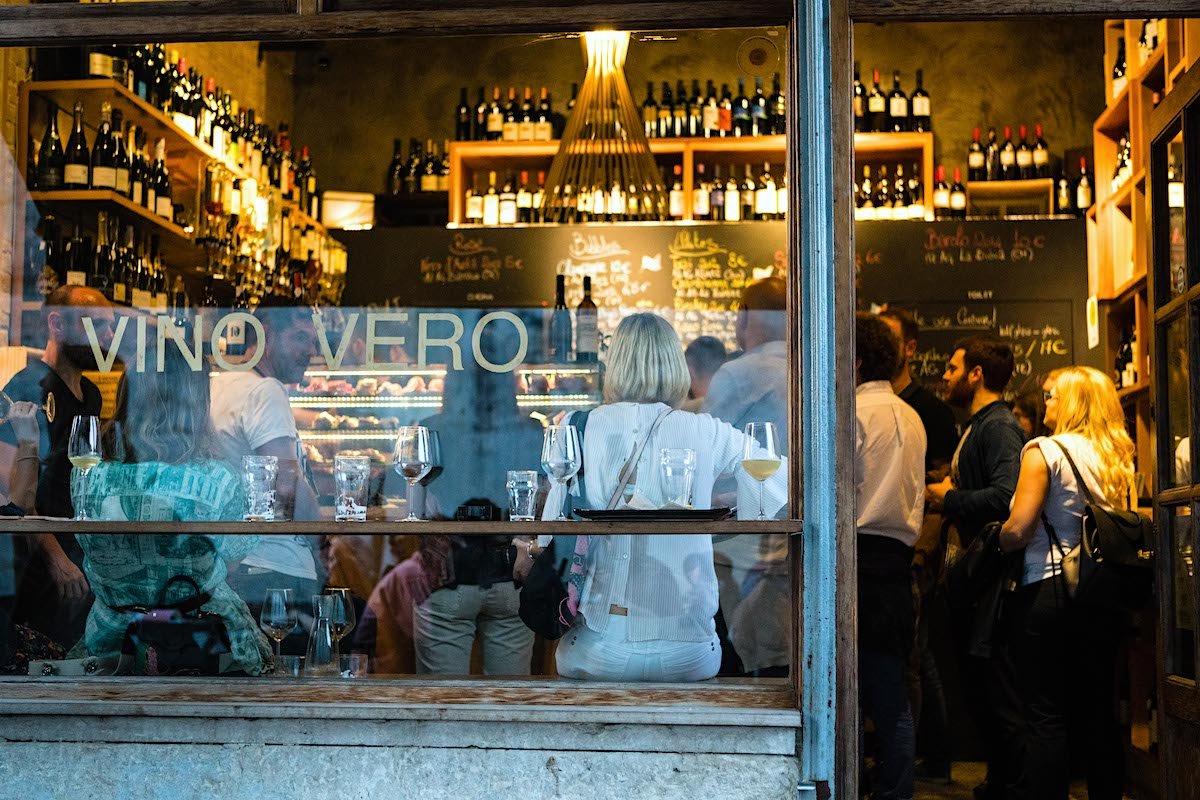
Canal-Side, Cannaregio: Where Venice's Natural Wine Conversation Began
The Fondamenta de la Misericordia is one of Cannaregio's more lived-in canal edges — long enough to accommodate a working neighbourhood before the tourist density of Strada Nova takes over, and lined with the kind of bars and osterie that Venetians actually use on a weekday evening. Vino Vero sits along this stretch, and the physical setting does a lot of editorial work before a glass is poured: water at the doorstep, low light inside, a wine shop visible from the street. It is the sort of place that reads immediately as serious without performing seriousness.
When Vino Vero opened in 2014, the natural wine movement in Italy was well-established in Milan, Rome, and Bologna but had not yet found a fixed address in Venice. The bar's own account positions it as the city's first dedicated natural wine bar — a claim that, a decade on, no competing venue appears to contest. That timing matters. A bar that opened in this format in 2014 was making an argument about what Venetian drinking culture could look like, not following a trend that already existed locally.
The shortlist, unlocked.
Hard-to-book tables, cellar releases, and concierge-planned trips.
Get Exclusive Access →Natural Wine in Italy: What the Category Actually Means Here
Natural wine as a category remains deliberately uncodified , no appellation rules, no certification body with teeth , but in the Italian context it draws from a specific tradition of small-scale, low-intervention viticulture that predates the marketing language around it. Many of the producers who appear on natural wine lists across Italy are working in regions with deep indigenous variety heritage: Friuli-Venezia Giulia, the Veneto, Sicily, Campania. These are areas where the argument for minimal intervention is partly pragmatic (the grapes carry enough character on their own) and partly political (a rejection of the late-twentieth-century drive toward international variety standardisation).
Venice's position in this geography is interesting. The city sits at the edge of the Veneto, one of Italy's most productive wine regions, and within reach of Friuli's Collio and Colli Orientali zones, which have been central to the orange wine and skin-contact revival that runs parallel to the broader natural wine conversation. A bar in Cannaregio that takes its selection seriously has a plausible claim to one of the more geographically coherent natural wine cellars in the country, drawing on producers within a short radius who have been working this way for decades. This is the intersection that the EA-GN-15 angle captures well: the methods arriving from outside (biodynamic frameworks, influence of Jura and Loire producers, the Slovenian natural wine tradition just across the border) meeting ingredients , Garganega, Glera, Ribolla Gialla, Verduzzo , that are emphatically local.
For context across Italy's bar scene, the natural wine format has taken different shapes in different cities. Enoteca Historical Faccioli in Bologna represents the format's more archival, cellar-forward expression. In Rome, venues like Drink Kong sit in the cocktail-bar tradition rather than the wine-bar one, showing how the city's premium drinking scene has developed differently. 1930 in Milan and Gucci Giardino in Florence are further data points in how Italy's premium drinking is fragmenting into format-specific niches rather than a single hierarchy. Vino Vero occupies a distinct niche: wine bar and wine shop combined, canal-side, in a neighbourhood with genuine local patronage.
Cannaregio and Its Drinking Circuit
Venice's drinking scene is more segmented by neighbourhood than most comparable Italian cities. The area around Rialto produces the cicchetti-and-ombra circuit , small plates, short pours, high turnover , that most visitors encounter first. San Marco carries the weight of hotel bars and long-established caffès. Cannaregio, and particularly the Misericordia canal zone, has developed as the area where format experimentation is more likely, partly because the real estate and the foot traffic allow for it.
Within that zone, Vino Vero sits alongside other venues that have helped define what contemporary Venetian drinking looks like for the non-tourist audience. Al Covino and Al Mercà represent the cicchetti tradition, while Al Covo anchors a more formal dining register. At the other end of the price and formality spectrum, Aman Bar operates in a different category entirely , heritage palazzo, high cover charge, international clientele. Vino Vero occupies the middle ground that those poles leave open: educated but unpretentious, focussed on the glass rather than the occasion.
For a complete map of where Venice's drinking and dining fits together, the EP Club Venice guide covers the full range by neighbourhood and format.
Planning a Visit: What to Know Before You Go
Vino Vero functions as both a bar and a wine shop, which means the visit can take several forms: a glass at the canal-side, a longer session working through a producer-led selection, or a bottle purchased to drink elsewhere. The canal-side setting on Fondamenta de la Misericordia makes it a natural stop on an evening walk through Cannaregio rather than a destination that requires planning around. Getting there on foot from the Guglie vaporetto stop takes under ten minutes. The bar opened in 2014 and has now been running long enough that it functions as a reference point rather than a discovery , locals know it, visiting wine professionals use it, and the natural wine community internationally has catalogued it. No booking details are published in EP Club's database for this venue, so visiting without a reservation and arriving on the early side of an evening session is the practical approach, particularly during the Biennale periods when Cannaregio's more knowledgeable visitor traffic increases.
Comparable canal-side bar experiences in other southern European cities tend not to combine the wine-shop format with the bar format as naturally as Venice's geography allows , the Lost and Found in Nicosia and Bar Leather Apron in Honolulu each show how the serious-drinks format adapts to local geography and culture, which is context worth holding when assessing what Vino Vero does that is specifically Venetian. The answer is partly the location, partly the selection depth for northern Italian and Friulian producers, and partly the timing: opening in 2014 meant shaping the conversation rather than joining it.
The shortlist, unlocked.
Hard-to-book tables, cellar releases, and concierge-planned trips.
Get Exclusive Access →Frequently Asked Questions
Side-by-Side Snapshot
A quick comparison pulled from similar venues we track in the same category.
Need a Table?
Our members enjoy priority alerts and concierge-led booking support for the world's most difficult bars and lounges.
Get Exclusive AccessThe shortlist, unlocked.
Hard-to-book tables, cellar releases, and concierge-planned trips.
Get Exclusive Access →