On Weserstrasse in Neukölln, Thelonious Bar occupies the quieter, more considered end of Berlin's neighbourhood bar spectrum. Named after the jazz pianist whose music rewarded close listening, it draws a crowd that arrives with time to spare rather than somewhere else to be. The bar fits a Berlin tradition of spaces that run differently by day than by night, shifting in pace and purpose between afternoon and late evening.
Pearl is the En Primeur Club membership app — saves, bookings, and concierge access live there. Same editors, same standards.
- Address
- Weserstr. 202, 12047 Berlin, Germany
- Phone
- +49 30 55618232
- Website
- thelonious-bar.de
- Directions
- Get directions
 Saves & bookings on Pearl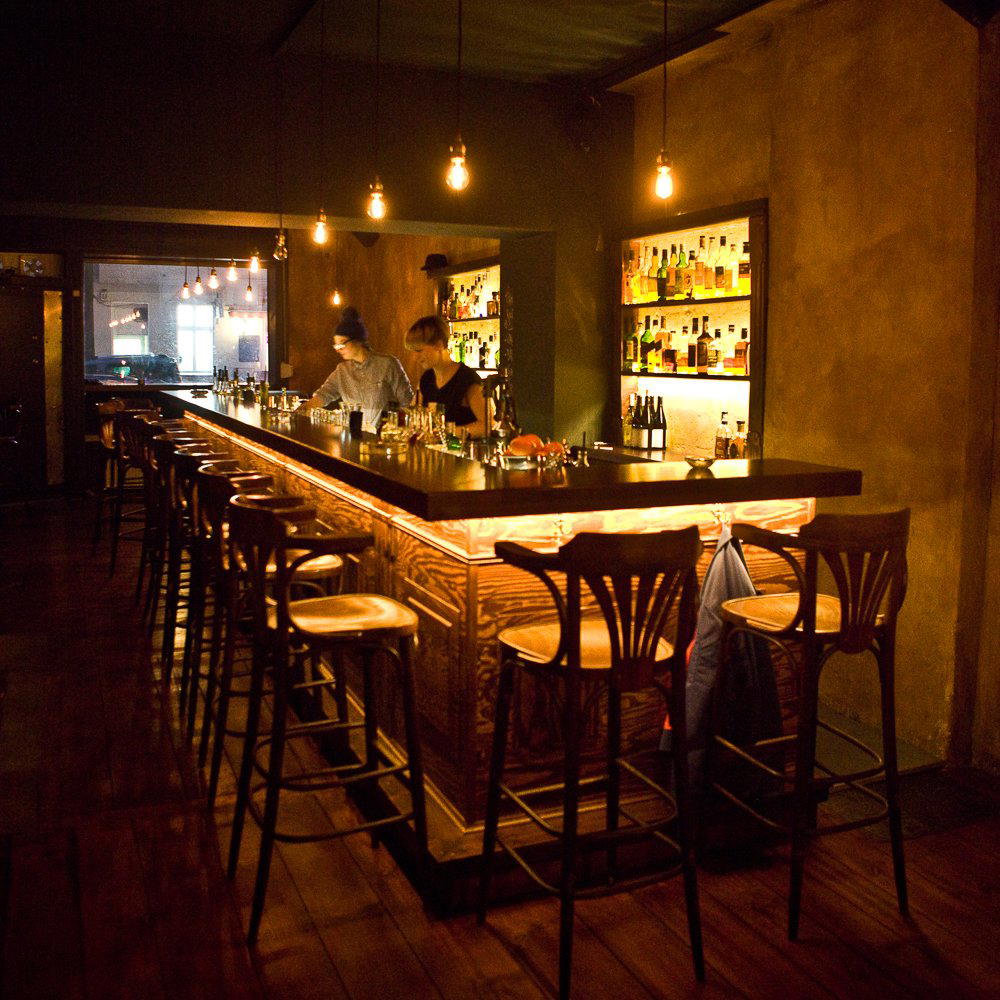
Weserstrasse and the Neighbourhood Bar That Rewards Patience
Neukölln's Weserstrasse has been through several versions of itself in the past fifteen years. What began as a low-rent stretch of independent bars and late-night spots has stratified into something more layered: some venues chasing the tourist trail that follows every Berghain write-up, others quietly holding their ground as neighbourhood staples with a loyal, local-first following. Thelonious Bar, at number 202, belongs to the second category. The name references Thelonious Monk, the jazz pianist whose compositions were famously angular, unhurried, and resistant to easy categorisation. The reference is doing editorial work: this is not a bar in a hurry.
Berlin's cocktail scene has split into at least three distinct tiers over the past decade. There are the internationally recognised destination bars, the mid-market concept venues that lean on theatrical presentation, and then the neighbourhood rooms that build identity through consistency and crowd rather than concept decks. Thelonious Bar operates in that third register, which in Berlin is not a concession but a deliberate position. Some of the city's most durable bars have always been this: Kiez institutions with low visual noise and high return-visit rates.
The Daytime Shift: When the Bar Belongs to a Different Crowd
The gap between afternoon and evening at a bar like this is not just a matter of lighting adjustments. In Berlin's neighbourhood bar tradition, the daytime room functions almost as a separate venue: quieter, populated by regulars running laptops or holding long conversations over coffee and the first drink of the afternoon, with the bar team working at a different tempo. Weserstrasse sees this pattern clearly, the street quiets around lunchtime and reanimates gradually through mid-afternoon as the neighbourhood's working-from-home and creatively employed populations begin drifting out.
A bar named after a jazz musician carries implicit expectations about how time is supposed to move inside it. Monk's own relationship with rhythm was famously non-linear: he could hold a silence longer than any bandmate expected, then resolve it on a beat no one anticipated. Afternoon service at Thelonious Bar carries something of that quality. The pace is set by the guest rather than the venue. For visitors who want to understand how Berlin's neighbourhood bars function for the people who live around them rather than visiting them, the daytime window is the one to use.
Evening: The Room Changes Register
By late evening, Weserstrasse's bars are operating at full Berlin pace, which means the concept of closing time remains loosely defined. The cocktail bars along this stretch compete less on menu novelty and more on atmosphere, staff energy, and whether the room feels like somewhere worth staying in rather than moving on from. The bar's jazz namesake again provides a useful frame: the difference between a Monk performance at midnight and one at midday was significant, not in the notes played but in the density of attention in the room. Evening service concentrates the crowd and raises the room's register without changing its essential character.
Venues like Buck & Breck operate at the more structured, reservations-led end of that spectrum, while Stagger Lee builds on a Southern Americana aesthetic that gives it a distinctive reference point. Velvet and Lebensstern each occupy different positions along the formality axis. Thelonious sits at the neighbourhood end: lower concept intensity, higher reliance on the room itself doing the work. In a city where that approach has sustained bars for decades, it is not an inferior position.
Neukölln as a Bar Destination
Understanding the bar requires understanding Weserstrasse's role in Berlin's bar geography. Mitte and Prenzlauer Berg have their own drinking cultures, more visible to first-time visitors and more dependent on tourism economics. Neukölln's bar strip functions differently: it draws from a dense residential population with a high proportion of long-term residents who treat these venues as part of daily life rather than as destinations. The economics of that model produce different bars: slower to change, less dependent on novelty cycles, more attentive to what keeps the same person coming back twice a week.
That residential pull is part of what keeps Weserstrasse relevant even as other Berlin neighbourhoods cycle through hype and burnout. The bar's address places it in the denser, more established section of the street rather than the northern end closer to Hermannplatz, where foot traffic peaks but permanence is harder to sustain. Visitors arriving from central Berlin can reach Neukölln directly via U-Bahn to Hermannplatz or Rathaus Neukölln, making the bar accessible without requiring a taxi budget.
German bar culture more widely is tracked through venues including Le Lion Bar de Paris in Hamburg, Goldene Bar in Munich, The Parlour in Frankfurt, Bar Trattoria Celentano in Cologne, Uerige in Düsseldorf, and Kieler Brauerei am Alten Markt in Kiel.
Planning a Visit
Weserstr. 202 is in Neukölln, Berlin, reachable by U8 to Hermannplatz. The bar is walk-in friendly and does not take reservations. Walk-ins are the expected mode of arrival. Timing matters more than reservations: afternoon visits offer a different experience than arriving post-midnight, and both are defensible choices depending on what you want from the evening or day.
Comparison Snapshot
Comparable venues nearby, for context on price, style, and recognition.
| Venue | Cuisine | Price | Notes |
|---|---|---|---|
| Thelonious BarThis venue — the venue you are viewing | speakeasy | $$$ | Not listed |
| Victoria Bar | cocktail_bar | $$$ | Schöneberg |
| Bellman | cocktail_bar | $$ | Kreuzberg |
| der Weinlobbyist | wine_bar | $$$ | Schoneberg |
| Bar Elisabeth | wine_bar | $$ | Wedding |
| Planet Wein | wine_bar | $$ | Mitte |
Continue exploring
More in Berlin
Bars in Berlin
Browse all →
Restaurants in Berlin
Browse all →
Hotels in Berlin
Browse all →
Wineries in Berlin
Browse all →
At a Glance
- Intimate
- Classic
- Cozy
- Sophisticated
- Date Night
- After Work
- Casual Hangout
- Speakeasy
- Live Music
- Standalone
- Seated Bar
- Standing Room
- Classic Cocktails
- Craft Cocktails
- Craft Beer
Current opening hours
- Monday
- Closed
- Tuesday
- 7 PM–1 AM
- Wednesday
- 7 PM–1 AM
- Thursday
- 7 PM–1 AM
- Friday
- 7 PM–2 AM
- Saturday
- 7 PM–2 AM
- Sunday
- Closed
Hours can change for holidays and private events. Last verified .
Dark wood bar with low lighting and intimate speakeasy feel, creating a sophisticated and laid-back vibe well-suited for cocktail enthusiasts.