the Water Stop
A desert-road bar on West San Antonio Street, the Water Stop occupies an unlikely position in Marfa's small but serious drinking scene. The back bar draws travelers and locals alike with a spirits selection that rewards those who take time to look past the obvious pours. In a town where most hospitality skews toward the visual arts crowd, this is a place built around what's in the glass.
Pearl is the En Primeur Club membership app — saves, bookings, and concierge access live there. Same editors, same standards.
- Address
- 1300 W San Antonio St, Marfa, TX 79843
- Phone
- +1 432 295 3302
- Website
- facebook.com
- Directions
- Get directions
 Saves & bookings on Pearl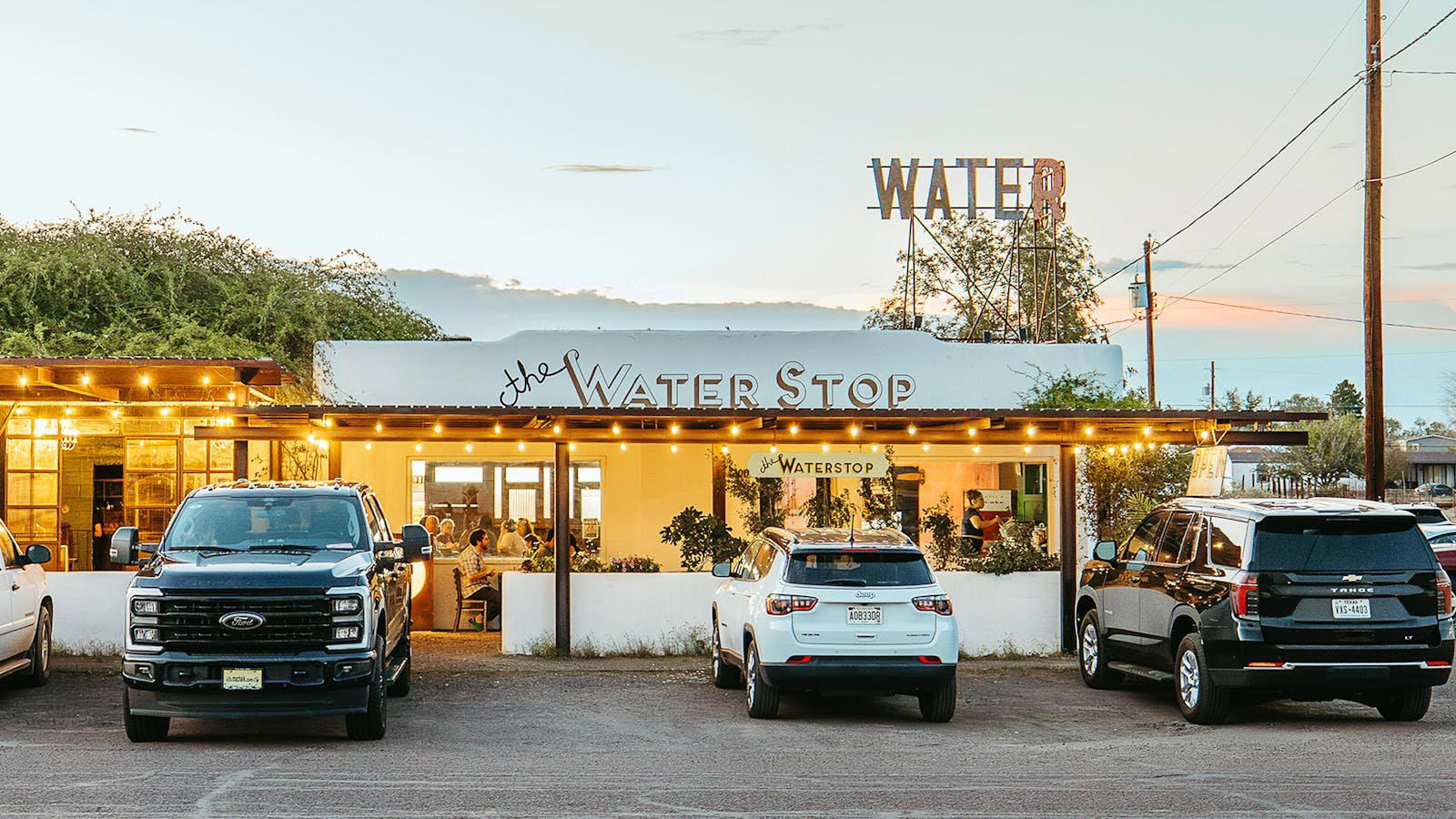
A Bar at the Edge of the Chihuahuan Desert
Marfa operates on a different frequency from most American towns its size. The population hovers around 1,700, yet the town pulls a disproportionate number of culturally literate travelers — people drawn first by the Chinati Foundation and Donald Judd's permanent installations, then held longer by the quality of what they find to eat and drink. The bar scene is small by any urban measure, but it is not thin. The Water Stop, at 1300 W San Antonio Street, sits along the main westbound corridor out of town, a position that places it squarely in the path of travelers who've spent the day in the desert light and want something worth drinking before or after dinner.
West San Antonio is one of the few commercial stretches in Marfa that doesn't feel staged for the Instagram moment. The architecture is functional, the distances between things are real, and the light in the late afternoon comes in low and hard across the Trans-Pecos landscape. Arriving at the Water Stop, you're not walking into a curated design narrative — you're stopping, as the name suggests, because this is where you stop.
The Back Bar as Editorial Statement
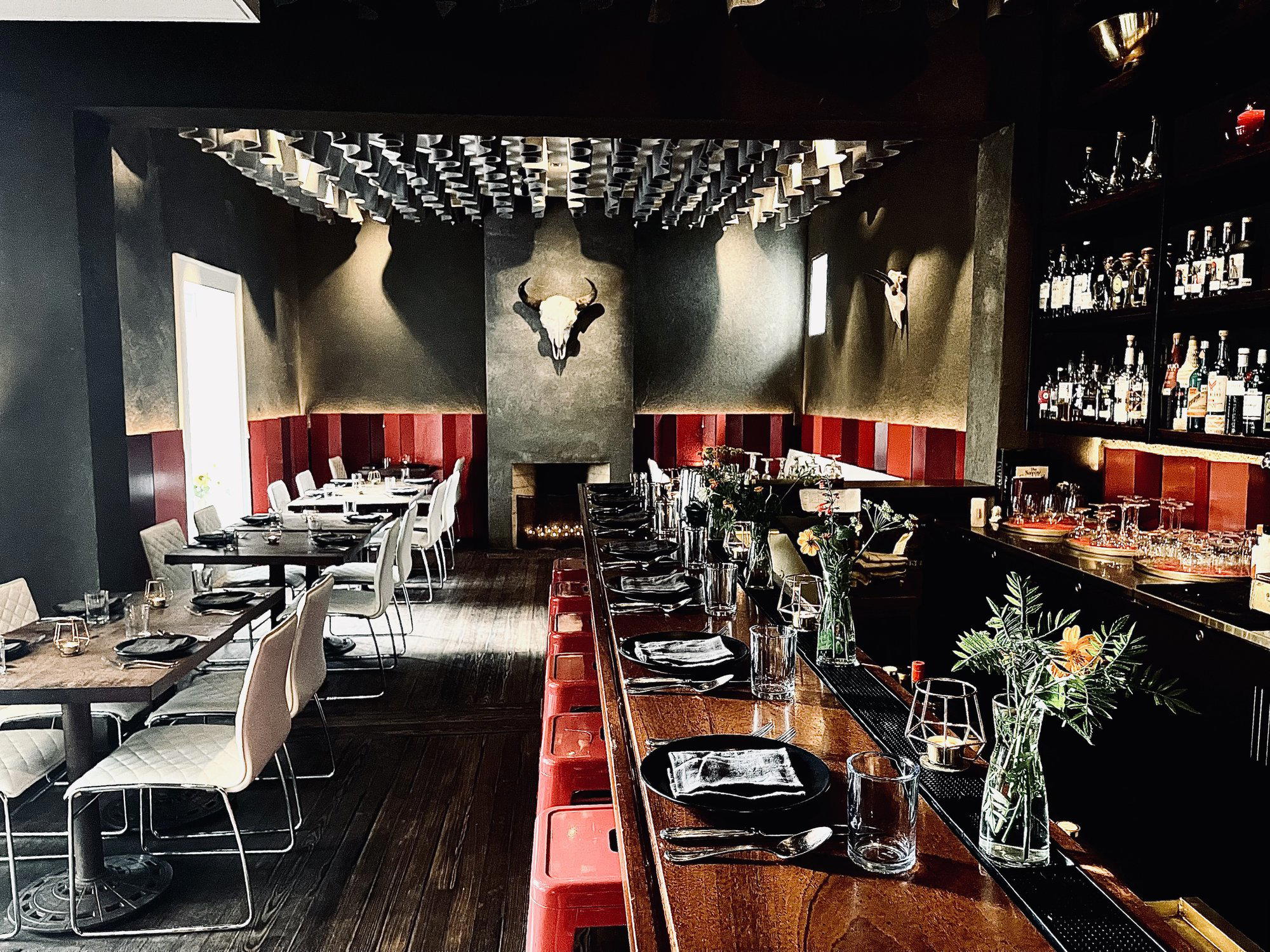
In American cocktail culture, the back bar functions as the clearest signal of what a program is actually about. High-volume venues stack recognizable bottles for speed and margin. Bars with something to say tend to build their shelves around gaps, obscure American whiskeys, mezcals from producers outside the mainstream, rums and brandies that don't appear on supermarket shelves. The back bar at a serious independent operation is, in effect, a curatorial argument about what spirits deserve attention.
The Water Stop's position in the Marfa drinking scene places it alongside LOST, the other significant bar in town with a considered program. Between them, these two operations give Marfa a drinking culture that punches well above its weight relative to population. Bars in cities with far larger footprints, including Julep in Houston, which built its reputation on Southern whiskey depth, and ABV in San Francisco, known for an unusually broad spirits reference, represent the category benchmark. What distinguishes the desert-town bar from its urban peers is context: in Marfa, the back bar does more cultural work per bottle, because the alternatives are fewer and the audience has traveled further to get there.
The spirits collection at a bar like this also tends to reflect the town's broader cultural posture. Marfa has, since the 1970s, maintained a seriousness about things that are difficult to explain to outsiders, minimalist sculpture, long-exposure photography, the specific quality of high-desert silence. A bar that fits that sensibility doesn't reach for novelty or volume. It reaches for things that require a second look.
What Marfa's Bar Scene Tells You About the Drinks
West Texas bar context matters when you're deciding what to order. Towns at this latitude and elevation have historically been whiskey and beer territory, the ranch and oilfield economies that shaped the region didn't generate much demand for amaro flights or clarified cocktails. What's changed in Marfa specifically is the overlay of an arts economy on top of that ranching baseline, which has created a drinker profile unlike almost anywhere else in Texas: people who know what they want, don't need to perform their knowledge, and are genuinely curious about what's on the shelf.
That profile creates space for a bar to go deeper on spirits curation without the pressure of constant explanation. Bars in larger markets, including Kumiko in Chicago with its Japanese whisky and liqueur depth, or Bar Leather Apron in Honolulu with its sustained 50 Best recognition, operate in scenes where the curatorial bar is set by competition and peer pressure. In Marfa, the curatorial bar is set by the drinkers themselves, a smaller but notably self-selected group.
The result, at its finest, is a back bar that functions as a quiet conversation rather than a sales pitch. The Water Stop's address on W San Antonio puts it in reach of travelers arriving from Alpine or departing toward El Paso, which means the bar serves as both a first-night discovery and a last-chance stop, two very different drinking moments that a well-stocked program can serve without switching registers.
Placing the Water Stop in a Wider American Context
American bar culture in 2024 has largely sorted itself into recognizable formats: the speakeasy throwback, the hyper-technical cocktail laboratory, the natural-wine-adjacent bottle shop with seating, and the spirits-forward room where the list does most of the talking. The Water Stop occupies territory closer to that last format, a place where the bottle selection is the program, and where the room exists to give that selection somewhere to be consumed properly.
Bars built around spirits depth rather than cocktail theatrics tend to age better. Jewel of the South in New Orleans, which operates around a historically informed cocktail program, and Bitter & Twisted in Phoenix, with its award-documented breadth, both demonstrate that sustained recognition in the bar category comes from depth of reference rather than seasonal reinvention. Allegory in Washington, D.C. and Superbueno in New York City take more conceptually driven approaches. Bar Kaiju in Miami and The Parlour in Frankfurt extend the comparison internationally.
Planning Your Visit
Marfa's remoteness is both its appeal and its practical constraint. The nearest commercial airport with regular service is in Midland, roughly two hours east by car, and El Paso sits about three hours to the west. Most visitors arrive by road and stay for at least two nights to make the drive worthwhile. The Water Stop's location on W San Antonio Street is direct to reach from the town center, and its position on the main through-road makes it a natural stop without requiring a detour. For a broader picture of where the Water Stop sits in the town's overall food and drink picture, our full Marfa restaurants guide maps the scene across dining and drinking.
At a Glance
- Cozy
- Whimsical
- Bohemian
- Trendy
- Casual Hangout
- Date Night
- Group Outing
- Standalone
- Historic Building
- Design Destination
- Seated Bar
- Lounge Seating
- Outdoor Terrace
- Booth Seating
- Classic Cocktails
- Craft Cocktails
Current opening hours
- Monday
- 5–10 PM
- Tuesday
- 5–10 PM
- Wednesday
- 5–10 PM
- Thursday
- 5–10 PM
- Friday
- 5–10 PM
- Saturday
- 5–10 PM
- Sunday
- 5–10 PM
Hours can change for holidays and private events. Last verified .
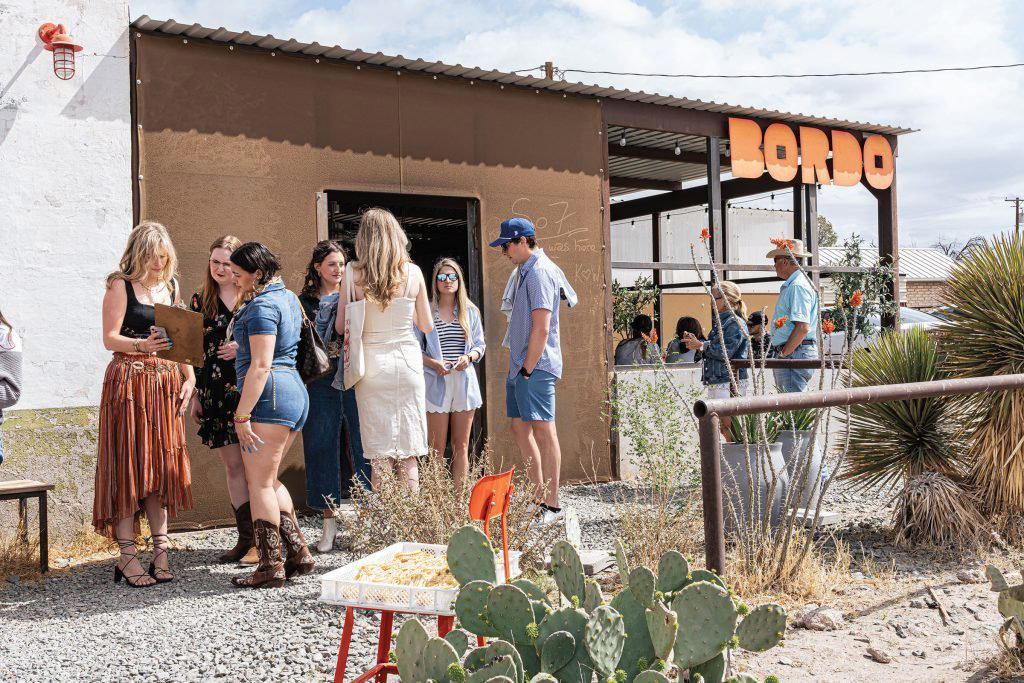
Whimsical and eclectic with vintage photos, colorful art, and a cozy bar that gets progressively darker toward the back; bright and relaxed on the outdoor patio.
Know Before You Go
- Getting there
- 1300 W San Antonio St, Marfa, TX 79843