The Koji Club

The Koji Club occupies a Brighton address that sits at some distance from Boston's central dining corridor, positioning itself within a small but growing category of fermentation-focused drinking establishments. The name signals a clear culinary orientation: koji, the mold at the root of miso, sake, soy sauce, and much of East Asian fermented cuisine, serves as both the conceptual anchor and the drinks program's throughline.
Pearl is the En Primeur Club membership app — saves, bookings, and concierge access live there. Same editors, same standards.
- Address
- 525 Western Ave #6, Brighton, MA 02135
- Website
- thekojiclub.com
- Directions
- Get directions
 Saves & bookings on Pearl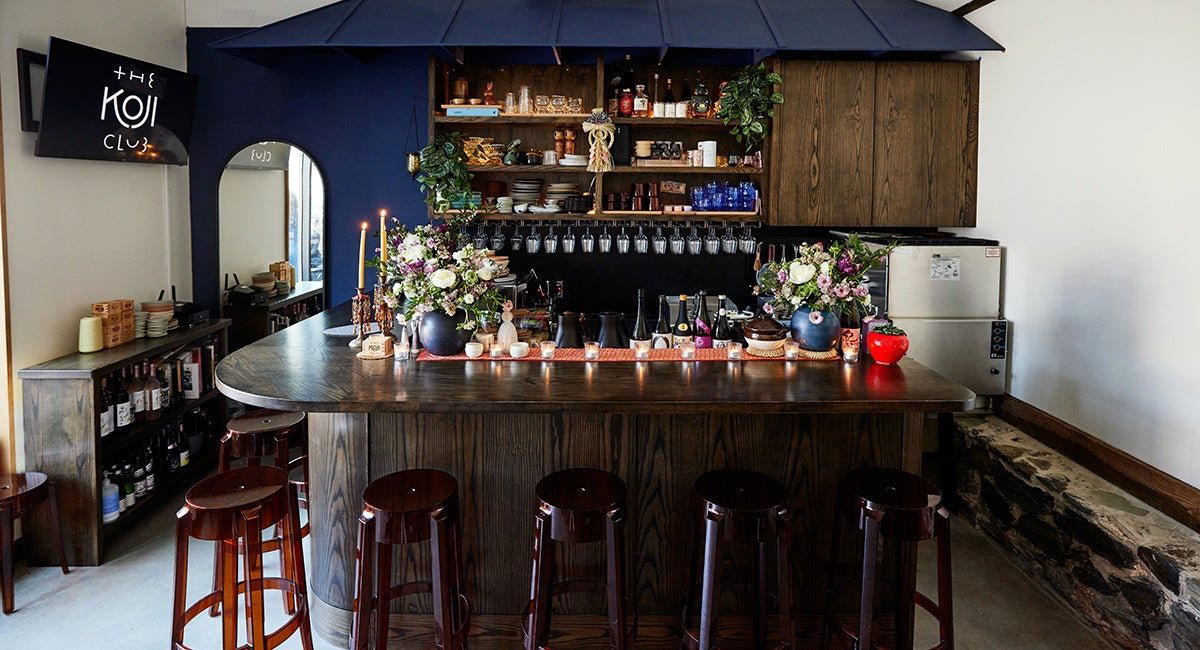
Fermentation Culture, Bottled
Across American cities, a specific kind of bar has been quietly gaining ground over the past decade. It does not lead with a singular spirit category or a theatrical cocktail format. Instead, it organizes itself around a fermentation tradition, typically one rooted in East Asian food culture, and builds a drinks program that treats koji, sake, shochu, or makgeolli the way a serious wine bar treats terroir. The result is a different kind of drinking experience: more referential, more ingredient-driven, and, at its leading, genuinely educational without being didactic. Kumiko in Chicago occupies this space with precision, and Bar Leather Apron in Honolulu operates within a related register.
The Setting: Brighton, Not Back Bay
The address matters here. 525 Western Ave sits in Brighton, a neighborhood that does not appear in most Boston dining itineraries built around the Back Bay, the South End, or the Seaport corridor. Brighton has historically functioned as a residential district, dense with students from nearby Boston College and a working-class population that predates the city's recent hospitality surge. A bar operating under a fermentation-forward concept in this postcode is not chasing the obvious foot traffic. That placement shapes the room's likely character: somewhere between a neighborhood local and a specialist destination, drawing guests who are specifically looking for what it offers rather than walking in from the street.
The suite-style address (unit 6) suggests a multi-tenant building rather than a standalone storefront, which further implies an interior that relies on programming and product to establish atmosphere rather than a dramatic facade. For the category of bars The Koji Club belongs to, this is not unusual. Particularly technically serious fermentation bars in the United States operate out of spaces that would be easy to miss from the outside. The interior visit becomes the point.
Koji as Cultural Framework
Name is not incidental. Koji, the common name for Aspergillus oryzae, is the fungal culture responsible for particularly foundational flavors in East Asian cuisine. It converts starches to sugars in the production of sake, produces the enzymes that break down proteins in miso and soy sauce, and gives shochu and mirin much of their aromatic complexity. In Japan, koji is sometimes referred to as the country's national fungus, a designation that reflects its centrality not just to cooking but to an entire fermentation philosophy built over centuries.
Bars and restaurants in the United States that organize themselves around koji are, in effect, connecting to this longer tradition while adapting it to a contemporary cocktail and hospitality context. The fermentation wave that has reshaped American restaurant kitchens over the past fifteen years, with chefs at institutions ranging from Nordic-influenced fine dining to casual izakaya-style restaurants reaching for koji as a flavor tool, has now created enough of a cultural substrate that a bar named for the ingredient can reasonably expect its guests to arrive with some frame of reference. That shift represents a meaningful change in American drinking culture.
Compared to the broader Boston bar scene, where venues like Equal Measure operate within a more classically American cocktail idiom, and Asta has historically pursued a technique-led but Western-rooted format, The Koji Club is working in a more specific cultural register. The closest national analogs are venues like Kumiko in Chicago, which built an entire program around Japanese whisky and fermentation-adjacent flavors, or Superbueno in New York City, which uses Latin fermentation traditions as its organizing principle. The conceptual move is similar even when the source cultures differ: locate a deep fermentation tradition, make it the structural logic of the menu, and let that logic do the work a cocktail list alone cannot.
What the Drinks Program Likely Looks Like
A bar organized around koji will typically work across several spirits categories that emerge directly from koji fermentation. Sake, the internationally recognized, ranges from entry-level junmai to aged koshu styles with oxidative notes that function more like sherry than the clean, fresh profile most Western drinkers associate with the category. Shochu, still significantly underrepresented in American bars despite decades of presence in Japanese drinking culture, offers a versatility across base ingredients (barley, sweet potato, rice, buckwheat) that makes it highly adaptable to cocktail construction. Mirin and sake lees (kasu) appear increasingly as modifiers and infusion bases in fermentation-forward programs.
Whether The Koji Club also operates alongside or in contrast to the Korean-American fermentation wave, which has produced venues like NAMU Distilling Company with their soju and makgeolli-based spirits, is unclear. But the category is porous. Koji touches Korean, Japanese, and Chinese fermentation traditions in overlapping ways, and a program serious about the ingredient may well cross those lines rather than observe them strictly. For reference on how East Asian-inspired cocktail thinking plays out in a bar setting, Bar Leather Apron in Honolulu provides a useful regional comparison, drawing on Pacific-facing ingredient availability that Boston cannot match but shares a similar intellectual orientation.
How The Koji Club Sits in Boston's Bar Scene
Boston's cocktail scene has matured considerably over the past decade, moving from a period when a small number of pioneering bars defined the conversation to a more distributed map where neighborhood-level specialists now coexist with larger destination venues. Baleia operates in a wine and natural ferment register that overlaps adjacently with fermentation culture, and Abe & Louie's anchors the more traditional, spirit-forward end of the market. The bar's conceptual positioning places it in a smaller and more specific peer group, one that has more natural comparators outside Boston than within it.
That is not a weakness. Bars that do a specific thing with seriousness tend to build loyal, informed audiences who travel for them rather than stumble upon them. The Brighton address, the suite-style location, and the name itself all suggest that the bar has calibrated its offering for guests who arrive with intention. For further context on how fermentation-forward bar programs operate at a national level, Jewel of the South in New Orleans, Julep in Houston, and ABV in San Francisco each represent a different version of the specialist-bar model. Internationally, The Parlour in Frankfurt on the Main shows how technically serious cocktail programming travels across cultural contexts.
Know Before You Go
Address: 525 Western Ave, Unit 6, Brighton, MA 02135
Neighborhood: Brighton, west of the Allston corridor, accessible from the Green Line B branch
Phone / Website: not listed at time of writing; check current listings before visiting
Hours: Mon: Closed; Tue: Closed; Wed: 5–10 PM; Thu: 5–11 PM; Fri: 4–11 PM; Sat: 2–11 PM; Sun: 2–8 PM
Price Range: About $50 per person
Reservations: Walk-in friendly
Reputation First
Comparable venues nearby, for context on price, style, and recognition.
| Venue | Cuisine | Price | Notes |
|---|---|---|---|
| The Koji ClubThis venue — the venue you are viewing | sake_bar | $$$ | Not listed |
| nathálie | wine_bar | $$$ | West Fens |
| OFFSUIT | speakeasy | $$$ | Leather District |
| Rooftop at The Envoy | rooftop_bar | $$$ | South Boston Waterfront |
| Extra Dirty Cocktail Club | speakeasy | $$$ | North End |
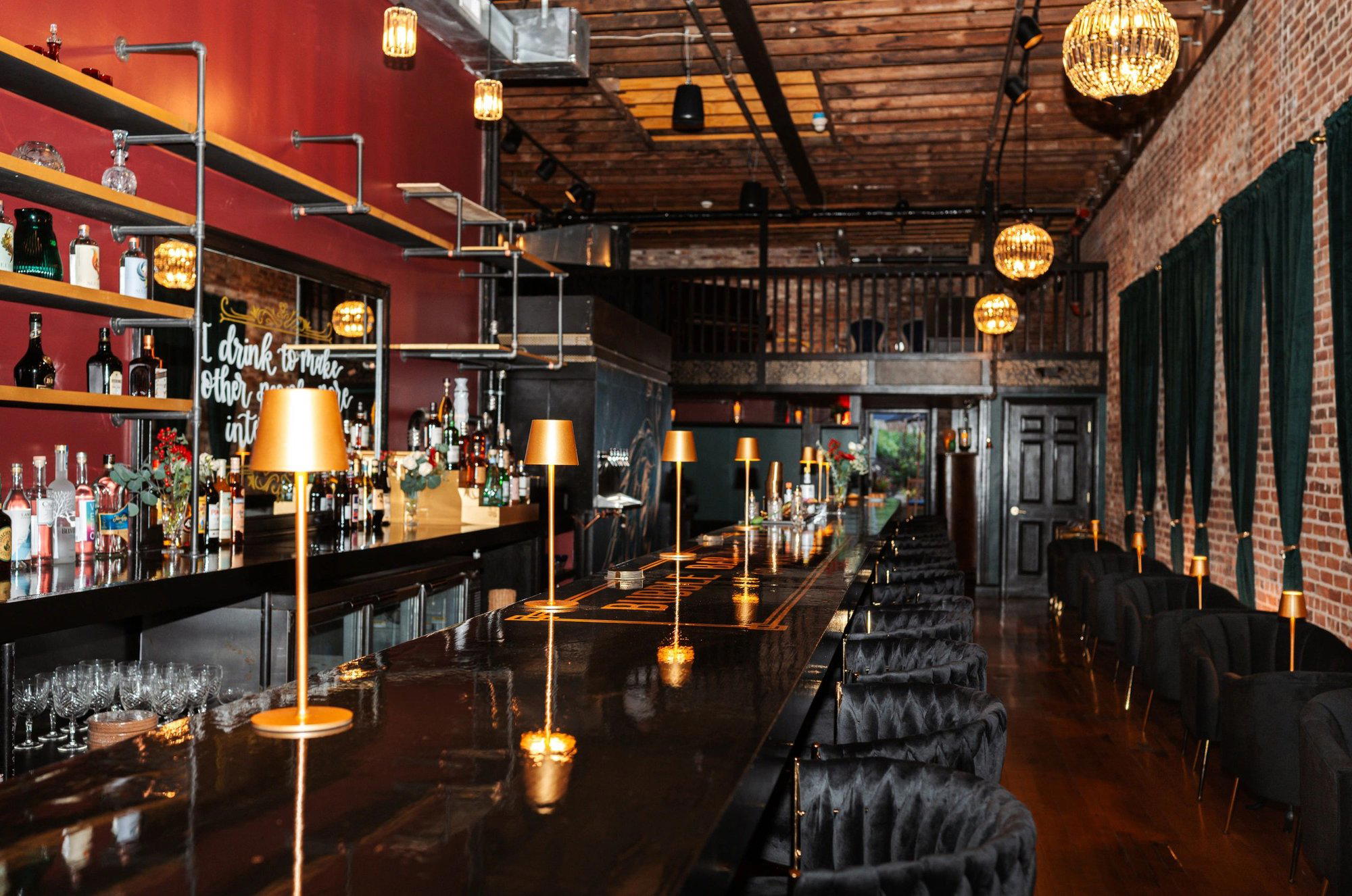
| Bubble Bath Back Bay | rooftop_bar | $$$ | Symphony |
Recognition history
Dated appearances from independent guides and award organizations, with the underlying list record or original source where available.
James Beard Award Semi Finalist
James Beard Award
Continue exploring
More in Boston
Bars in Boston
Browse all →
Restaurants in Boston
Browse all →
Hotels in Boston
Browse all →
Wineries in Boston
Browse all →
At a Glance
- Trendy
- Intimate
- Sophisticated
- Date Night
- Special Occasion
- Design Destination
- Seated Bar
- Lounge Seating
- Sake
Current opening hours
- Monday
- Closed
- Tuesday
- Closed
- Wednesday
- 5–10 PM
- Thursday
- 5–11 PM
- Friday
- 4–11 PM
- Saturday
- 2–11 PM
- Sunday
- 2–8 PM
Hours can change for holidays and private events. Last verified .
Stylish, tiny boîte with dim blue lighting and lounge seating, creating a cool and captivating atmosphere for sake enthusiasts.