Sahara Lounge
Sahara Lounge on Webberville Road sits at the edge of Austin's eastside bar circuit, where live music, cold beer, and a covered outdoor stage draw a crowd more interested in atmosphere than atmosphere design. It occupies a tier of Austin drinking culture that predates the cocktail-bar renovation wave, and that stubbornness is the point. Think neighborhood institution, not concept bar.
Pearl is the En Primeur Club membership app — saves, bookings, and concierge access live there. Same editors, same standards.
- Address
- 1413 Webberville Rd, Austin, TX 78721
- Phone
- +1 512 927 0700
- Website
- saharalounge.com
- Directions
- Get directions
 Saves & bookings on Pearl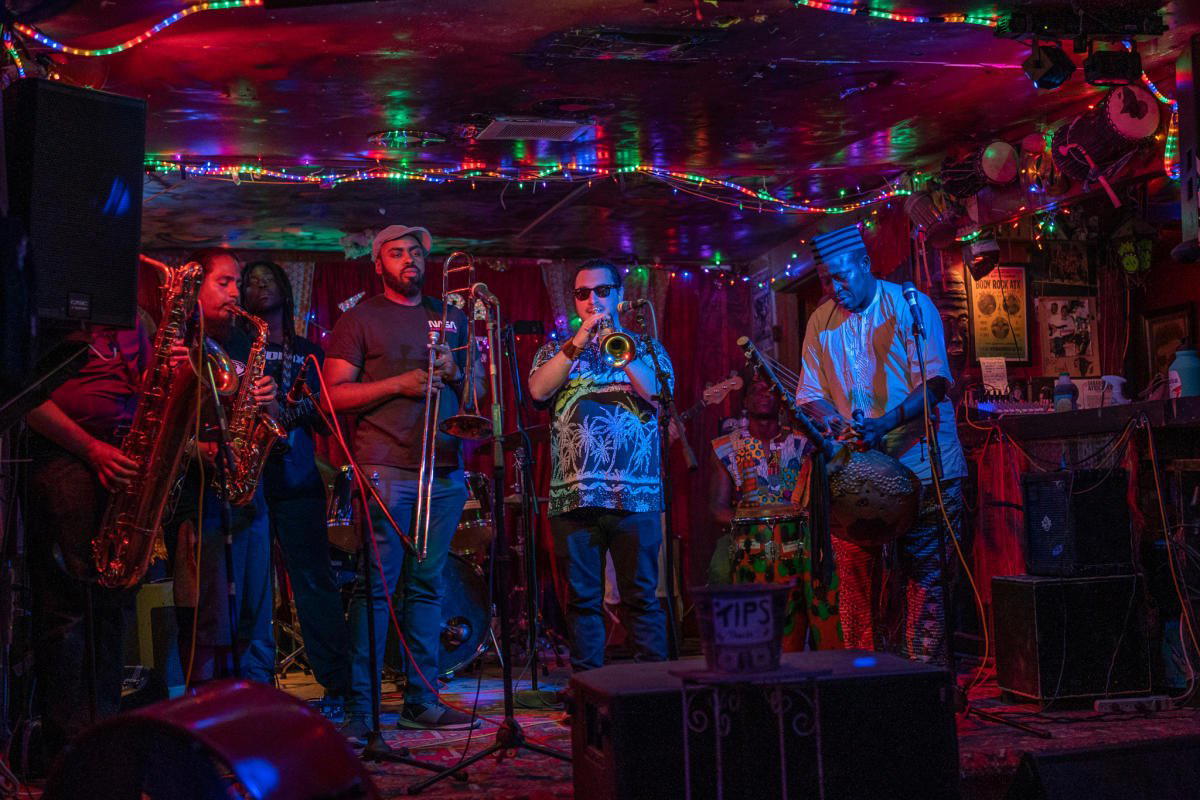
East Austin Before the Renovation Wave
There is a particular kind of bar that survives in American cities not because it reinvents itself but because it refuses to. Sahara Lounge at 1413 Webberville Road sits in that category: a fixture on Austin's eastside that holds its ground while the neighborhood shifts around it. The blocks surrounding it have absorbed coffee roasters, natural wine shops, and fast-casual concepts at pace over the past decade, yet the Lounge reads, from the road, like something that has not consulted a trend report and does not intend to. That is not a flaw. In a city where bar design has become a competitive sport, a room that simply commits to being a room carries its own authority.
Austin's eastside drinking scene has split into two clear tiers over the past several years. One tier runs on cocktail programs, house-made syrups, and credentialed bar directors; venues like Nickel City and 2500 E 6th St belong there, where the pour is precise and the fit-out deliberate. The other tier is older and less photographed: it runs on cold beer, live music, and outdoor stages where the sound bleeds into the parking lot at 10pm. Sahara Lounge belongs to the second group, and the distinction matters if you are deciding where to spend a Tuesday night.
What the Space Tells You
The physical environment at Sahara Lounge does most of the communicating before you order anything. Covered outdoor space, string lights, and a stage configuration oriented toward live performance rather than social seating signal the hierarchy here: music is the organizing principle, drinking is the support structure. This is a format that Austin has historically done well, partly because the city's live music infrastructure runs deep enough to supply quality bookings to venues well outside the downtown corridor, and partly because the eastside's residential character allows for the kind of informal, long-night atmosphere that more central blocks cannot sustain at reasonable noise levels.
The room itself operates at a lower visual register than the renovation-era bars that have opened nearby. There is no considered lighting scheme, no material palette sourced from a design studio. What you get instead is the accumulated atmosphere of a place used regularly by people who actually live in the neighborhood: worn surfaces, functional furniture, a bar setup oriented toward throughput rather than theater. Bars in this category often read as accidental to outsiders but are, in fact, precise expressions of their communities. The eastside Austin that Sahara Lounge serves is not the eastside that appears in travel round-ups about the city's food and drink renaissance; it is the version that existed before that narrative took hold, and that still exists alongside it.
For comparison: the polished cocktail bars that now anchor the corridor, including Aba Austin, operate on entirely different premises around service pacing, menu complexity, and clientele expectations. Neither model is wrong. They answer different questions about what a night out should do.
The Live Music Function
Austin's identity as a live music city is well-documented, but the actual infrastructure sustaining that identity is distributed unevenly. Larger venues like Antone's Nightclub handle the bookings with national profiles. Smaller rooms like Sahara Lounge provide the middle layer where local and regional acts have somewhere to play in front of an audience that showed up for the music rather than the experience of attending a show. That distinction has real consequences for the quality of what gets performed: a crowd at Sahara Lounge tends to be self-selected by genuine interest, which sets a different room temperature than a venue where the music is incidental to the evening.
The stage format, oriented toward the outdoor covered area, also means the sonic experience is less controlled than at purpose-built music rooms. Sound bleeds, ambient noise from the street is present, and the atmosphere is closer to a block party than a concert. Some readers will find that less appealing than a well-tuned room; others will find it more honest. The difference is largely a matter of what you want music to feel like.
Placing Sahara Lounge in a Wider Bar Conversation
Across American cities, bars at this register, neighborhood-anchored, music-forward, low-concept, are becoming rarer as property values and renovation costs push owners toward higher-margin formats. The trajectory is visible in cities like New York, where bars like Superbueno represent the polished end of the spectrum, and in San Francisco, where ABV has built a reputation on technical program depth. Venues in the Gulf South, including Jewel of the South in New Orleans and Julep in Houston, have found a way to operate at high craft levels while retaining some neighborhood function, but those are exceptions built on exceptional programming. Sahara Lounge does not attempt that synthesis. It stays in its lane, which is a strategic choice more bars should probably make explicitly rather than by default.
Further afield, bars like Kumiko in Chicago, Bar Leather Apron in Honolulu, and The Parlour in Frankfurt on the Main represent the endpoint of the craft-bar evolution: formalized programs, considered environments, and a guest experience built around the quality of what is in the glass. Sahara Lounge is not competing with those venues and would not benefit from trying to. Its competitive set is defined by the eastside Austin neighborhood, not by the global cocktail bar circuit.
Planning Your Visit
Sahara Lounge is leading understood as a live music venue that sells drinks, not a bar that occasionally books acts. Arrive oriented toward the programming schedule rather than the drink selection, and the evening works. Arrive expecting a curated cocktail experience and you will have misread the room. For context on the broader Austin bar and restaurant scene, see our full Austin restaurants guide.
| Venue | Format | Primary Draw | Booking |
|---|---|---|---|
| Sahara Lounge | Neighborhood bar / live music | Live music, outdoor stage | Walk-in |
| Nickel City | Cocktail bar | Beer and shot program | Walk-in |
| The Roosevelt Room | Craft cocktail bar | Technical cocktail menu | Reservations available |
| Antone's Nightclub | Live music venue | Established music bookings | Ticketed events |
Continue exploring
More in Austin
Bars in Austin
Browse all →
Restaurants in Austin
Browse all →
Hotels in Austin
Browse all →
At a Glance
- Rustic
- Lively
- Bohemian
- Well Known
- Energetic
- Late Night
- Group Outing
- Casual Hangout
- Celebration
- Live Music
- Historic Building
- Standalone
- Standing Room
- Lounge Seating
- Outdoor Terrace
- Booth Seating
- Craft Cocktails
- Rum
- Gin
- Mezcal
- Zero Proof
Current opening hours
- Monday
- Closed
- Tuesday
- Closed
- Wednesday
- 7 PM–12 AM
- Thursday
- 7 PM–12 AM
- Friday
- 7 PM–2 AM
- Saturday
- 7 PM–2 AM
- Sunday
- 4–8 PM
Hours can change for holidays and private events. Last verified .
Dimly lit historic juke joint with vintage character, sprung wooden dance floor, fire pit patio, and eclectic decor described as a cross between a psychedelic estate sale and a Sun Ra-operated hostel; warm, welcoming, and timeless.
Know Before You Go
- Getting there
- 1413 Webberville Rd, Austin, TX 78721