R. House
Situated in a converted auto showroom in Remington, R. House is a modern, chef-driven food hall celebrated for fostering independent food startups and culinary experimentation. According to Condé Nast Traveler and Baltimore Magazine, the lineup includes diverse options like BRD’s fried chicken, Amano Taco, and Hilo Poke & Sushi. The communal seating, sunlit interior, and rotating pop-up stalls make R. House a lively hub for food lovers and a launchpad for some of Baltimore’s most exciting new talent. The venue’s focus on local ownership and creativity continues to earn it praise in city guides and foodie circles alike.
Pearl is the En Primeur Club membership app — saves, bookings, and concierge access live there. Same editors, same standards.
- Address
- 301 W 29th St, Baltimore, MD 21211
- Phone
- +1 443 347 3570
- Website
- r.housebaltimore.com
- Directions
- Get directions
 Saves & bookings on Pearl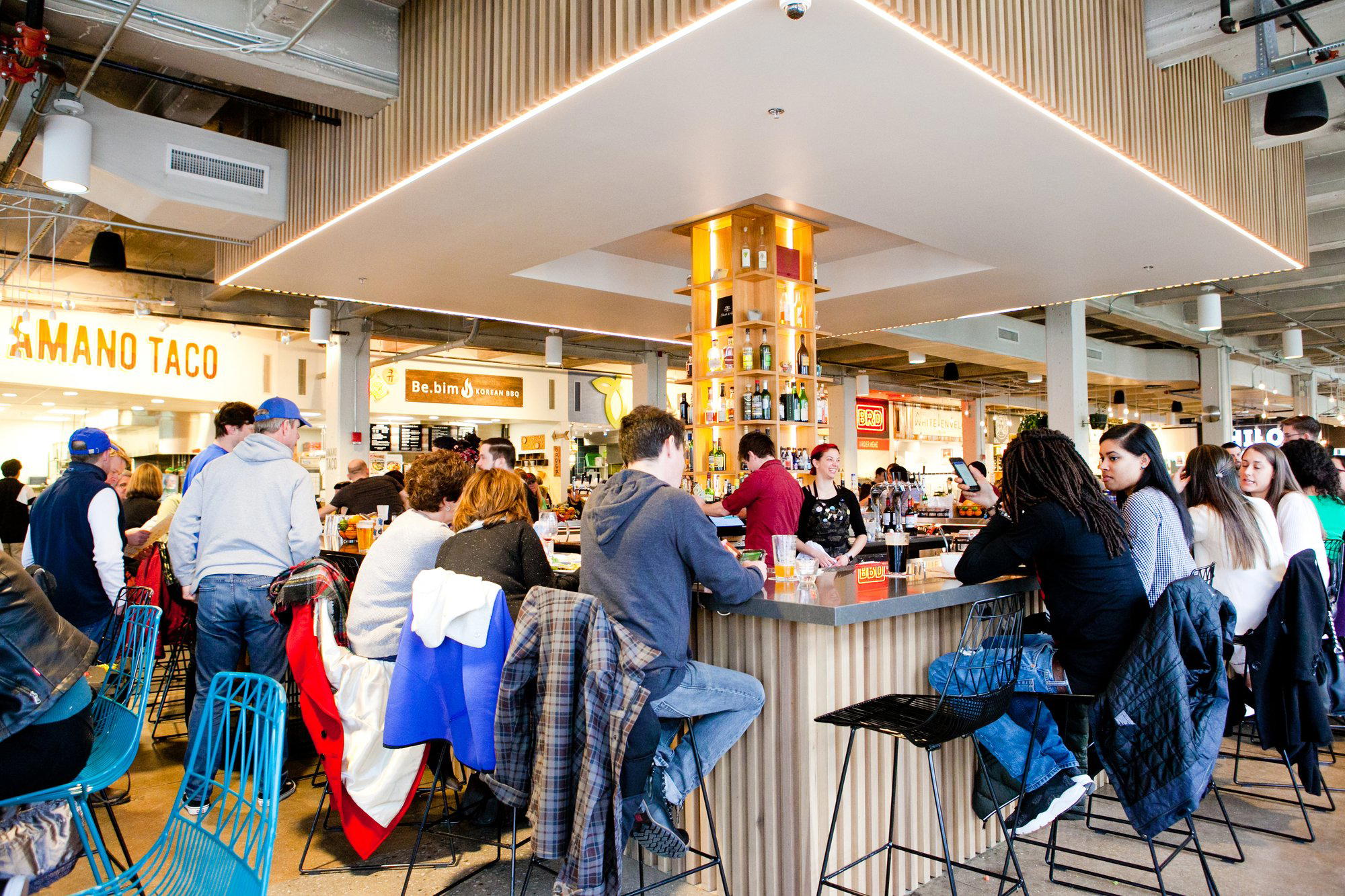
Where Hampden's Food Hall Format Finds Its Footing
At the corner of West 29th Street, R. House reads more like a reclaimed warehouse than a dining destination from the outside. The scale is industrial, the footprint generous, and the interior noise levels pitch somewhere between a covered market and a lively neighborhood bar on a Friday evening. That atmospheric roughness is not incidental. It reflects a structural decision about how food halls operate in mid-sized American cities, where the format tends to succeed not by imitating the density of a New York or Chicago terminal market, but by becoming a genuine community anchor for a particular neighborhood.
Hampden has been Baltimore's most design-conscious residential corridor for the better part of two decades, with independent retail and food operators clustering along 36th Street before spilling into the surrounding blocks. R. House arrived on West 29th Street as that neighborhood's largest single food-and-drink footprint, consolidating multiple independent vendor concepts under one roof. The model belongs to a specific tier of American food hall development: not the transit-hub variety, not the luxury food court attached to a hotel, but the neighborhood-scale incubator format that positions itself as a platform for emerging local operators.
The Menu Architecture of a Multi-Vendor Hall
Understanding R. House as a dining experience requires reading its menu architecture differently than you would a restaurant. There is no single kitchen, no single chef, and no unified culinary philosophy imposed from above. Instead, the hall functions as a portfolio of independent stalls, each with its own format, price point, and ordering logic. This structure places the editorial burden on the visitor: you are effectively curating your own meal from a set of discrete offerings rather than surrendering to a tasting progression.
That curatorial freedom is the format's central appeal and its primary challenge. At a counter-service restaurant, the menu is already edited. At a hall like R. House, the editing is yours. The better vendors tend to operate with focused, tight menus rather than sprawling lists, which is consistent with how the most successful food hall concepts in comparable American cities have differentiated themselves. The stalls that draw sustained lines and repeat visitors are rarely the ones trying to do everything; they are the ones that have compressed a specific culinary idea into four or five items executed with discipline.
The communal seating at the center of the hall is both the operational logic and the social proposition. Tables are shared, sightlines are open, and the crowd on any given evening skews toward neighborhood regulars rather than destination tourists. That demographic mix shapes the atmosphere more than any design decision: R. House functions, in practice, as a local institution for Hampden residents who want variety and flexibility without the formality or price floor of a full-service restaurant.
Positioning in Baltimore's Broader Dining Scene
Baltimore's food and drink scene has developed a cluster of serious independent operators over the past decade, with venues like Alma Cocina Latina and Baba'de drawing attention from well beyond the city's usual radius. The food hall format sits adjacent to but distinct from that tier: it is less about a singular culinary vision and more about access and range. Where a destination restaurant asks you to trust a chef's point of view across an entire meal, a hall like R. House asks you to make a series of smaller, lower-commitment decisions.
That lower commitment has a corresponding lower price floor. The per-person spend at R. House will generally fall well beneath what a comparable evening at a full-service Baltimore restaurant would cost, which positions it clearly in the accessible end of the market. It competes less with spots like Barcocina or Alonso's and more with the broader question of how a neighborhood resident decides to eat on a weeknight when they want variety without a reservation or a minimum spend.
For visitors arriving from cities with more developed food hall cultures, the comparison set is instructive. The format shares structural DNA with bar-adjacent communal spaces across the country: places like ABV in San Francisco, Kumiko in Chicago, or Superbueno in New York City, which each in their own way blur the line between drinking destination and food-forward social space. R. House is not operating at the cocktail-program sophistication of those venues, but it shares the underlying premise that the most durable urban hospitality spaces are the ones that create a reason for people to stay, move around, and return.
Internationally, the neighborhood food hall model has produced some of the most durable evening formats in cities with strong independent operator cultures. From the covered-market bars of central Europe, such as The Parlour in Frankfurt on the Main, to craft cocktail destinations like Bar Leather Apron in Honolulu, Jewel of the South in New Orleans, and Julep in Houston, the throughline is a clear sense of place and operator identity. The halls that last are the ones where the vendor mix reflects the actual neighborhood, not a developer's concept of what that neighborhood should want.
Planning Your Visit
R. House sits at 301 West 29th Street in Baltimore's Hampden neighborhood, reachable from downtown Baltimore in roughly fifteen to twenty minutes by car or rideshare. The hall's open-floor format means walk-ins are the norm rather than the exception, and the communal seating structure means arriving as a pair or small group gives you the most flexibility. Evenings tend to draw a denser crowd than weekend afternoons, which are somewhat quieter and better suited to methodical exploration of the vendor lineup. For a broader orientation to where R. House fits within Baltimore's independent dining and drinking scene, the full Baltimore restaurants guide maps the city's key neighborhoods and operator tiers in more detail.
Continue exploring
More in Baltimore
Bars in Baltimore
Browse all →
Restaurants in Baltimore
Browse all →
At a Glance
- Lively
- Industrial
- Trendy
- Group Outing
- Casual Hangout
- Brunch
- Live Music
- Seated Bar
- Communal Tables
- Craft Cocktails
Current opening hours
- Monday
- 7 AM–10 PM
- Tuesday
- 7 AM–10 PM
- Wednesday
- 7 AM–10 PM
- Thursday
- 7 AM–10 PM
- Friday
- 7 AM–11 PM
- Saturday
- 7 AM–11 PM
- Sunday
- 7 AM–10 PM
Hours can change for holidays and private events. Last verified .
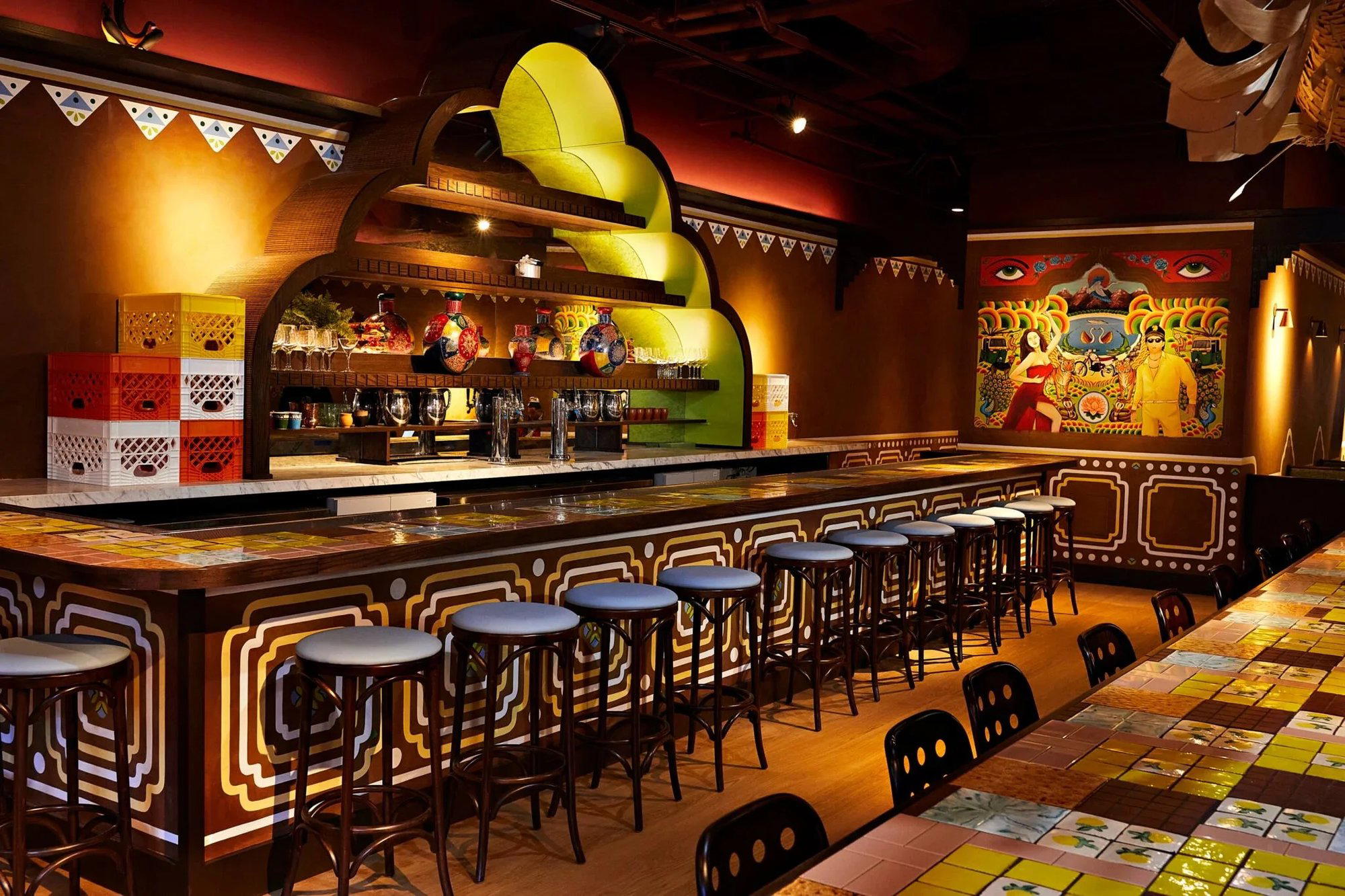
Industrial-chic warehouse with roll-up garage doors and colorful sofas creating a creative, energetic atmosphere.
Know Before You Go
- Getting there
- 301 W 29th St, Baltimore, MD 21211