Momotaro
Momotaro occupies a prominent position on West Lake Street in Chicago's Fulton Market corridor, where Japanese dining has pushed well beyond sushi counters into something more architecturally and conceptually ambitious. The room operates at a scale that few Japanese concepts in the Midwest attempt, and the bar program has developed a following that extends beyond the dining crowd.
 Discover on Pearl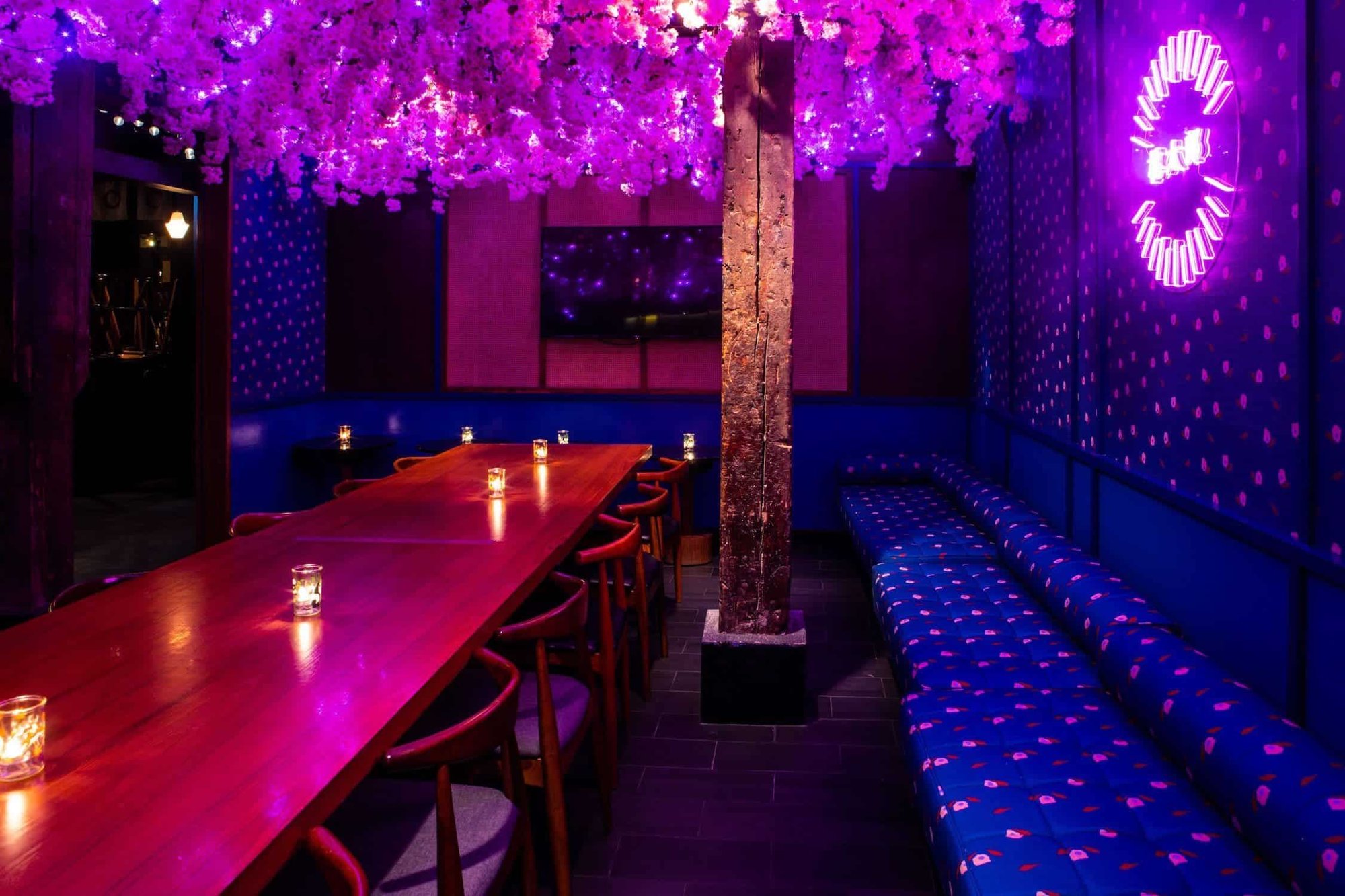
The Scale Japanese Dining Reaches in Fulton Market
Chicago's Fulton Market corridor has spent the better part of a decade becoming the city's most concentrated block of destination dining. The neighbourhood's former meatpacking identity now reads as atmosphere rather than function, and the buildings that replaced or repurposed those warehouses tend toward height and volume. Momotaro, at 820 W Lake St, fits that logic exactly. Japanese restaurants in American cities typically operate at one of two scales: the intimate counter running under thirty seats, or the sprawling izakaya-influenced room designed to absorb large-format bookings. Momotaro operates in the latter category, and does so in a building that signals intent before you cross the threshold.
The West Loop and Fulton Market together form the tightest competitive dining cluster in Chicago, where a reservation at one address puts you within walking distance of most of the city's serious restaurant ambition. That density matters for Japanese dining specifically, because the category in Chicago has developed unevenly. Counter omakase has grown but remains limited in seat count citywide. Large-format Japanese concepts that maintain kitchen discipline across a broad menu are rarer, and Momotaro has occupied that space consistently since opening.
What the Room Communicates
The experience of arriving at Momotaro is closer to entering a contemporary Japanese design statement than a neighbourhood restaurant. The building is multi-level, and the spatial hierarchy inside reflects an approach common to Tokyo's better mid-to-large dining rooms: different floors serve different social registers. A ground-level bar area absorbs walk-ins and early drinkers; the main dining room operates at a remove from that energy. This kind of vertical separation is a solved problem in Japanese hospitality, where floor plan and service choreography are understood to be part of the same discipline. In an American city context, it is less common and more deliberate when it appears.
Bar program here has attracted attention on its own terms, and that is not incidental to the room's design. Chicago's cocktail scene has developed a strong bench of technically serious programs, from the Japanese whisky focus at Kumiko to the more eclectic approaches at Leading Intentions and the French-inflected Bisous. Momotaro's bar sits within that broader movement toward substantive drink programs in Chicago, but its Japanese-ingredient orientation and scale place it in a different part of the category.
The Team Dynamic: Kitchen, Bar, and Floor Working Together
What separates a large Japanese restaurant from an assembly-line one is whether the kitchen, the bar, and the front-of-house operate as a coherent unit or as three separate departments sharing a room. At Momotaro, the program has been built around the premise that food and drink should cross-reference each other, which is a structural commitment rather than a styling choice. Japanese cuisine provides a useful framework for this because umami-forward food and spirit-forward drinks have a long documented compatibility: sake's acidity, Japanese whisky's grain character, and shochu's neutrality all offer different solutions to the same pairing problem.
The floor team's role in a room of this size is to translate that kitchen-bar coherence into individual table decisions. A server who can move between sake recommendations and whisky highball suggestions, and connect both to what is on the plate, is performing a genuinely difficult skill. It is the same challenge that operations like Bar Leather Apron in Honolulu and Jewel of the South in New Orleans have addressed in different ways: the bar program and the hospitality program have to share a common language. At Momotaro, Japanese hospitality conventions provide that shared grammar, even when the execution is filtered through a Chicago sensibility.
Where Momotaro Sits in the Wider Chicago Picture
Chicago's Japanese dining category has grown more layered in recent years. The city now has credible representation across omakase counters, ramen specialists, and large-format concepts. Momotaro is positioned at the larger-format end of that range, which means it functions differently from a twelve-seat counter booking: it absorbs groups, accommodates walk-in bar traffic, and can handle the kind of spontaneous weeknight visit that a counter omakase cannot. That accessibility is a feature, not a compromise, for a certain category of evening.
For context beyond Chicago, the American cities that have developed the most sophisticated Japanese large-format dining tend to be on the coasts, where Japanese-American communities and international travel patterns have driven demand for decades. Chicago has built its version of this category with a different supply chain of influence, drawing on the broader Midwest food culture and a restaurant investment community that has increasingly looked beyond the steakhouse as its flagship format. Momotaro represents that shift clearly. Its address on West Lake Street, rather than in River North or the Loop, is itself a statement about where Chicago's dining ambition has relocated.
The bar's reputation for Japanese-ingredient cocktails also places Momotaro in a national conversation that includes programs like Lemon in Chicago, Julep in Houston, Superbueno in New York City, ABV in San Francisco, Allegory in Washington, D.C., and The Parlour in Frankfurt on the Main. These are programs that have staked their identity on a specific flavor tradition rather than on general technical excellence. Momotaro's bar fits that model, with the additional advantage of a full kitchen behind it.
For a comprehensive view of where Momotaro sits within Chicago's broader dining and drinking scene, see our full Chicago restaurants guide.
Know Before You Go
Planning Details
- Address: 820 W Lake St, Chicago, IL 60607
- Neighbourhood: Fulton Market / West Loop
- Format: Large-format Japanese restaurant with multi-level layout and bar program
- Bar access: The ground-floor bar absorbs walk-in traffic on most nights; the main dining room operates by reservation
- Getting there: The Green and Pink Line CTA stop at Morgan St is a short walk; street parking on W Lake St is limited during evening service
- Leading approach: Reserve the dining room for groups or occasions; the bar is a viable standalone destination
Frequently Asked Questions
The Minimal Set
A compact peer set to orient you in the local landscape.
| Venue | Notes | Price |
|---|---|---|
| Momotaro | This venue | |
| Kumiko | ||
| Bisous | ||
| The Aviary | ||
| Three Dots & a Dash | ||
| Best Intentions |
Need a Table?
Our members enjoy priority alerts and concierge-led booking support for the world's most difficult bars and lounges.
Get Exclusive Access