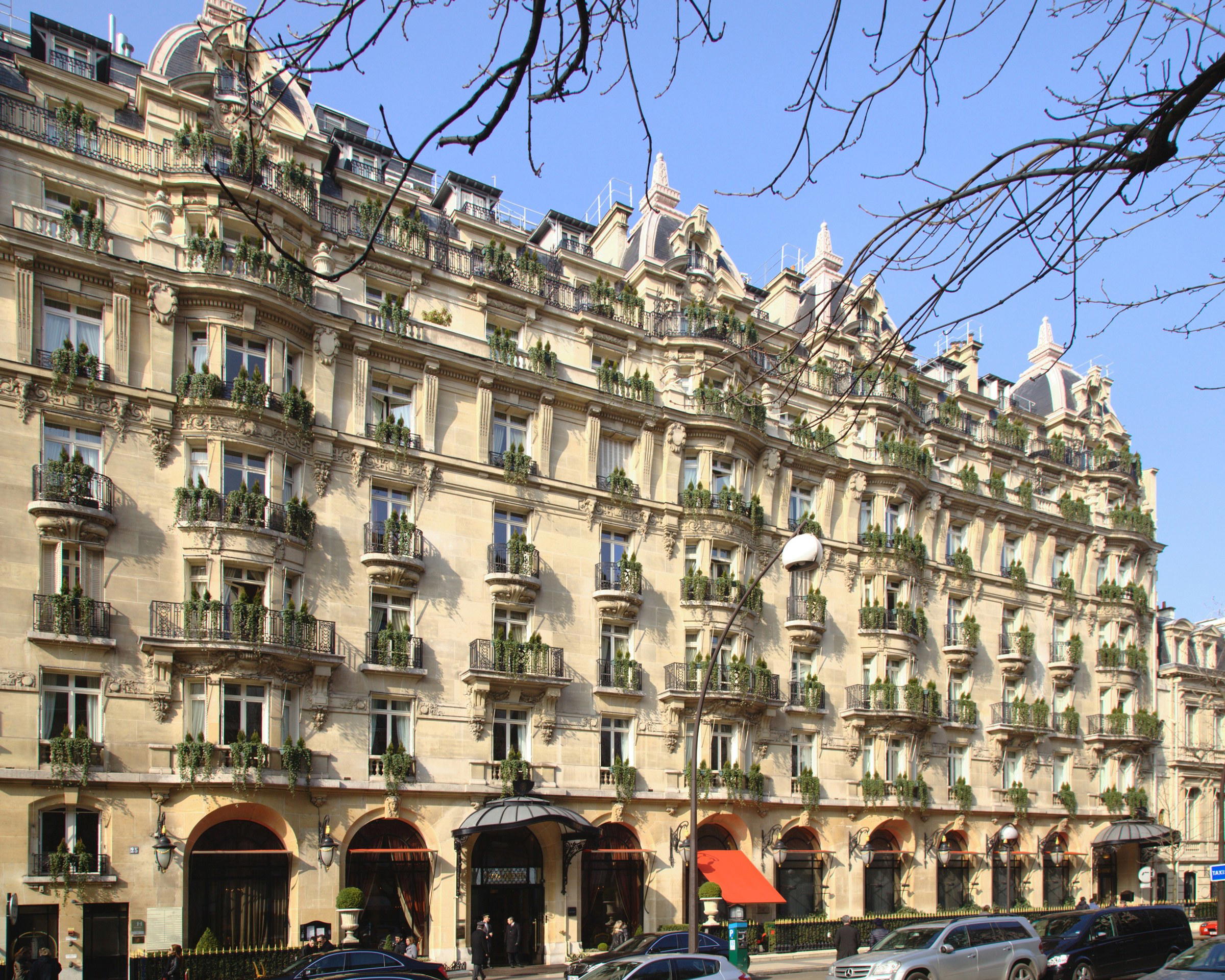
Le Royal occupies a Rue de Grenelle address in the 7th arrondissement, placing it squarely within Paris's most wine-serious dining corridor. The room operates at the quieter, more deliberate end of the Left Bank register, where cellar depth and provenance matter as much as what arrives on the plate. For those approaching Paris dining through the lens of what's in the glass, it belongs in the planning conversation.
Pearl is the En Primeur Club membership app — saves, bookings, and concierge access live there. Same editors, same standards.
- Address
- 212 Rue de Grenelle, 75007 Paris, France
- Phone
- +33 1 47 53 92 90
- Website
- leroyalbarparis.fr
- Directions
- Get directions
 Saves & bookings on Pearl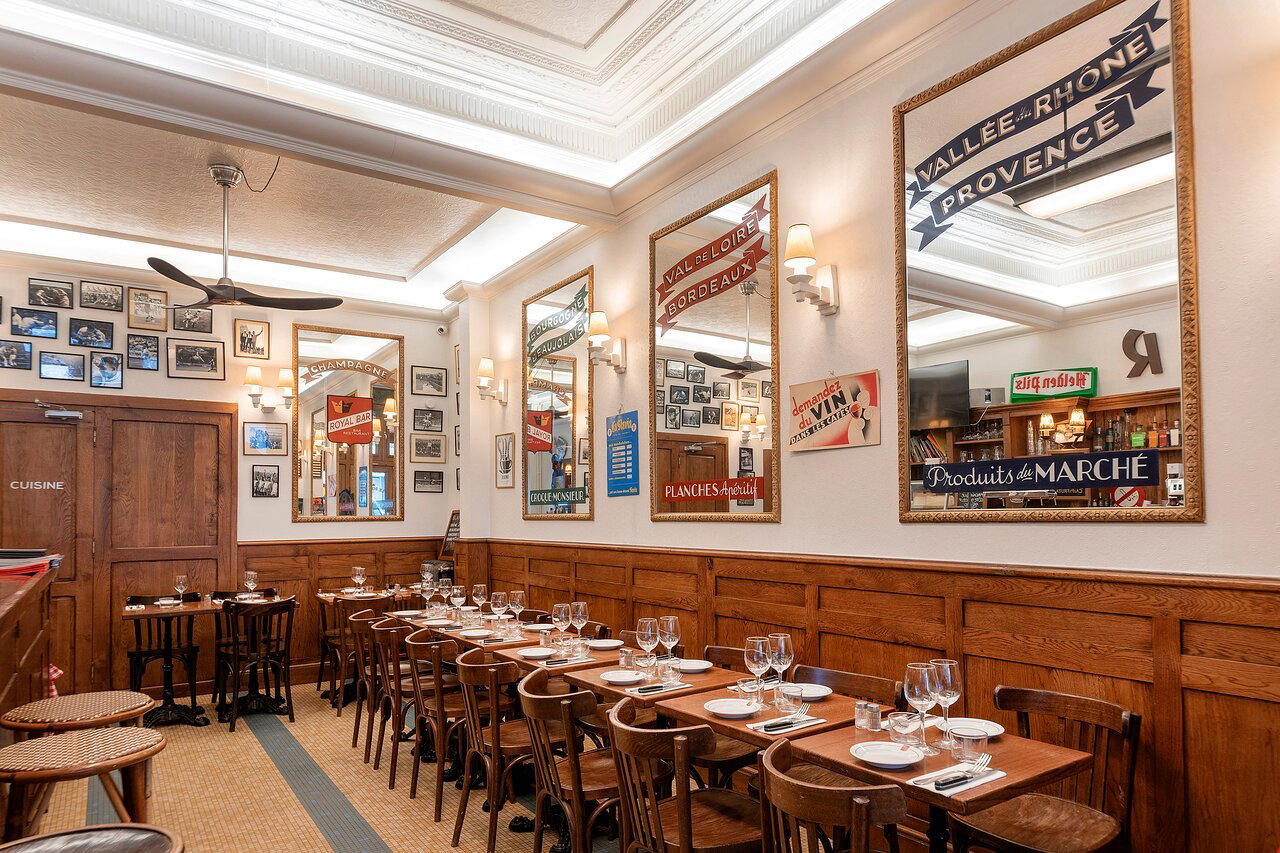
The 7th Arrondissement and the Wine-Forward Table
Rue de Grenelle runs through one of Paris's most compositionally consistent neighbourhoods: ministerial buildings, couture flagships, and restaurants that attract a clientele with strong opinions about Burgundy vintages. The 7th has long been resistant to the kind of high-concept turnover that marks the 11th or the 9th. Addresses here tend to hold, and the dining rooms that endure tend to do so because they have something calibrated and repeatable to offer. Le Royal, at number 212, sits inside that pattern.
Approaching from the Boulevard de La Tour-Maubourg side, the street narrows perceptibly and the pace drops. The neighbourhood's culinary character is shaped less by trend and more by the expectations of a resident clientele who have been eating well for decades. In that context, a wine program earns its reputation slowly, through consistency across seasons rather than a single headline list. That is the measure that matters on this street.
What a Deep Cellar Signals in Paris Right Now
Paris's wine culture has been through a visible rebalancing over the past ten years. The natural wine movement pulled attention and column inches toward the 11th arrondissement and the Canal Saint-Martin, toward low-intervention producers and chalkboard lists that changed weekly. That shift was real and produced genuinely interesting drinking. But it also left a gap at the table for establishments that maintained traditional cellar depth, the kind built over years from Bordeaux négociants, Burgundy domaines, and Loire specialists who don't feature in the natural wine conversation.
The 7th never fully joined the natural wine pivot. Its restaurants kept buying from classical appellations, kept ageing bottles, kept employing sommeliers trained in the classical French tradition. Le Royal's address on Rue de Grenelle places it inside that continuity.
For wine-led dining in Paris, the relevant comparisons are not necessarily the most visible names. They are the addresses where the sommelier conversation begins with what you're drinking rather than what you're eating, where the list has depth in Pomerol and Meursault rather than breadth across natural producers. That positioning carries implications for pace, formality, and price tier that are worth understanding before you book.
Framing Le Royal in Its Competitive Set
The 7th arrondissement operates as a distinct competitive tier within Paris dining. It is not the 1st or the 8th, where grand brasseries and palace hotel restaurants set the tone. It is not the 11th, where small producers and late hours define the register. The 7th sits closer to the 6th in disposition: serious without being theatrical, expensive without being ostentatious, and wine-attentive in a way that assumes the guest arrives with some knowledge.
Across Paris, the bar and restaurant scene has fragmented into sharply differentiated formats. The cocktail-forward addresses, including Danico, Candelaria, and Bar Nouveau, occupy one tier, built around technical programs and deliberate curation. The larger, atmosphere-driven venues like Buddha Bar occupy another. A wine-serious table in the 7th competes against neither of those formats.
That relative invisibility is not accidental. The clientele the 7th's better restaurants serve tend to book through networks and return visits rather than through discovery platforms. For a visitor constructing a Paris itinerary around wine rather than cocktails or spectacle, that distinction matters for what to expect at the door and at the table. Our full Paris restaurants guide maps the broader context across arrondissements and price tiers.
The Wine List as the Organising Principle
In the classical French dining tradition, the wine list predates the menu in the logic of the meal. You choose the wine, or at least the appellation and vintage register, and the food follows. That philosophy produces a different kind of restaurant from one where the kitchen leads and the sommelier matches afterward. Establishments built around the former approach tend to have longer cellars, more mature stock, and a service cadence that builds time into the wine conversation rather than compressing it.
France's regional wine culture extends well beyond Paris. Across the country, wine bars and specialist addresses have developed their own distinct approaches: Coté Vin in Toulouse, La Maison M. in Lyon, and Bar Casa Bordeaux in Bordeaux each reflect their region's dominant grape and producer relationships. In Alsace, Au Brasseur in Strasbourg anchors the other end of the French drinking tradition. Against that national picture, a Paris address in the 7th with classical cellar depth is making a specific argument about what wine service should look like, one built on the accumulated stocks of Bordeaux and Burgundy rather than on regional character or producer storytelling.
Beyond France, the contrast is equally instructive. Papa Doble in Montpellier and Le Café de la Fontaine in La Turbie represent the southern French dining register, lighter and more Mediterranean in orientation. Even further afield, Bar Leather Apron in Honolulu shows how the ambition for serious cellar depth has spread far outside Europe's classical wine corridors. The 7th arrondissement remains, for now, the benchmark against which those ambitions are often measured.
What to Expect at the Table
Dining on Rue de Grenelle in the 7th places you in a neighbourhood where the tempo of service is slower by design. Tables are not turned on a schedule that prioritises volume. The sommelier interaction, where the list and the room are aligned, runs as a genuine conversation rather than a transaction. For guests accustomed to the faster, more casual register of Paris's bistronomie scene, the pace can feel deliberate to the point of formality. That is not a flaw in the experience; it is the experience.
The cuisine in this part of Paris tends toward the classical French register with modern adjustment rather than full reinvention. Dishes are constructed to carry wine rather than compete with it. Reductions, butter-based sauces, aged proteins: these are the kitchen's primary tools, and they are chosen because they work with depth-driven Burgundy and Bordeaux in a way that more acidic or herb-forward preparations do not. Whether the kitchen at Le Royal executes this with the same precision as its cellar, the address and neighbourhood context put it in the right conversation.
Know Before You Go
- Address: 212 Rue de Grenelle, 75007 Paris, France
- Arrondissement: 7th, Left Bank
- Nearest Metro: La Tour-Maubourg (Line 8) or Rue du Bac (Line 12)
- Dress code: Smart casual is the standard for this neighbourhood tier; formal is not out of place
- Timing: Lunch service in the 7th typically runs from noon; dinner from 7:30pm. Confirm current hours with the venue directly
- Paris context: See our full Paris guide for neighbourhood comparisons and broader itinerary planning
What It’s Closest To
| Venue | Cuisine |
|---|---|
| Le RoyalThis venue — the venue you are viewing | This venue |
| Bar Nouveau | World's 50 Best |
| Buddha Bar | World's 50 Best |
| Candelaria | World's 50 Best |
| Danico | World's 50 Best |
| Harry's Bar | World's 50 Best |
Continue exploring
More in Paris
Bars in Paris
Browse all →
Restaurants in Paris
Browse all →
Hotels in Paris
Browse all →
At a Glance
- Elegant
- Sophisticated
- Casual Hangout
- Standalone
- Seated Bar
- Classic Cocktails
Current opening hours
- Monday
- 11:30 AM–1 AM
- Tuesday
- 11:30 AM–1 AM
- Wednesday
- 11:30 AM–1 AM
- Thursday
- 11:30 AM–1 AM
- Friday
- 11:30 AM–1 AM
- Saturday
- 11:30 AM–1 AM
- Sunday
- Closed
Hours can change for holidays and private events. Last verified .
Chill atmosphere with great music.
Know Before You Go
- Getting there
- 212 Rue de Grenelle, 75007 Paris, France