La Parguera
La Parguera is a coastal fishing village on Puerto Rico's southwest shore where bioluminescent bay tours meet an unhurried bar culture built around rum, local beer, and open-air waterfront drinking. The scene here runs closer to the rhythms of the sea than to San Juan's polished cocktail programs, making it a useful counterpoint to the island's more produced nightlife. Plan around sunset and stay for the glow.
 Discover on Pearl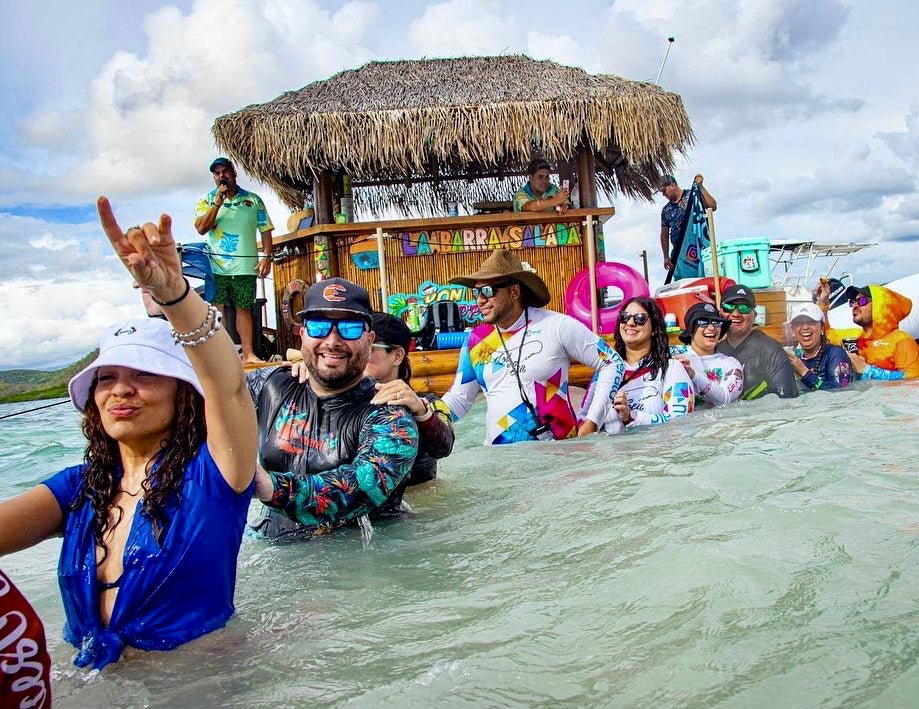
Where the Southwest Coast Drinks
Puerto Rico's southwest corner operates on a different clock than San Juan. In La Parguera, a fishing village in the municipality of Lajas, the bar culture is shaped by water rather than by neighborhood competition or award cycles. Mangrove channels cut through the coastline, the famous bioluminescent bay draws visitors after dark, and the strip of open-air establishments along the waterfront functions less as a nightlife destination and more as an extension of the pier itself. This is where locals and visitors share plastic chairs, coolers cross tables, and the rum flows at a pace the Caribbean sets for itself.
That informality is not a gap in the market — it is the market. Southwest Puerto Rico has not chased the cocktail program arms race that defines parts of Old San Juan, and La Parguera is a useful illustration of why. The village sits roughly 35 miles southwest of Ponce and about two hours from San Juan by car along PR-2 and PR-116; the distance is part of what keeps the scene intact. Visitors who make the drive tend to come specifically for the bay, the fishing, and the low-friction social atmosphere the waterfront delivers.
The Rum Logic of the Southwest
Puerto Rico's relationship with rum is structural, not decorative. The island produces more rum by volume than almost any other territory in the world, and that production underpins how bars across the island are stocked, priced, and consumed. In places like La Parguera, rum is rarely the subject of a tasting note — it is the baseline. A cold rum-and-soda or a simple mixed drink served in a plastic cup at the water's edge is the dominant format, and the experience of drinking there is inseparable from the setting: salt air, the sound of boat engines at idle, and the kind of light that only exists when the sun drops behind the Caribbean.
That stands in direct contrast to the approach at La Factoría in San Juan, which has built one of the island's most referenced cocktail programs through deliberate technique and multi-room bar design. Both places serve rum. The difference is intent, format, and audience. La Parguera makes no claim to craft-cocktail territory , its authority comes from place and mood rather than from menu architecture. For a comparison of how technique-driven programs operate elsewhere in the Americas, Jewel of the South in New Orleans and Kumiko in Chicago represent the opposite end of that spectrum.
Drinking in Puerto Rico's Southwest: A Broader Picture
The southwest and west coasts of Puerto Rico have a cluster of bar and drinking experiences that collectively tell a story about how the island drinks outside its capital. Guavate in Cayey anchors the mountain corridor with roadside lechoneras and open-air drinking tied to weekend food culture. El Bohio in Rincon serves the surf community along the northwest coast. PR-116 in Lajas , practically in La Parguera's own municipality , represents the local bar presence in the surrounding area. Further up the west coast, Da Bowls in Aguadilla and Campamento Piñones in Loiza demonstrate how Puerto Rico's coastal communities each develop drinking cultures shaped by their particular geography and visitor mix.
La Parguera fits cleanly into this pattern. It is a village that drinks the way coastal fishing communities tend to: accessibly, communally, and without much concern for what is being curated elsewhere. The bioluminescent bay is the organizing attraction , most evenings, kayak or boat tours of the bay operate after dark, and the waterfront bar scene fills in the hours before and after. That sequencing matters for how you plan a visit.
The Bioluminescent Bay as Context for the Evening
Bioluminescent bays are rare enough globally that La Parguera's Bahía Fosforescente functions as a genuine draw rather than a footnote. The dinoflagellates responsible for the glow require specific conditions , warm water, the right salinity, minimal light pollution , and La Parguera's enclosed lagoon system provides them reliably. The experience of watching the water light up around a paddle or a boat hull at night sets the tone for what follows on the waterfront: people returning from tours, still processing what they saw, settling into the nearest open-air bar for a drink that does not need to be complicated.
The practical implication is that the leading approach to La Parguera's bar scene is as a before-and-after rather than a standalone destination. Arrive with enough time to explore the waterfront in the late afternoon, join a bay tour around dusk or shortly after, and return to the strip when the night is still young. Casa BACARDÍ in Catano offers a more structured rum education if you want institutional context for what you are drinking across the island , but La Parguera's waterfront is specifically not that. It is the experiential counterpoint.
How La Parguera Compares Beyond Puerto Rico
The open-air waterfront bar format La Parguera operates within is not unique to Puerto Rico , it appears across the Caribbean, in coastal fishing towns from Belize to Martinique, and in analogous beach-town drinking cultures globally. What distinguishes the Puerto Rican version is the rum infrastructure underneath it and the specific combination of bioluminescent bay tourism with a village scale that has not been significantly commercialized. For comparison, Bar Leather Apron in Honolulu shows how a Pacific Island destination can produce a technically serious cocktail scene alongside beach tourism , a path La Parguera has not taken, and likely will not.
For readers who want the full picture of where La Parguera fits within the island's drinking and dining options, our full La Parguera restaurants guide covers the broader scene. And for a point of comparison on how a culturally grounded bar program operates in a coastal-adjacent American city, Julep in Houston is worth the reference.
Planning Your Visit
La Parguera is reached via PR-116 off PR-2, roughly two hours southwest of San Juan by car. Weekends draw heavier local crowds , families, groups arriving for the bay tours, and the waterfront strip operating at higher volume. If the bioluminescent bay is your primary reason for coming, new moon periods produce the most visible effect, since less ambient light from the sky allows the dinoflagellates' glow to register more clearly. Weeknights offer a quieter version of the same experience. Accommodation options within the village are limited, so most visitors either base in Ponce for day-trip access or book ahead for the small number of locally-run guesthouses. There is no major hotel presence, which contributes directly to the village's character.
Frequently Asked Questions
- How would you describe the overall feel of La Parguera?
- La Parguera runs on fishing-village informality rather than San Juan's polished bar culture. The waterfront strip is open-air, communally paced, and oriented around the bioluminescent bay as the evening's organizing event. There are no notable awards in the bar scene here , the draw is environmental and social, not programmatic. Prices align with a local-tourist economy rather than a premium travel tier.
- What's the must-try cocktail at La Parguera?
- The honest answer is that La Parguera's bar scene is not defined by a specific cocktail , it is defined by rum in its most direct forms. Puerto Rican rum served simply, with soda or fruit juice, is the baseline across the waterfront. If you want a technically composed rum drink benchmarked against the island's awards-recognized programs, La Factoría in San Juan operates in an entirely different register.
- What makes La Parguera worth visiting?
- The bioluminescent bay is the singular draw , one of a small number of reliably glowing bays in the world, accessible by kayak or boat tour most evenings. The waterfront bar scene is worth experiencing as context for the bay visit rather than as a standalone nightlife destination. There are no awards, Michelin recognition, or premium pricing signals here; the value is environmental and experiential.
- How far ahead should I plan for La Parguera?
- Bay tour slots , particularly on weekends and during new moon periods , book ahead through local operators, sometimes by several days during high season. The bar scene itself requires no reservation. Given the limited accommodation in the village, lodging is the more pressing planning priority, especially for anyone without a car or a base in Ponce.
- Is La Parguera better for daytime or nighttime visits?
- The bioluminescent bay requires darkness to be visible, which makes the after-dusk window the primary draw for most visitors. However, the lagoon system and mangrove channels are worth exploring in daylight by kayak or lancha (small motorboat) before the evening begins. A late-afternoon arrival gives you access to both halves of what La Parguera offers, with the waterfront bar scene filling the transition between them.
Side-by-Side Snapshot
These are the closest comparables we have in our database for quick context.
| Venue | Cuisine | Price | Awards | Notes |
|---|---|---|---|---|
| La Parguera | This venue | |||
| La Factoría | World's 50 Best | |||
| Guavate | ||||
| The Gallery Inn | ||||
| Chillums Gallery | ||||
| Da Bowls |
Need a Table?
Our members enjoy priority alerts and concierge-led booking support for the world's most difficult bars and lounges.
Get Exclusive Access