Jimmy's Corner
On West 44th Street in Midtown, Jimmy's Corner is one of New York's most stubbornly unchanged dive bars — a narrow, boxing-memorabilia-lined corridor where the drinks are cheap, the regulars are loyal, and the Theatre District crowds mix with working-class drinkers without ceremony. Few bars in Manhattan operate so deliberately outside the city's cocktail ambitions, and that's precisely the point.
Pearl is the En Primeur Club membership app — saves, bookings, and concierge access live there. Same editors, same standards.
- Address
- 140 W 44th St, New York, NY 10036
- Phone
- +1 212 221 9510
- Website
- m.facebook.com
- Directions
- Get directions
 Saves & bookings on Pearl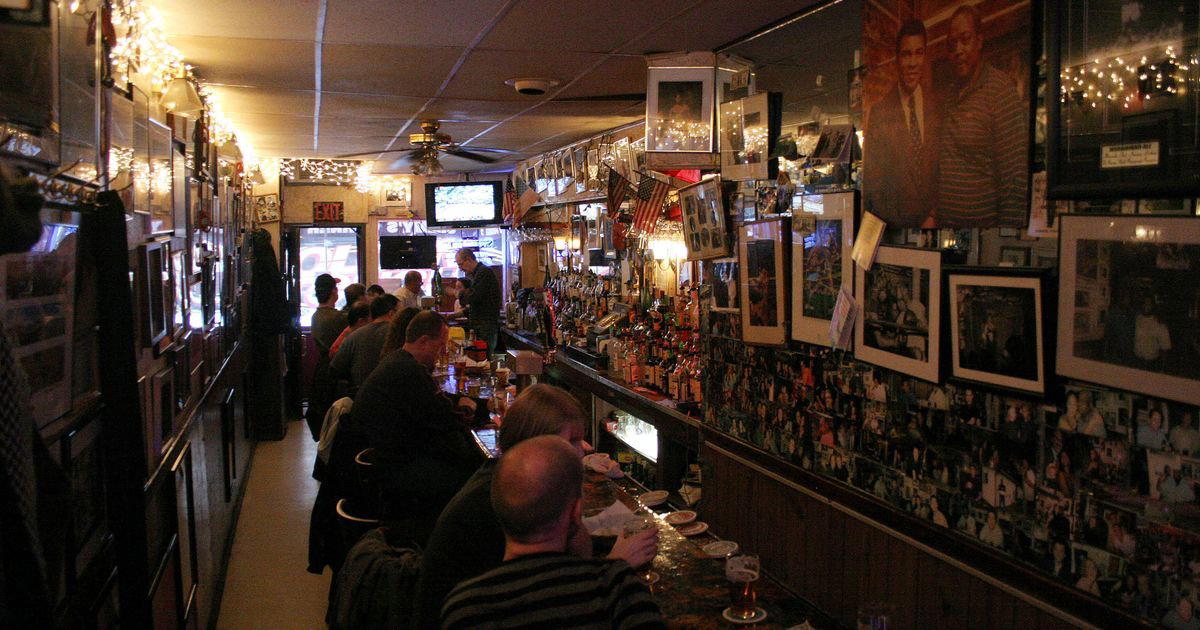
The Bar That Midtown Built, and Never Quite Let Go
West 44th Street sits in the administrative heart of Midtown Manhattan, a block type more associated with corporate lobbies and pre-show dining than genuine neighbourhood drinking. Which makes Jimmy's Corner — a sliver of a bar tucked into the street at number 140 — something of an anomaly in the most literal sense. The entrance is easy to walk past. The interior is narrow enough that two people passing each other require a degree of coordination. The walls are covered floor-to-ceiling in boxing photographs and fight memorabilia, the kind of accumulation that takes decades and cannot be staged. This is a bar that formed around a community, not the other way around.
Midtown has always occupied an awkward position in New York's drinking geography. It draws enormous foot traffic, commuters, tourists, theatre-goers, office workers, but rarely produces the bar culture that other neighbourhoods manage. The neighbourhood's density tends to produce transactional hospitality: fast service, high turnover, prices calibrated to expense accounts. Jimmy's Corner operates on different logic entirely. The pricing sits at the lower end of Manhattan's range, the pace is unhurried, and the regulars are treated as the baseline rather than an afterthought. For a city that has largely sorted its bar culture into either the premium craft tier or the anonymous chain tier, a place like Jimmy's Corner occupies the middle ground with unusual conviction.
What a Boxing Bar Looks Like in 2024
The bar's identity is inseparable from the sport of boxing. The walls function less as decoration and more as an archive, photographs of fighters at various stages of their careers, posters from bouts across several decades, the kind of material that has been added to incrementally rather than installed wholesale. In American bar culture, sports theming tends toward the generic: mass-produced memorabilia, televised games as ambient noise, the sport as brand rather than genuine context. Jimmy's Corner works differently because the boxing connection is biographical rather than commercial. The material on the walls reflects a real relationship with the sport rather than a design decision, and regulars who know the context can read the room differently from those who simply note that there are boxing photographs.
That distinction matters in a city where bar concepts are cycled through with considerable speed. New York's cocktail bar scene has undergone substantial evolution over the past fifteen years, moving from the speakeasy revival of the mid-2000s to the technical craft programs that now define venues like Attaboy NYC or the bitter-led menus at Amor y Amargo, and the high-concept Latin drinking culture at Superbueno. Jimmy's Corner exists in a parallel register, it doesn't participate in that evolution because it never entered it. The absence of a cocktail program, a curated spirits list, or a bar lead with a media profile is not a gap; it's the format.
The Regulars as the Point
The editorial angle on Jimmy's Corner that gets repeated most often is the mix: that the bar draws theatre industry workers, boxing enthusiasts, Midtown office staff, and tourists who stumbled in from Times Square a few blocks north, and that these groups drink alongside each other without the social sorting that characterises most Manhattan venues. That mix is genuine, but the more durable observation is about what enables it. The bar's low price point removes the economic barrier that stratifies much of Manhattan's drinking scene. The small physical footprint creates an intimacy that large sports bars eliminate.
This is a pattern that recurs in the most durable neighbourhood bars across American cities. The bars that survive for decades without reinventing themselves tend to share a few characteristics: pricing that keeps them accessible across income levels, a physical environment that has accrued rather than been designed, and a regulars culture that gives the room its social texture. You see versions of this logic operating in different contexts at Jewel of the South in New Orleans or Julep in Houston, though those venues approach community identity through craft programs rather than simplicity. ABV in San Francisco and Kumiko in Chicago represent the specialist craft pole of that same spectrum. Jimmy's Corner is at the opposite end, and it holds that position without apology.
Drinking Here and What to Expect
The drinks at Jimmy's Corner follow the dive bar template: beer, direct spirits, no elaborate presentation. In a city where cocktail preparation has become a form of performance, clarified drinks, fat-washed spirits, the kind of tableside theatre that venues like Angel's Share or Allegory in Washington, D.C. have built their reputations on, ordering a beer and a shot at Jimmy's Corner carries its own kind of deliberateness. The value proposition is transparent: what you spend here is a fraction of what comparable time would cost at a Midtown hotel bar or a craft cocktail venue in the East Village. For visitors calibrating a New York drinking itinerary, that contrast has real value. Spending an evening moving between a technical program like Bar Leather Apron in Honolulu is impossible in the same city, but spending a night that includes both Jimmy's Corner and a more ambitious bar elsewhere in Manhattan is entirely reasonable, and gives a more accurate reading of what the city's drinking culture actually contains.
Logistically, the bar is on West 44th Street between Sixth and Seventh Avenues, walkable from Bryant Park and a short distance from the Times Square subway hub. The Theatre District location means the room gets busy on weekday evenings before and after shows; arriving early or later in the evening tends to produce a calmer experience. There is no reservation system and no door policy. For a fuller map of where Jimmy's Corner sits within New York's bar and restaurant options, the EP Club New York City guide provides broader context across neighbourhoods and price tiers. Internationally, bars with comparable community-anchor positioning, places where the drinking is secondary to the room's social function, appear in cities as different as Frankfurt, where The Parlour operates on a similar logic of place-before-program.
Continue exploring
More in New York City
Bars in New York City
Browse all →

Restaurants in New York City
Browse all →
Hotels in New York City
Browse all →





At a Glance
- Classic
- Cozy
- Well Known
- After Work
- Late Night
- Casual Hangout
- Historic Building
- Seated Bar
- Standing Room
- Classic Cocktails
Current opening hours
- Monday
- 11:30 AM–2 AM
- Tuesday
- 11:30 AM–2 AM
- Wednesday
- 11:30 AM–2 AM
- Thursday
- 11:30 AM–4 AM
- Friday
- 11:30 AM–4 AM
- Saturday
- 12:30 PM–4 AM
- Sunday
- 4 PM–2 AM
Hours can change for holidays and private events. Last verified .
Dimly lit, divey atmosphere evoking 1970s New York with boxing ephemera, jukebox soul music, and a friendly, unpolished charm.
Know Before You Go
- Getting there
- 140 W 44th St, New York, NY 10036