Faust occupies a vaulted stone space beneath the Pont Alexandre III on the Rive Gauche, positioning it among the more architecturally singular bar addresses in Paris. The setting, a former river-engine room with the Seine running overhead, draws a crowd that treats the atmosphere as the main event. It sits in the upper tier of Paris destination bars on location alone.
Pearl is the En Primeur Club membership app — saves, bookings, and concierge access live there. Same editors, same standards.
- Address
- Rive Gauche, Pont Alexandre III, 75007 Paris, France
- Phone
- +33 1 44 18 60 60
- Website
- faustparis.fr
- Directions
- Get directions
 Saves & bookings on Pearl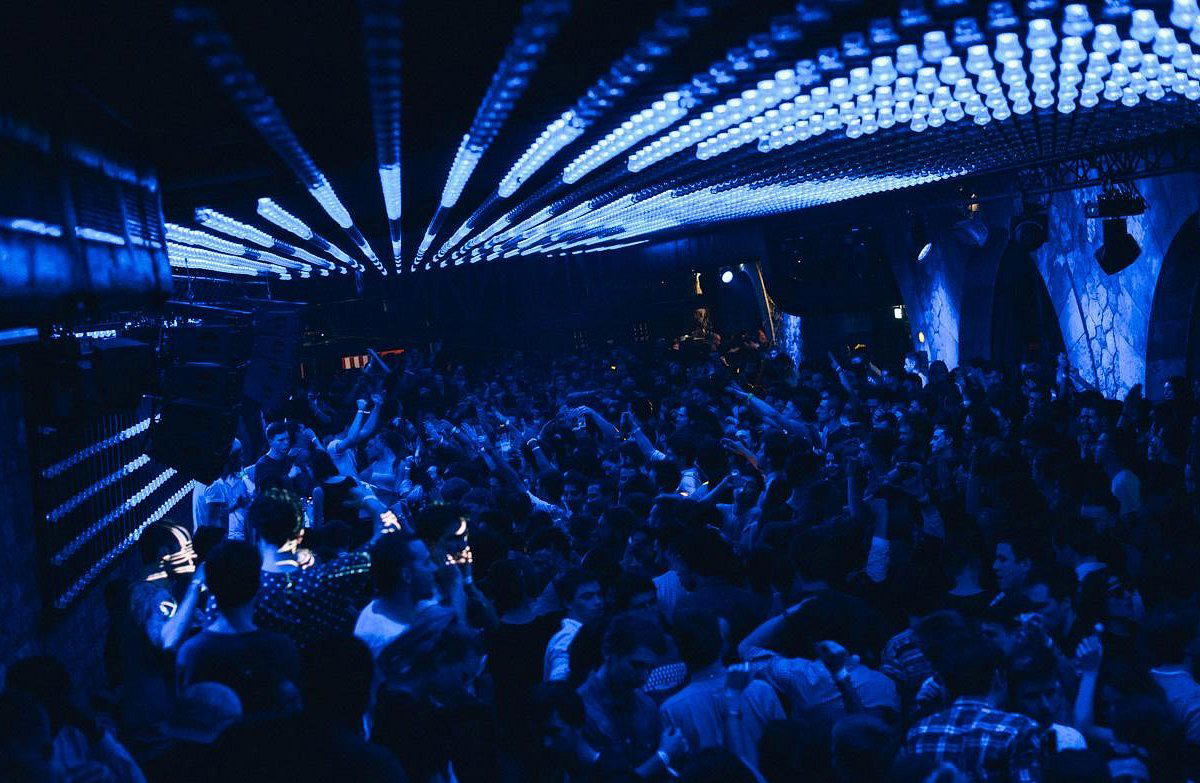
Beneath the Bridge: Paris Bar Culture at Its Most Theatrical
Paris has always maintained two parallel bar traditions: the neighbourhood zinc counter, where the point is proximity and habit, and the destination address, where the room itself is the proposition. Faust belongs firmly to the second category. It occupies the vaulted stone cellars directly beneath the Pont Alexandre III on the 7th arrondissement bank, a space that was never designed for hospitality but has been converted into one of the more spatially arresting bar rooms in the city. The bridge above it, completed in 1900 for the Exposition Universelle, is among the most ornamented in Paris, and that context bleeds downward into the bar's atmosphere whether intentional or not.
Arriving on foot from the Quai d'Orsay side means descending toward the river rather than entering through a street-level door, which already signals that this is not a conventional bar visit. The Seine is close enough to register as a presence, a low ambient sound and a specific quality of damp evening air that no interior designer can replicate. That sensory specificity is what places Faust in a different register from the cocktail-forward room that might occupy a Haussmann-era ground floor a few streets away.
Where Faust Sits in the Paris Bar Scene
The Paris bar scene has undergone a sustained reorganisation over the past decade. The early 2010s wave of mezcal-forward, low-lit rooms — of which Candelaria remains the definitive example — established a particular vocabulary of hidden-door discretion and high-technique short menus. That model influenced an entire generation of Paris openings and remains influential, even as the scene has since fragmented into more varied formats.
A second strand, represented by technically rigorous programs like Danico, positioned serious cocktail craft at the centre of the offer rather than the room's atmosphere. And then there are the large-format destination bars, where scale, setting, and the social spectacle of the crowd are the primary draw, with Buddha Bar as the most recognisable example in that bracket.
Faust operates somewhere between those poles. The room has the spatial drama associated with large-format venues, but the location under a bridge on the Seine gives it an intimacy that a purpose-built nightlife venue in a hotel or commercial complex cannot reproduce. Among the newer openings worth tracking alongside it, Bar Nouveau represents the more polished, interior-design-led end of current Paris bar openings, offering a useful point of comparison for readers calibrating their expectations across the city's current offer.
The Sensory Argument for This Address
There is a specific category of Paris bar that justifies itself primarily through what it looks and feels like to be inside it. The vaulted stone architecture of the Pont Alexandre III cellars places Faust in that category. Stone arches, proximity to the river, and the low ambient light that follows logically from a below-grade space combine to produce an atmosphere that is genuinely difficult to manufacture elsewhere in the city.
Paris has several bars that trade on significant architectural backdrops, but most of those are within hotel lobbies or repurposed 19th-century salons. A converted river infrastructure space of this scale is rarer. The sensory specificity here, the sound of the water, the weight of the stone overhead, the particular quality of light at dusk seen from the riverside terrace when the bridge's gilded lampposts activate, is not something that can be accessed elsewhere in the 7th arrondissement at any price point.
For readers who have worked through the more technique-forward programs at venues like Danico or the hidden-room format at Candelaria, Faust offers a different proposition: atmosphere as the primary currency, with the drink program as accompaniment to a room that does most of the work.
Paris in a Broader French Bar Context
Understanding what Faust represents is easier when set against the range of serious bar addresses across France. The intimate neighbourhood anchors like La Maison M. in Lyon or Coté vin in Toulouse draw authority from local rootedness and editorial programming. Regional craft-focused rooms such as Au Brasseur in Strasbourg or Bar Casa Bordeaux in Bordeaux are defined by product specificity and provenance. Papa Doble in Montpellier and Le Café de la Fontaine in La Turbie demonstrate how strong singular identities can anchor bar programs well outside the capital.
Faust's position in that spectrum is at the opposite end from product-led or neighbourhood-anchored. It competes on the strength of a location that no other bar in France can replicate, which is simultaneously its clearest asset and its most honest limitation: there is no backup proposition if the room doesn't move you. For those who find it does, the address is not easily replaced by anything else on the Rive Gauche or anywhere else in the city.
For a broader calibration of Paris drinking addresses across formats and neighbourhoods, the EP Club Paris guide maps the full range. For those curious how Paris destination-bar logic compares to international equivalents, Bar Leather Apron in Honolulu offers an instructive contrast: a room that derives its authority from precision craft rather than spatial spectacle, representing the other end of the bar-value spectrum.
Planning Your Visit
Know Before You Go
- Address: Rive Gauche, Pont Alexandre III, 75007 Paris, France
- Getting there: The nearest Métro stations are Invalides (lines 8 and 13) and Champs-Élysées Clemenceau (lines 1 and 13), each a short walk across or along the river. The location is more legible on foot than by car, given the quayside approach.
- Leading timing: Dusk and early evening, when the Pont Alexandre III's lampposts illuminate and the riverside terrace transitions from day to night, represent the strongest version of the atmospheric argument for this address. Midsummer evenings extend this window considerably.
- Booking: Reservation policy and contact details were not confirmed at time of publication. Given the location's profile and weekend demand, advance contact is advisable for groups.
- Price range: Not confirmed at time of publication. The address and format suggest pricing consistent with upper-tier Paris destination bars.
Category Peers
A small set of peers for context, based on recorded venue fields.
| Venue | Awards |
|---|---|
| FaustThis venue — the venue you are viewing | Not listed |
| Bar Nouveau | World's 50 Best |
| Buddha Bar | World's 50 Best |
| Candelaria | World's 50 Best |
| Danico | World's 50 Best |
| Harry's Bar | World's 50 Best |
Continue exploring
More in Paris
Bars in Paris
Browse all →
Restaurants in Paris
Browse all →
Hotels in Paris
Browse all →

At a Glance
- Trendy
- Lively
- Elegant
- Energetic
- Date Night
- Late Night
- Group Outing
- Terrace
- Waterfront
- Outdoor Terrace
- Lounge Seating
- Classic Cocktails
- Waterfront
- Street Scene
Current opening hours
- Monday
- 6 PM–2 AM
- Tuesday
- 2 PM–2 AM
- Wednesday
- 2 PM–2 AM
- Thursday
- 2 PM–2 AM
- Friday
- 2 PM–2 AM
- Saturday
- 2 PM–2 AM
- Sunday
- 2 PM–2 AM
Hours can change for holidays and private events. Last verified .
Chic and lively atmosphere with DJ sets on the terrace and energetic nightlife in the tunnel space under the bridge.
Know Before You Go
- Getting there
- Rive Gauche, Pont Alexandre III, 75007 Paris, France