Duke's Waikiki
Duke's Waikiki on Kalākaua Avenue occupies a particular place in Honolulu's beach-bar tradition — less a tourist stop than a neighbourhood institution where the afternoon crowd arrives in board shorts and the sunset shift lingers well past dark. Positioned at the edge of Waikīkī Beach, it functions as a gathering point that locals and returning visitors treat as a reliable landmark rather than a novelty.
 Discover on Pearl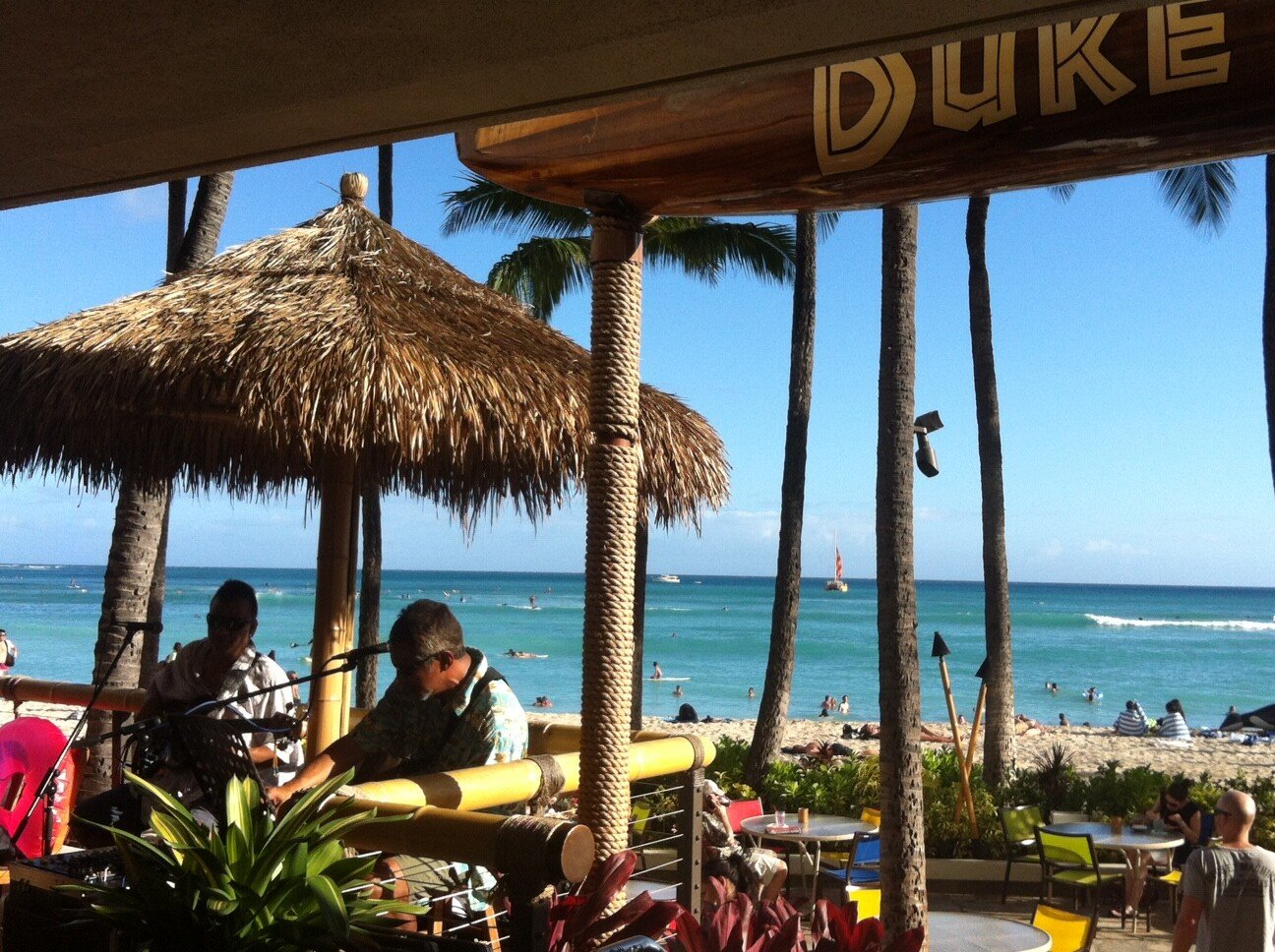
Where Kalākaua Avenue Meets the Water
Waikīkī's strip along Kalākaua Avenue has been pulled in competing directions for decades: luxury hotel redevelopment on one side, beach-access commerce on the other. Duke's Waikiki, at 2335 Kalākaua Ave, sits in the middle of that tension and has largely ignored it. The open-air format, positioned at the edge of the beach itself, means the Pacific is not a backdrop but a physical presence — salt air, wind off the water, and the ambient noise of surf that no interior design budget can replicate. For bars and restaurants operating in this stretch, the question is always whether the ocean view is a genuine feature or a premium charged for something you could see for free from the sand. Duke's relationship with the beach feels less mediated than most of its neighbours.
The venue takes its name from Duke Kahanamoku, the Honolulu-born swimmer and surfer whose legacy anchors Hawaiian identity in ways that extend well beyond sports history. Naming a Waikīkī venue after Kahanamoku carries a specific weight — it sets an expectation of local rootedness that the venue either earns through sustained community presence or betrays through surface-level theming. Duke's has operated long enough on this block that the question has largely been answered by repetition and habit: this is where people come back to, not where they stumble in once.
The Waikīkī Beach-Bar Tradition
Open-air beach venues in Honolulu exist on a spectrum from full resort F&B; operations to informal shack-style spots that serve shave ice and plate lunch. Duke's occupies a middle tier that has largely defined itself by what it is not: not a hotel dining room with a beach view attached, and not a grab-and-go window with no seating culture. The format that has developed here is genuinely communal , long stays encouraged, regulars recognised, the rhythm of the day structured around when the surf changes and when the light drops.
In a city where the hospitality industry is heavily oriented toward visitors arriving with a fixed itinerary, venues that develop a local regular base represent a different operating logic. The afternoon crowd at a place like Duke's is not interchangeable with the morning tour-bus lunch crowd at a resort buffet. It is built over time, through consistency of experience rather than novelty. That dynamic connects Duke's to a broader pattern visible at beach-adjacent spots across the Pacific: the ones that last are the ones that give residents a reason to return on a Tuesday, not just a Saturday in peak season.
For comparison, Beachhouse at the Moana operates with more formal hotel infrastructure behind it, positioning itself toward a guest experience with broader dining ambitions. Duke's lacks that hotel backing and, arguably, is better for it , the absence of a corporate F&B; program creates space for the kind of looseness that beach-bar culture actually requires. Across Honolulu's broader drinking scene, Bar Leather Apron represents the opposite pole: a precision cocktail program in a controlled interior environment, aimed at a very different kind of intentional drinker.
Who Comes Here and Why
The geography of Duke's regulars tells you something about how Waikīkī actually functions for people who live in or near Honolulu. The neighbourhood around Kalākaua Avenue is simultaneously one of the most tourist-saturated zones in the United States and a genuine community space for residents who use the beach, the park, and the surrounding streets as part of daily life. Venues that successfully bridge those two populations tend to have long operating histories and a format flexible enough to absorb both.
The afternoon-into-evening rhythm at a beach-facing bar like this one draws people at the end of surf sessions, after work, or simply at the point when sitting on the sand transitions into wanting a drink with a seat. That sequence is different from the deliberate dinner reservation or the cocktail-bar visit with a researched agenda. It is the kind of habit-forming venue visit that builds loyalty slowly and loses it only through a significant decline in consistency. In Honolulu's bar scene, where newer, more concept-driven openings compete for attention, this kind of durable community role is harder to replicate than it appears.
Elsewhere in the city, spots like AGU Ramen at Ward Centre and Andy's Sandwiches and Smoothies serve similar neighbourhood-anchor functions in their respective parts of Honolulu, each building repeat traffic through consistency rather than event-driven programming. The full Urban Honolulu guide maps how these different community nodes distribute across the city's distinct zones.
The Beach-Bar Format Across Cities
The communal beach-bar format that Duke's represents in Honolulu has parallels in other cities, though the physical setting is specific enough that direct comparison is limited. What connects venues across different geographies is the role they play as reliable gathering infrastructure. Jewel of the South in New Orleans, Julep in Houston, and Kumiko in Chicago each occupy a community-anchor position in their respective bar scenes, though through very different formats and with far more cocktail program specificity than a beach venue like Duke's requires. Superbueno in New York City, ABV in San Francisco, and The Parlour in Frankfurt similarly function as neighbourhood institutions in cities where the bar category is more crowded and differentiation requires more deliberate positioning. 9th Ave Rock House in Honolulu fills a parallel local-institution role for a different part of the city and a different crowd profile.
Planning a Visit
Duke's sits at 2335 Kalākaua Ave, Suite 116, in Waikīkī, directly accessible from the beachfront path that runs parallel to the main avenue. The location means foot traffic from the beach is constant during daylight hours, and arrival by walking along the sand from adjacent beach access points is common. For visitors staying in the Waikīkī hotel corridor, the venue is within walking range of most properties on or near Kalākaua. Parking in this stretch of Waikīkī follows the standard constraints of the neighbourhood: street parking is scarce, and most visitors either walk, use rideshare, or validate through nearby hotel structures. Given the open-air setup and beach adjacency, dress is consistently informal; the venue has no stated dress code requirement, and the surrounding context makes anything beyond beach-casual unnecessary. For booking and current hours, checking directly via search for current operating details is the most reliable approach, as specifics shift seasonally.
Frequently Asked Questions
Recognition Snapshot
A quick peer reference to anchor this venue in its category.
| Venue | Awards | Cuisine | Notes |
|---|---|---|---|
| Duke's Waikiki | This venue | ||
| Tokkuri Tei | |||
| AGU Ramen - Ward Centre | |||
| Andy's Sandwiches & Smoothies | |||
| Beachhouse at the Moana | |||
| Fête |
Need a Table?
Our members enjoy priority alerts and concierge-led booking support for the world's most difficult bars and lounges.
Get Exclusive Access