Beachhouse at the Moana
Positioned on the ground floor of the historic Moana Surfrider along Kalākaua Avenue, Beachhouse at the Moana places craft cocktails and open-air Waikiki atmosphere in the same frame. The bar sits closer to the serious end of Honolulu's drinking scene than its beachfront setting might suggest, making it a reference point for visitors and locals who want something more considered than a mai tai by the pool.
 Discover on Pearl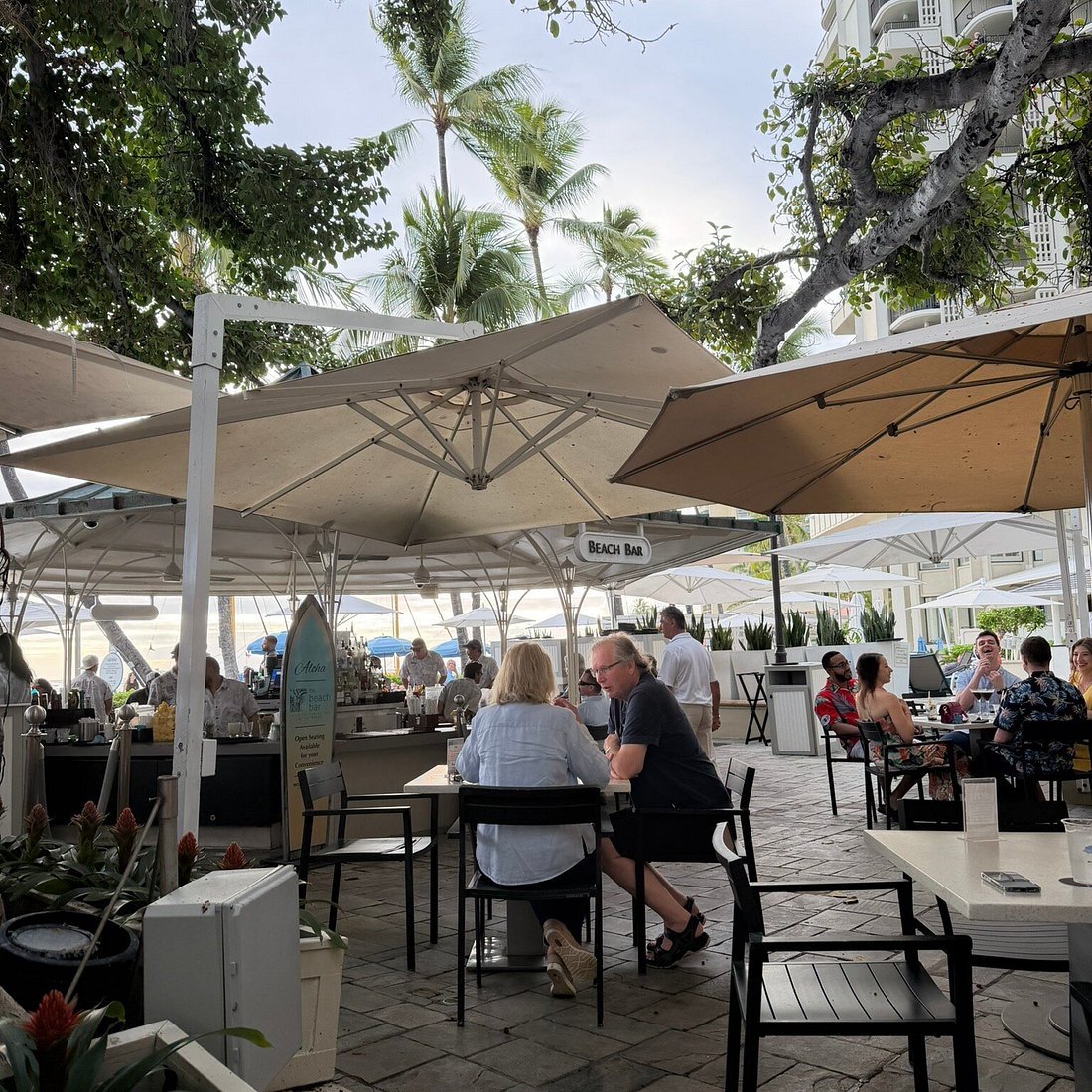
Where Waikiki's Shoreline Meets a Serious Bar Program
Stand at the edge of Kalākaua Avenue at dusk and the Moana Surfrider's white colonial facade is one of the more arresting sights on Oahu's south shore. The building dates to 1901, making it the oldest hotel on Waikiki Beach, and that context matters when you're sitting at the Beachhouse bar watching the last light drop behind Diamond Head. The Pacific is right there, close enough that the sound of surf competes with conversation. That sensory backdrop is not window dressing; it is the room's defining condition, and any serious bar program operating inside it has to decide whether to lean into the setting or work against it.
Beachhouse at the Moana leans in, and does so with more discipline than the location might imply. Waikiki's bar scene runs a wide spectrum: volume-driven resort operations on one end, and a smaller, more technically focused cohort on the other. Beachhouse sits toward the latter, occupying a position where the oceanfront atmosphere and a craft-oriented approach are meant to reinforce rather than contradict each other. That positioning separates it from the bulk of the strip, where cocktail programs are often secondary to the view.
The Craft Behind the Counter
Honolulu's cocktail scene has matured considerably over the past decade. The city's better bars now operate with the same vocabulary as their counterparts on the mainland: house-made syrups, local spirits, ingredient sourcing that reflects the islands' agricultural specificity. Bar Leather Apron in Honolulu sits at the more austere, technique-forward end of that shift; Beachhouse occupies a different register, one where the craft program is present and intentional but the setting and hospitality are equally weighted considerations.
The editorial angle here is about what good bartending looks like in a beachfront context. Across cities with serious bar cultures, the bartender's role has expanded well beyond technical execution. At Kumiko in Chicago or Jewel of the South in New Orleans, the craft identity is constructed partly through restraint and precision, and partly through a hospitality posture that keeps the guest at the center of the experience. At Beachhouse, the hospitality posture is shaped by the physical environment itself: open air, ocean proximity, a room that invites longer stays and slower drinking. The bar program needs to serve that context, and a well-executed house cocktail list with local ingredients fits that brief more naturally than a maximalist technical menu would.
Programs operating in similar resort-adjacent positions, from Julep in Houston to Superbueno in New York City, demonstrate that approachability and craft are not mutually exclusive. The bar that reads the room well, and builds its program accordingly, tends to hold up better over time than one that imports a formula from a different dining culture entirely.
Waikiki's Bar Tier: Where Beachhouse Sits
Understanding Beachhouse requires some mapping of the broader Waikiki drinking context. The strip's bar options tend to cluster around two poles. The first is the high-volume resort bar, oriented toward tourists seeking the canonical Hawaiian cocktail experience: bright, sweet, photographable drinks in a loud room. The second is a smaller set of venues where the program is more considered, the pacing more deliberate, and the ingredient list more specific to place.
Duke's Waikiki operates firmly in the first category, with a scale and energy that make it one of the more recognizable names on the strip. Beachhouse operates at a different pitch. The Moana Surfrider's historic status and the bar's physical setting, open to the beach and oriented toward the water rather than the street, create a natural filter that tends to attract guests who are looking for something more measured. That self-selection matters; it shapes what the bar's program needs to deliver and how the staff are positioned to deliver it.
For context on what Honolulu's bar scene looks like beyond Waikiki, our full Urban Honolulu restaurants guide maps the city's drinking and dining options across neighborhoods. Options like 9th Ave Rock House serve a very different clientele and purpose, reflecting how segmented the city's after-dark options have become. Equally, the daytime eating and drinking circuit around spots like Andy's Sandwiches and Smoothies or AGU Ramen at Ward Centre shows that Honolulu's culinary geography extends well past the resort corridor.
Comparing Notes: Beachhouse Against a Wider Peer Set
Hotel bars in historic properties occupy a specific niche in the cocktail world. They carry the ambient prestige of their surroundings and the foot traffic that comes with a destination hotel, but they also have to justify themselves to guests who could drink anywhere. The standard for hotel bar programs has risen significantly across the United States; what passed a decade ago as an acceptable hotel cocktail list now reads as generic. Bars like ABV in San Francisco or The Parlour in Frankfurt show what it looks like when a bar attached to or adjacent to a hospitality property takes its program seriously on its own terms.
Beachhouse is competing in that context whether or not it frames itself that way. A guest who has drunk well in other cities will arrive with calibrated expectations. The setting gives Beachhouse an inherent advantage that few bars in the world can claim, but the setting alone does not sustain repeat visits. The program has to carry its share of the weight.
Planning a Visit
Beachhouse at the Moana is located at 2365 Kalākaua Avenue, within the Moana Surfrider. The beachfront position means timing matters: the bar is at its most atmospheric in the late afternoon and early evening, when the light on the water is at its most specific to this stretch of the Pacific coast. Waikiki's more popular dining and drinking rooms fill quickly on weekends and during peak travel periods, which run heavily through summer and the holiday months; arriving with some margin, or checking directly with the hotel, is advisable if you have a particular seating position in mind. For travelers whose itinerary extends into the city proper, the Moana's address places it at the eastern end of the main Waikiki strip, walkable to most major hotel clusters.
Frequently Asked Questions
The Essentials
A compact peer snapshot based on similar venues we track.
Need a Table?
Our members enjoy priority alerts and concierge-led booking support for the world's most difficult bars and lounges.
Get Exclusive Access