Coach Sushi
Coach Sushi occupies a Grand Avenue address in Oakland's Grand Lake neighborhood, where the East Bay's appetite for Japanese formats continues to sharpen. The venue sits at the intersection of Oakland's neighborhood bar culture and the Bay Area's broader sushi conversation, offering a case study in how omakase-adjacent dining translates outside San Francisco's denser competitive field.
 Discover on Pearl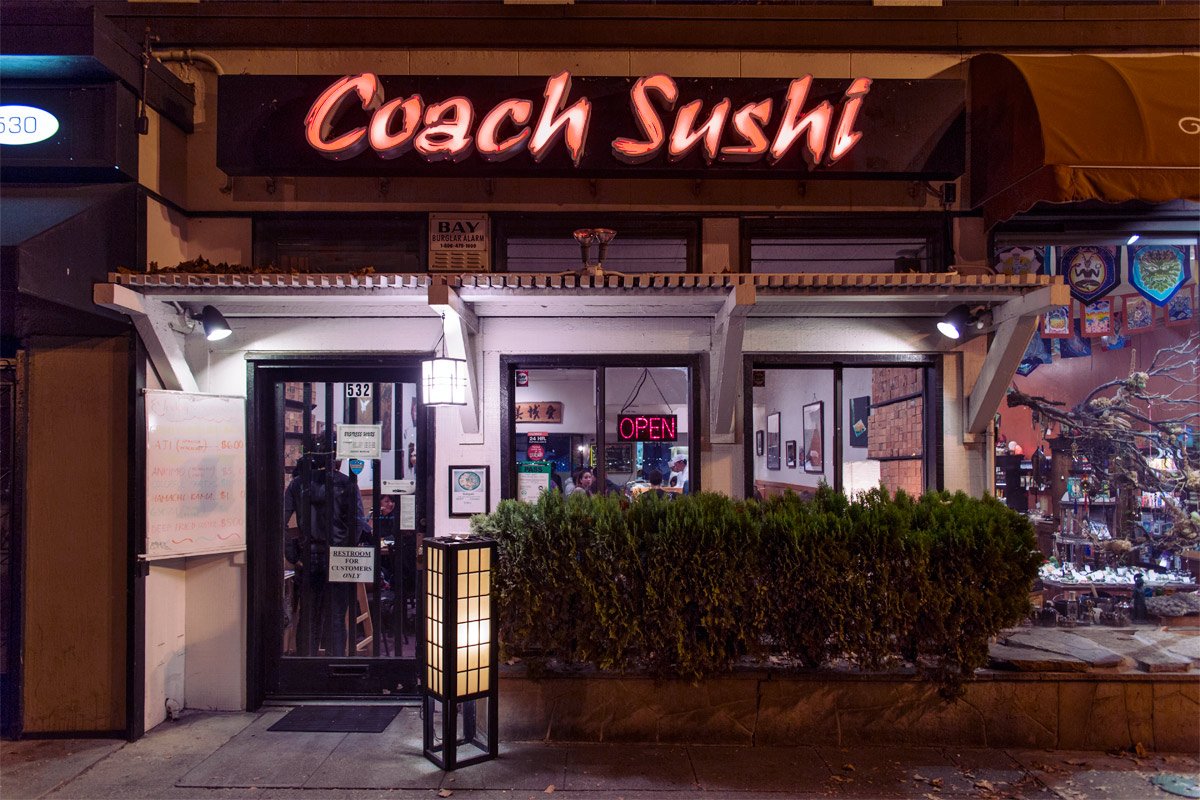
Grand Avenue and the East Bay Sushi Conversation
Grand Lake is one of Oakland's more composed neighborhood corridors: tree-lined, locally owned, the kind of block where a wine bar and a Japanese counter can share the same stretch without either feeling out of place. Coach Sushi, at 532 Grand Ave, sits inside that rhythm. The area draws residents who eat out deliberately, and the Oakland dining scene has responded with formats that lean more technical than casual without tipping into the self-conscious register that can make San Francisco's higher-end Japanese rooms feel airless.
The broader Bay Area omakase market has stratified considerably over the past decade. San Francisco holds most of the Michelin-flagged Japanese counters, with several securing stars and driving reservation windows that stretch months. Oakland's relationship with that format is more unresolved, which creates room for a venue like Coach Sushi to operate in a middle register: serious enough to attract the kind of diner who tracks provenance and technique, accessible enough to anchor a neighborhood rather than serve as a destination in isolation. That positioning, in a city where dining identity is still being written, is worth paying attention to.
The shortlist, unlocked.
Hard-to-book tables, cellar releases, and concierge-planned trips.
Get Exclusive Access →The Bar-Food Relationship as a Structural Argument
One of the more interesting developments in American Japanese dining over the past several years is the deliberate pairing of the sushi counter with a drinks program that has its own editorial point of view. At Kumiko in Chicago, the integration of Japanese whisky and clarified cocktails with Japanese food culture is explicit and programmatic. At Bar Leather Apron in Honolulu, the approach leans into Pacific ingredients as connective tissue between the bar and the kitchen. The question any sushi-adjacent bar program has to answer is whether the drinks exist to complement the food or simply to accompany it.
Coach Sushi operates in the East Bay, where bar culture and food culture have been converging in ways that differ from the more bifurcated San Francisco model. Oakland venues like Analog and Bay Grape have built reputations around drinks programs that take the surrounding food context seriously. The neighborhood context at Grand Lake similarly rewards venues that treat the relationship between glass and plate as a design decision rather than an afterthought.
The strongest bar-food pairings in the sushi category tend to work through contrast and bridge. Highball-style drinks, with their dilution and carbonation, cut through fatty fish in ways that heavier cocktails cannot. Sake-adjacent spirits, particularly those built on rice bases or with umami-friendly fermentation notes, extend what's already happening on the palate. Where a venue places itself on that spectrum signals something about its self-understanding: is the drinks list a concession to guests who don't drink sake, or is it an active argument about how Japanese flavors translate into cocktail logic?
That question sits at the center of what makes the bar-food pairing format genuinely interesting at a Japanese counter. Venues that resolve it well, like Jewel of the South in New Orleans or Superbueno in New York City, tend to build programs where the bartender and the kitchen are in active conversation rather than parallel operation.
Oakland's Position in the Wider Japanese Dining Shift
The migration of serious Japanese dining formats to secondary markets, including cities adjacent to major West Coast hubs, reflects a broader pattern in American food culture. As San Francisco real estate economics push costs up and margin down, Oakland has absorbed some of the overflow energy, particularly among operators who want to work with serious ingredients and technique without absorbing the overhead of a SoMa or Hayes Valley address.
That creates an interesting competitive context. Coach Sushi is not competing directly with the Michelin-starred counters across the Bay. It is competing with a different peer set: the neighborhood-anchored Japanese spots that have proliferated in Oakland and Berkeley, some driven by former SF kitchen talent, others by operators who came up through the East Bay's own food infrastructure. In that field, the differentiator is often precision in a specific category, whether that's sourcing, format discipline, or the coherence of the drinks program alongside the food.
For context on how Oakland's bar scene maps around this venue, 13 Orphans and alaMar Dominican Kitchen represent two different approaches to how Oakland venues are building identity through the intersection of food and drinks culture. Our full Oakland restaurants guide maps the broader picture.
Seasonal Timing and When to Go
Grand Lake runs at a different pace through the year, and the calculus for timing a visit to a neighborhood sushi counter shifts accordingly. Fall and winter are when Japanese omakase formats tend to show at their most focused: colder water fish like yellowtail and certain tuna cuts are in better condition, and the room's atmosphere shifts toward the more considered register that suits a counter meal. The Bay Area's mild winters mean outdoor streets stay active later into the season than in colder markets, which keeps Grand Avenue's evening traffic steady through November and into January.
Spring brings the Bay Area's version of a reset, when the Grand Lake weekend market picks up and the neighborhood density increases. For a venue on Grand Ave, that seasonal foot traffic creates a different kind of energy from the steadier weekday-evening pattern. Booking lead times for counter seats at serious sushi operations in the Bay Area vary significantly by tier: Michelin-level San Francisco counters often require months of advance planning, while Oakland neighborhood spots tend to operate on shorter windows, though specific booking information for Coach Sushi should be confirmed directly with the venue.
For comparison, drinks-forward programs at technically focused bars in comparable markets, including ABV in San Francisco and Julep in Houston, tend to see their leading traffic on Thursday through Saturday evenings, with the shoulder periods on Tuesday and Wednesday offering a more composed experience. The Parlour in Frankfurt on the Main demonstrates how counter-format venues in tighter spaces manage pacing across different seasonal windows, a model relevant to any sushi bar with limited seating.
Planning Your Visit
Coach Sushi is located at 532 Grand Ave, Oakland, CA 94610, in the Grand Lake neighborhood. Grand Avenue is accessible by public transit from the 19th Street BART station, with the walk taking approximately 20 minutes, or via the AC Transit lines that run along the corridor. Street parking is available on Grand and the surrounding residential blocks, though it tightens on weekend evenings. Given the format and neighborhood, this reads as an evening venue rather than a lunch destination, though precise hours should be confirmed directly. Reservation availability, pricing, and current menu formats are leading verified through the venue's current booking channel before your visit.
The shortlist, unlocked.
Hard-to-book tables, cellar releases, and concierge-planned trips.
Get Exclusive Access →Frequently Asked Questions
Peers You’d Cross-Shop
Comparable venues for orientation, based on our database fields.
| Venue | Cuisine | Price | Notes |
|---|---|---|---|
| Coach Sushi | This venue | ||
| Snail Bar | |||
| Punchdown | |||
| Era Art Bar & Lounge | |||
| Analog | |||
| Belotti Ristorante E Bottega |
Need a Table?
Our members enjoy priority alerts and concierge-led booking support for the world's most difficult bars and lounges.
Get Exclusive AccessThe shortlist, unlocked.
Hard-to-book tables, cellar releases, and concierge-planned trips.
Get Exclusive Access →