Chickie Wah Wah
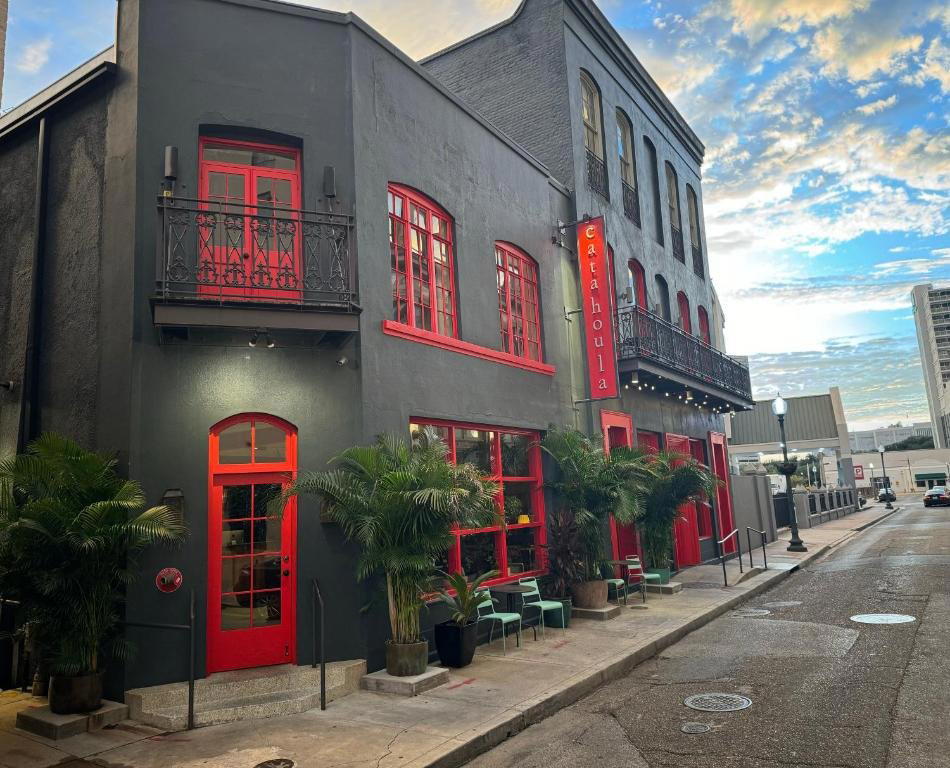
Chickie Wah Wah on Canal Street sits at the intersection of New Orleans' live music culture and its neighborhood bar tradition, a combination the city has refined across more than a century. Compared to the craft cocktail rooms along Magazine Street or the tourist-facing stages of Frenchmen Street, this Mid-City room operates at a quieter register, where the music and the pours are the point.

Pearl is the En Primeur Club membership app, where members save venues, book tables and use the concierge.

Canal Street's Quieter Frequency
Canal Street has spent decades shedding identities. Once the commercial spine of New Orleans, it cycled through department stores, cinema palaces, and stretches of vacancy before settling into its current state: a corridor that connects the French Quarter to Mid-City neighborhoods where locals actually live. At 2828 Canal St, Chickie Wah Wah occupies a stretch of that corridor where the tourist traffic thins and the clientele shifts. This is not the Frenchmen Street block of venues angling for visitor attention, nor the Marigny rooms that have become destinations on every travel list. It belongs to a different register of New Orleans music venue, the neighborhood anchor, the room where the audience already knows the performers and the bartender already knows the drink.
That distinction matters in a city where the line between performance and atmosphere has always been deliberately blurred. New Orleans built its music culture not on concert halls but on the integration of sound into everyday spaces: bars, restaurants, second-line routes, backyard parties. Chickie Wah Wah operates within that tradition, a Mid-City room where live music is part of the ambient logic of the place rather than a ticketed event with a separate entrance fee and a distinct beginning and end.
The Drinks in Context
New Orleans holds a particular position in American bar culture. The city that gave the world the Sazerac and the Vieux Carré has, in recent decades, also produced a generation of serious craft cocktail programs. Cure on Freret Street is the benchmark for the technique-forward tier, the room that established New Orleans as a city worth watching on the national cocktail map. Jewel of the South in the French Quarter works the nineteenth-century canon with research-grade precision. Beachbum Berry's Latitude 29 operates in a different lane entirely, applying the same obsessive sourcing logic to tiki rather than to classic American drinks.
Chickie Wah Wah sits outside that craft-forward tier, and that positioning is not a weakness. The neighborhood bar-and-venue format the room occupies has its own integrity. Across American drinking culture, the technical cocktail programs that draw critical attention, rooms like Kumiko in Chicago, ABV in San Francisco, Allegory in Washington, D.C., or Bar Leather Apron in Honolulu, serve a different function than the rooms that anchor a neighborhood's social life. Julep in Houston and Superbueno in New York City are in that craft tier; The Parlour in Frankfurt on the Main shows how this dynamic plays out internationally. The venues that serve a community rather than a critical conversation operate with a different set of metrics: consistency, familiarity, the quality of the room on a Wednesday night when no one is keeping score.
In that respect, the editorial angle here is less about cellar depth or curation philosophy in the sommelier sense and more about what a working bar in a live music room actually needs from its drinks program: speed, reliability, and a selection broad enough to keep a mixed audience through multiple sets. Those are unglamorous criteria, but they are the right ones for this format.
Live Music as the Organizing Principle
New Orleans has a surplus of live music venues and a shortage of good ones. The distinction is not about production values or capacity, it is about the relationship between the music, the room, and the audience. The leading rooms in the city have a curatorial coherence: the bookings make sense together, the acoustics suit the format, and the audience that shows up on any given night has a reasonable expectation of what they're walking into. Frenchmen Street venues have become reliable enough on that count to draw visitors specifically for that predictability. Mid-City rooms like Chickie Wah Wah serve a constituency that doesn't need the predictability marketed to them, they already know.
The Canal Street address places the venue at a useful remove from both the French Quarter's density and the Magazine Street corridor's design-conscious bar scene. Mid-City is a residential neighborhood with a distinct social life, and the venues that serve it tend to be more durable than the ones that depend on visitor traffic. That durability is its own credential in a city where turnover in the hospitality sector runs high.
Placing Chickie Wah Wah in the New Orleans Drinking Map
For visitors mapping a New Orleans bar itinerary, the city's drinking scene divides into at least three distinct tiers: the craft cocktail rooms with national profiles, the historic tourist-facing venues (the Carousel Bar, Pat O'Brien's), and the neighborhood rooms that operate primarily for locals. Chickie Wah Wah belongs to the third category, alongside a handful of Mid-City and Uptown bars that don't appear on most travel itineraries but represent how the city's residents actually drink.
The 2 Phat Vegans operation offers a useful parallel: a venue that serves a specific community need and builds its identity around that service rather than around critical recognition. Both are parts of a New Orleans that exists outside the visible hospitality infrastructure. For anyone building a serious picture of the city's social geography, that layer is worth mapping. See our full New Orleans restaurants and bars guide for a broader view of how these tiers fit together.
Why do people go to Chickie Wah Wah?
The venue operates at the intersection of two things New Orleans does with particular seriousness: live music and the neighborhood bar. For residents of Mid-City and surrounding areas, it provides a local room with consistent programming at a Canal Street address that the streetcar makes accessible from most parts of the city. It is not a destination in the way that Frenchmen Street venues or the craft cocktail rooms on Freret Street are destinations, it is a place people return to because it already fits into how they use the city. In a market where price and production values tend to rise in direct proportion to visitor traffic, that positioning has its own value.
Is Chickie Wah Wah a good spot for first-time visitors to New Orleans looking beyond the French Quarter?
For visitors who have already covered the French Quarter's well-documented drinking circuit and want a clearer picture of how Mid-City operates socially, Chickie Wah Wah on Canal Street is a reasonable next step. The Canal Streetcar provides a direct connection from the Quarter to this stretch of Canal, making the logistics direct. The room sits in the neighborhood-anchor category of New Orleans venues rather than the craft-cocktail or tourist-facing tier, which means the experience reads more accurately as an introduction to how the city's residential neighborhoods socialize than as a polished visitor attraction. Confirm hours and programming directly before visiting, as live music schedules in this format can shift week to week.
A Minimal comparable set
Comparable venues nearby, for context on price, style, and recognition.
| Venue | Cuisine | Price | Awards | Notes |
|---|---|---|---|---|
| Chickie Wah WahThis venue (the venue you are viewing) | Mid-City, lounge | $20–30 | Not listed | Not listed |
| Cooter Brown's Tavern | Not listed | $20–30 | Not listed | Black Pearl, sports_bar |
| Mandina's Restaurant | Mid-City, lounge | Not listed | Not listed | Not listed |
| Blue Nile | Marigny, Bar | $20–30 | Not listed | Not listed |
| Surrey's Café & Juice Bar | Lower Garden District, Bar | $10–20 | Diners, Drive-Ins and Dives Featured Bar | Not listed |
| Liuzza's by the Track | Esplanade Ridge, pub | Not listed | Not listed | Not listed |
Continue exploring
More in New Orleans
Bars in New Orleans
All bars in New Orleans →
Restaurants in New Orleans
All restaurants in New Orleans →

Details
- Intimate
- Lively
- Cozy
- Well Known
- Casual Hangout
- Late Night
- Live Music
- Historic Building
- Seated Bar
- Lounge Seating
- Outdoor Terrace
- Classic Cocktails
- Craft Beer
Current opening hours
- Monday
- 5 PM–2 AM
- Tuesday
- 5 PM–2 AM
- Wednesday
- 5 PM–2 AM
- Thursday
- 5 PM–2 AM
- Friday
- 5 PM–2 AM
- Saturday
- 5 PM–2 AM
- Sunday
- 5 PM–2 AM
Hours can change for holidays and private events. Hours as of .
Intimate setting with stage lighting, glowing beer cooler, red overhead mood lighting, and lively energy from live performances.