One of Munich's most storied café addresses, Café Luitpold on Brienner Strasse has anchored the city's coffee-house tradition since the nineteenth century. The Schwabing-adjacent address draws a cross-section of Munich society for pastries, lunch, and afternoon coffee in a room that carries real architectural weight. For visitors seeking a grounded sense of how the city actually lives, it belongs on the itinerary.
 Discover on Pearl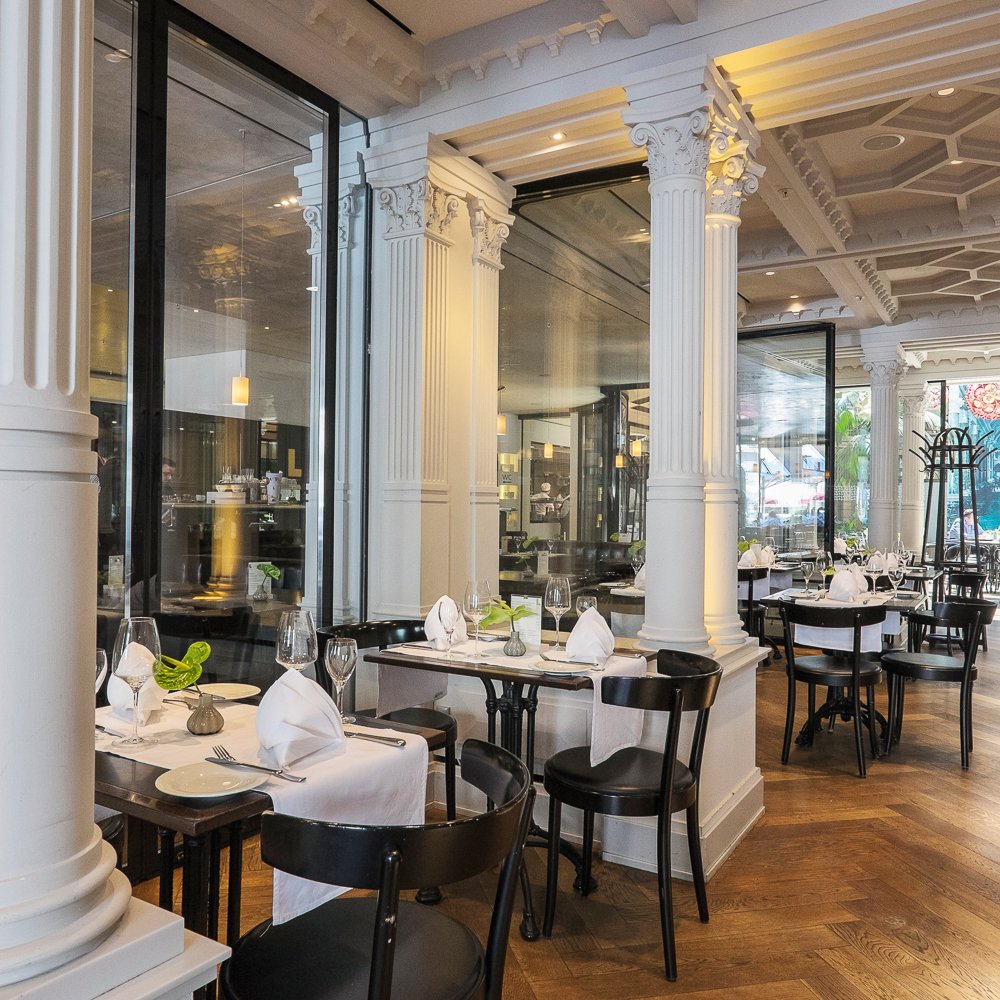
A Room That Earns Its Reputation
Brienner Strasse is one of Munich's grand civic axes, and the building that houses Café Luitpold reads accordingly. The façade signals old-money permanence rather than aspirational renovation, and the interior delivers on that promise: high ceilings, considered detailing, and the kind of proportions that make afternoon coffee feel like a properly allocated hour rather than a hurried transaction. Munich has a serious café culture, and this address has been one of its reference points since the late 1800s. Walking in, there is an immediate sense that the room has absorbed several generations of the city's daily life.
That historical weight matters because it shapes how the food and drink are framed. This is not a concept café built around a single ingredient or a fashionable provenance story. It is a place where the sourcing logic is older and more conservative: Bavarian butter, regional dairy, house-made confectionery that reflects a tradition of craft pastry rather than imported technique. The kitchen works within a European café grammar — cold cuts, open sandwiches, seasonal soups, cakes built around local flour and fruit — and executes it with the consistency you expect from an operation that has been doing essentially the same thing across multiple decades.
The shortlist, unlocked.
Hard-to-book tables, cellar releases, and concierge-planned trips.
Get Exclusive Access →How Munich's Café Tradition Positions This Address
Central European café culture occupies a distinct register, and Munich's version carries its own flavour. Unlike Vienna's coffee-house tradition, which tends toward theatrical solemnity, Munich's café culture sits closer to the city's social pragmatism: you come to eat well, read the paper, or hold a meeting over good cake. The grand café format , a large, architecturally serious room where no one rushes you , is relatively rare in a city that has embraced the faster Northern European café model in many of its newer neighbourhoods.
Café Luitpold represents the older template. The room accommodates different uses simultaneously: a morning pastry crowd, a midday lunch sitting, and a long afternoon coffee service. That versatility is itself a product of the traditional grand café model, where the room belongs to the guest for as long as they choose to occupy it. Visitors who know analogous spaces in Vienna, Budapest, or Prague will find the grammar familiar; visitors who don't will find it instructive.
For comparative context within Munich's café and bar scene, the city offers a range of serious drinking and eating addresses. Goldene Bar and Schuman's Bar represent the cocktail end of Munich's premium hospitality, while Augustiner Stammhaus and Blaue Libelle anchor the beer-culture side of the city's social drinking. Café Luitpold occupies a different register entirely , daytime, food-led, architecturally grounded , and does not really compete with any of them. It serves a need that Munich's bar scene, however accomplished, does not address.
The Sourcing Logic Behind the Menu
The editorial angle most useful for understanding what Café Luitpold does is ingredient provenance within a Bavarian regional frame. Bavaria has one of Germany's most coherent regional food identities: dairy-led, grain-centred, with a strong tradition of fruit preserves, rye breads, and sugar work built around seasonal stone fruit. A café operating within this tradition draws on a relatively short supply radius for its core inputs, and the results carry the particular character of Central European agricultural produce , butter with higher fat content, cream with more body, flour milled from local wheat varieties.
This regional sourcing is not a marketing position here. It is simply how this kind of café has always operated, and the continuity with a long-established food tradition is part of what gives the house-made cakes their authority. Visitors who arrive expecting the kind of single-origin narrative common in contemporary specialty coffee shops will find a different story: not transparency about a specific farm or producer, but depth of practice within a regional craft tradition that does not need to announce itself.
The pastry counter is the most direct evidence of this. Central European sugar work at this level involves laminated doughs, cooked fruit fillings, and layered cream constructions that require both technical skill and quality dairy. The Café Luitpold kitchen produces these in a classical Bavarian register, and the consistency across the calendar reflects the advantage of working with ingredients whose character is stable and well understood.
Placing This Address in a Broader German Context
Germany's café and bar culture is geographically diverse, and Munich's version has a distinct identity relative to the rest of the country. Le Lion Bar de Paris in Hamburg operates in a French-inflected cocktail idiom that reflects Hamburg's commercial cosmopolitanism. Buck and Breck in Berlin sits in the intimate, technique-driven end of Berlin's serious bar scene. The Parlour in Frankfurt and Bar Trattoria Celentano in Cologne each reflect their cities' particular relationship with drinking culture. Uerige in Düsseldorf and Kieler Brauerei am Alten Markt in Kiel occupy the brewery-tavern tradition at opposite ends of the country. Even beyond Germany, the contrast with Bar Leather Apron in Honolulu underlines how locally specific the grand café format remains , it is a Central European institution that does not translate easily to other contexts, which is part of what makes an address like this one worth seeking out when you are in Munich.
For those building a broader Munich itinerary, our full Munich restaurants guide covers the city's dining scene across price points and cuisine types.
Planning a Visit
Café Luitpold sits at Brienner Strasse 11 in Munich's inner city, within easy walking distance of the Königsplatz and the Maxvorstadt museum quarter. The address is well-served by public transport, and the central location makes it a natural stop within a morning or afternoon spent in the city's cultural core. The café operates across multiple service periods , morning coffee, lunch, and afternoon cake , so the timing of a visit is largely a matter of what you want to eat. For the pastry programme, the mid-morning and mid-afternoon windows tend to offer the fullest counter. No booking information is currently listed in our database; given the café's scale and traditional grand-café operating model, walk-in visits are the standard approach, though larger groups may wish to contact the venue directly ahead of a visit.
Frequently Asked Questions
- What should I try at Café Luitpold?
- The pastry and cake programme is where the kitchen's craft tradition is most visible. Within the Bavarian café format, house-made layered cakes, laminated pastries, and seasonal fruit-based confections are the core of what this kind of address does. Coffee is served in the Central European register , filtered and espresso options within a café setting rather than a specialty-coffee framework.
- Why do people go to Café Luitpold?
- The combination of a historically significant interior and a consistently executed café menu draws both Munich residents and visitors. For a city that offers relatively few surviving examples of the grand café format, this address on Brienner Strasse functions as a working piece of the city's social history rather than a museum recreation. The price register is broadly in line with Munich's established café tier , higher than a chain, appropriate for the setting and the quality of production.
- Is Café Luitpold reservation-only?
- Based on the traditional grand café operating model, walk-in visits are the standard approach for individuals and couples. No online booking system is currently listed in our database, and no phone number is on file. Visitors planning a larger group visit should contact the venue directly to confirm availability and any requirements for reserved seating.
- How does Café Luitpold fit into Munich's broader Central European café tradition?
- The address has been part of Munich's café culture since the nineteenth century, placing it within the same historical stratum as the great coffee houses of Vienna and Budapest. Unlike those cities, Munich has fewer surviving grand café spaces still operating in their original format, which gives Brienner Strasse 11 an outsize role in representing what that tradition looks like in a Bavarian context. The architectural seriousness of the room and the food programme rooted in regional craft production are both expressions of that continuity.
Peer Set Snapshot
A quick look at comparable venues, using the data we have on file.
| Venue | Cuisine | Price | Awards | Notes |
|---|---|---|---|---|
| Café Luitpold | This venue | |||
| Goldene Bar | World's 50 Best | |||
| Schuman's Bar | World's 50 Best | |||
| Blaue Libelle | ||||
| Champagne Characters München | ||||
| Frank Weinbar |
Need a Table?
Our members enjoy priority alerts and concierge-led booking support for the world's most difficult bars and lounges.
Get Exclusive AccessThe shortlist, unlocked.
Hard-to-book tables, cellar releases, and concierge-planned trips.
Get Exclusive Access →