A casual taqueria anchored in Tulum Centro, Burrito Amor sits in the everyday dining layer that keeps the town running beneath its resort-facing surface. The draw is straightforward Mexican street format, burritos and tacos built for the local crowd and budget-aware travellers, in a neighbourhood setting away from the zona hotelera markup. Pair it against Tulum's agave-heavy bar scene for a grounded evening in town.

Pearl is the En Primeur Club membership app, where members save venues, book tables and use the concierge.
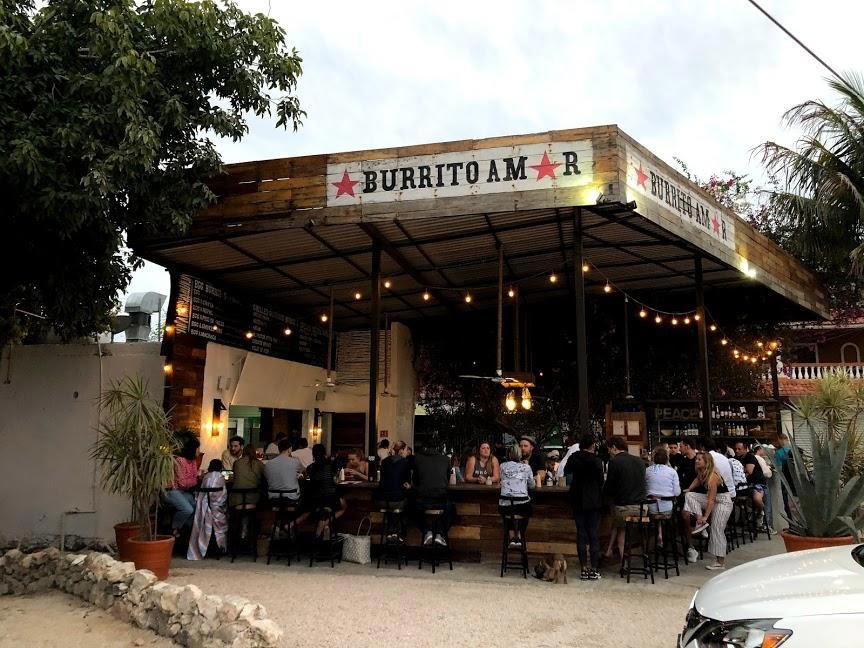
Tulum Centro's Street Format, Below the Resort Waterline
Most writing about Tulum eating and drinking gravitates toward the hotel zone: the open-air jungle bars, the mezcal-forward cocktail programs, the candlelit cenote-adjacent dining rooms. Burrito Amor operates in a different register entirely. Its address on Avenida Tulum in Centro places it squarely in the commercial spine of the town proper, where locals shop, eat, and move through daily life without the orchestrated atmosphere of the beachside strip. For a traveller who has spent two evenings at properties like Arca or Azulik Uh May, the shift in register is immediate and intentional.
This matters because Tulum Centro has, over the past decade, become one of the more interesting fault lines in Mexican resort-town eating. The zona hotelera sets its prices and aesthetic for an international audience; the town centre runs on a parallel economy that feeds the people who actually live there. Street-format spots in this corridor serve as an important corrective to the idea that Tulum dining is exclusively a high-design, high-ticket proposition. Burrito Amor sits in that corrective space.
The Format: Burritos in a Taco-First Country
Mexico's relationship with the burrito is geographically specific. The format originates in the northern states, Sonora, Chihuahua, and has historically been treated with some suspicion in the Yucatán, where the local tradition runs toward cochinita pibil tacos, panuchos, and salbutes rather than flour-wrapped cylinders. A spot specialising in burritos in Tulum Centro is making a conscious decision to operate outside the dominant regional grammar, positioning itself closer to a pan-Mexican or border-influenced format that travels well with tourists and younger urban Mexicans alike.
This is not a criticism. Format versatility has value in a town where the dining audience is genuinely international. The burrito, when executed at street level, is a utilitarian object: filling, portable, and calibrated for people who want food rather than an experience. That positioning creates a different kind of trust than the tasting-menu properties in the hotel zone command, it's the trust of the lunch counter and the regular customer, not the first-time arrival on a resort package.
Agave Country: The Broader Drinking Context
Because the editorial angle here concerns spirits curation and what a venue's back bar (or lack thereof) signals about a town's drinking culture, it's worth framing Tulum's agave position clearly. The Yucatán Peninsula is not mezcal-producing territory in the way that Oaxaca, Guerrero, or Durango are, but Tulum has absorbed Mexico's agave renaissance more thoroughly than almost any other tourist-facing town in the country. Bars like Gitano and Casa Jaguar have built identities around deep mezcal programs, single-village expressions, and rare ensambles that place them in conversation with serious agave bars anywhere in the world.
Street-level and casual spots in Centro occupy the opposite end of that spectrum. The drink served alongside a burrito in a taqueria context is typically a agua fresca, a bottled cerveza, or a well tequila, functional rather than curated. That's not a failure; it reflects the economic and social reality of a local eating spot. Understanding where a venue sits in the spirits hierarchy helps a traveller calibrate expectations: Burrito Amor is not competing with the mezcal lists at the zona hotelera bars, and it doesn't need to. It exists in a different conversation entirely.
For readers interested in the depth of Mexico's spirits culture across different cities and formats, the contrast is instructive. Baltra Bar in Mexico City represents the high-craft cocktail tier; El Gallo Altanero in Guadalajara operates within a deep tequila tradition; La Capilla in the town of Tequila is where the category's history becomes almost tangible. Bekeb in San Miguel de Allende takes an artisanal approach to the agave spectrum. Casual spots like Burrito Amor anchor the other end of that axis: drink is context, not subject.
Centro as a Counterweight
The structural shift happening in Tulum right now is worth naming directly. For years, the town's international reputation rested almost entirely on what was built along the beach road, the palapas, the boutique hotels, the art galleries strung between jungle and Caribbean. The Tulum Centro that visitors encounter today is a denser, more commercially layered place, with a growing ecosystem of everyday spots that serve the residents who outnumber tourists most months of the year.
Eating in Centro rather than the hotel zone is itself a position: it signals that a traveller is interested in the town as a functional place rather than a curated fantasy. Spots like Burrito Amor are part of that counter-narrative. They exist because people need to eat lunch, not because an investor decided that Tulum needed another concept restaurant. That distinction, unglamorous as it is, carries its own kind of editorial weight.
For comparison, the dynamic mirrors patterns visible in other resort-tourism towns across Mexico and the wider region. The places that age well tend to develop a functioning local food economy alongside their tourism infrastructure. Tulum Centro, for all its rapid growth, shows signs of that dual structure, and casual street-format spots are evidence of it. For more on how the full Tulum food and drink scene layers together, see our full Tulum restaurants guide.
Planning a Visit
Burrito Amor's Centro address makes it accessible on foot if you're staying in town, and reachable in a short taxi or collectivo ride from the hotel zone. The Centro grid is walkable and compact, with the main commercial avenue running parallel to the highway. As with most casual street-format spots in Mexican towns, peak hours tend to cluster around midday and early evening; arriving outside those windows generally means shorter waits. No booking infrastructure is associated with this format, it operates on a walk-in basis, as is standard for the category. Travellers arriving from the airport at Cancun will find the Centro area roughly 90 minutes south, with shuttle and bus connections running regularly along the Riviera Maya corridor.
For contrast with other casual drinking formats across the region, Aruba Day Drink in Tijuana shows how the northern border interprets the daytime drinking occasion, while Coco Bongo in Cancun represents the high-volume entertainment end of the Riviera Maya spectrum. Internationally, Bar Leather Apron in Honolulu demonstrates what happens when a Pacific island resort town decides to take cocktail craft seriously, a direction Tulum's better bars have been moving toward, even as its street-food layer stays deliberately grounded.
Budget Reality Check
| Venue | Price |
|---|---|
| Burrito AmorThis venue (the venue you are viewing) | $10–20 |
| Azulik Uh May | $20–30 |
| Casa Jaguar | $30–50 |
Continue exploring
More in Tulum
Bars in Tulum
All bars in Tulum →
Restaurants in Tulum
All restaurants in Tulum →



Details
- Trendy
- Cozy
- Bohemian
- Casual Hangout
- Group Outing
- Outdoor Terrace
- Communal Tables
- Craft Cocktails
Current opening hours
- Monday
- 8 AM–10 PM
- Tuesday
- 8 AM–10 PM
- Wednesday
- 8 AM–10 PM
- Thursday
- 8 AM–10 PM
- Friday
- 8 AM–10 PM
- Saturday
- 8 AM–10 PM
- Sunday
- 8 AM–10 PM
Hours can change for holidays and private events. Last verified .
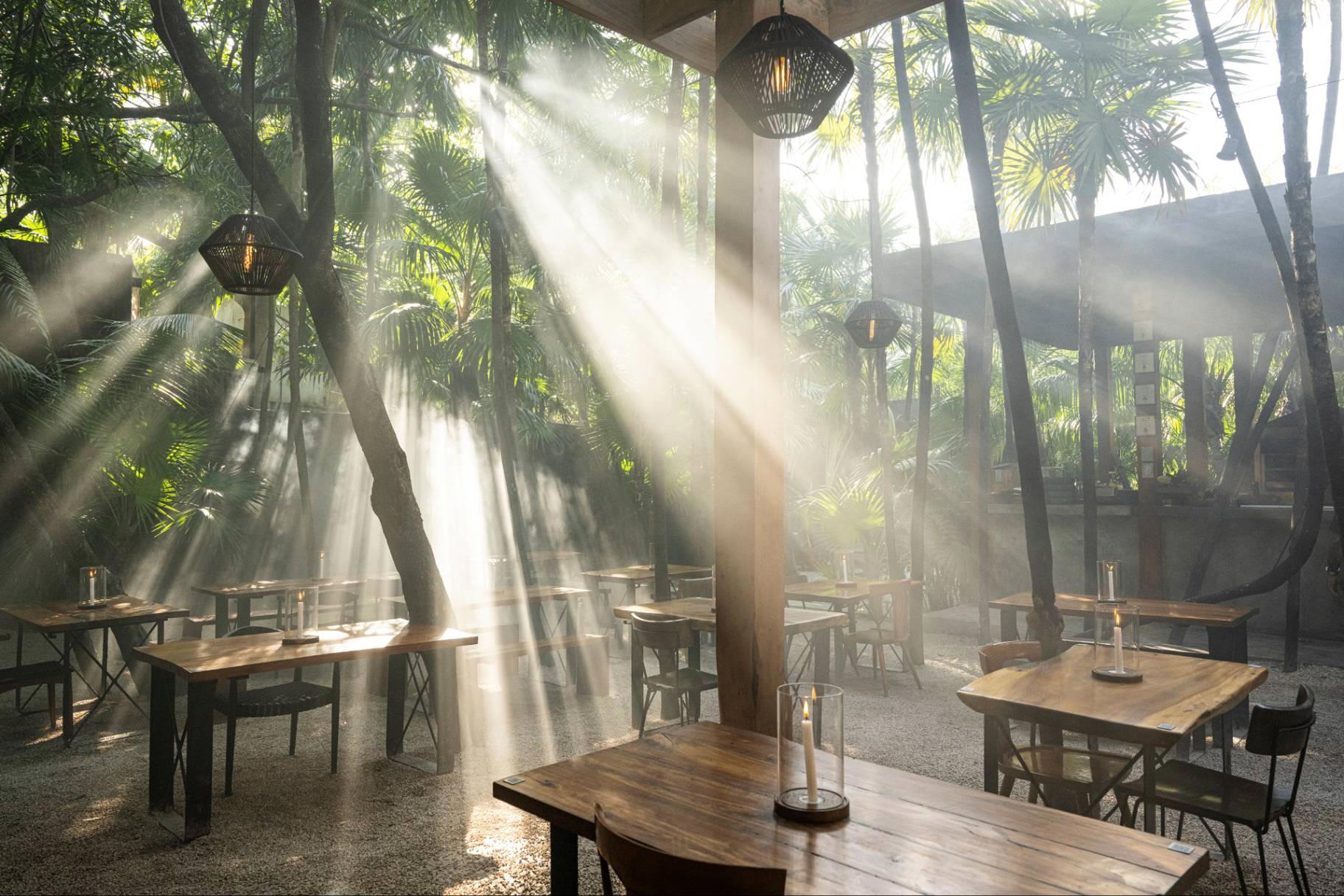
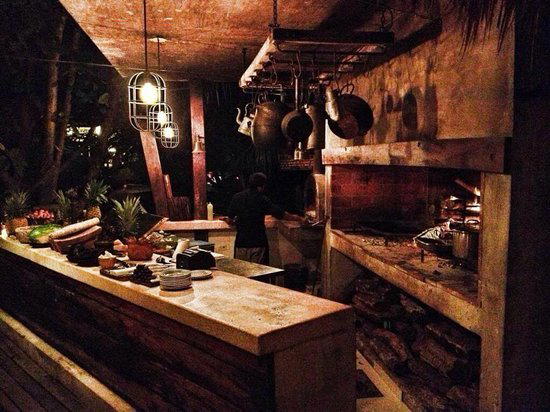
Airy open-air setting with large wooden tables and benches, creating a laid-back tropical cafe atmosphere that feels like a friend's backyard barbecue.