BOCA by Chef Maria Mazon
Chef Maria Mazon’s market-driven tacos and daily salsa flights celebrate Sonoran flavors on vibrant Fourth Avenue. Featured in The New York Times and led by a James Beard–recognized chef, BOCA is festive, personal, and unmistakably Tucson.
 Discover on Pearl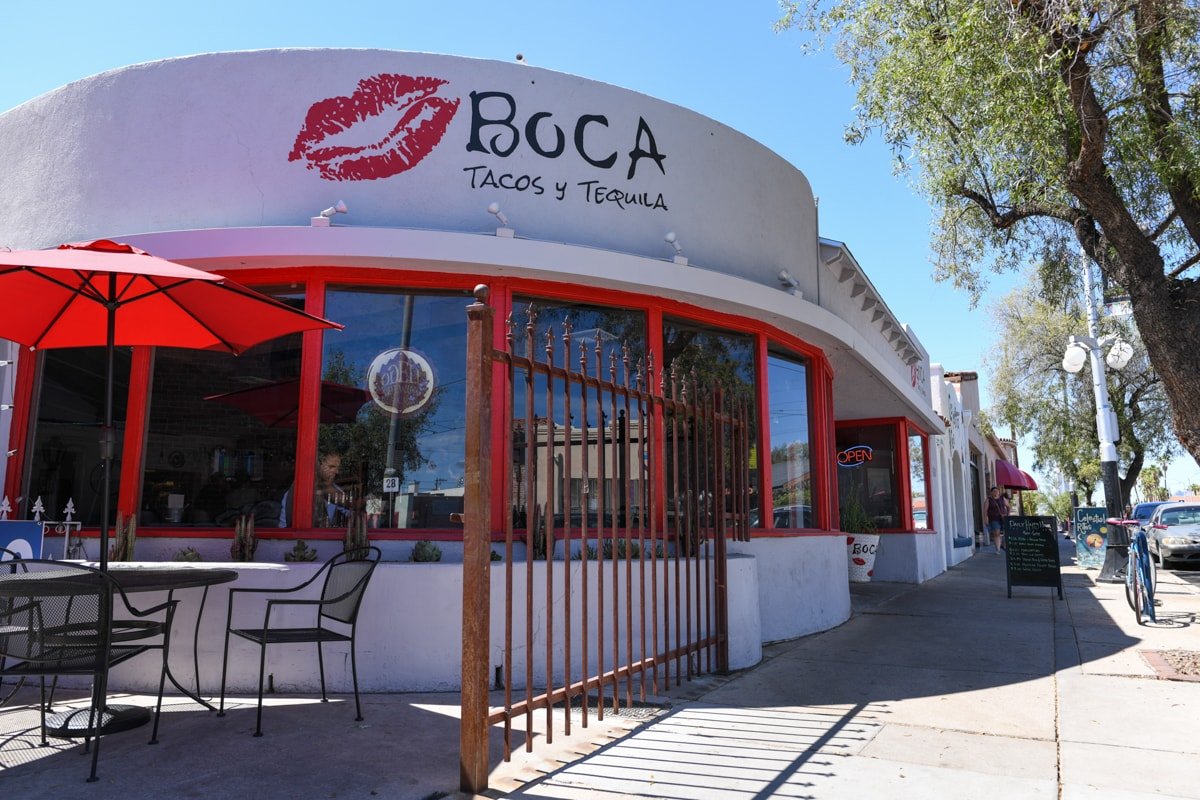
Fourth Avenue in Daylight and After Dark
Tucson's Fourth Avenue corridor has its own cadence. During the day it reads as a neighbourhood of independent shops and sun-bleached murals. By evening the strip tightens into something more deliberate: cocktail programs running alongside serious kitchens, regulars who know the staff by name, and a crowd that arrives with specific intentions rather than by accident. BOCA by Chef Maria Mazon sits at 533 N 4th Ave, physically inside that scene and editorially inseparable from it. The address is not incidental. Fourth Avenue rewards venues that match its register, and BOCA has been part of that conversation long enough to become a reference point rather than a discovery.
The Physical Register of the Room
Sonoran-inflected restaurants along this corridor tend to resolve into one of two modes: the bright, cafeteria-adjacent taqueria or the low-lit room that takes its cues from Mexican cantina tradition without mimicking it literally. BOCA occupies the second register. The atmosphere operates at a middle volume, warm enough to feel relaxed, composed enough that conversation at the table doesn't require leaning in. This is a room built for the kind of meal that takes its time, where the space itself signals that the kitchen is not in a hurry and neither should you be.
That quality of deliberateness in the physical environment is increasingly difficult to sustain on Fourth Avenue, where landlord pressure and rising foot traffic push operators toward volume over atmosphere. Venues that manage both tend to anchor at a particular service format. BOCA's format, based around Sonoran and northern Mexican cuisine, produces a rhythm in the room that differs from the broader Mexican-American dining scene in southern Arizona, which skews toward quicker turns and a more casual physical plant.
Where BOCA Sits in Tucson's Mexican Food Conversation
Tucson's relationship with Mexican cuisine is longer and more textured than almost any other American city. In 2015, Tucson became the first American city designated a UNESCO Creative City of Gastronomy, a recognition tied explicitly to its Sonoran food traditions. That designation shifted the local framing of Mexican food from regional comfort category to something with documented cultural and historical weight. Restaurants operating in this environment are not simply competing on price or portion; they are participating in a civic identity argument about what Sonoran food is and who it belongs to.
BOCA's position in that argument is defined by its chef's lineage and its format. Chef Maria Mazon has received James Beard Award recognition, placing BOCA in the company of a very small tier of Tucson restaurants operating with nationally credentialed kitchen leadership. That credential matters less as a trophy than as a signal about approach: the restaurant is working at a level of intentionality that is not assumed across the broader Fourth Avenue dining scene.
For context, peer venues in Tucson range from straightforwardly casual spots like Barrio Brewing Co to the more composed environments of the Arizona Inn. BOCA occupies a distinct middle register: neighbourhood-rooted but not casual by default, ambitious in the kitchen without the formal architecture of a resort dining room. Across the country, restaurants doing serious regional Mexican work in a similarly composed but accessible format include operations like Superbueno in New York City and Julep in Houston, each of which grounds a regional culinary argument in a specific physical and atmospheric identity.
The Drinking Side of the Room
Mexican-inflected cocktail programs in the American Southwest have developed considerably over the past decade. Agave spirits, specifically mezcal and tequila, have moved from margin to centre in serious bar programs, and the leading rooms are now making decisions about production method, region of origin, and expression in the same way that whisky-focused bars have been doing for years. In cities like Tucson, where agave culture is not imported but native, a restaurant with serious kitchen ambitions is expected to match them at the bar.
Cocktail operations built around technical specificity and regional ingredient logic, rather than novelty theatre, currently define the upper tier of American bar programming. Kumiko in Chicago and Bar Leather Apron in Honolulu represent the discipline-first end of that spectrum. Jewel of the South in New Orleans grounds its program in documented regional tradition. ABV in San Francisco and The Parlour in Frankfurt demonstrate how bar formats at this level operate across very different city contexts. BOCA's proximity to both the agave-producing regions of Sonora and the border drinking culture of southern Arizona gives its bar program a geographic grounding that venues in other cities can research but cannot replicate from first principles.
For a more locally anchored reference in Tucson's drinking scene, Bar Crisol/Exo and 5 Points Market and Restaurant provide a sense of the broader Fourth Avenue drinking culture that BOCA inhabits. Our full Tucson restaurants guide maps the city's dining and drinking scene in more detail.
Planning a Visit
BOCA sits on North Fourth Avenue at the 533 address, within comfortable walking distance of the University of Arizona district and accessible by the Tucson Streetcar, which runs along the corridor. Fourth Avenue's dining scene is most animated Thursday through Saturday evenings, when foot traffic is heavier and the energy in rooms like BOCA's tends to peak. For a quieter version of the same kitchen, weekday evenings are the operative window. Given the James Beard recognition and the relatively contained format typical of Fourth Avenue venues, booking ahead rather than walking in is the pragmatic approach, particularly on weekend nights.
What to Expect from the Experience
Sonoran cuisine at its reference level is not a cuisine of maximalism. The Sonoran pantry, built around wheat flour, beef, cheese, and specific chile varieties, rewards restraint and ingredient quality over layering and complexity for its own sake. A kitchen operating in that tradition with serious credentials is making choices about sourcing and technique that do not announce themselves loudly from the plate but that distinguish the result from category-average execution. Expect a room and a meal that reward attention without demanding performance from the diner in return.
Frequently Asked Questions
Cuisine and Credentials
A short peer set to help you calibrate price, style, and recognition.
| Venue | Cuisine | Awards | Notes |
|---|---|---|---|
| BOCA by Chef Maria Mazon | This venue | ||
| Samurai Sombrero | |||
| Arizona Inn | |||
| Bar Crisol/Exo | |||
| Barrio Brewing Co | |||
| Barrio Viejo |
Need a Table?
Our members enjoy priority alerts and concierge-led booking support for the world's most difficult bars and lounges.
Get Exclusive Access