Bar Shoji



Eater Coffee Guide · Infatuation Matcha Guide · San Francisco Travel Cafe Guide
Bar Shoji sits inside San Francisco’s cocktail conversation at a moment when the city rewards precision over theatrics. Public venue data is sparse, so the useful reading is comparative: place it alongside the city’s technical bars, Japanese-influenced drinking rooms, and reservation-conscious counters rather than treating it as a conventional neighborhood pub.

Pearl is the En Primeur Club membership app — saves, bookings, and concierge access live there. Same editors, same standards.
- Address
- 140 New Montgomery St Suite 1, San Francisco, CA 94105
- Phone
- (628) 233-1533
- Hours
- Mon 8 AM–2:30 PMTue–Fri 8 AM–3 PM, 5–11 PMSat 9 AM–3 PM, 5–11 PMSun 9 AM–2:30 PM
- Website
- theshojisf.com
- Directions
- Get directions
- Booking
- Book on OpenTable
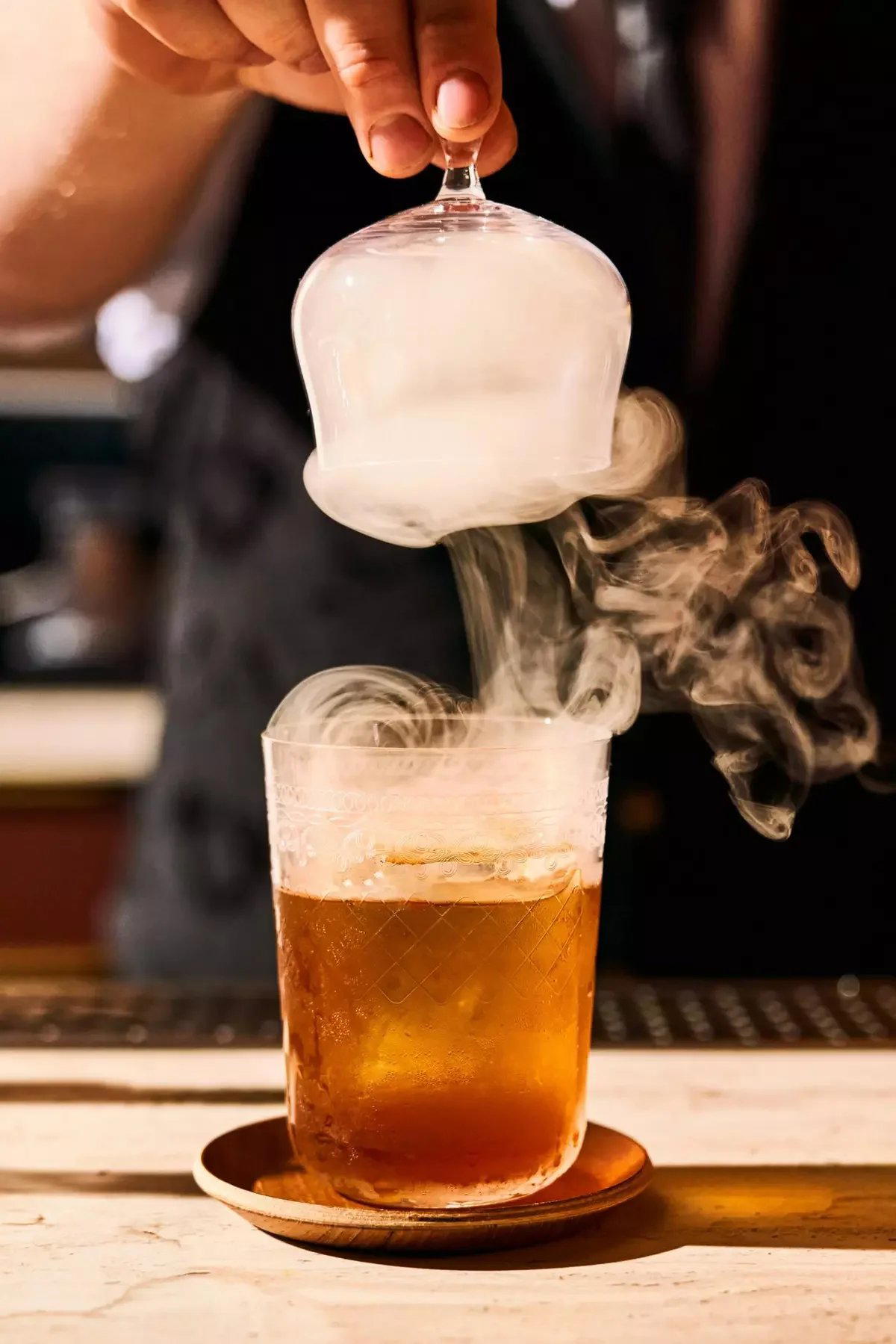
The room before the drink
San Francisco bar culture often announces itself through thresholds: a fog-softened street, a narrow door, a change in light, then the quieter grammar of glassware, bottles, ice, and pacing. Bar Shoji belongs in that kind of reading.
That matters because San Francisco’s drinking culture has never been only about the drink in the glass. The city has a long habit of treating bars as extensions of restaurant culture, neighborhood culture, and immigrant drinking traditions. A serious bar here is expected to know when to be technical and when to disappear into the evening.
San Francisco's technical cocktail moment
The city’s stronger cocktail rooms tend to fall into several camps. There are restaurant-adjacent bars, where the kitchen’s discipline shapes the drinking; neighborhood bars with serious backbars but little ceremony; hotel and downtown rooms where service polish carries the experience; and specialist bars that work with a narrower visual and technical language. Bar Shoji reads, from its name and category alone, as something to assess through that specialist lens, with particular attention to Japanese bar culture’s influence on American cocktail rooms. That influence does not mean every drink should be assumed to involve Japanese ingredients, nor does it allow invented menu claims. It does mean that readers should approach the bar through expectations of proportion, temperature, dilution, glassware, and quiet control rather than volume or novelty.
San Francisco is well suited to that sort of bar. The city’s restaurant audience is comfortable with counter formats, tasting-menu pacing, and high-cost small rooms; its cocktail audience has been trained by years of ingredient-led programs and bartender-owned projects. True Laurel links cocktail technique to a restaurant sensibility. ABV helped normalize serious cocktails in a casual Mission setting. Friends and Family operates in the East Bay’s broader hospitality orbit with a different neighborhood cadence. Pacific Cocktail Haven built national attention around creative drinks with Filipino and Asian American references, earning recognition in conversations that extend beyond local nightlife. Bar Shoji enters a city where the audience already knows how to read a drink program as cultural positioning, not just refreshment.
Why the cocktail programme is the right frame
The assigned lens here is the cocktail programme, and that is the right editorial frame because the available record gives no cuisine type, no chef, and no food details. In a data-rich profile, a critic could point to house drinks, bar-team credentials, awards, menu structure, or price. Here, the absence of those details should sharpen rather than weaken the guidance. The relevant question becomes how to evaluate a bar when the public signals are limited. In San Francisco, the answer is to compare it with the city’s known drinking patterns: Does the room seem built for a short aperitif, a full evening, or a late-night second stop? Does the drink list emphasize classics, house signatures, highballs, stirred cocktails, low-ABV builds, or sake and whisky? Does the service rhythm suit conversation, ceremony, or speed?
Those questions are not filler; they are the practical critical tools that separate serious bar-going from list-chasing. Japanese-influenced cocktail culture, in particular, is often misunderstood in American cities. The meaningful markers are not decorative minimalism or an imported whisky label on the shelf. They are control: ice handling, dilution, the temperature at service, the weight of the glass, the ratio between spirit and modifier, the confidence to keep a drink quiet. If Bar Shoji is operating in that register, the payoff would be precision rather than surprise. If it is operating outside that register, the name alone should not lead a guest to assume otherwise.
How it compares with the city's bar circuit
The useful comparison is not between Bar Shoji and every bar in San Francisco. It is between Bar Shoji and the subset of rooms that attract drinkers who care about technique, pacing, and point of view. True Laurel belongs to the restaurant-bar school, where cocktails can feel composed with the same seriousness as food. ABV shows the opposite lesson: a room can be casual in format while maintaining a serious cocktail spine. Pacific Cocktail Haven demonstrates how identity, memory, and technical bar craft can occupy the same glass without turning into theme. Friends and Family is useful as a regional reference because the Bay Area’s cocktail culture spills across city lines rather than staying inside downtown San Francisco.
Against that field, Bar Shoji should be approached as a narrow-format decision rather than an all-purpose night out. If the evening calls for a loud room, a sprawling food order, or a bar crawl with loose timing, San Francisco offers many options. If the evening is built around the first drink, the bar seat, the quiet edit, and the pleasure of watching a programme reveal its priorities, the decision becomes more interesting. The lack of published price and booking data also means visitors should not assume an easy walk-in or a known spend. In a city where labor, rent, and ingredients push cocktail pricing upward, a small serious bar can price closer to restaurant drinking than casual nightlife.
What can be said without inventing details
EP Club’s rule for sparse venue records is simple: use what is known, mark what is not, and widen the context rather than filling gaps with fiction. The known data is limited to the name, city, state, country, and category as a bar. The unavailable data includes address, phone, website, price range, hours, awards, seat count, booking method, cuisine type, chef or bar lead, and menu. That absence is itself useful for planning. A traveler should treat Bar Shoji as a venue requiring verification close to the date of travel, especially if it is meant to anchor an evening rather than sit as a flexible stop between dinner and a hotel.
This is also where San Francisco’s geography matters, even without a listed address. The city rewards neighborhood sequencing. A cocktail plan near the Mission has a different after-dinner logic from one near Jackson Square, Hayes Valley, the Financial District, or the Richmond. The right hotel, dinner, and bar combination can remove friction from an evening; the wrong pairing can turn a short cross-town move into a timing problem. For broader planning, EP Club’s city pages are the more useful starting grid: Our full San Francisco bars guide, Our full San Francisco restaurants guide, Our full San Francisco hotels guide, Our full San Francisco wineries guide, and Our full San Francisco experiences guide.
The broader American cocktail comparison
San Francisco does not drink in isolation. Its sharper bars sit in a national conversation that includes Miami’s Cuban-American cocktail theater, Albuquerque’s idiosyncratic independent bar scene, and Seattle’s precise spirits-led rooms. Café La Trova in Miami shows how live music, cantinero tradition, and bar craft can operate as a cultural system rather than a drink list with décor. Happy Accidents in Albuquerque is a reminder that serious American cocktail culture no longer belongs only to coastal capitals. Roquette in Seattle represents another northern West Coast model, where restraint and spirits knowledge often carry more weight than volume.
That national comparison helps clarify what Bar Shoji needs to prove. A bar with limited public detail cannot lean on awards, published rankings, or a famous bartender in the available record. It earns attention through execution, not biography. In the current American cocktail scene, the stronger rooms make their argument quickly: the first interaction at the door, the way the menu is edited, the confidence of the first drink, and the rhythm between staff and guest. San Francisco patrons are alert to those signals because the city has enough good drinking rooms to make vagueness costly. A bar does not need a long menu or theatrical service to register; it needs a clear position.
Planning the evening
Check current public channels before building an evening around the bar, and avoid assuming same-night availability, especially later in the week. If it operates on a walk-in model, the same absence means timing will matter: early evening is usually safer for quieter cocktail rooms, while post-dinner hours can compress demand. None of that is a claim about Bar Shoji’s policy; it is the prudent approach for a San Francisco bar with incomplete published logistics.
Pairing is the smarter move. Build the night around neighborhood flow once the address is confirmed: dinner first if the bar is the contemplative final stop, or a short first round if the restaurant reservation carries the evening. Visitors staying in the city should avoid overloading a single night with distant stops; San Francisco’s compact map can be deceptive when hills, traffic, and weather intervene. A serious cocktail room benefits from breathing space. Arriving rushed, late, or overcommitted is the easiest way to miss the qualities that make a technical bar worthwhile.
Editorial assessment
Bar Shoji is not a venue to oversell from thin data. Its value, at least from the available record, lies in how it can fit into San Francisco’s broader cocktail culture: precise, comparative, and sensitive to format. That restraint is not a weakness. It is a better service to readers who care about accuracy as much as taste.
The editorial stance is clear: treat Bar Shoji as a specialist cocktail prospect in a city that already has mature benchmarks. It is worth considering for drinkers who prefer edited rooms over noisy variety, who care about technique more than spectacle, and who are willing to verify practical details before committing an evening. For travelers who want certainty, the established San Francisco bar circuit offers more documented options. For travelers who enjoy reading a city through its smaller drinking rooms, Bar Shoji belongs on the research list, with expectations set by context rather than hype.
Comparable Venues Nearby
Comparable venues nearby, for context on price, style, and recognition.
| Venue | Cuisine | Price | Awards | Notes |
|---|---|---|---|---|
| Bar ShojiThis venue — the venue you are viewing | cocktail_bar | $50–100 | Eater Coffee Guide · Infatuation Matcha Guide | Not listed |
| Chome | rooftop_bar | $50–100 | Not listed | Mission |
| Cantina Los Mayas | wine_bar | $30–50 | Not listed | Inner Richmond |
| 620 Jones | rooftop_bar | Not listed | Not listed | Tenderloin |
| Betty Lou's Seafood & Grill | Bar | Not listed | Not listed | North Beach |
| Poc-Chuc Restaurant | lounge | Not listed | Not listed | Mission |
Recognition history
Dated appearances from independent guides and award organizations, with the underlying list record or original source where available.
Eater Coffee Guide
Eater
Infatuation Matcha Guide
Infatuation
San Francisco Travel Cafe Guide
San Francisco Travel
Details
- Intimate
- Sophisticated
- Modern
- Quiet
- Trendy
- Date Night
- After Work
- Solo
- Casual Hangout
- Special Occasion
- Standalone
- Design Destination
- Seated Bar
- Lounge Seating
- Craft Cocktails
- Sake
- Zero Proof
- Whiskey
Current opening hours
- Monday
- 8 AM–2:30 PM
- Tuesday
- 8 AM–3 PM, 5–11 PM
- Wednesday
- 8 AM–3 PM, 5–11 PM
- Thursday
- 8 AM–3 PM, 5–11 PM
- Friday
- 8 AM–3 PM, 5–11 PM
- Saturday
- 9 AM–3 PM, 5–11 PM
- Sunday
- 9 AM–2:30 PM
Hours can change for holidays and private events. Last verified .
Low-lit and intimate with warm wood finishes and subdued lighting, creating a quiet, refined Japanese cocktail-bar atmosphere.