Atchafalaya
Atchafalaya occupies a corner of the Lower Garden District that moves at its own pace, where the bar program carries as much weight as the kitchen. Positioned alongside New Orleans' more celebrated cocktail destinations, it draws a neighborhood crowd that returns for the specificity of what's in the glass as much as what's on the plate. The address at 901 Louisiana Avenue places it a short ride from the French Quarter's density.
 Discover on Pearl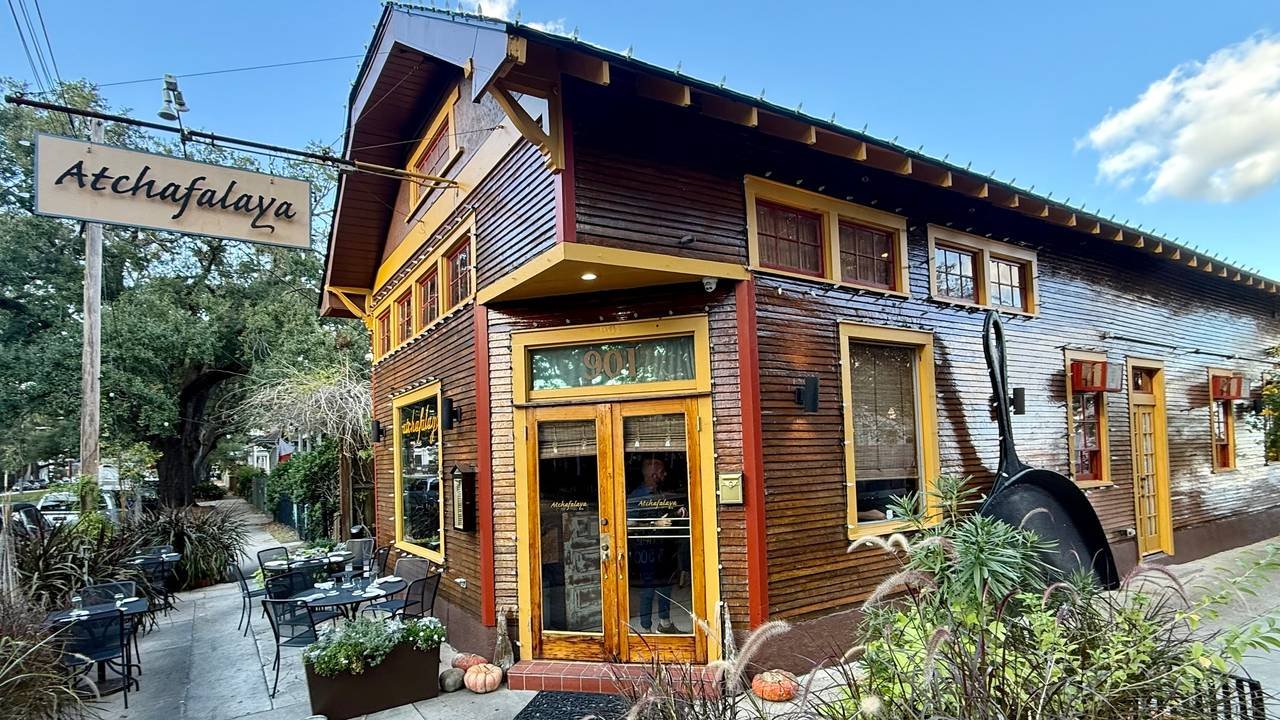
A Corner Bar in a City That Takes Corners Seriously
New Orleans has always organized its drinking culture around geography. The French Quarter delivers volume and spectacle; the Garden District and its neighboring wards deliver something closer to intention. Atchafalaya sits at 901 Louisiana Avenue, in the Lower Garden District, on a block where the foot traffic is local rather than tourist-facing. That distinction matters in a city where the difference between a bar that performs New Orleans and a bar that simply is New Orleans shows up quickly in what arrives at the table.
The building reads as the neighborhood reads: front porches, weathered wood, a certain ease with the heat. Approaching from Louisiana Avenue, the structure feels embedded rather than installed, the kind of address that has absorbed decades of the city's particular rhythm. Inside, the room operates on a scale that allows the bar counter to remain a focal point rather than a service station — a spatial choice that says something about where the venue's priorities sit.
The shortlist, unlocked.
Hard-to-book tables, cellar releases, and concierge-planned trips.
Get Exclusive Access →The Bar as the Room's Organizing Principle
Across American cities, the relationship between kitchen and bar has shifted considerably over the past decade. In a first wave, restaurants bolted on cocktail programs as an afterthought; in a second, dedicated cocktail bars absorbed food menus as a way to hold guests longer. The more interesting middle position — where bar and kitchen carry roughly equal institutional weight , is harder to sustain and, when it works, produces a different kind of evening. Atchafalaya operates in that middle register.
New Orleans is a city with a strong comparative set for cocktail programs. Cure, in the Freret corridor, helped establish the template for technically rigorous programs rooted in local ingredient vocabulary. Jewel of the South works the classical revival angle, pulling from 19th-century New Orleans cocktail history with precision. Beachbum Berry's Latitude 29 occupies a specialist niche in the tiki tradition that few programs can match on depth of research. Within that context, Atchafalaya's bar sits in a different register: neighborhood-anchored, hospitality-forward, and less interested in positioning itself against the city's cocktail canon than in serving the room in front of it.
That approach has equivalents elsewhere. Julep in Houston deploys Southern ingredient fluency in service of a welcoming room rather than a trophy program. ABV in San Francisco built its reputation on a similar logic: serious craft operated without ceremony. The bartender-as-host model, where technical knowledge serves the guest's comfort rather than the bar's prestige, tends to produce programs that age better than those built around a single aesthetic moment.
Craft in the Southern Register
Louisiana's ingredient vocabulary gives any serious bar program a particular foundation to work from. Cane spirits, bitter aperitifs, local citrus, and the cultural overlap between French, Spanish, and West African flavor traditions create a reference pool that rewards depth of knowledge. A bartender working that vocabulary well is doing something categorically different from one applying a generic craft-cocktail template to a Southern address.
The comparison set for this approach extends beyond the city. Kumiko in Chicago demonstrates how a bar program can carry genuine culinary ambition without requiring the kitchen to do the explaining. Allegory in Washington, D.C. shows what happens when hospitality philosophy and technical precision reinforce each other over time. Superbueno in New York City works a similarly ingredient-specific angle through a Latin American lens. Across those programs, the connecting thread is specificity , a bar that knows exactly which tradition it's drawing from and applies that knowledge consistently rather than eclectically.
At the global tier, Bar Leather Apron in Honolulu and The Parlour in Frankfurt on the Main represent how the hospitality-forward bar model translates across very different cultural contexts, suggesting the model's durability has less to do with geography than with the discipline of execution.
The Lower Garden District as Context
The Lower Garden District operates differently from the more photographed streets of the Garden District proper. The architecture is less uniformly grand, the commercial strip along Magazine Street is closer and more accessible, and the residential density means that a neighborhood restaurant-bar has an actual neighborhood to serve. That dynamic shapes what a venue like Atchafalaya can be: less a destination that imports its guests from elsewhere, more a room that earns loyalty through repeated visits.
New Orleans dining, at its most functional, works this way. The city's most durable restaurants rarely rely on tourism alone; the local return rate is what sustains the kitchen through the seasonal flux of visitor traffic. A venue at Louisiana Avenue and Laurel Street is positioned to work that dynamic if the program merits it. For an alternative reading of how the Lower Garden District's food and drink scene fits into the broader city picture, the full New Orleans restaurants guide maps the neighborhoods with more granularity.
One adjacent note: 2 Phat Vegans represents another strand of the neighborhood's food identity, one that moves against the protein-heavy default of Louisiana cuisine in a way that reflects how the city's dining scene has broadened over the past several years.
Planning a Visit
Atchafalaya's address at 901 Louisiana Avenue places it in a part of the city that rewards arriving by car or rideshare rather than on foot from the Quarter, though the streetcar along St. Charles Avenue puts the neighborhood within reach. The venue draws a mixed crowd , neighborhood regulars alongside visitors who have done enough research to end up off the main tourist circuits. That mix tends to produce a room with less self-consciousness than addresses closer to Bourbon Street.
Given the venue's positioning as a bar-kitchen operation rather than a pure cocktail destination, an evening here works leading approached as a full sitting rather than a quick drink stop. Reservations, where available, are worth pursuing for the dining room; the bar counter typically operates on a walk-in basis, which is consistent with how similar venues across the city handle their splits between the two spaces. Current hours and booking options are confirmed directly through the venue, as operational details at this address are subject to change.
Frequently Asked Questions
- What's the signature drink at Atchafalaya?
- Atchafalaya's bar program draws from Louisiana's deep cane spirit and citrus vocabulary rather than a single headline cocktail. The program's identity sits closer to the hospitality-forward model seen at venues like Cure than to bars built around a single signature, meaning the menu rewards exploration rather than a single order. Specific current offerings are confirmed at the venue directly.
- What's the defining thing about Atchafalaya?
- The address in the Lower Garden District places Atchafalaya in a neighborhood-facing role that most of New Orleans' more celebrated cocktail venues don't occupy. The bar and kitchen carry roughly equal weight, which produces an evening with a different shape than either a dedicated cocktail bar or a restaurant with a perfunctory drinks list. In a city where price points and tourist volume can distort both categories, that balance is the venue's primary distinction.
- What's the leading way to book Atchafalaya?
- If dining room access is the priority, securing a reservation in advance is advisable, particularly on weekend evenings when Lower Garden District venues absorb spillover from busier parts of the city. The bar counter typically takes walk-ins. Current contact details and any online booking options are confirmed through the venue directly, as this information is subject to change.
- Is Atchafalaya suitable for a full dinner or better as a drinks stop?
- Atchafalaya functions as a full-service restaurant-bar rather than a pure drinking venue, which means the evening is structured around a seated experience with a proper kitchen behind it. In New Orleans' dining culture, that format occupies a specific tier: more casual in feel than the city's tasting-menu rooms, but with more culinary ambition than a standard bar kitchen. Guests who treat it as a dinner destination rather than a pre-dinner stop tend to get more out of the bar program as a result.
At a Glance
A quick peer snapshot; use it as orientation, not a full ranking.
| Venue | Notes | Price |
|---|---|---|
| Atchafalaya | This venue | |
| Jewel of the South | ||
| Beachbum Berry's Latitude 29 | ||
| Cure | ||
| Cane & Table | ||
| The Carousel Bar |
Need a Table?
Our members enjoy priority alerts and concierge-led booking support for the world's most difficult bars and lounges.
Get Exclusive AccessThe shortlist, unlocked.
Hard-to-book tables, cellar releases, and concierge-planned trips.
Get Exclusive Access →