Weingut Gebeshuber

Falstaff Winery - 4 Stars
Weingut Gebeshuber is a calm Thermenregion winery in Gumpoldskirchen, shaped around biodynamic viticulture, shell-limestone parcels, and native white grapes. Its strongest editorial case is not scale or spectacle, but a disciplined focus on Zierfandler and Rotgipfler, with Pinot Noir and St. Laurent carrying the red-wine side of the estate.

Pearl is the En Primeur Club membership app, where members save venues, book tables and use the concierge.

The tone here is set before the first glass: a historic cellar, a quiet wine lounge, and the measured pace of a Lower Austrian wine town where the strongest producers do not need to perform for the room. In Gumpoldskirchen, wine culture is tied less to grand tourism infrastructure than to local varieties, limestone soils, and the patience required to make them legible. Weingut Gebeshuber belongs to that slower register: elegant, restrained, and more interested in site expression than in broad international styling.
The estate’s relevance starts with the Thermenregion’s native white grapes. Zierfandler and Rotgipfler remain the defining local pair, and Gebeshuber’s white-wine program is built exclusively around them. That decision matters. In a market where many Austrian lists are led by Grüner Veltliner, Riesling, or internationally familiar varieties, this is a pointed regional statement. The whites are not presented as generic Austrian bottles; they are anchored to Gumpoldskirchen’s own grammar.
Red wine plays a different role. Pinot Noir and St. Laurent place the estate in a cooler-climate, fragrance-led idiom rather than a high-extraction one. That split gives the range a clear shape: indigenous whites as the signature identity, reds that follow the Thermenregion’s capacity for poise, and a house style built around calm maturation rather than cellar showmanship.
Shell limestone, native grapes, and a disciplined Thermenregion hierarchy
The portfolio is organized in a way that reads like a map of increasing site precision. Querfeldein sits at the approachable end, covering white, rosé, and red wines intended for early drinking. Vom Muschelkalk moves the conversation toward parcels shaped by shell limestone around Gumpoldskirchen, where food-friendliness and ripeness are treated as part of the same argument. Lage occupies the single-site tier, with selected fruit and slow élevage in small and large wood.
That hierarchy is useful because it shows how the estate thinks about terroir. The entry wines give the broad regional accent; the muschelkalk bottlings narrow the focus to soil; the Lage wines move toward named-site seriousness without turning the experience into a collector-only exercise. For visitors trying to understand the Thermenregion, this ladder is more instructive than a long, unfocused tasting list. It explains how the same place can produce casual table wines and more age-minded bottlings without losing its identity.
Biodynamic production is central to the estate’s public positioning, and the property is described as a pioneer of biodynamic cultivation in the Thermenregion of Lower Austria. That is a meaningful trust signal in a region where vineyard identity and farming choices are closely connected. The stronger point, however, is cultural as much as agricultural: by keeping Zierfandler and Rotgipfler at the center of the whites, the winery is preserving a local vocabulary that would be easy to dilute with more export-friendly grapes.
The estate dates to 1998, with Johannes Gebeshuber associated with its founding and winemaking identity. That timeline places it among the modern generation of Austrian producers that built reputations through clearer regional focus, more precise vineyard language, and a move away from generic country-wine branding. The Falstaff winery directory also gives it a useful third-party presence within Austrian wine culture, even without needing to lean on medals or score-chasing as the main argument.
The tasting-room case: calm over performance
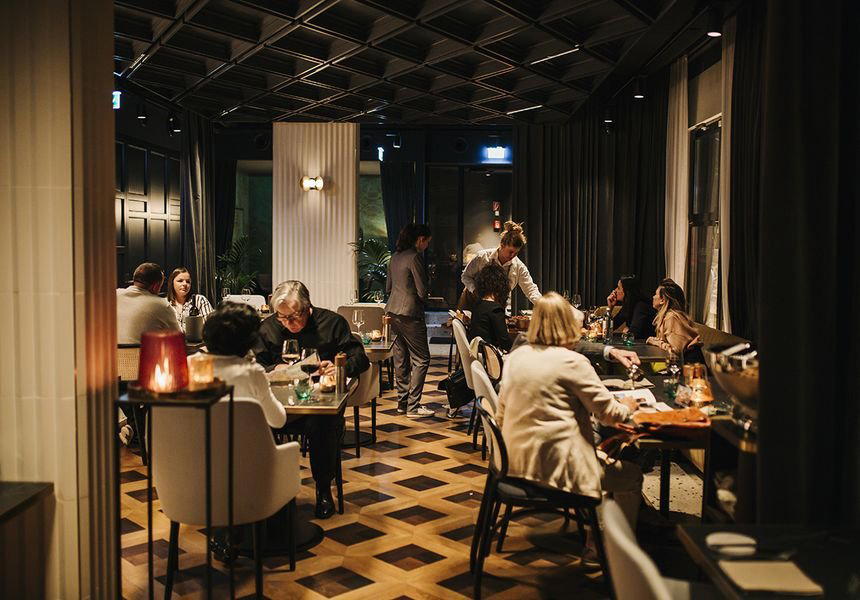
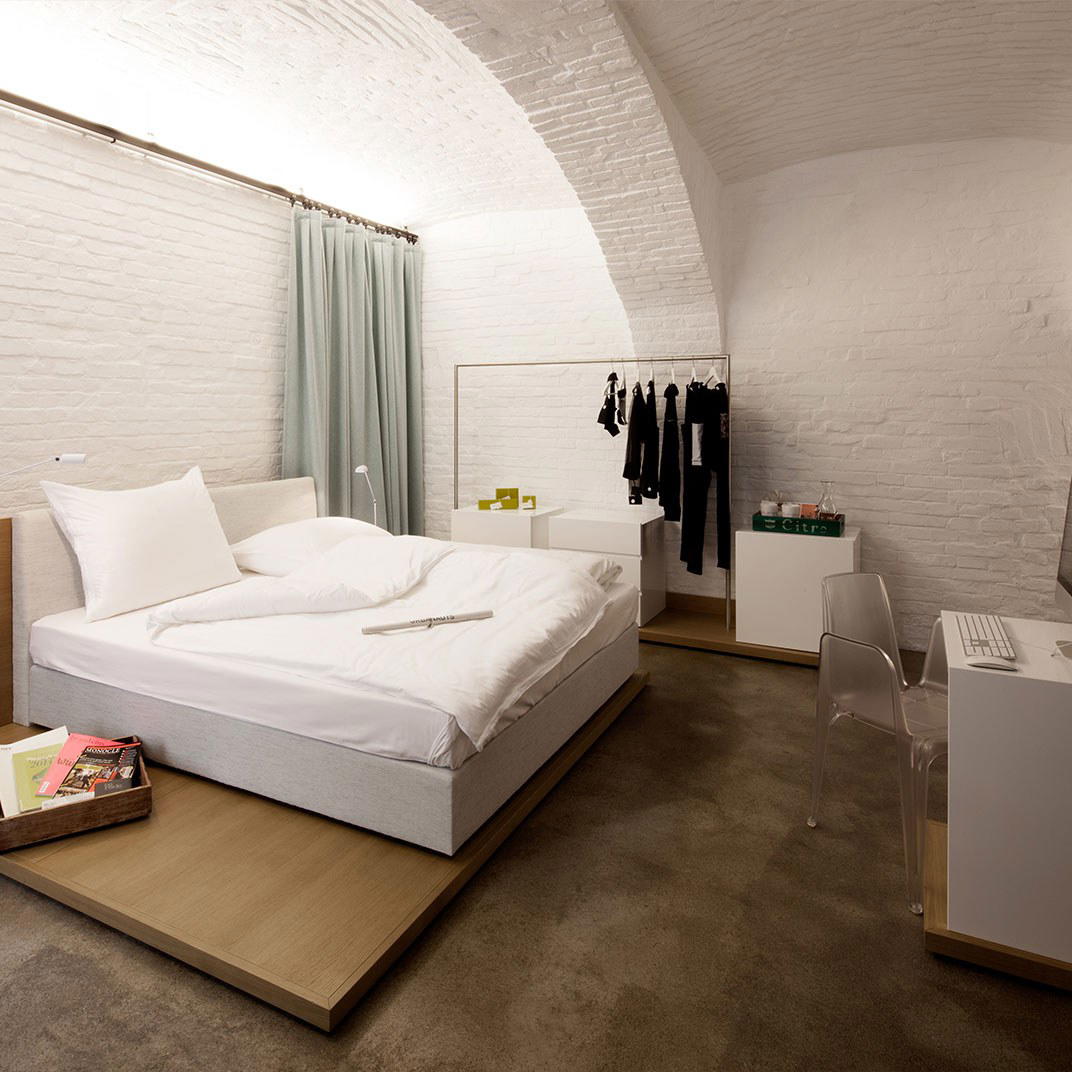
Hospitality here follows the same editorial logic as the wines. The setting is described as a historic winery and cellar in central Gumpoldskirchen, with a wine lounge used for tastings, sales, and events. That matters because the experience is not framed as a high-volume cellar-door circuit. It is better understood as a composed introduction to a regional producer whose range is built around a few clear ideas: biodynamic farming, limestone, indigenous whites, and slow maturation.
The event programming also suggests a broader cultural role. Jazz and wine evenings in the wine lounge, including tasting and a Winzerjause, place the estate inside the social life of the town rather than isolating it as a production facility. In wine regions close to major cities, the danger is often the tasting-room template: quick flight, quick purchase, little memory of place. Gebeshuber’s format works better when treated as a slower stop in Gumpoldskirchen, especially for travelers who want to understand why the Thermenregion’s native grapes have survived as more than historical curiosities.
For a compact local itinerary, the sensible approach is to build the day around Gumpoldskirchen’s wine culture rather than a single address. EP Club’s broader regional rails are useful for that: Our full Gumpoldskirchen wineries guide maps the wine side, while Our full Gumpoldskirchen restaurants guide, Our full Gumpoldskirchen hotels guide, Our full Gumpoldskirchen bars guide, and Our full Gumpoldskirchen experiences guide help frame the town beyond the cellar door.
How to place it in a wider Austrian wine itinerary
Gebeshuber is strongest for drinkers who want an Austrian wine stop with a local grape argument, not a generic premium tasting. Zierfandler and Rotgipfler are the reason to pay attention; muschelkalk parcels explain the soil story; Pinot Noir and St. Laurent fill out the cooler red register. The mood is quiet, classic, and sophisticated, with enough structure for wine education and enough ease for groups or special-occasion tastings.
Readers building a Gumpoldskirchen route can use nearby editorial entries as context rather than as a ranking exercise: Freigut Thallern, Johann Sonnleitner, Landesweingut Gumpoldskirchen, Weinbau Herbert Hasenöhrl, and Weinbau Michael Ramberger broaden the local picture. For a wider cellar-door lens beyond the town, EP Club also covers »der Steiner« Hans Steiner in Podersdorf am See, ®walzer in Gneixendorf Bei Krems, 1516 Brewing Company Distillery in Vienna, & Handwein in Mannheim, and 00 Wines in Carlton.
The editorial verdict is simple: this is a winery for understanding the Thermenregion through its own materials. The draw is not spectacle, famous labels, or a trophy wall. It is the way a medium-scale estate uses biodynamic farming, native grapes, limestone-linked sourcing, and a restrained cellar hierarchy to make Gumpoldskirchen taste specific rather than interchangeable.
Recognition history
Dated appearances from independent guides and award organizations, with the underlying list record or original source where available.
Falstaff Winery - 4 Stars
Falstaff
Continue exploring
More in Gumpoldskirchen
Wineries in Gumpoldskirchen
All wineries in Gumpoldskirchen →
Bars in Gumpoldskirchen
Browse all →
Restaurants in Gumpoldskirchen
All restaurants in Gumpoldskirchen →![[aend] restaurant in Vienna](https://cdn.enprimeurclub.com/storage/v1/object/public/images/locations/recsVyRkMfzCxPmp0/hero2.jpg?width=3840&quality=75)
Details
- Quiet
- Elegant
- Classic
- Sophisticated
- Wine Education
- Group Outing
- Special Occasion
- Private Tasting
- Historic Building
- Barrel Room
- Design Destination
- Biodynamic
- Organic
- Vineyard
- Zierfandler
- Rotgipfler
- Pinot Noir
- St. Laurent
- Still White
- Still Red
- Sparkling
- Dessert
- Winelounge Tasting
- Cellar Door Tasting
- Guided Tasting
Calm, elegant, and understated, with a historic cellar setting in the heart of Gumpoldskirchen and a wine lounge used for tastings and events.