
Among the Wachau's most closely watched estates, Weingut F. X. Pichler operates from Oberloiben with a Pearl 2 Star Prestige rating (2025) that positions it alongside the valley's most serious Grüner Veltliner and Riesling producers. The address — a bend in the Danube where steep loess and primary rock terraces define what Austrian white wine can be — is as much the argument as the wine itself.
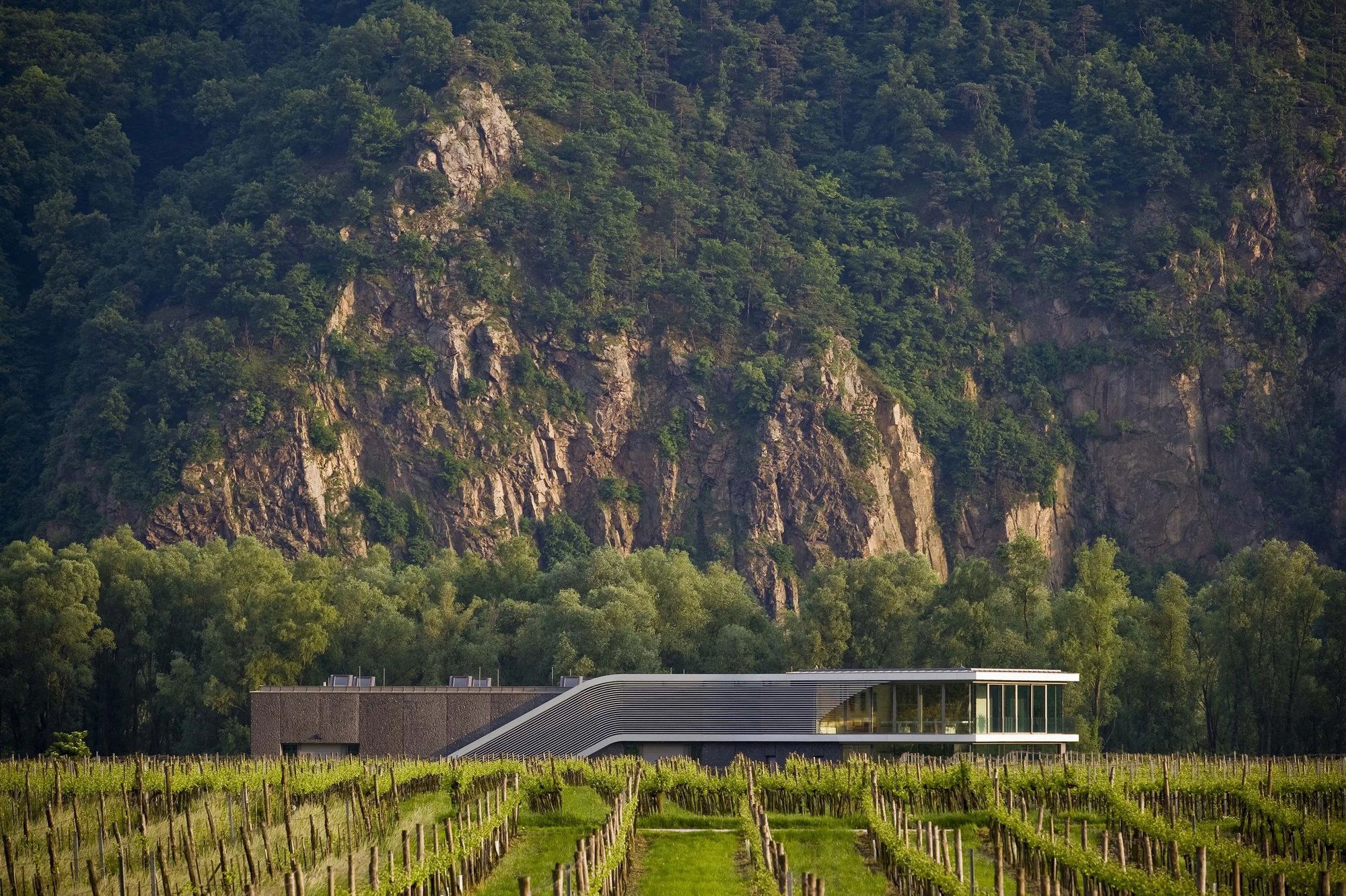
Where the Danube Bends and the Terraces Begin
The stretch of the Danube between Dürnstein and Loiben is one of Central Europe's most legible wine landscapes. Terraced vineyards climb from the river's edge at gradients that make mechanisation impossible, loess and primary rock alternate in ways that experienced tasters claim to detect in the glass, and the valley's particular microclimate — warm days, cool nights, the river acting as a thermal buffer — produces conditions that the Wachau has leveraged into a distinct identity within Austrian wine. Weingut F. X. Pichler sits inside that geography at Oberloiben 57, a hamlet so small it barely registers on most maps but carries considerable weight among those who follow Austrian Grüner Veltliner and Riesling seriously.
The estate holds a Pearl 2 Star Prestige rating for 2025, a designation that places it in the upper tier of a competitive peer group that includes Weingut Emmerich Knoll and Weingut Alzinger, both operating from the same narrow corridor. The Wachau as a whole produces relatively small volumes at the premium end , the region's total vineyard area is modest by European standards , which means that estates at this level are pricing against global fine-white benchmarks rather than regional averages.
The Physical Logic of These Terraces
Few wine regions make their argument as visibly as the Wachau. Standing on the river road between Dürnstein and Loiben, the terracing is the first thing you absorb: dry-stone walls holding narrow strips of vines on gradients that face the sun at angles engineered over centuries by hand labour. The primary rock , gneiss and granite in the upper Wachau, with loess deposits increasing as you move downstream toward Loiben , translates into wines that track differently depending on the specific parcel. Estates that hold multiple sites across this geology tend to use single-vineyard designations as the clearest way to communicate those differences to their buyers.
F. X. Pichler's position at Oberloiben places it toward the lower Wachau, where the valley widens slightly and loess influence grows. That geological positioning is shared with neighbours like Emmerich Knoll, who also works with terraces along this section of the river. The contrast with the upper valley producers, or with a cooperative like Domäne Wachau, which draws from across the entire appellation, is worth understanding before visiting: the smaller family estates at this level offer a more site-specific argument, even if the practical experience of visiting them differs from a large cellar with a public tasting room.
The Wachau Classification and What the Smaragd Tier Means
Austrian wine has a classification system specific to the Wachau that sits outside the national Prädikat framework. Steinfeder, Federspiel, and Smaragd represent ascending levels of ripeness and body, with Smaragd , named after a local emerald-green lizard seen basking in the sun , designating the richest, most age-worthy wines from the ripest grapes harvested last in the season. For estates operating at the prestige level of F. X. Pichler, Smaragd Grüner Veltliner and Riesling from specific vineyards are where critical attention concentrates. These wines age well , a well-cellared Smaragd from a leading Wachau estate at ten years is a different proposition than at two , which partly explains why allocation and mailing-list access matter to serious buyers.
The broader Austrian fine-wine context is worth noting. Producers like Schloss Gobelsburg in Langenlois, working in the adjacent Kamptal, offer a useful comparison: similarly serious credentials, different geology, and a style that reflects the Kamptal's warmer, more continental climate versus the Wachau's river moderation. Further afield, the diversity of Austrian wine becomes even more apparent when you consider red-focused producers like Weingut Pittnauer in Gols or the sweet-wine specialists at Weingut Kracher in Illmitz , each operating in entirely different natural and stylistic registers.
Approaching the Estate: Practical Orientation
Dürnstein, the medieval village that anchors this stretch of the Danube, is accessible by train from Vienna (approximately 90 minutes by regional service to Krems, then local connection) or by car along the B3, the road that traces the northern bank of the river through the Wachau. The scenery along the B3 through the wine villages , Spitz, Weißenkirchen, Dürnstein, Loiben , is part of the orientation: you pass the terraces, read the vineyard names on signs at the road's edge, and arrive at Oberloiben already understanding something about the landscape that produced what you're about to taste.
Visiting premium family estates in the Wachau requires more planning than stopping at a cooperative with walk-in facilities. Estates operating at the Pearl 2 Star Prestige tier tend to host by appointment rather than open cellar-door access, and availability during harvest (typically late September through October) is limited. Contacting the estate directly in advance is the standard approach. The broader Dürnstein area rewards a longer stay: the Dürnstein hotels guide covers accommodation options along the river, and the Dürnstein restaurants guide maps the dining options in the village and surrounding wine country. For a broader survey of what the valley offers across wine, food, and culture, the Dürnstein experiences guide covers the full picture.
Placing F. X. Pichler in Its Competitive Context
The Wachau operates with a relatively small number of estates at the leading of the quality pyramid. The Pearl 2 Star Prestige rating earned by F. X. Pichler in 2025 positions the estate inside a cohort where differences between producers are meaningful and debated, but where all members share a commitment to site-specific Smaragd production at prices that reflect international demand. The regional cooperative, Domäne Wachau, serves a different function in the market , volume and accessibility rather than allocation scarcity , while estates like Weingut Alzinger, also based in Loiben, operate at a similar boutique scale.
For those building a broader picture of Austrian fine wine beyond the Wachau, the full Dürnstein wineries guide covers the valley's producers in context. Producers elsewhere in Austria worth considering alongside the Wachau's white-wine specialists include Weingut Heinrich Hartl in Oberwaltersdorf and, for a contrasting European fine-wine tradition, estates like Abadía Retuerta in Sardón de Duero. The Dürnstein bars guide is worth consulting for anyone wanting to continue exploring regional wine in a more casual setting after a cellar visit.
Frequently Asked Questions
What should I taste at Weingut F. X. Pichler?
For any serious visit to a Wachau estate at the Pearl 2 Star Prestige level, the Smaragd tier Grüner Veltliner and Riesling from named single-vineyard sites is where the estate's argument is most clearly made. These wines represent the ripest, most structured expressions of the Wachau's primary-rock and loess terraces and are the wines that drive the estate's critical reputation. If allocation allows, comparing across at least two distinct vineyard designations is the most informative approach.
What's the main draw of Weingut F. X. Pichler?
The combination of physical location and critical standing is the core case. Oberloiben sits on one of the Wachau's most closely watched stretches of river, with terrace vineyards that have defined Austrian white wine's international reputation over several decades. The Pearl 2 Star Prestige rating (2025) confirms that F. X. Pichler remains among the valley's leading estates , a meaningful designation in a peer group that includes Emmerich Knoll and Alzinger, both operating within a few kilometres. The estate does not operate at accessible price points, which sets the expectation accordingly.
Is Weingut F. X. Pichler reservation-only?
Premium family estates in the Wachau at this recognition level typically receive visitors by appointment rather than open walk-in access. If you are travelling to Dürnstein specifically to visit the estate, contacting them ahead of your trip is the appropriate approach. The estate's address at Oberloiben 57 is confirmed in the database; specific booking methods, hours, and contact details are not currently listed, so reaching out via the estate's official channels directly is advisable.
How does Weingut F. X. Pichler relate to the wider history of Austrian Riesling's international standing?
The Wachau was central to Austrian wine's re-emergence on international fine-wine lists from the 1980s onward, and estates operating at the Pearl 2 Star Prestige tier today are, in part, the beneficiaries of that longer reputation-building period. F. X. Pichler in Dürnstein sits within a lineage of producers who demonstrated that the valley's Riesling and Grüner Veltliner could hold their own against the world's leading white-wine benchmarks. That context matters when assessing the estate's pricing and allocation practices, both of which track international fine-white demand rather than domestic Austrian norms. For those comparing across European fine-wine traditions, estates like Weingut Scheiblhofer Distillery in Andau illustrate how differently Austrian producers interpret prestige outside the classic Wachau white-wine model.
Peers You’d Cross-Shop
Comparable options at a glance, pulled from our tracked venues.
| Venue | Classification | Awards | First Vintage | Notes |
|---|---|---|---|---|
| Weingut F. X. Pichler | 1 awards | This venue | ||
| Weingut Emmerich Knoll | 1 awards | |||
| Weingut Alzinger | 1 awards | |||
| Domäne Wachau | World's 50 Best |
Access the Cellar?
Our members enjoy exclusive access to private tastings and priority allocations from the world's most sought-after producers.
Access the Concierge