
Weingut Alzinger holds a Pearl 2 Star Prestige rating for 2025, placing it among the Wachau's most closely watched small producers. Located at Unterloiben 11 in Dürnstein, the estate sits in one of Austria's most consequential wine corridors, where Riesling and Grüner Veltliner grown on steep terraced vineyards above the Danube define a regional style that is studied internationally.
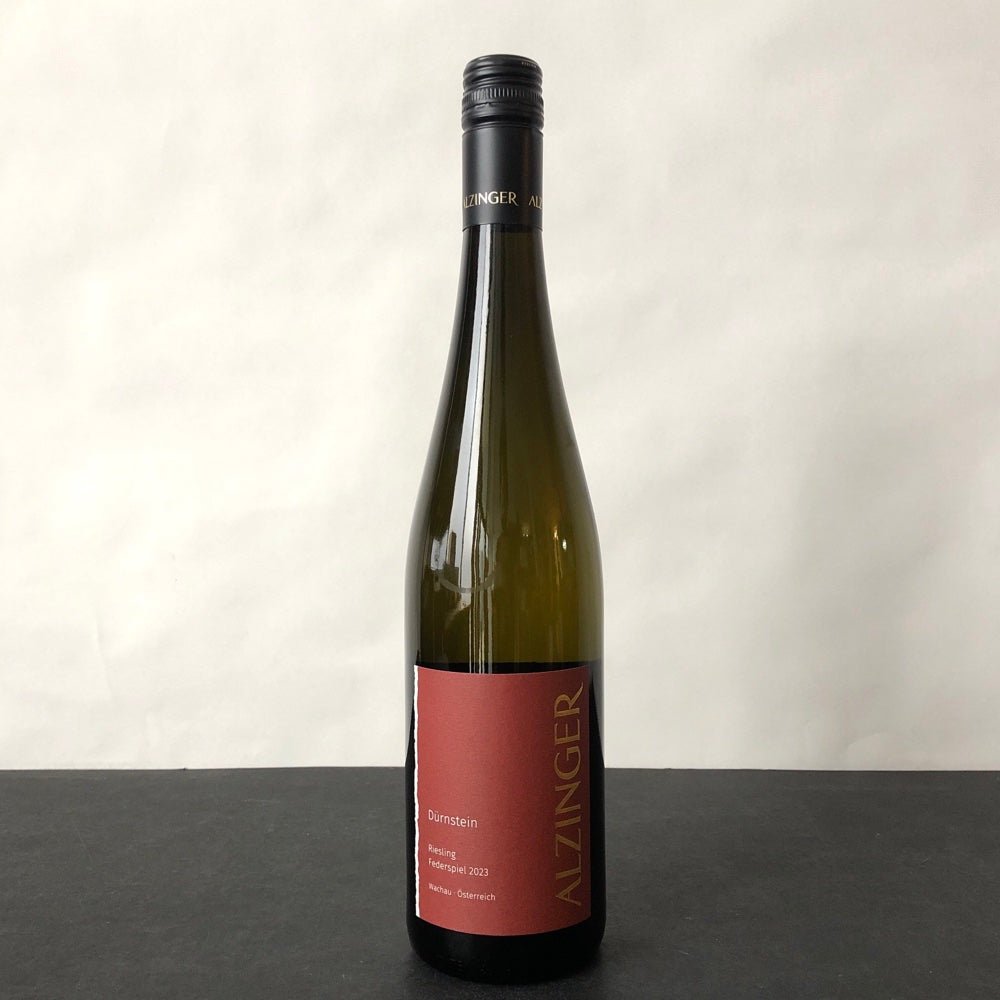
Wachau's Upper Tier: Where Alzinger Sits in the Regional Hierarchy
The Wachau is a narrow strip of vineyard land running roughly 35 kilometres along the Danube between Melk and Krems, and it punches well above its physical scale in Austria's wine conversation. The valley's classification system, the Vinea Wachau, divides wines into Steinfeder, Federspiel, and Smaragd, the last reserved for the ripest, most concentrated expressions from the steepest terraced sites. It is inside this Smaragd tier that the region's most discussed estates compete, and Weingut Alzinger, addressed at Unterloiben 11 in Dürnstein, holds a confirmed Pearl 2 Star Prestige rating for 2025, a signal that places it among the handful of producers in the valley whose releases attract sustained critical attention.
The Wachau's competitive set is tight. Estates such as Weingut Emmerich Knoll and Weingut F. X. Pichler have long anchored the region's international reputation, and the cooperative Domäne Wachau provides scale and consistency across the valley. Alzinger operates as a smaller family estate in this company, which is precisely what defines its positioning: limited production, site-specific bottlings, and a release rhythm that favours allocation over volume.
The Philosophy Behind the Wines: Precision Over Spectacle
Wachau's leading estates share a commitment to reflecting vineyard character rather than winemaking intervention, a discipline the region codified long before the phrase became fashionable in natural wine circles elsewhere. The geology here is complex, ranging from gneiss and granite in the western sections to loess-heavy soils further east, and the leading producers treat this variation as a primary argument for single-site bottlings rather than blended regional expressions.
Alzinger's approach sits squarely within that tradition. The estate's Riesling and Grüner Veltliner come from some of the most steeply graded vineyards in the region, where mechanical harvesting is structurally impossible and yields are naturally constrained by elevation and aspect. That manual discipline, combined with cool fermentation protocols common to the valley's serious houses, produces wines that emphasise tension and mineral definition over immediate weight. The 2025 Pearl 2 Star Prestige rating reflects where that approach has landed in terms of peer recognition: not at the entry level of the valley, but in the bracket just below or alongside the region's longest-established names.
For comparison within Austria more broadly, estates like Schloss Gobelsburg in Langenlois in the adjacent Kamptal demonstrate how the country's leading white-wine houses often operate on a similar scale and philosophy, with site selection and minimal intervention forming the shared grammar of the category. Austria's premium wine identity in 2025 is a white-wine story above all, and the Wachau remains its most internationally legible chapter.
Unterloiben and the Physical Context of the Estate
Unterloiben sits at the eastern edge of the Wachau, between the better-known village of Dürnstein to the west and the city of Krems to the east. The area is among the most vine-dense sections of the valley, with terraced plots rising steeply from the Danube's north bank. Travelling along the B3 riverside road, the transition from agricultural flatness to near-vertical vineyard walls is abrupt, and it gives an immediate physical explanation for why wines from these sites carry the structural weight they do: the vines are working hard.
Dürnstein itself is a small, historically significant town most associated with Richard the Lionheart's imprisonment in 1192, and the ruined castle above it is visible from most points along the valley. For wine visitors, the town functions as a base for exploring the western Wachau's leading addresses, and the concentration of prestige estates within a short drive makes it a practical hub. Our full Dürnstein wineries guide maps the broader field if you are planning a multi-estate visit, and our full Dürnstein restaurants guide covers where to eat alongside the tasting circuit.
Planning a Visit: What to Expect in Practice
Small Wachau estates at Alzinger's prestige level do not typically operate as open cellar-door venues in the way that larger New World wineries might. Visits tend to be by appointment, structured around tasting sessions rather than walk-in access, and the annual release calendar defines the rhythm of the estate's outward-facing activity more than any fixed opening schedule. Given the Pearl 2 Star Prestige recognition for 2025, demand on limited stock and visit slots is a practical constraint worth accounting for when planning.
The address at Unterloiben 11 is reachable by car from Krems in under ten minutes or from Vienna in approximately 75 minutes along the A1 and then the B3. Train access via the Krems station is feasible, with the riverside road walkable or cycleable in good weather. Dürnstein's own accommodation options are covered in our full Dürnstein hotels guide, and the town's bar and wine-bar scene is outlined in our full Dürnstein bars guide. Those combining the Wachau with a broader Austrian wine itinerary might also consider estates in other regions: Weingut Kracher in Illmitz in Burgenland covers the country's sweet-wine tradition, while Weingut Pittnauer in Gols and Weingut Heinrich Hartl in Oberwaltersdorf extend the picture toward the country's red-wine and biodynamic producers.
For those building a longer European winery itinerary, the contrast between the Wachau's cool-climate, mineral-driven whites and the warmer expressions from estates such as Abadía Retuerta in Sardón de Duero in Spain, or even the entirely different reference point of Aberlour in Scotland's Speyside, illustrates how differently premium producers in different climates frame their relationship to terroir. The Wachau's version of that argument is arguably the most topography-dependent of any European wine region, and Alzinger's position within it reflects a specific commitment to that logic. Further Austrian context is available through Weingut Scheiblhofer Distillery in Andau, which represents a different register of Austrian production entirely.
Our full Dürnstein experiences guide covers the broader activity options in the valley for those combining a wine visit with the region's hiking trails, river cruises, and cultural sites.
Frequently Asked Questions
- What wines should I try at Weingut Alzinger?
- Alzinger's focus is Riesling and Grüner Veltliner from steep Wachau terraces, with Smaragd-category bottlings representing the estate's most concentrated, site-specific work. The Pearl 2 Star Prestige rating for 2025 reflects the critical standing of these wines within the Wachau's upper tier. Specific current releases and vineyard designations are leading confirmed directly with the estate, as small producers at this level tend to vary allocations year to year.
- What is Weingut Alzinger leading at?
- Within the context of the Wachau and the broader Austrian white-wine conversation, Alzinger is recognised as a precision-focused, small-family estate producing site-expressive Riesling and Grüner Veltliner. The Pearl 2 Star Prestige (2025) places it in the upper bracket of regional producers in Dürnstein, alongside long-established names that have defined the valley's international reputation. For those comparing estates in the area, the contrast with the scale of Domäne Wachau or the profile of Weingut F. X. Pichler is instructive.
- Should I book Weingut Alzinger in advance?
- Given Alzinger's prestige-tier recognition and the typical operating model of small Wachau estates, visits by prior arrangement are the expected approach rather than walk-in access. With a Pearl 2 Star Prestige rating for 2025, the estate's profile within the international wine community is active, and both tasting appointments and allocations of specific wines warrant planning ahead. Direct contact via the estate's available channels is advised well before a planned visit, particularly during the spring release and autumn harvest periods when demand on time and stock peaks.
In Context: Similar Options
A quick snapshot of similar venues for side-by-side context.
| Venue | Classification | Awards | First Vintage | Notes |
|---|---|---|---|---|
| Weingut Alzinger | 1 awards | This venue | ||
| Weingut Emmerich Knoll | 1 awards | |||
| Weingut F. X. Pichler | 1 awards | |||
| Domäne Wachau | World's 50 Best |
Access the Cellar?
Our members enjoy exclusive access to private tastings and priority allocations from the world's most sought-after producers.
Access the Concierge