
Waterford Distillery sits on the Kilkenny bank of the River Suir and has built one of Irish whiskey's most rigorous arguments for terroir-driven production. Its 2025 Pearl 3 Star Prestige award confirms a standing in the upper tier of Ireland's craft distillery scene. For visitors arriving from the city, the distillery offers a field-to-glass perspective that sets it apart from heritage-brand tours elsewhere in the country.
Where the River Suir Meets the Barley Field
Cross the Suir out of Waterford city toward Kilculliheen and the landscape shifts almost immediately. The industrial quayside gives way to agricultural Co. Kilkenny, and the Waterford Distillery arrives as a working production facility rather than a heritage showpiece. That distinction matters. Ireland's whiskey revival has produced two broad categories of visitor destination: the polished urban experience (think the Jameson Bow St. model, where Jameson in Dublin anchors the tourist circuit) and the production-first distillery, where the physical act of making whiskey is the story. Waterford belongs firmly in the second category.
The 2025 Pearl 3 Star Prestige award confirms what whiskey writers have been tracking for several years: this is a distillery operating at the serious end of Irish craft production, not a lifestyle brand with a still attached. That recognition places it in a small peer group that includes Dingle Distillery and Powerscourt Distillery in Enniskerry as craft operations drawing serious collector attention, though Waterford's particular focus on agricultural provenance sets it on a different axis from either.
The Terroir Argument in a Glass
The concept that brought Waterford to international attention is the same one that has been debated in wine circles for decades: can the specific farm, soil type, and microclimate of a barley crop express itself in the finished spirit? In wine, that conversation is old enough to have produced its own vocabulary. In whiskey, it remains contested ground, and Waterford has positioned itself as the distillery most committed to answering the question with data rather than marketing copy.
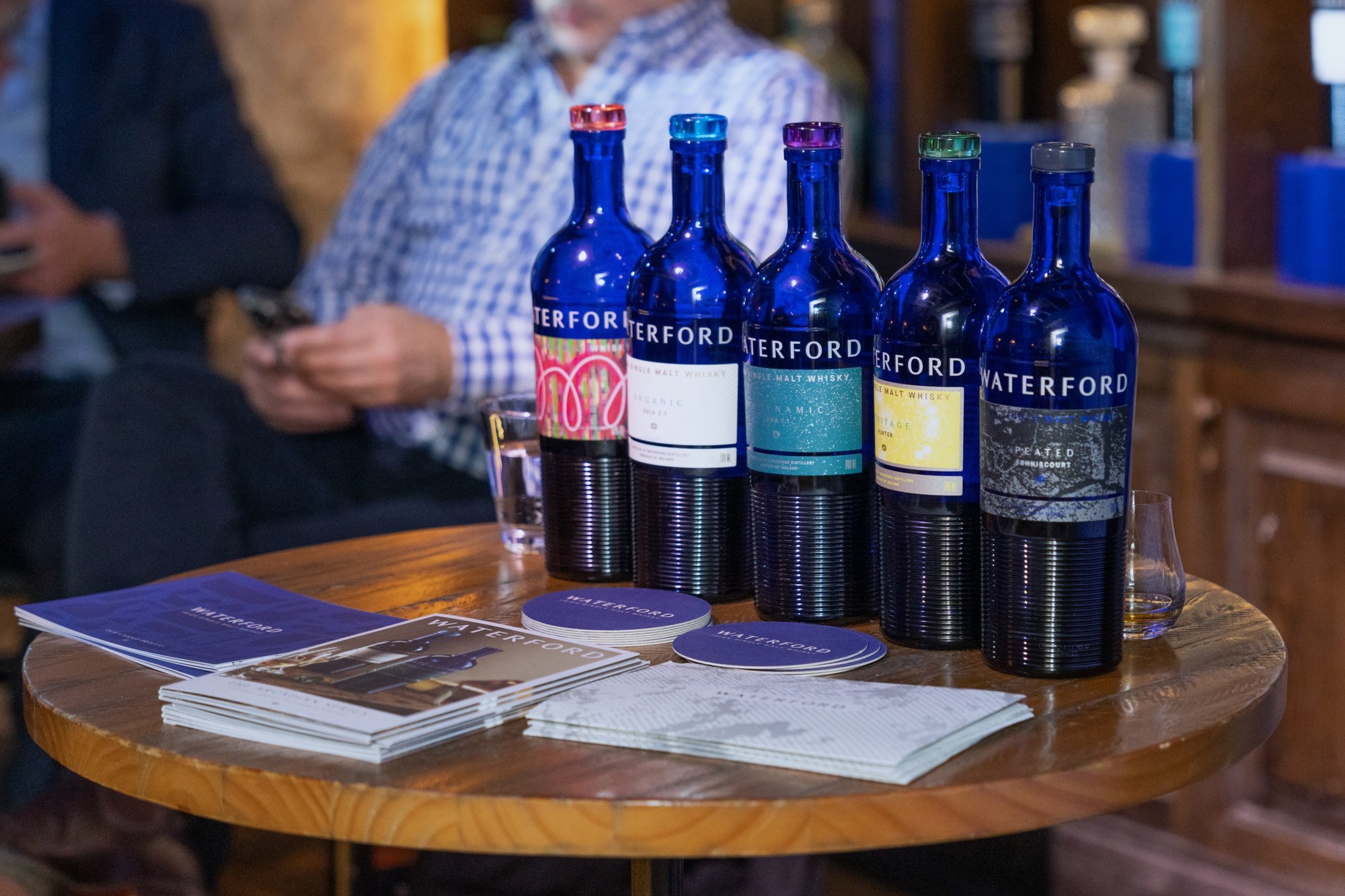
Production approach maps individual barley farms across Ireland's southeast, each harvested and distilled separately, with the resulting single-farm-origin releases allowing side-by-side comparison between plots. The Suir Valley's combination of limestone-rich soils and the moderating influence of the estuary creates growing conditions that differ meaningfully from the Atlantic-facing barley fields that supply distilleries further west, including Dingle. Whether those differences survive the distillation process and register in the glass is precisely the question the releases are designed to test.
This approach draws inevitable comparisons to how Burgundy's village-level appellations work, and Waterford has leaned into that parallel. For visitors with a background in fine wine, the single-farm-origin framework will feel familiar. For those coming from a Scotch whisky perspective, the model echoes what independent bottlers like Berry Bros. & Rudd or Gordon & MacPhail have done with cask-level transparency, though Waterford applies it at the agricultural rather than the maturation stage. Aberlour in Speyside, for comparison, anchors its identity in maturation environment; Waterford anchors its in the field before distillation begins.
The Irish Whiskey Context
Ireland's whiskey industry contracted dramatically through the mid-twentieth century and has spent the last two decades rebuilding from a handful of surviving distilleries to well over forty operating producers. The geography of that revival is instructive. Midleton in Cork remains the production engine for the mainstream market, where Redbreast has become the export standard-bearer for pot still whiskey. Kilbeggan in the Irish Midlands trades on continuous heritage. Tullamore D.E.W. occupies the accessible-blended tier. Slane Irish Whiskey represents the estate-and-castle model that captures luxury tourism alongside production.
Waterford sits outside all of those frames. It has no heritage claim to rest on, no grand estate aesthetic, and no mainstream blend in its portfolio. Its credibility rests entirely on the intellectual proposition that agricultural origin matters in whiskey the way it matters in wine, and on the releases that either support or undermine that proposition. For a visitor, that means arriving with a degree of intellectual curiosity rather than just a preference for smooth liquid in a glass. The distillery rewards engagement.
For a wider picture of where to eat, drink, and stay in the region, our full Waterford restaurants guide, Waterford hotels guide, and Waterford bars guide map the broader scene. The city's drinking culture, covered in our Waterford wineries and distilleries guide, increasingly reflects the production-first seriousness that Waterford Distillery has helped establish.
Visiting in Practice
The distillery's address on Gibbethill in Kilculliheen places it just across the river from Waterford city, accessible from the city centre in under ten minutes by car. Those combining the visit with a broader southeast Ireland itinerary will find it sits naturally alongside a day in Kilkenny city or a drive through the Barrow Valley. The Waterford experiences guide covers the wider regional context for planning that kind of multi-day route.
Given the distillery's production focus, visits here work leading for those who want to understand the process rather than simply taste through a flight. The farm-origin framework means the tasting notes are only meaningful once you understand what distinguishes one soil type from another, so arriving without that context will limit the experience. Reading even a short primer on Irish pot still whiskey production before visiting will sharpen what you take away.
Booking specifics, current tour formats, and seasonal availability are leading confirmed directly through the distillery before travelling. No phone number or online booking link is published in our current data, so approaching via the distillery's own channels is advised. Given the 2025 Pearl 3 Star Prestige recognition, demand for visits from serious whiskey collectors has increased, and assuming walk-in availability is a risk worth avoiding.
The Comparative Case for the Southeast
Ireland's distillery tourism circuit tends to cluster visits around the obvious anchors: Bow St. in Dublin for accessibility, Midleton for scale, Dingle for scenery. Waterford makes the case that the southeast — historically Ireland's most productive barley-growing region and the port through which much of that grain was historically exported — deserves a place on the serious drinker's map in its own right.
The parallel with wine tourism is worth pressing. Drinkers who would plan a trip around Burgundy village comparisons or Napa single-vineyard releases but have never applied the same logic to whiskey will find Waterford the most direct transfer point between those two modes of thinking. The Abadía Retuerta in Sardón de Duero represents a similar estate-scale argument for terroir in wine; Waterford makes the equivalent case in spirit form. The Shed Distillery in Drumshanbo offers another angle on Irish craft production, built around botanical experimentation rather than agricultural provenance.
The 2025 Pearl 3 Star Prestige award should be taken as a signal rather than just a credential. It confirms that the critical apparatus around Irish whiskey is catching up with the ambition of what Waterford has been building, and that the southeast corner of Ireland now has a distillery worth travelling to rather than simply past.
Planning Your Visit
Waterford Distillery is located at Gibbethill, Kilculliheen, Co. Kilkenny, a short drive from Waterford city across the Suir. Given that booking and hours information is not publicly available through our current data, contacting the distillery directly before planning travel is strongly recommended. The southeast Irish itinerary pairs well with Kilkenny, the Waterford Greenway, and the city's own food and drink scene, covered across our restaurant, bar, and hotel guides for Waterford. For those building a wider Irish distillery circuit, the natural companions are Kilbeggan to the northwest and Redbreast at Midleton to the southwest, though both offer a fundamentally different visitor proposition.
Frequently Asked Questions
Is Waterford Distillery more low-key or high-energy?
Low-key, in the leading sense. This is a production distillery with an intellectual argument at its centre, not a high-volume tourist attraction. The 2025 Pearl 3 Star Prestige recognition draws serious whiskey collectors and wine-trained tasters more than general visitors. Expect a focused, quieter experience calibrated around tasting and understanding rather than entertainment. On the scale of Irish distillery visits, it sits closer to a small specialist producer than to the polished, high-throughput models in Dublin or Midleton.
What should I taste at Waterford Distillery?
The single-farm-origin releases are the point of the visit. These are the expressions that carry the terroir argument, each distilled from barley grown on a named farm in Ireland's southeast, allowing direct comparison between agricultural origins. The Pearl 3 Star Prestige award reflects the overall production standard rather than a single expression, so the breadth of the portfolio is worth exploring rather than fixating on one release. Those with a wine background will recognise the tasting logic immediately.
What's the main draw of Waterford Distillery?
The farm-origin framework. In a category where most producers anchor identity in maturation, blending skill, or heritage, Waterford has staked its position on the argument that barley provenance is the primary driver of character in the glass. That intellectual proposition, backed by the 2025 Pearl 3 Star Prestige, is what draws collectors and serious drinkers. Waterford city provides an easy base, and the distillery's location just across the Suir makes it a natural add-on to any southeast Ireland itinerary.
Is Waterford Distillery reservation-only?
Current booking format and tour availability are not confirmed in our published data. Given the 2025 Pearl 3 Star Prestige award and the distillery's position as a production-focused operation rather than a large-scale visitor centre, contacting them in advance before travelling is strongly advised. Assuming drop-in availability at a distillery of this standing and scale carries risk, particularly for visits tied to specific dates or tasting objectives. Check directly with the distillery for current hours and access formats.
At-a-Glance Comparison
A quick peer check to anchor this venue’s price and recognition.
| Venue | Classification | Awards | First Vintage | Notes |
|---|---|---|---|---|
| Waterford Distillery | 1 awards | This venue | ||
| Redbreast | 2 awards | |||
| Dingle Distillery | 1 awards | |||
| Jameson (Bow St.) | 1 awards | |||
| Kilbeggan Distillery | 1 awards | |||
| Slane Irish Whiskey | 1 awards |
Access the Cellar?
Our members enjoy exclusive access to private tastings and priority allocations from the world's most sought-after producers.
Access the Concierge