
Slane Irish Whiskey operates from the historic demesne of Slane Castle in County Meath, placing Irish whiskey production at the intersection of landed heritage and the Boyne Valley's particular limestone-filtered terroir. Awarded Pearl 3 Star Prestige in 2025, it sits among the more credentialed visitor distillery experiences in the Irish whiskey revival. The site rewards those with an interest in how place shapes spirit as much as process.
Where the Boyne Valley Shapes the Spirit
The Irish whiskey revival of the last fifteen years has divided distilleries into two broad categories: urban heritage sites, often in converted city warehouses and bonded stores, and estate operations where the surrounding land has a legible relationship to what ends up in the bottle. Slane Irish Whiskey, set within the Slane Castle demesne along the N51 in County Meath, belongs firmly to the second category. The Boyne Valley's limestone geology, its damp Atlantic-influenced air, and the centuries of estate management layered into this particular stretch of ground are not incidental to the whiskey — they are the argument the distillery makes with every release.
Arriving at Slane, the estate context is immediate. The demesne sits in the bend of the River Boyne, a river whose valley carries enough historical and geological weight to give the address a meaning beyond the postcode. The castle itself dates to the 18th century, and the distillery occupies the estate's restored stables. That physical setting places Slane in a competitive subset of Irish distillery experiences — alongside properties like Powerscourt Distillery in Enniskerry , where heritage architecture does genuine work in framing the visit rather than serving as decorative backdrop.
Terroir as Argument: What the Boyne Valley Contributes
The concept of terroir travels uneasily outside wine, but in Irish whiskey it is beginning to find more rigorous application. The most compelling version of this argument comes from distilleries where the water source, the barley provenance, and the warehouse microclimate can all be traced to a specific geography. Slane's position in the Boyne Valley gives it access to limestone-filtered water, a resource that several of Ireland's longer-established distilleries have pointed to as a meaningful input. Kilbeggan Distillery, working with the River Brosna further inland, and Waterford Distillery, which has made single-farm barley provenance the centre of its entire production philosophy, represent the poles of how seriously Irish producers are now taking this question.
Slane's approach sits between those poles: the estate provides the setting and the water character, while the triple-cask maturation process , using virgin American oak, seasoned Tennessee whiskey casks, and Oloroso sherry casks , introduces a layering logic that is more about barrel influence than raw terroir. For visitors who follow the distillery category closely, this is a useful distinction. The place matters, but the maturation architecture is where the production argument becomes most specific. County Meath's relatively mild, damp climate supports steady maturation in the estate's warehouses, the kind of consistent humidity that whiskey makers in drier climates actively try to simulate.
The Visitor Experience and Its Position Among Irish Distilleries
The Irish distillery visitor experience has matured considerably since the early revival years, when tours were largely improvised and tasting rooms were functional rather than considered. The current tier of serious visitor distilleries in Ireland now compete on the depth of their programming as much as on the whiskey itself. Jameson at Bow Street in Dublin operates at scale, absorbing very large visitor numbers into a polished heritage format. Dingle Distillery in Kerry works the opposite end, with a craft-scale operation where batch sizes are small enough that the production process itself is the draw. Slane occupies middle ground: an estate-scale operation with enough physical grandeur to satisfy visitors coming for the heritage dimension, but a production focus serious enough to hold the attention of those primarily interested in the spirit.
Slane received a Pearl 3 Star Prestige award in 2025, a credential that places it in the upper tier of assessed visitor distillery experiences in the country. That recognition matters for planning purposes: it signals that the visit has been evaluated against a standard and found to meet it, rather than relying solely on the site's visual appeal or brand familiarity. For visitors building an itinerary around Irish whiskey, Slane represents a more considered stop than many of the brand experience centres that have proliferated in recent years. The comparison set is closer to The Shed Distillery in Drumshanbo or Tullamore D.E.W. in terms of the seriousness of the production story being told.
Planning the Visit from Dublin and Beyond
Slane sits approximately 48 kilometres north of Dublin city centre, making it a viable half-day or full-day excursion from the capital. The N2 and the M1/N51 route via Drogheda are the standard approaches by car, and the drive through County Meath's open farmland provides its own argument for the rural estate setting. For visitors without a car, the journey is more involved, requiring a bus or train connection followed by local transport, which in practice makes Slane a more natural stop for those already exploring the wider Boyne Valley area , the nearby sites at Newgrange and Brú na Bóinne sit within the same general catchment.
The distillery address at Slane Castle Demesne, N51, Co. Meath (C15 A361) is the practical starting point for route planning. Because this is an estate rather than a town-centre venue, visitors should confirm tour times and availability in advance through the distillery's booking channels before the visit, as session capacity at estate distilleries of this type is typically managed. Those combining the visit with broader Meath exploration will find our full Slane restaurants guide, our full Slane hotels guide, our full Slane bars guide, and our full Slane experiences guide useful for building the surrounding itinerary.
Slane in the Wider Irish and European Distillery Context
The estate distillery model has precedents outside Ireland that are worth keeping in mind when assessing what Slane is attempting. Abadía Retuerta in Sardón de Duero operates as a monastery-estate winery where the historic built environment and the surrounding agricultural land are inseparable from the product's identity , a model that translates well to the Irish estate distillery context. Similarly, Aberlour in Scotland's Speyside has long made the case that a distillery's river and glen setting is part of the sensory and commercial identity of the spirit. Slane makes a cognate claim in the Irish context, and the Boyne Valley's particular combination of history, landscape, and water geology gives it credible raw material for that argument.
For visitors tracking the Irish whiskey category across its full range, Redbreast at Midleton in Cork represents the single pot still tradition at its most decorated, while our full Slane wineries guide maps the broader local context. Slane's position as a prestige-rated estate distillery in Meath means it speaks to a different part of the category than the large Midleton campus or the urban Liberties distilleries, and that distinction is precisely what makes it worth the journey.
Frequently Asked Questions
- What should I expect atmosphere-wise at Slane Irish Whiskey?
- The physical setting does considerable work. The restored estate stables within Slane Castle's demesne create a visit that feels grounded in the land rather than staged in a purpose-built attraction. The atmosphere is quieter and more considered than the high-volume urban distillery experiences in Dublin, which suits visitors primarily interested in the production story. The 2025 Pearl 3 Star Prestige award confirms that the experience has been assessed at a standard consistent with that positioning.
- What is the signature bottle at Slane Irish Whiskey?
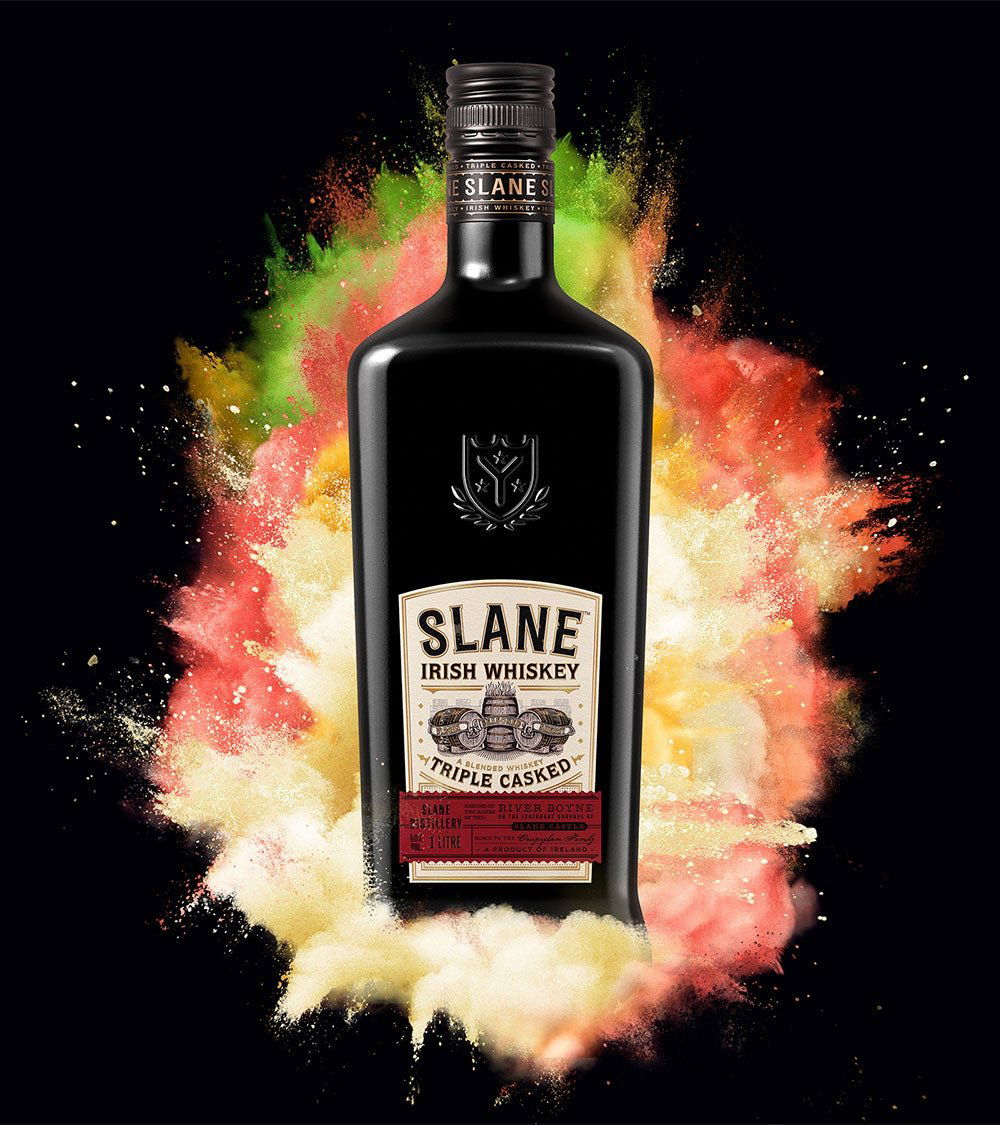
- Slane Irish Whiskey's best-known release is its triple-cask blended Irish whiskey, matured in virgin American oak, Tennessee whiskey casks, and Oloroso sherry casks. That three-cask architecture is the production signature of the distillery, and it is the bottle most directly associated with the Slane name in international markets. The Boyne Valley estate setting, rather than a named winemaker or winery equivalent, is the provenance marker that carries the brand's identity.
- What is the main draw of Slane Irish Whiskey?
- The combination of the Slane Castle estate setting and a production story grounded in a specific County Meath geography gives this distillery a different proposition than most Irish whiskey visitor centres. The 2025 Pearl 3 Star Prestige recognition places it in the assessed upper tier of Irish distillery experiences, which provides a useful anchor when comparing it with alternatives. For visitors already in the Boyne Valley for the area's heritage sites, adding Slane to the itinerary adds a production and tasting dimension that the region's archaeological sites do not offer.
- How hard is it to get in to Slane Irish Whiskey?
- As an estate distillery with managed session capacity, advance booking is advisable rather than optional. If you arrive without a reservation on a busy weekend or during peak summer months, there is a meaningful chance that sessions are full. The distillery does not publish phone or website details through EP Club's database, so checking the official Slane Irish Whiskey website directly is the reliable first step. Midweek visits and shoulder-season travel (April to June, September to October) typically offer more availability than summer weekends.
- Is Slane Irish Whiskey worth visiting if I am primarily interested in Irish whiskey history rather than current production?
- The Slane Castle demesne carries historical depth that extends well beyond the distillery itself, and the Boyne Valley context adds a layer of Irish cultural and agricultural history that few other distillery sites can match. The 2025 Pearl 3 Star Prestige rating suggests the visitor experience addresses both dimensions with enough rigour to satisfy history-focused visitors. That said, those primarily focused on the deep archival history of Irish distilling may find that combining Slane with a visit to Kilbeggan Distillery, one of Ireland's oldest licensed distillery sites, provides useful comparative depth.
Cuisine and Credentials
A quick peer check to anchor this venue’s price and recognition.
| Venue | Classification | Awards | First Vintage | Notes |
|---|---|---|---|---|
| Slane Irish Whiskey | 1 awards | This venue | ||
| Redbreast | 2 awards | |||
| Dingle Distillery | 1 awards | |||
| Jameson (Bow St.) | 1 awards | |||
| Kilbeggan Distillery | 1 awards | |||
| Teeling | 1 awards |
Access the Cellar?
Our members enjoy exclusive access to private tastings and priority allocations from the world's most sought-after producers.
Access the Concierge