
Dingle Distillery sits at the western edge of the Dingle Peninsula, producing small-batch Irish whiskey in one of the country's most geographically remote craft distilling locations. Awarded a Pearl 3 Star Prestige rating in 2025, it occupies a distinct tier in Ireland's growing artisan spirits scene, where Atlantic weather, local barley, and limited production runs shape the character of each release.
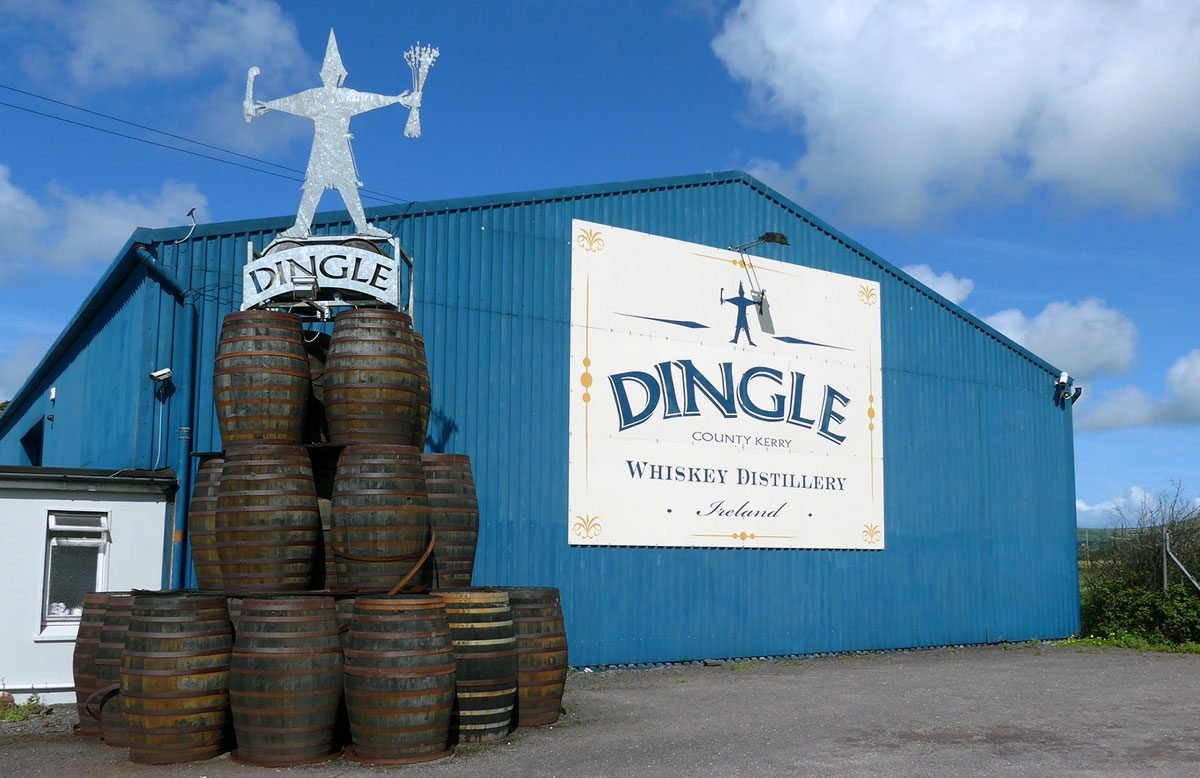
Where the Atlantic Defines the Spirit
The Dingle Peninsula extends further into the North Atlantic than almost any other inhabited point in western Europe, and that geography is not incidental to what Dingle Distillery produces. The air carries salt. The weather arrives with force. The barley grows in short, wet seasons that differ markedly from the flatter, drier conditions further east along Ireland's distilling heartland. In whiskey production, terroir is a contested term — the spirit spends years in oak, and barrel selection can obscure origin as readily as express it — but the conditions at Milltown nonetheless feed into a production philosophy that has earned the distillery a Pearl 3 Star Prestige rating from EP Club in 2025, placing it among Ireland's higher-tier craft producers.
That rating matters as a reference point. Ireland's craft distilling sector expanded rapidly through the 2010s, and the resulting market now ranges from large heritage operations like Jameson (Bow St.) in Dublin and Kilbeggan Distillery to newer, terroir-led independents. Dingle belongs to the latter category: a small-batch producer where limited release volumes and geographic specificity are the deliberate commercial and creative framework, not a constraint to be overcome.
The Geography Behind the Glass
Understanding Dingle Distillery requires understanding the peninsula itself. The Dingle Peninsula is a narrow spit of land in County Kerry, bounded by Dingle Bay to the south and Brandon Bay to the north, with the Slieve Mish mountains running along its spine. The town of Dingle , population roughly 1,800 , is one of Ireland's westernmost settlements. Rainfall is high, wind is persistent, and the Atlantic influence on temperature is significant year-round. These are not conditions that any Irish distillery shares in quite the same combination.
In whiskey terms, this matters most during maturation. Barrels stored in a warehouse close to the Atlantic breathe differently from those aged in the calmer, more temperate warehouses of Midleton or the Boyne Valley. The interaction between spirit and wood accelerates under temperature fluctuation and humidity variation, and coastal environments tend to introduce a specific mineral quality that distillers at producers like Redbreast in Midleton and Waterford Distillery do not work with in the same way. At Dingle, the warehouse sits in one of the most exposed positions in Irish craft distilling. Whether that translates into identifiable sensory character in the finished bottle is a question that different drinkers will answer differently , but the conditions that would produce such character are present and verifiable.
Craft Scale and Limited Release Logic
Small-batch production in Ireland has taken on a more specific meaning as the sector has matured. The early wave of craft distilleries used the term loosely; the current tier of serious producers uses it to signal allocation constraints, single-cask releases, and vintage variation rather than simply implying artisan intent. Dingle Distillery operates on this more rigorous model. Its releases are limited in volume, and the distillery's address , Milltown, on the edge of a small Kerry town , makes clear that scaling for mass distribution was never the objective.
This positions Dingle in a peer set that includes The Shed Distillery in Drumshanbo and Powerscourt Distillery in Enniskerry: producers defined by regional character, controlled output, and a visitor experience calibrated for depth rather than throughput. At the higher end of this tier, the distillery visit becomes an education in production specifics rather than a heritage brand walkthrough, and the Pearl 3 Star Prestige rating suggests Dingle operates at that level of engagement.
For comparison, the visitor experience at Slane Irish Whiskey uses the spectacle of a castle estate, and Tullamore D.E.W. draws on the weight of a historic brand narrative. Dingle's proposition is different: the draw is isolation, specificity, and the evident relationship between where the distillery sits and what it produces.
Getting Here and Planning the Visit
Dingle is not a casual detour. The distillery sits at Milltown on the edge of Dingle town, and reaching it requires either driving the N86 west through Tralee or taking the more scenic but slower coastal route over the Conor Pass. From Killarney, the drive runs approximately 45 minutes under normal conditions; from Cork, allow two hours or more. There is no rail connection to Dingle, and public transport options are limited, which means the majority of visitors arrive by car. That remoteness is, in a sense, the point: arriving in Dingle after a drive through the Slieve Mish mountains or along the coast sets the context for a spirit made in this specific, deliberately peripheral place.
Booking is advisable rather than optional for anyone planning a structured tasting or tour. The distillery's limited capacity means that walking in during peak summer months carries risk of disappointment. The peninsula draws significant numbers of visitors between June and September, and the distillery draws its share of that traffic. Outside those months, the experience becomes more intimate and the surrounding landscape , often dramatic in autumn and genuinely wild in winter , reinforces the Atlantic character that the production narrative leans on.
For those combining the distillery with a longer stay, our full Dingle hotels guide covers accommodation options across the peninsula, from small guesthouses in the town to more remote rural properties. Dingle itself has a dining scene disproportionate to its size, with a concentration of seafood-forward restaurants that work well with an evening after a distillery visit , see our full Dingle restaurants guide for the current picture. The town also has a legitimate bar culture, documented in our full Dingle bars guide, where local whiskey appears on shelves alongside the broader Irish range.
For those building a wider Kerry or south-west Ireland itinerary, the full picture of what the region offers in terms of experiences is in our full Dingle experiences guide, and our full Dingle wineries guide covers the distillery alongside any other producers operating in the area.
Where It Sits in the Irish Craft Spirits Map
Ireland's whiskey renaissance produced dozens of new producers between 2012 and 2022. Not all of them survived the capital requirements of ageing spirit; many launched on gin revenue while waiting for whiskey to mature, and some shifted identity in the process. The producers that have established a coherent identity by 2025 tend to have a clear answer to the question of why they are where they are. For Aberlour in Speyside, the answer is river water and a specific Scotch tradition. For Abadía Retuerta, it is the Duero terroir. For Dingle, the answer is the Atlantic edge: a location that no other Irish distillery shares in the same degree, translating into production conditions that are, by geography, specific to this place.
The Pearl 3 Star Prestige rating from EP Club in 2025 positions the distillery firmly above the mid-tier of Irish craft producers, in a bracket where the visit itself is expected to deliver substantive engagement with production method and regional identity. That is the level at which Dingle operates: not a brand experience designed for social media throughput, but a serious engagement with a spirit made in one of Ireland's most remote and atmospherically specific locations.
Frequently Asked Questions
- Is Dingle Distillery more low-key or high-energy?
- Low-key is the accurate description. The distillery sits in a small town at the western end of the Dingle Peninsula, and the visitor format reflects that setting: small groups, production-focused tours, and tastings calibrated for engagement rather than spectacle. The Pearl 3 Star Prestige rating (2025) confirms it operates at a serious level, but the atmosphere skews toward quiet intensity rather than brand theatre. Visitors expecting a high-production visitor centre on the scale of larger heritage distilleries will find something considerably more restrained.
- What whiskeys should I try at Dingle Distillery?
- Dingle is a pot still and single malt producer, and its releases are small-batch by design. The distillery does not operate a large wine or spirits range , it produces Irish whiskey shaped by Atlantic maturation conditions. Check current release availability before visiting, as limited-run expressions sell out and the lineup evolves. The core single malt is the logical starting point for first-time visitors, and the maturation story is worth discussing with whoever leads the tasting.
- What is the defining thing about Dingle Distillery?
- Location is the honest answer. The distillery sits at Milltown on the Dingle Peninsula, further into the Atlantic than virtually any other Irish producer. That geography affects how barrels mature, gives the production a coherent terroir narrative, and distinguishes Dingle from producers working in more sheltered or inland conditions. The Pearl 3 Star Prestige rating (2025) confirms this is not just a location story , the quality is there , but the place is what makes it a different proposition from comparable Irish craft producers.
- How hard is it to get in to Dingle Distillery?
- Harder during summer than the off-season. Dingle town draws significant tourist traffic between June and September, and the distillery is a draw within that flow. Capacity is limited, which means advance booking is advisable for structured tours or tastings. Contact details and current booking options are most reliably found directly through the distillery. Outside peak season, the experience becomes more accessible and the surrounding landscape more atmospheric , autumn and early spring are worth considering for those with flexibility.
Budget and Context
A small set of peers for context, based on recorded venue fields.
| Venue | Classification | Awards | First Vintage | Notes |
|---|---|---|---|---|
| Dingle Distillery | 1 awards | This venue | ||
| Redbreast | 2 awards | |||
| Jameson (Bow St.) | 1 awards | |||
| Kilbeggan Distillery | 1 awards | |||
| Slane Irish Whiskey | 1 awards | |||
| Teeling | 1 awards |
Access the Cellar?
Our members enjoy exclusive access to private tastings and priority allocations from the world's most sought-after producers.
Access the Concierge