Schloss Halbturn Winery sits on the Austrian side of the Pannonian Plain, where continental heat and shallow soils push grapes toward concentration and structure.. The estate's château address at Im Schloß 3 in Halbturn gives the winery an unusual architectural anchor for a region better known for lakeside villages than noble palaces.
Pearl is the En Primeur Club membership app — saves, bookings, and concierge access live there. Same editors, same standards.
- Address
- Im Schloß 3, 7131 Halbturn
- Phone
- +43 2172 201620
- Website
- weingut-schlosshalbturn.com
- Directions
- Get directions
 Saves & bookings on Pearl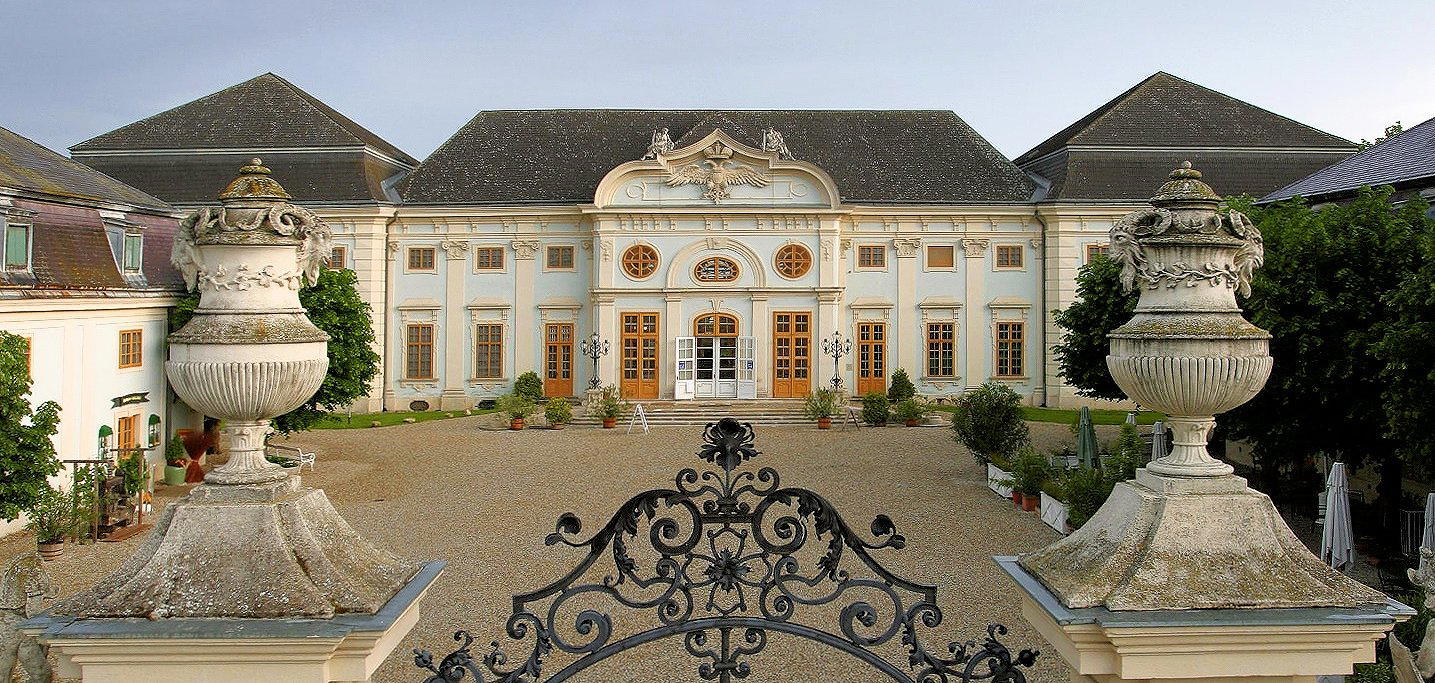
Where the Pannonian Plain Meets Baroque Stone
The flat agricultural country east of the Neusiedlersee does not announce itself with drama. Fields stretch to a low horizon, storks nest on telegraph poles, and the light in summer arrives with the particular weight of a climate that owes more to the Hungarian steppe than to the Alpine valleys that define Austria's postcard image. It is precisely this plainness that makes the terroir so distinctive: the Pannonian influence delivers long, hot growing seasons, minimal rainfall, and a soil composition, varying between loam, sandy deposits, and loess, that pushes vines toward the kind of physiological ripeness that cooler Austrian regions can rarely match. Against this agricultural flatness, the Baroque château at the centre of Schloss Halbturn is an architectural interruption. The building frames the winery's identity in a way few Burgenland estates can claim: the property at Im Schloß 3 is not simply a production facility with tasting room attached, but a landed estate where viticulture and heritage architecture coexist.
The Neusiedlersee as a Climate Instrument
The Neusiedlersee, the shallow reed-fringed lake that dominates the geography of northern Burgenland, functions as a thermal regulator and humidity source for the vineyards surrounding it. Its effect on the wider sub-region is well-documented in Austrian wine literature: the lake retains daytime heat and releases it slowly after sunset, moderating overnight temperatures and extending the ripening window into autumn. This same combination of warmth and residual moisture has historically made the eastern shore of the lake, and the flat country immediately north of it where Halbturn sits, the source of Austria's most concentrated red wines and some of Europe's most distinctive botrytised sweet wines. Producers operating in this corridor, from Illmitz to Gols and across to Andau, work with a climate that is categorically different from Wachau or Kamptal. Where Weingut Emmerich Knoll in Dürnstein or Weingut Bründlmayer in Langenlois depend on diurnal temperature variation and steep terraced slopes to preserve acidity in Grüner Veltliner and Riesling, Burgenland producers are working with a fundamentally warmer, flatter set of conditions that reward different varieties and different winemaking approaches entirely.
Terroir at Halbturn: Soil, Heat, and Position
Halbturn sits at the northern end of the Neusiedlersee wine belt, and its position relative to the lake means it sits at the outer edge of the moisture influence. The soils here tend toward chernozem, the dark, humus-rich earth associated with the Pannonian basin, interspersed with sandy and gravelly patches that force vine roots to extend deeper and restrict yields naturally. In warm years, the combination of heat accumulation and free-draining soils creates conditions for red varieties in particular to achieve textural density without losing structural grip. Blaufränkisch, which performs with authority across Burgenland, and Zweigelt, along with international red varieties that have been planted in the region since the late twentieth century, all respond to these conditions with wines that carry a savouriness and depth distinct from those grown on heavier soils further south. The estate's agricultural scale, the château setting implies significant landholdings, places it in a category of Burgenland producer that shapes its vineyards rather than simply farming allocated parcels.
A 2025 Award in Context
In Burgenland, the range of producer scales and ambitions is wide: small-parcel growers like Weingut Pittnauer in Gols operate with an artisanal focus, while estates like Weingut Kracher in Illmitz have built international reputations on specific wine categories. Schloss Halbturn's 2025 recognition places it in a credentialled tier without the decades-long export profile some of those neighbours have accumulated. For a visitor making a considered itinerary through northern Burgenland, it sits logically alongside a stop at Weingut Heinrich Hartl in Oberwaltersdorf or Weingut Scheiblhofer Distillery in Andau as part of a circuit that maps the range of approaches operating in the Pannonian corridor.
The Estate as Experience
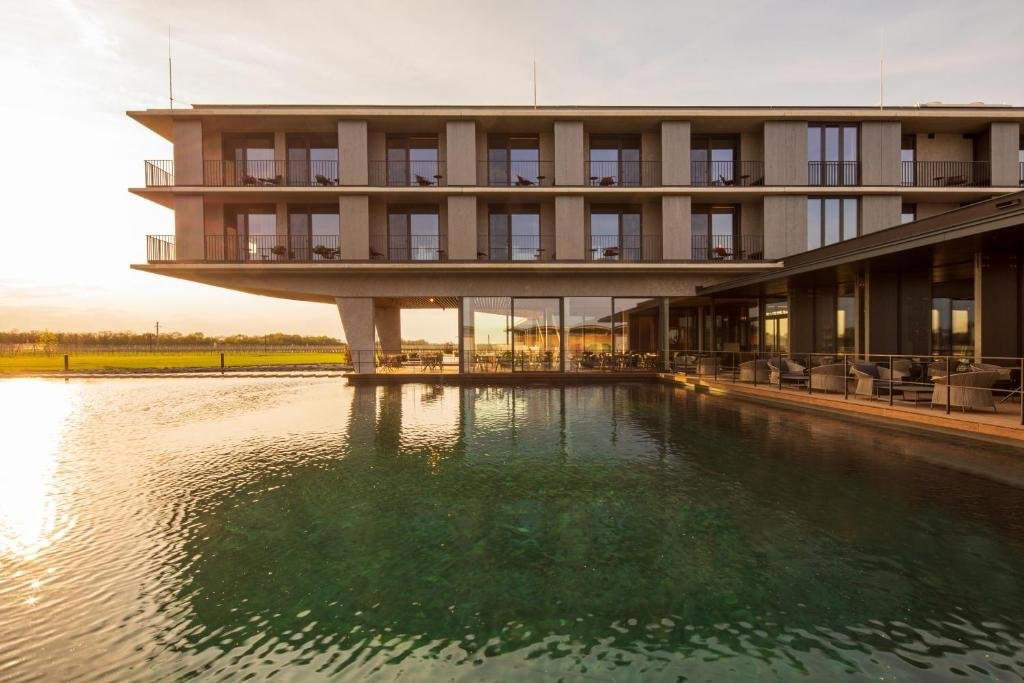
The Baroque château architecture at Halbturn is not incidental background. In a wine region where the visual grammar tends toward functional cellar buildings, the palace at Im Schloß 3 creates a framework for the visit that is unusual in Austrian wine tourism. Estates with significant architectural heritage in wine-producing regions typically sit in one of two categories: those that treat the building as pure heritage backdrop, and those that integrate the architecture into the tasting and hospitality experience in a way that reinforces the seriousness of the wine program. The Pannonian Plain's flat geography means the château is visible from a distance across the fields, which gives an approach to Halbturn a quality that lakeside villages with their compressed, road-level cellars cannot replicate. The physical setting alone makes the visit worthwhile for anyone touring the wine belt.
Planning a Visit
Halbturn is accessible by road from Vienna in under an hour and from the Neusiedl am See rail connection with local transport, placing it comfortably within a day trip for visitors based in the capital. The wine belt surrounding the Neusiedlersee draws visitors in late spring and during the harvest weeks of October. The Pannonian autumn is the period when the region's logic becomes most legible: the long growing season visible in the fields, the concentration of fruit palpable in late-season wines. The estate address, Im Schloß 3, 7131 Halbturn, is the correct contact point.
At-a-Glance Comparison
Comparable venues nearby, for context on price, style, and recognition.
| Venue | Cuisine | Price | Notes |
|---|---|---|---|
| Schloss Halbturn WineryThis venue — the venue you are viewing | Pinot Noir, Blaufränkisch | $$$ | Not listed |
| Weingut Ernst Triebaumer | Blaufränkisch, Chardonnay | $$$ | Rust |
| Weingut Hans Tschida | Welschriesling, Chardonnay | $$$ | Illmitz |
| Weingut Moric (Roland Velich) | Blaufränkisch, Grüner Veltliner | $$$ | Großhöflein |
| Weingut Philipp Grassl | Zweigelt, St. Laurent | $$$ | Göttlesbrunn |
| Esterházy Winery | Blaufränkisch, Pinot Noir | $$$ | Trausdorf |
Continue exploring
More in Halbturn
Wineries in Halbturn
Browse all →
Bars in Halbturn
Browse all →

Restaurants in Halbturn
Browse all →
At a Glance
- Elegant
- Classic
- Scenic
- Sophisticated
- Wine Education
- Special Occasion
- Vineyard Tour
- Historic Building
- Estate Grounds
- Vineyard
- Garden
- Neusiedlersee
- Pinot Noir
- Blaufränkisch
- Sankt Laurent
- Zweigelt
- Merlot
- Chardonnay
- Sauvignon Blanc
- Riesling
- Still Red
- Still White
- Cave Tasting
- Private Tasting
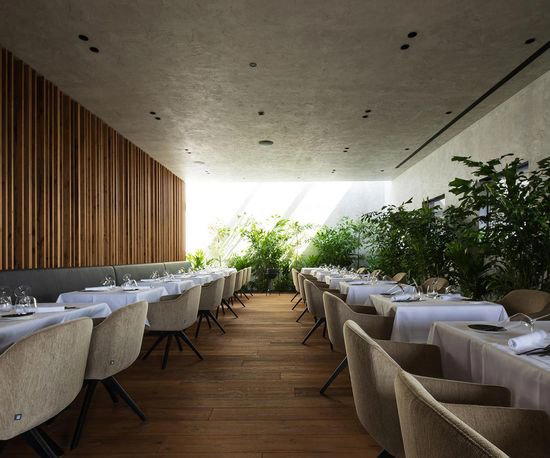
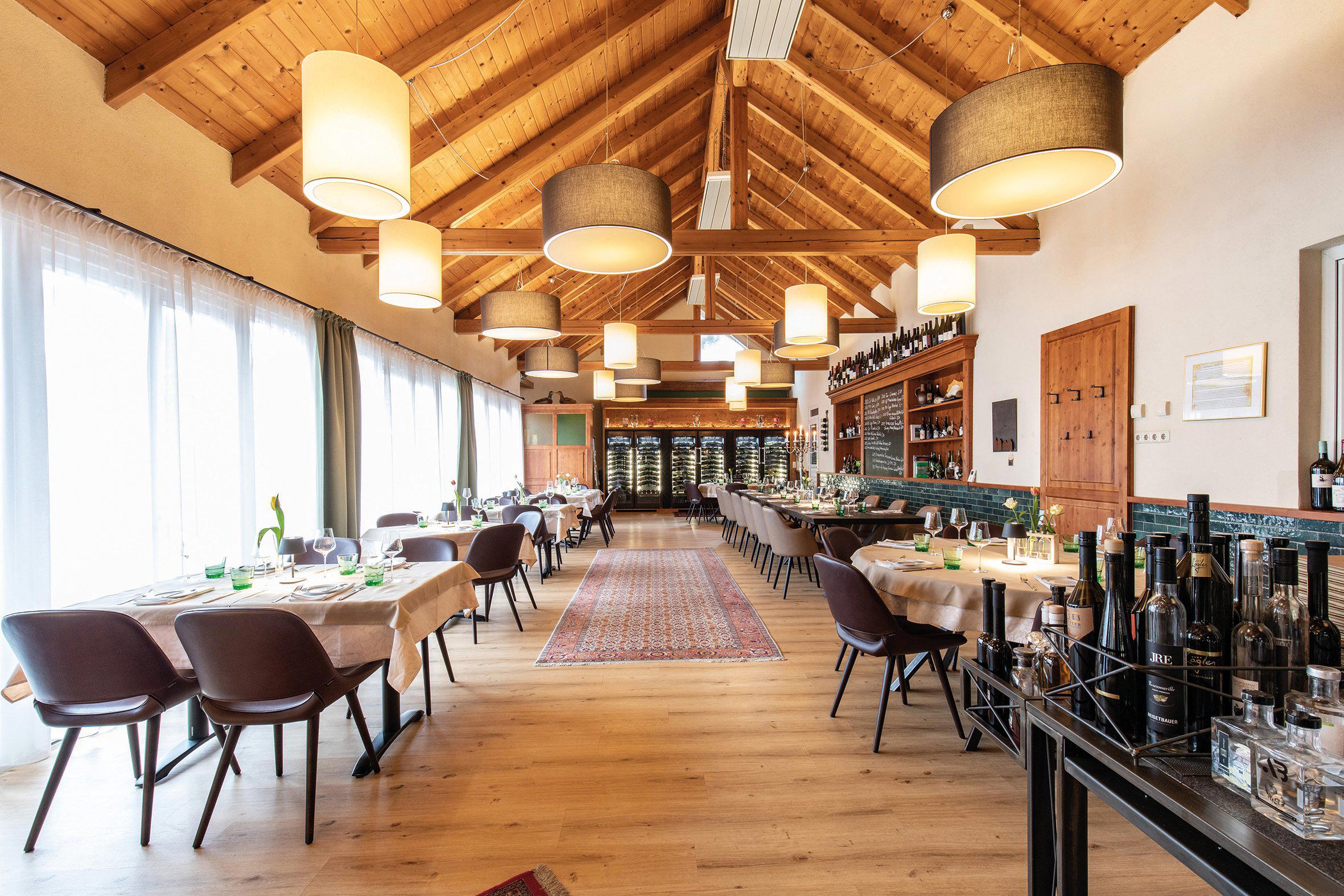
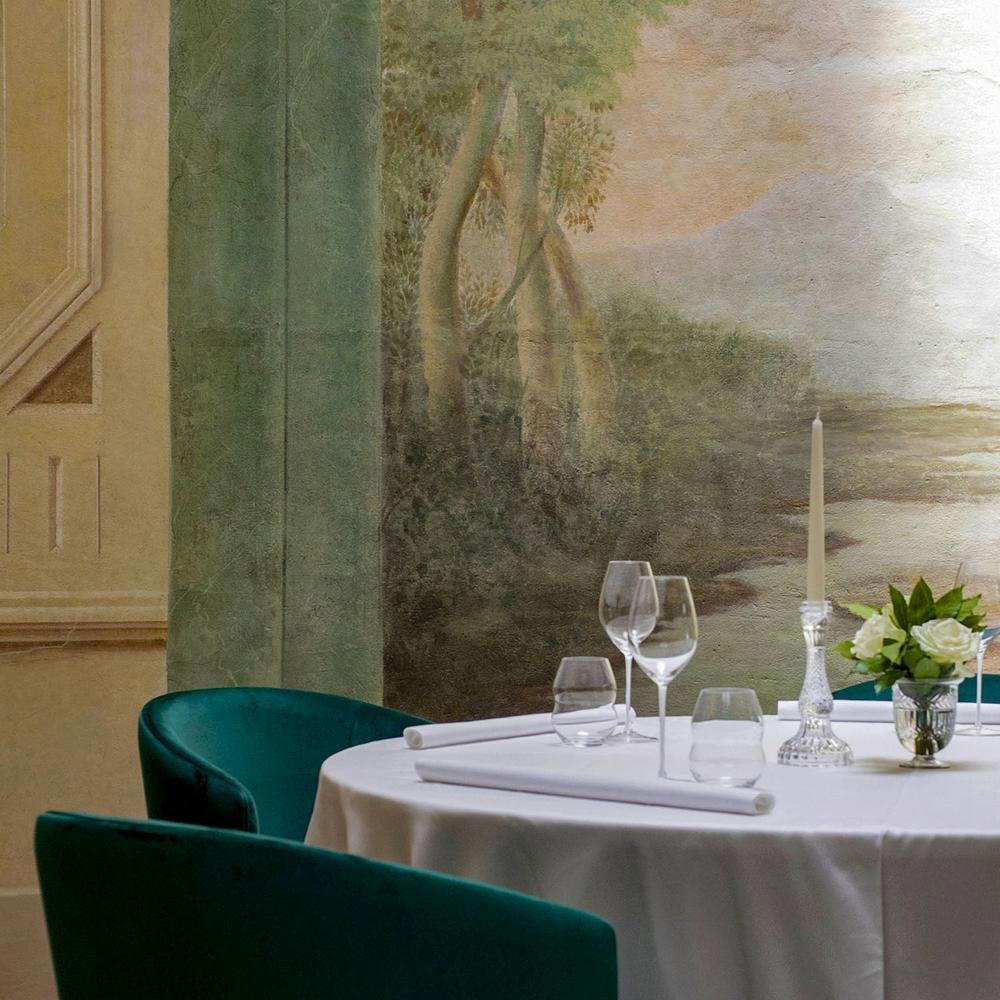
Elegant and sophisticated atmosphere reflecting the historic Baroque palace setting with a focus on refined, matured wines.