
Koutsoyannopoulos Winery sits in Vothonas, one of Santorini's quieter inland villages, and holds a Pearl 2 Star Prestige rating for 2025. The estate operates within a volcanic wine tradition built almost entirely on Assyrtiko, the grape that defines what dry-island viticulture can achieve. It belongs to a compact peer set of serious Santorini producers whose work rewards visitors who arrive with some background in the island's distinctive growing conditions.
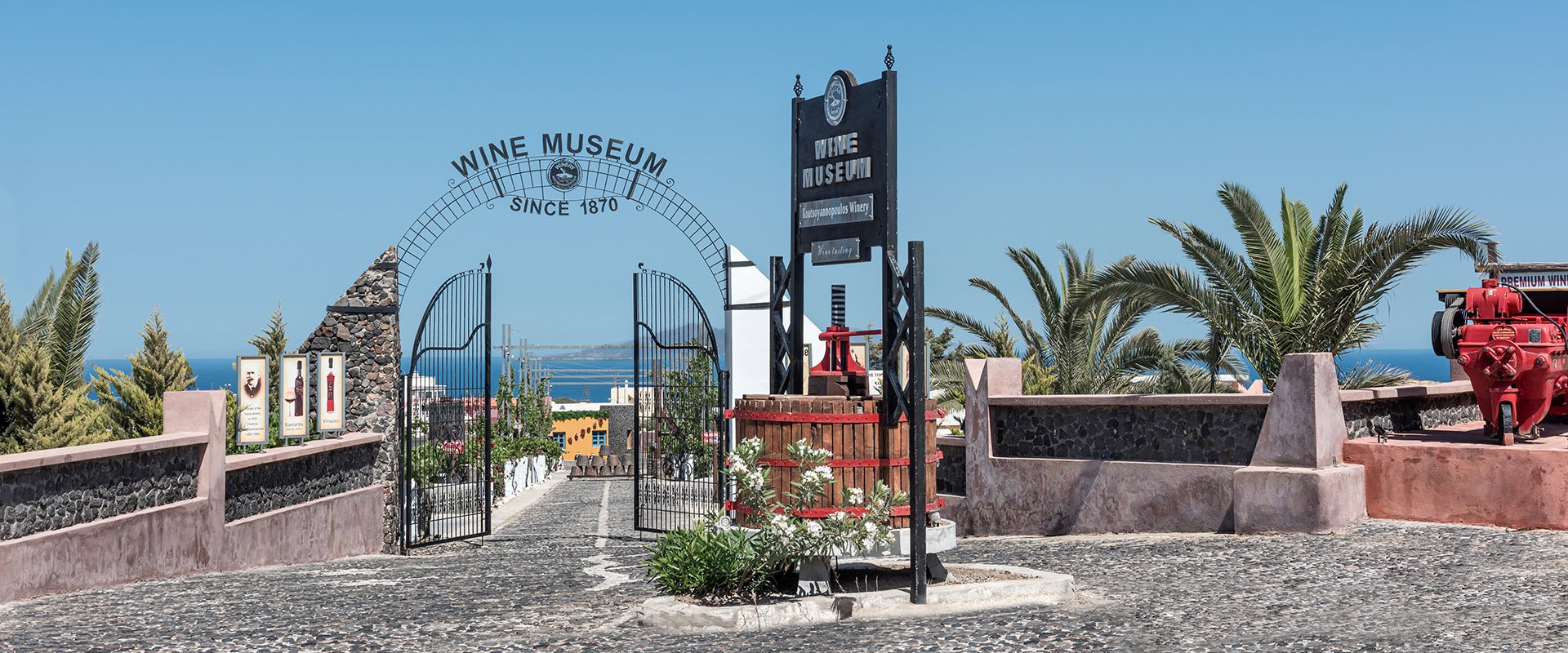
Approaching Vothonas from the caldera-facing west, the landscape shifts quickly. The whitewashed clifftop drama gives way to ochre walls, low-built houses cut into soft tuff, and vineyards trained in the basket weave that Santorini growers have used for centuries to shield fruit from the Aegean wind. Koutsoyannopoulos Winery sits in this quieter interior, away from the sunset-terrace circuit that dominates the island's wine tourism economy. The setting is not incidental: this part of Santorini still looks and functions like a working agricultural village, and the winery belongs to it in a way that the larger caldera-side operations do not.
Volcanic Terroir and the Basket-Vine Tradition
Santorini's viticulture rests on a set of conditions that exist almost nowhere else in the wine world. The island has no phylloxera, meaning ungrafted vines survive directly in volcanic pumice and ash soils that would kill most European rootstocks. Some of those vines are hundreds of years old. The kouloura, or basket training system, keeps fruit low to the ground, concentrating heat from the black soil at night while protecting grapes from the relentless summer meltemi. The result in the glass is a style of Assyrtiko unlike any other expression of the grape: high acid, high mineral concentration, low residual sugar, and a salinity that wine writers consistently trace to the sea-facing volcanic rock rather than any intervention in the cellar.
Koutsoyannopoulos holds a Pearl 2 Star Prestige award for 2025, a rating that places it inside the leading recognition tier on EP Club's scale and situates it alongside the small group of Santorini producers operating at consistent prestige level. For context, that peer group includes Estate Argyros, the island's largest private estate and a benchmark for aged Assyrtiko, and Artemis Karamolegos Winery, known for working with the island's remaining old-vine parcels. Being in that company in 2025 is a signal about production standards, not just marketing.
Sustainability in the Vineyard, Not as a Slogan
Santorini's traditional viticulture is, in structural terms, already low-intervention: ungrafted old vines in poor volcanic soil require little fertilisation, the dry climate suppresses most fungal pressure, and the kouloura system is itself a form of organic pest management, keeping the canopy off the ground. What separates producers who genuinely practice sustainable viticulture from those who simply inherit its benefits is what happens in the rest of the growing cycle: cover cropping, water management, soil biology, and cellar decisions around sulphur, fining, and filtration.
Across Santorini's serious producer tier, the broader pattern has been a move toward explicit organic or low-intervention commitments over the past decade, partly in response to visitor interest and partly because the island's fragile hydrology makes water stewardship a practical necessity rather than an ethical choice. Rainfall is minimal and groundwater is finite. Producers who manage vine stress through soil health rather than irrigation inputs tend to produce more consistent fruit in difficult vintages, which is why old-vine parcels remain the island's most valuable viticultural asset. For visitors oriented around responsible travel, the Vothonas interior is the right area to anchor a winery itinerary: its producers are embedded in the agricultural fabric of the island rather than positioned primarily as tourist facilities.
Where Koutsoyannopoulos Sits in the Santorini Wine Scene
The Santorini wine scene has consolidated around a handful of distinct tiers over the past two decades. At the cooperative end, SantoWines operates at scale with caldera views and a visitor experience designed for group tourism. Boutari Winery represents the mainland-group presence on the island, producing reliably made Assyrtiko across a broad distribution network. Canava Santorini Distillery (1974) occupies a different niche, focused on distilled spirits alongside wine production.
Koutsoyannopoulos, with its Vothonas base and 2025 prestige rating, operates in the estate-focused tier where production decisions, vineyard ownership, and wine identity matter more than visitor infrastructure. The winery is known in particular for a cave wine museum, one of the more unusual visitor formats on the island, which traces the history of Santorini wine through underground cellars cut into the volcanic rock. That kind of contextual offering positions the estate for visitors who want to understand what they are tasting, not just taste it.
Planning Your Visit
Vothonas sits in the island's southern interior, between Fira and the airport, and is accessible by car or taxi in under fifteen minutes from most caldera hotels. The village roads are narrow, so arriving with a local transfer or rental car rather than a tour bus is the practical choice. For visitors building a full Santorini wine day, combining Koutsoyannopoulos with a visit to Estate Argyros or Artemis Karamolegos in the same southern arc of the island is a logical route that avoids backtracking across the caldera traffic corridor.
Santorini's wine tourism season runs from late April through October, with August presenting the most heat stress for outdoor visits. The shoulder months of May, June, and September offer cooler conditions and shorter queues at the island's estate wineries. Booking ahead is advisable for private tastings at prestige-tier estates; walk-in availability varies by season and format. Because phone and website details are not confirmed in EP Club's current data for this property, the most reliable booking route is through a local concierge or the island's tourist information network, both of which maintain current contact information for inland producers.
For a broader picture of what the island offers across dining, accommodation, and after-hours drinking, our full Santorini restaurants guide, Santorini hotels guide, and Santorini bars guide cover the relevant categories. The full Santorini wineries guide maps the complete producer landscape across all price and style tiers, while our Santorini experiences guide covers the island's cultural and outdoor programming for visitors building a longer itinerary.
For those extending a Greek wine trip beyond the island, the comparison points shift considerably. Achaia Clauss in Patras represents the mainland's historic wine estate tradition, while Acra Winery in Nemea works in the Agiorgitiko zone that produces Greece's most age-worthy reds. Abraam's Vineyards in Komninades extends the picture to smaller, lesser-publicised appellation work. Outside Greece, Abadía Retuerta in Sardón de Duero offers a point of comparison in the European prestige-estate category, and Aberlour in Aberlour serves visitors whose interest spans wine and whisky production traditions.
Frequently Asked Questions
- What is the wine to focus on at Koutsoyannopoulos Winery?
- Assyrtiko is the starting point for any serious visit to a Santorini estate, and Koutsoyannopoulos, operating at Pearl 2 Star Prestige level in 2025, is producing within a tradition of dry volcanic whites built on old ungrafted vines. The island's appellation rules require a minimum of 75% Assyrtiko in Santorini PDO wines, but the most focused estate expressions are typically 100% varietal. If the estate offers a barrel-aged or extended-lees version alongside the unoaked style, the contrast between the two is the most instructive tasting in the Santorini category.
- What should I know about Koutsoyannopoulos Winery before I go?
- The winery is based in Vothonas in the island's southern interior, away from the caldera tourism corridor, and holds a Pearl 2 Star Prestige recognition for 2025. Confirmed contact details and pricing are not currently listed in EP Club's verified data, so checking through a hotel concierge or the Santorini tourism office before arriving is the sensible move. The estate is known for an underground cave wine museum, which makes it a different kind of visit from the direct tasting-room format common at larger island producers.
- Can I walk in to Koutsoyannopoulos Winery?
- Walk-in availability at Santorini's estate wineries depends heavily on season and the producer's tasting format. Prestige-tier estates holding awards equivalent to EP Club's Pearl 2 Star level generally prefer advance booking for private or structured tastings, particularly in peak summer months. Because confirmed phone and website information for Koutsoyannopoulos is not available in EP Club's current records, arranging access through a local concierge before travelling is a more reliable approach than arriving unannounced, especially between July and August when the island's visitor volume is highest.
- What is Koutsoyannopoulos Winery a strong choice for?
- It is a well-suited option for visitors who want to combine serious Assyrtiko tasting with a genuine historical context for Santorini wine production. The cave museum format sets it apart from the standard caldera-view tasting experience that dominates the island's wine tourism offer, and the Vothonas location means the surrounding village environment reflects the agricultural character of the island rather than its resort economy. The 2025 Pearl 2 Star Prestige rating signals production at a level that rewards visitors arriving with some background knowledge of what Santorini's volcanic viticulture produces.
- What makes the underground wine museum at Koutsoyannopoulos historically significant for Santorini?
- Santorini's wine history extends back more than three thousand years, but most of that record exists in fragmentary archaeological and documentary form rather than accessible visitor experience. The cave museum at Koutsoyannopoulos, cut into the island's volcanic tuff, presents that history in a physical environment that is itself part of the island's agricultural heritage: underground cellars have been used on Santorini for centuries both as storage and as shelter from summer heat. For visitors with a broader interest in Greek wine, the estate's Pearl 2 Star Prestige rating in 2025 places the tasting component on reliable ground, making the historical and the contemporary elements of the visit mutually reinforcing rather than disconnected.
Pricing, Compared
Comparable options at a glance, pulled from our tracked venues.
| Venue | Classification | Awards | First Vintage | Notes |
|---|---|---|---|---|
| Koutsoyannopoulos Winery | 1 awards | This venue | ||
| Estate Argyros | World's 50 Best | |||
| Artemis Karamolegos Winery | 1 awards | |||
| Boutari Winery (Santorini) | 1 awards | |||
| Canava Santorini Distillery (1974) | 1 awards | |||
| Kazianis Distillery | 1 awards |
Access the Cellar?
Our members enjoy exclusive access to private tastings and priority allocations from the world's most sought-after producers.
Access the Concierge