
Jacquart's German operation in Grafschaft carries the Reims house's maison identity into the heart of Europe, working under winemaker Floriane Eznack and earning a Pearl 2 Star Prestige recognition in 2025. Founded in 1962, the house occupies a distinct tier among Champagne producers with a German footprint, positioning itself between the large négociant houses and smaller grower operations. For those tracing premium Champagne in central Europe, Grafschaft is a credible address.
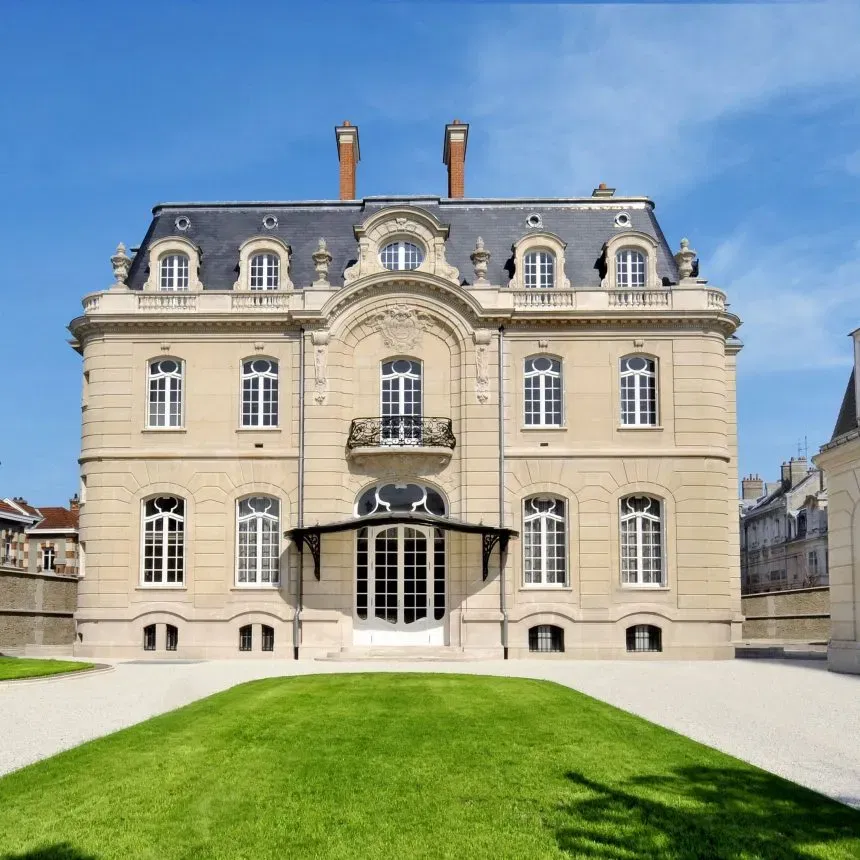
Champagne in a German Setting: How Terroir Travels
There is a specific tension that defines Champagne's relationship with international markets: the wine is rooted in a single, tightly demarcated region in northeast France, yet the houses that produce it have long operated distribution, education, and representation arms across Europe. Grafschaft, a municipality in the Ahr region of Germany, sits within this network as the base for Jacquart Champagne Deutschland GmbH. The address on Max-Planck-Straße is not a winery in the traditional sense. It is the institutional presence of a house that traces its first vintage to 1962, translating the terroir logic of the Marne Valley into a German commercial and cultural context.
That translation is worth examining seriously. Champagne's terroir, built on chalk-heavy soils across the Côte des Blancs, Montagne de Reims, and Vallée de la Marne, is non-reproducible. The region's combination of a northern continental climate, significant diurnal temperature variation, and that distinctive belemnite chalk subsoil produces grapes with a natural acidity and mineral tension that no other geography replicates with precision. When a house like Jacquart operates a German outpost, it is not claiming to produce wine in Germany. It is carrying the logic of a specific French terroir into a new context, asking German markets to engage with those expressions on their own terms.
What the 1962 Foundation Means for the Assemblage Approach
Jacquart was founded as a cooperative-rooted house in 1962, which places it in a different historical moment from the grande marque institutions established in the eighteenth and nineteenth centuries. Cooperative Champagne houses draw grapes from member growers across multiple villages and vineyard sites, which gives them a breadth of terroir access that single-estate producers cannot match. The assemblage built from those contributions reflects a wide palette: chalk expressions from Chardonnay-dominant villages, structured Pinot Noir from the Montagne de Reims, and the fuller, sometimes brioche-leaning character of Pinot Meunier from the valley floor. Floriane Eznack, who holds the winemaker role, operates within that tradition, constructing blends that are designed to express the collective terroir signature of the house's sourcing network rather than a single plot or commune.
This is not a minor distinction. The grower Champagne movement, particularly prominent since the 2000s, has shifted considerable critical attention toward single-village and single-vineyard wines. Houses like Jacquart operate in a different register: the skill is in blending across sites to achieve a consistent house identity year after year, with reserve wines acting as a stabilising force against vintage variation. For the German market, which has its own sophisticated wine culture rooted in Riesling and site-specific expression, this cooperative assemblage logic requires some explanation, and the Grafschaft operation provides exactly that educational function.
The Pearl 2 Star Prestige Recognition and What It Signals
In 2025, Jacquart's German operation received a Pearl 2 Star Prestige recognition. This places the house within a recognised tier of premium producers, though the full competitive set for this award is not published alongside the Grafschaft record. What the recognition does confirm is that the operation meets criteria for prestige-level production or representation, separating it from the broad middle tier of négociant Champagne distributed through general retail. For visitors or buyers considering where Jacquart sits relative to peers, the 2025 Pearl 2 Star Prestige is a useful anchor point, indicating that the house is not operating at volume-commodity level.
Germany's own wine culture provides an instructive comparison. Estates like Kloster Eberbach in Eltville and Schloss Vollrads in Oestrich-Winkel have built their prestige credentials on centuries of Rheingau Riesling production, where terroir expression is tied directly to named vineyard sites and documented climatic records. Jacquart's prestige case rests on different evidence: the depth of its Champagne sourcing network, the consistency of its assemblage, and its track record since 1962. These are valid but distinct credentials from the single-site German estate model, and the 2 Star Prestige recognition acknowledges that distinction rather than collapsing it.
Champagne's Terroir in Context: Germany as a Discerning Market
Germany is an instructive market for a Champagne house to operate in. German wine consumers are more technically literate on average than those in many comparable markets, partly because the country's own Prädikat system requires engagement with sugar levels, ripeness categories, and regional origin. Producers like Schlossgut Diel in Rümmelsheim, Weingut A. Christmann in Neustadt an der Weinstraße, and Weingut Bassermann-Jordan in Deidesheim serve a domestic audience that reads labels carefully and has strong opinions about origin, viticulture, and cellar practice. For a Champagne house operating in this environment, the argument for terroir must be made concisely and credibly.
Jacquart's position in Grafschaft, rather than in a major German wine city like Mainz, Trier, or Würzburg, is worth noting. Grafschaft sits in the Ahr district, a compact red wine region that produces some of Germany's most serious Spätburgunder from steep slate-heavy slopes. The surrounding wine culture is not Champagne-focused, which means Jacquart's German operation functions as a concentrated point of representation rather than an outpost embedded within a Champagne-sympathetic scene. That geographic placement shapes the kind of engagement visitors and trade buyers experience here: it is a focused, institutionally serious encounter with the house, rather than a destination embedded in broader regional wine tourism.
For those exploring German wineries in adjacent regions, estates such as Weingut Battenfeld-Spanier in Hohen-Sülzen, Weingut Clemens Busch in Pünderich, and Weingut Bürgerspital zum Heiligen Geist in Würzburg provide strong contrast points, each rooted in German terroir traditions that operate on entirely different soil and climate logic from the Champagne chalk. Visiting Jacquart's Grafschaft operation alongside any of these estates frames the difference clearly.
Planning a Visit to Jacquart in Grafschaft
Practical information for Jacquart's Grafschaft address is limited in the public record. The operation is registered as Jacquart Champagne Deutschland GmbH at Max-Planck-Straße, Grafschaft, and functions as the house's formal German entity. Hours, booking procedures, tasting formats, and pricing are not publicly listed, which suggests that visits, if available, are arranged through direct trade or press contact rather than walk-in or standard consumer tourism. Visitors planning to engage with the house are advised to make contact in advance through official Jacquart channels. For broader context on what Grafschaft and its surroundings offer, see our full Grafschaft wineries guide, as well as the Grafschaft restaurants guide, hotels guide, bars guide, and experiences guide for the region. Those extending their itinerary internationally might also find the approach of Abadía Retuerta in Sardón de Duero instructive as another example of how estate-scale prestige operations communicate terroir to sophisticated European audiences. For a completely different production tradition, Aberlour in Aberlour offers a useful counterpoint in how a single-origin producer builds institutional identity.
Frequently Asked Questions
- How would you describe the overall feel of Jacquart?
- Jacquart's Grafschaft operation is institutional in character rather than experiential in the consumer-facing sense. As the registered German entity for a Champagne house founded in 1962 and carrying a 2025 Pearl 2 Star Prestige recognition, it occupies a trade and representation role in the German market. The feel is that of a serious, credential-backed house presence rather than a tasting room or hospitality venue. Pricing and format details are not publicly listed, which reinforces the professional, trade-oriented character of the operation.
- What should I taste at Jacquart?
- Floriane Eznack leads the winemaking, and the house's assemblage model draws on cooperative sourcing across Champagne's principal zones. Given the 2025 Pearl 2 Star Prestige recognition and the house's foundation in 1962, the core range represents the long-established house style built on multi-terroir blending. Specific tastings and formats available at the Grafschaft address are not publicly confirmed; engaging through official channels will clarify what is accessible for trade, press, or specialist consumer contacts. For contextual comparison, the Champagne-adjacent terroir logic is well illustrated by contrasting with German estate producers listed in our regional guides.
Comparison Snapshot
These are the closest comparables we have in our database for quick context.
| Venue | Cuisine | Price | Awards | Notes |
|---|---|---|---|---|
| Jacquart | Pearl 2 Star Prestige (2025) | This venue | ||
| Lingua Franca | ||||
| Kloster Eberbach | ||||
| Schloss Vollrads | ||||
| Schlossgut Diel | ||||
| Weingut A. Christmann |
Access the Cellar?
Our members enjoy exclusive access to private tastings and priority allocations from the world's most sought-after producers.
Access the Concierge