
Hernö Gin operates from Härnösand on Sweden's High Coast, producing spirits that carry a Pearl 2 Star Prestige rating for 2025. The distillery sits in one of Scandinavia's more remote production environments, where northern latitude, clean water, and botanical sourcing shape the character of its output in ways that distinguish it from the broader Swedish craft spirits scene.
 Discover on Pearl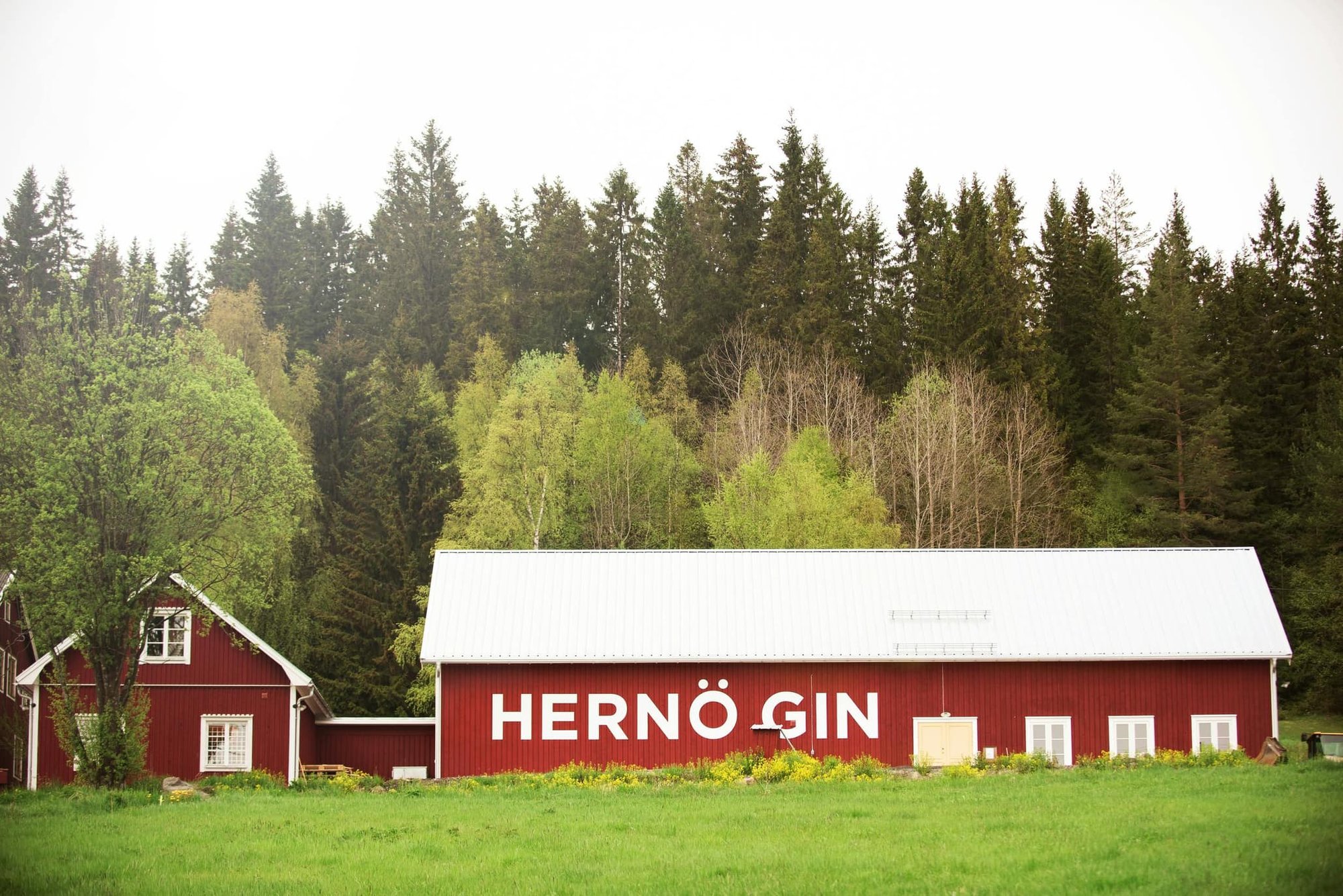
Gin from the High Coast: What Latitude Does to a Spirit
Sweden's craft spirits scene divides roughly into two tiers: the established whisky producers clustered around central and southern regions, and a smaller group of distillers working in the country's northern reaches, where the production environment itself becomes an argument for distinctiveness. Hernö Gin sits firmly in the latter category. Located at Kanaludden 2 in Härnösand, a coastal town on Sweden's High Coast roughly 500 kilometres north of Stockholm, the distillery operates in a climate and geography that few spirits producers anywhere in the world share. That remoteness is not incidental to what ends up in the bottle.
The High Coast is a UNESCO World Heritage landscape defined by dramatic post-glacial rebound, where land continues to rise from the sea at a measurable rate. The water drawn from this environment carries the mineral character of ancient bedrock rather than the agricultural softness of lowland sources. For a gin, where botanical extraction and dilution water both leave fingerprints on the final spirit, the source water is not a minor footnote. It is part of the formulation. Producers working in comparable northern environments, whether in Scandinavia or the northern British Isles, consistently point to water as the variable that differentiates their spirits most clearly from those produced at lower latitudes with softer, more neutral supplies.
How Hernö Gin Sits in the Swedish Craft Spirits Context
To understand where Hernö Gin belongs in the broader picture, it helps to look at what the Swedish craft spirits sector has produced over the past two decades. Mackmyra in Gävle established the template for a premium Swedish distillery drawing on local ingredients and northern terroir, building international recognition primarily through whisky. Smögen in Hunnebostrand carved out a position in Scotch-influenced single malt. Hernö represents a different ambition: building a gin-first identity from a northern base, at a time when gin's global market was expanding rapidly enough to reward specialist producers who could articulate genuine provenance.
The distillery's 2025 Pearl 2 Star Prestige award is the sharpest single trust signal available here. Pearl ratings in this tier require consistent quality across multiple evaluations, not a single strong batch. For a gin distillery operating in a market where London dry and contemporary styles compete at every price point, holding a Prestige-level rating positions Hernö in a peer group that includes very few producers outside the traditional gin capitals of England and the Netherlands. The comparison is less with Swedish spirits broadly and more with the small cohort of internationally recognised gin producers who have built reputations on ingredient quality and production discipline rather than on marketing spend.
For wider context on how specialist craft producers at this level compare across categories and geographies, the range is instructive: Abadía Retuerta in Sardón de Duero and Accendo Cellars in St. Helena operate in wine with similar Prestige-tier recognition, while Aberlour in Aberlour holds equivalent standing in Scotch whisky. The thread connecting producers at this level, across categories, is a demonstrable relationship between place and product rather than a purely technical or brand-led approach.
The Production Environment as a Critical Variable
Gin production at this latitude involves sourcing decisions that differ meaningfully from those available to distilleries in southern England or continental Europe. The growing season in central Sweden is compressed and intense, producing botanicals with higher concentrations of essential oils relative to their size. Juniper, the defining botanical in any gin, grows wild across Swedish forests and carries a resinous, slightly reductive character in northern specimens that differs from the rounder, more aromatic profile of Mediterranean juniper. The practical result, when a distillery actively sources from local and regional botanical suppliers rather than from commodity brokers, is a gin that tastes of where it is made in a way that many contemporary gins do not.
This is the terroir argument applied to spirits rather than wine, and it is worth taking seriously. The parallel is closer than it might initially appear. Just as Adelaida Vineyards in Paso Robles or Adelsheim Vineyard in Newberg can point to specific soil types and diurnal temperature ranges as explanations for what ends up in the glass, a northern gin distillery with genuine botanical sourcing discipline can make a credible provenance claim. The challenge is that gin, unlike wine, has no established critical vocabulary for terroir. The producers who have built the most durable reputations in the category have done so by demonstrating consistency over time, which is precisely what a Prestige-level award reflects.
Visiting Härnösand: Planning Around the Distillery
Härnösand is not a city that most international visitors pass through incidentally. Reaching it involves a deliberate itinerary, either by train on the main northern line from Stockholm (approximately four to five hours) or by car along the E4 coastal highway. That commitment filters the visitor profile considerably. Those who arrive are, by definition, interested in what the High Coast specifically offers, and the distillery experience at Hernö benefits from that context in a way that urban gin bars and visitor centres in major cities do not.
The town itself is small enough that the distillery at Kanaludden 2 is a primary destination rather than one stop among many. For planning purposes, combining a visit with broader High Coast exploration makes sense: the UNESCO-listed shoreline, the archipelago access points around Härnösand, and the distinct light quality of this latitude in summer months all reinforce the sense of place that the gin itself is trying to express. For those building a more complete Härnösand itinerary, our full Härnösand restaurants guide, hotels guide, bars guide, and experiences guide cover the surrounding options. Our Härnösand wineries guide provides additional context on what the region's producers are doing across categories.
Booking and access details, including tour formats and opening hours, are leading confirmed directly with the distillery before travel. Given the remoteness of the location and the scale of the operation, turning up without prior contact carries meaningful risk. This is a working distillery, not a walk-in attraction, and the visitor experience reflects that production-first orientation.
Where Hernö Sits in the International Gin Conversation
The international gin revival of the past fifteen years has produced thousands of new producers, many of them with strong branding and weak provenance. The producers who have emerged from that period with genuine critical standing share a common characteristic: they made production decisions that prioritised ingredient quality and regional specificity over ease of scaling. Hernö's Pearl 2 Star Prestige recognition in 2025 places it in a small group that includes some of the most scrutinised producers in the category globally.
For reference across the spirits and wine world, producers at this award tier include names such as Achaia Clauss in Patras, Alban Vineyards in Arroyo Grande, and Albert Boxler in Niedermorschwihr. These are producers whose regional identity is inseparable from their critical reputation. Hernö earns its place in that company not because Swedish gin carries inherent prestige, but because the distillery has built a case, through consistent award performance, for why northern Swedish production conditions produce a gin worth seeking out at distance.
That distance remains part of the proposition. A visit to Härnösand to see where this gin is made carries a weight that a tasting in Stockholm or London cannot replicate. The High Coast light, the mineral water, the compressed botanical season: these are the conditions that the spirit is trying to carry in the bottle, and standing in them clarifies the argument.
Peer Set Snapshot
These are the closest comparables we have in our database for quick context.
Access the Cellar?
Our members enjoy exclusive access to private tastings and priority allocations from the world's most sought-after producers.
Get Exclusive Access