Gloria Ferrer Caves & Vineyards

Gloria Ferrer Caves & Vineyards holds a Pearl 3 Star Prestige rating (2025) and operates as one of Carneros's reference points for sparkling wine production on the Sonoma side of the appellation. Set against the low hills where San Pablo Bay fog shapes the growing season, it draws visitors seeking structured tastings and estate-grown bubbles within a landscape defined by cool-climate viticulture.
 Discover on Pearl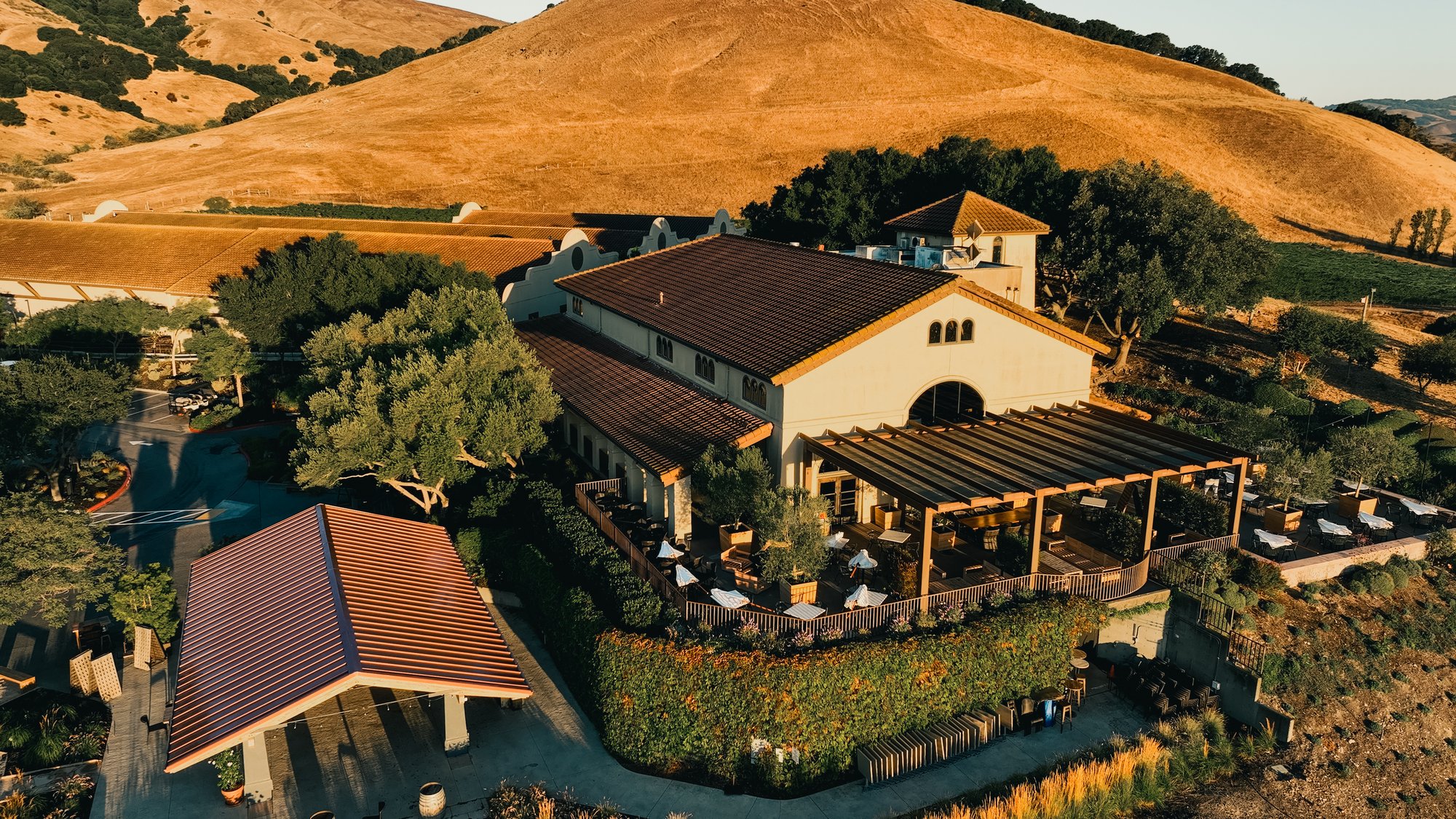
Where the Fog Line Sets the Terms
The drive south on Arnold Drive toward the Carneros appellation is a gradual lesson in California climate geography. The vineyards flatten and the oak scrub gives way to open grassland as the land drops toward the bay. By the time Gloria Ferrer Caves & Vineyards appears on the left, the temperature has already shifted several degrees from downtown Sonoma Plaza — cooler, more marine, the kind of air that slows ripening and builds the acidity that sparkling wine depends on. The physical setting is not incidental. In Carneros, where the appellation straddles both Sonoma and Napa counties, location on the vineyard map is an argument about wine style before a single bottle is opened.
Gloria Ferrer earned a Pearl 3 Star Prestige rating in 2025, placing it in a select tier among California producers recognised for consistent quality at the estate level. For the Carneros appellation specifically, that recognition reflects a longer story about how the region built its identity around cool-climate varieties — Pinot Noir and Chardonnay above all , and how a handful of producers shaped what California sparkling wine could mean when made with the same diligence applied to still wine.
Carneros and the Case for Cool
Carneros occupies a particular position in California wine geography. While Napa Valley to the east built its prestige on Cabernet Sauvignon and Sonoma's warmer inland zones developed Zinfandel and Rhône varieties, Carneros staked its claim on the varieties that ripen slowly and need restraint rather than heat. Chardonnay and Pinot Noir thrive here because the growing season is long and cool, shaped by afternoon winds off San Pablo Bay that moderate temperatures throughout summer and autumn. This is the same logic that sends sparkling wine producers to Champagne rather than Burgundy: the marginal climate is a feature, not a problem.
Gloria Ferrer belongs to that Carneros tradition of treating the cool as an asset. The estate vineyards surrounding the property are not decorative , they are the primary argument for why the wines taste the way they do. In a California wine scene that spent decades competing on ripeness and extraction, Carneros producers built a parallel identity around tension and length. Producers like Hanzell Vineyards and Gundlach Bundschu Winery pursued their own versions of this cool-climate argument in Sonoma with still wines; Gloria Ferrer made the case through sparkling production anchored to the same appellation.
The Viticulture Underneath the Bubbles
The editorial angle that matters most at Gloria Ferrer is not the finished wine in the glass but the decisions made in the vineyard before harvest. In the broader California wine conversation, there has been a meaningful shift over the past decade toward farming practices that treat soil health, biodiversity, and reduced intervention as quality tools rather than marketing positions. The Carneros appellation, with its wind-swept, low-fertility soils, has always been a place where viticulture requires precision rather than force , overwatering or over-cropping here produces dilute fruit quickly.
Estate farming in Carneros means working with conditions that favour restraint by default. The clay-loam soils retain moisture unevenly, requiring careful canopy management to avoid the mildew pressure that marine air can bring. Cover crops between vine rows, a practice associated with both soil health and water retention, are visible throughout the estate. These are not novel techniques , they reflect a broader regional movement across Sonoma and Napa toward farming that builds long-term soil capacity rather than depleting it for short-term yield. Producers such as Bedrock Wine Co. and Cline Cellars have pursued analogous approaches with old-vine and estate programs elsewhere in Sonoma, each making the argument that the vineyard's condition over decades is the most durable investment a producer can make.
For a sparkling wine estate specifically, the viticulture stakes are higher than for still wine production. Base wines destined for traditional-method sparkling carry less margin for error: phenolic bitterness from stressed vines, insufficient acidity from over-ripe fruit, or excess sugar from poorly managed canopy will compound through secondary fermentation rather than disappear. The farming discipline that Carneros demands is, in this sense, structurally aligned with what traditional-method sparkling wine requires.
Visiting: Format and Context
The tasting experience at Gloria Ferrer is conducted in a Spanish-influenced building with a terrace that faces the estate vineyards and the hills beyond. The architectural reference is deliberate: the Ferrer family, founders of the estate, brought their background in Cava production from Catalonia, and the property carries traces of that heritage in its design language. Visitors arriving from the Sonoma Plaza, roughly seven miles north on Arnold Drive, move from the warmer town environment to this cooler, more exposed site in under fifteen minutes , a transition that is itself a useful orientation to why the wines are made here rather than closer to the valley floor.
Tastings are structured around the sparkling program, with still Pinot Noir and Chardonnay available as context for understanding how the estate approaches the same fruit in both formats. For visitors comparing experiences across the Sonoma appellation, this pairing , the same grape in still and sparkling iterations , is a useful lens for understanding what the traditional method extracts and what it leaves behind. Nearby producers like Buena Vista Winery approach Sonoma's heritage through a different historical lens, making a circuit of the southern Sonoma zone a productive afternoon for anyone interested in how the region's identity was constructed over time.
For broader planning, our full Sonoma wineries guide maps the appellation's producers by style and geography, and our full Sonoma restaurants guide covers dining options for extending the visit into the evening. Our full Sonoma hotels guide and our full Sonoma bars guide cover accommodation and after-dinner options, while our full Sonoma experiences guide includes cultural and outdoor programming across the county.
Peer Context: Carneros and Beyond
Within the California sparkling wine category, producers in Carneros operate in a different competitive register from still-wine estates elsewhere in the state. The traditional-method sparkling tier in California is smaller and more defined than the Cabernet or Chardonnay markets, with a shorter list of estate-focused producers making wines in the Champagne method. Gloria Ferrer's 2025 Pearl 3 Star Prestige recognition positions it within the upper segment of that group.
For visitors who approach wine travel with an interest in how regional identity is constructed through viticulture rather than marketing, the Carneros comparison set is instructive. Across California and internationally, producers building prestige around cool-climate estate farming and traditional-method production include Accendo Cellars in St. Helena, Adelaida Vineyards in Paso Robles, and Adelsheim Vineyard in Newberg , each making a version of the argument that marginal climates and careful farming produce wines with more to say. Further afield, estate-driven production at Abadía Retuerta in Sardón de Duero and the single-malt discipline at Aberlour in Aberlour reflect analogous thinking in different categories: that place, farming, and restraint compound into quality in ways that formula production cannot replicate.
Planning Your Visit
Gloria Ferrer is located at 23555 Arnold Drive, Sonoma, CA 95476, on the southern end of the Carneros appellation. The property sits along a route that connects naturally with other southern Sonoma producers, making it a logical anchor for a day that moves northward toward the Plaza and the warmer valley zones. Given the 2025 Pearl 3 Star Prestige recognition, weekend visit windows in peak season , late spring through autumn harvest , attract a higher volume of visitors than the off-season, so arriving with a reservation or booking in advance through the estate's website is advisable. The terrace is exposed to the afternoon wind that defines the appellation's climate, so layering is practical regardless of the ambient temperature at your accommodation.
Peer Set Snapshot
These are the closest comparables we have in our database for quick context.
| Venue | Awards | Notes |
|---|---|---|
| Gloria Ferrer Caves & Vineyards | Pearl 3 Star Prestige | This venue |
| Aperture Cellars | 50 Best Vineyards #14 (2025); Pearl 2 Star Prestige | |
| Bedrock Wine Co. | Pearl 3 Star Prestige | |
| Buena Vista Winery | Pearl 3 Star Prestige | |
| Cline Cellars | Pearl 3 Star Prestige | |
| Gundlach Bundschu Winery | Pearl 3 Star Prestige |
Access the Cellar?
Our members enjoy exclusive access to private tastings and priority allocations from the world's most sought-after producers.
Get Exclusive Access