Dornoch Distillery

Dornoch Distillery operates from a converted Victorian fire station in the heart of Dornoch, a cathedral town in the Scottish Highlands. Holder of a Pearl 3 Star Prestige award (2025), it sits at the serious end of Scotland's new-wave craft distilling movement, where small-batch production and regional character take precedence over volume. The address alone — Station Square — places it at the centre of one of the north's most quietly compelling whisky destinations.
 Discover on Pearl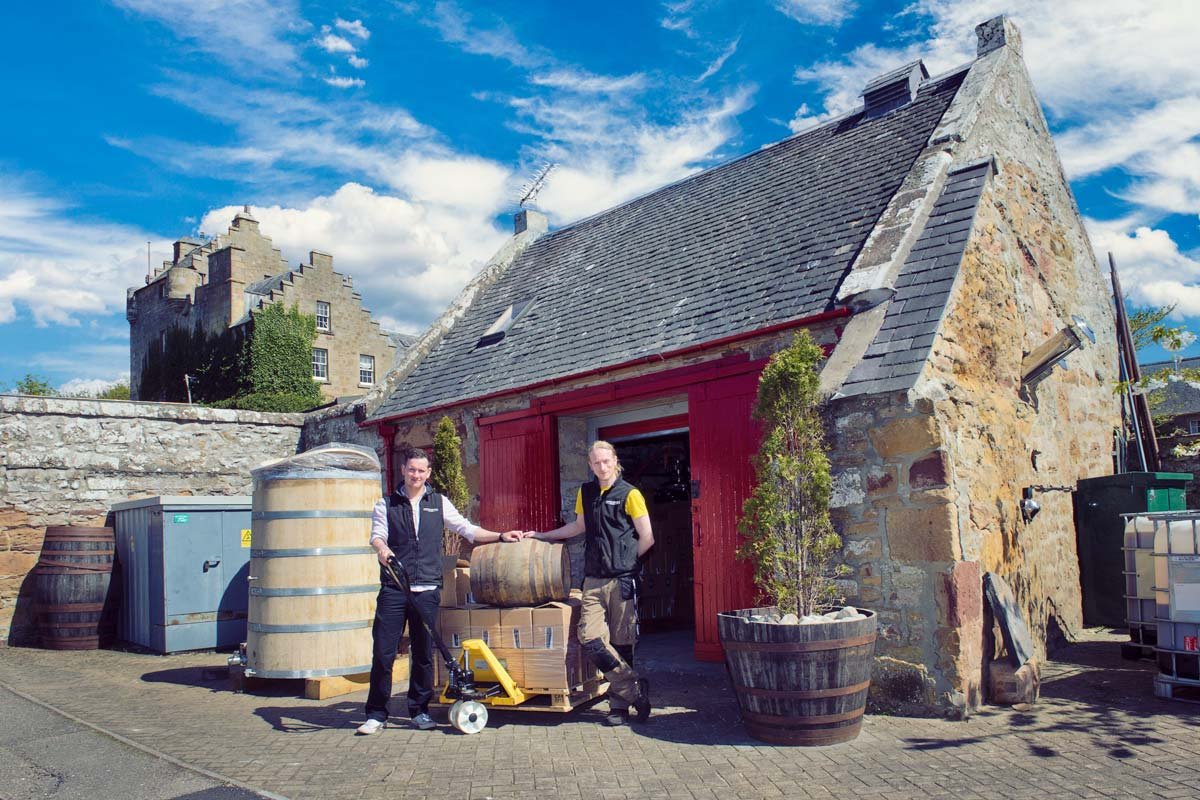
Where the Highlands Speak in Barley
The Scottish Highlands produce whisky under conditions that are genuinely difficult to replicate elsewhere: Atlantic weather systems pushing moisture across open moorland, water filtered through ancient Torridonian sandstone, and a latitude that stretches the growing season for barley into something irregular and demanding. Dornoch, a cathedral town of just over a thousand residents on the north shore of the Dornoch Firth, sits within this environment at its most concentrated. The distillery at 3c Station Square occupies a converted Victorian fire station, a building whose stone construction and compact footprint signal the broader philosophy at work: craft at a scale where the provenance of raw materials can actually be tracked, and where regional character is a production decision rather than a marketing afterthought.
This matters because Dornoch is not a distilling town with a long industrial heritage. It is a town with a castle, a cathedral dating to the thirteenth century, and a golf course that draws international visitors for reasons entirely unrelated to whisky. The distillery's presence here is part of a wider pattern across Highland Scotland, where the last decade has seen small-scale producers establish operations in locations chosen for their access to local grain, water quality, and the kind of unhurried pace that long maturation requires. That context places Dornoch Distillery in a different competitive register from the major Highland houses further west and south.
The shortlist, unlocked.
Hard-to-book tables, cellar releases, and concierge-planned trips.
Get Exclusive Access →The Logic of Northern Terroir
In whisky production, terroir is a contested term. Unlike wine, where grape variety, soil composition, and microclimate interact in ways that are directly traceable from glass to ground, Scotch whisky involves fermentation, distillation, and years of cask maturation that can obscure or transform any agricultural signal from the barley. What the leading small-scale Highland producers argue — and what the craft distilling movement has made increasingly credible — is that when you source grain locally, use traditional yeast strains, and allow extended fermentation windows, regional character does survive into the spirit.
The area around the Dornoch Firth has its own microclimate, moderated by the firth itself and sheltered from the full force of northern Atlantic exposure by the Black Isle to the south. Barley grown at these latitudes develops slowly, accumulating starch and complexity under long summer days that drop into cool nights. The water sources feeding distilleries in this part of Sutherland draw from hill and moorland catchment areas with minimal industrial interference. These are not abstract credentials , they are the material conditions that determine what goes into the still, and by extension what emerges from the cask several years later.
For comparison, Balblair Distillery in Edderton, a few miles south along the Firth, operates with a single-vintage release philosophy that places explicit emphasis on the year's conditions as a shaping force. Clynelish Distillery in Brora, just up the coast, carries a reputation for a waxy, coastal-inflected character that whisky writers consistently attribute to its northern address. Dornoch Distillery operates in that same geographic conversation, but from the newer, smaller-footprint position that craft producers occupy within the region.
Pearl 3 Star Prestige: What the Rating Signals
Dornoch Distillery holds a Pearl 3 Star Prestige award for 2025. Within EP Club's rating framework, this places it at the upper tier of recognised producers, alongside a peer set defined by consistent quality across releases, sourcing transparency, and production integrity. It is the kind of rating that confirms a trajectory rather than marking a single exceptional moment, and for a distillery of this size and relative youth in the market, it is a significant signal about where the operation sits relative to more established Highland names.
The award also functions as a useful navigational reference for visitors. The northern Highlands contains a cluster of serious distilleries operating across a spectrum of scale and ambition. At one end, large historic houses like Ardnahoe in Port Askaig and Auchentoshan Distillery in Clydebank carry the weight of extended production histories and established global distribution. At the other end, craft producers with smaller still rooms and experimental grain programs occupy a niche where the ceiling on ambition is genuinely open. Dornoch's Pearl 3 Star positioning puts it toward the serious end of that latter group , not a curiosity, but a destination with credentials.
Dornoch as a Whisky Destination
The town itself rewards a considered visit. The medieval cathedral at the centre of Dornoch has been in continuous use since the thirteenth century; the nearby castle, now a hotel, was the seat of the Bishop of Caithness. Golf at Royal Dornoch, founded in 1877 and consistently ranked among the leading links courses globally, draws visitors who then find themselves within a short walk of the distillery on Station Square. That proximity is not incidental , Dornoch has a logic as a destination precisely because it compresses a cathedral, a championship links, and a working craft distillery into a town centre you can cross on foot in under ten minutes.
For context, Scotland's broader craft distilling geography is worth mapping. Elsewhere across the country, producers like Dunphail Distillery in Dunphail and InchDairnie Distillery in Glenrothes are building reputations around grain provenance and production method rather than age or heritage. In the south, Bladnoch Distillery in Bladnoch represents a Lowland counterpoint to the northern Highland cluster. Across the Speyside corridor, Aberlour and Cardhu in Knockando anchor a different tradition , older, more volume-oriented, differently expressive. Glen Garioch Distillery in Oldmeldrum and Glen Scotia in Campbeltown add further geographic and stylistic range to what is, at the serious end, a remarkably varied national category. Deanston in Deanston completes the picture with its organic grain program, which makes it a useful stylistic comparison for the values-driven production approach visible in the craft tier.
Planning the Visit
Dornoch sits approximately 60 miles north of Inverness by road, making it a logical extension of any serious Highland itinerary rather than a detour. The A9 corridor connects the two, with Inverness Airport serving direct routes from London and several European cities. The Station Square address places the distillery within the town centre, within walking distance of accommodation at the castle and several smaller guesthouses. Specific opening hours, tasting formats, and booking requirements are leading confirmed directly with the distillery before travel, as craft operations of this scale tend to run visitor programs with limited daily capacity.
For a broader read on what the Dornoch area offers beyond the distillery , including dining, lodging, and other notable addresses , see our full Dornoch restaurants guide.
Frequently Asked Questions
- What kind of setting is Dornoch Distillery?
- Dornoch Distillery operates from a converted Victorian fire station at Station Square in Dornoch, a small Highland cathedral town on the north shore of the Dornoch Firth. The setting is compact and town-centre, placing it within a short walk of the medieval cathedral and Royal Dornoch golf course. It holds a Pearl 3 Star Prestige award (2025), which confirms its standing as a serious craft producer rather than a visitor-oriented novelty.
- What whisky is Dornoch Distillery known for?
- Dornoch Distillery is a Scotch whisky producer operating within the Highland region, where the combination of northern latitude, moorland water sources, and locally sourced barley shapes the character of production. The distillery sits within a Highland craft tier that includes Balblair Distillery in Edderton and Clynelish Distillery in Brora, both of which carry strong regional provenance credentials. Its Pearl 3 Star Prestige award (2025) positions it at the serious end of Scotland's craft distilling movement.
- What makes Dornoch Distillery worth visiting?
- Dornoch Distillery earned a Pearl 3 Star Prestige award in 2025, placing it among EP Club's recognised producers for quality and production integrity. The town of Dornoch is compact enough that a visit to the distillery integrates naturally with Royal Dornoch golf, the thirteenth-century cathedral, and the castle , all within a ten-minute walk of Station Square. For visitors building a Highland itinerary north from Inverness, the combination of credentials and setting makes it a purposeful stop.
- What is the leading way to book a visit to Dornoch Distillery?
- Specific booking information, including tasting formats, tour availability, and advance reservation requirements, should be confirmed directly with the distillery. Craft operations of this scale typically run visitor programs at limited daily capacity. The distillery is located at 3c Station Square, Dornoch IV25 3PG, and its Pearl 3 Star Prestige rating (2025) suggests demand that warrants early planning.
- How does Dornoch Distillery fit within the wider Scottish craft distilling movement?
- Dornoch Distillery represents the northern Highland tier of Scotland's craft distilling expansion, a wave of small-batch producers that emerged over the past decade to occupy the space between historic volume houses and experimental micro-distilleries. Its Pearl 3 Star Prestige award (2025) signals consistent quality within that peer group, which across Scotland includes producers from Dunphail to Glenrothes. Its Dornoch address, in a cathedral town with a championship links course, gives it a setting that few craft producers elsewhere in the country can match for destination coherence.
A Quick Peer Check
These are the closest comparables we have in our database for quick context.
| Venue | Cuisine | Price | Awards | Notes |
|---|---|---|---|---|
| Dornoch Distillery | This venue | |||
| Terre Rouge and Easton Wines | ||||
| Aberlour | ||||
| Ardnahoe | ||||
| Auchentoshan Distillery | ||||
| Balblair Distillery |
Access the Cellar?
Our members enjoy exclusive access to private tastings and priority allocations from the world's most sought-after producers.
Get Exclusive AccessThe shortlist, unlocked.
Hard-to-book tables, cellar releases, and concierge-planned trips.
Get Exclusive Access →