
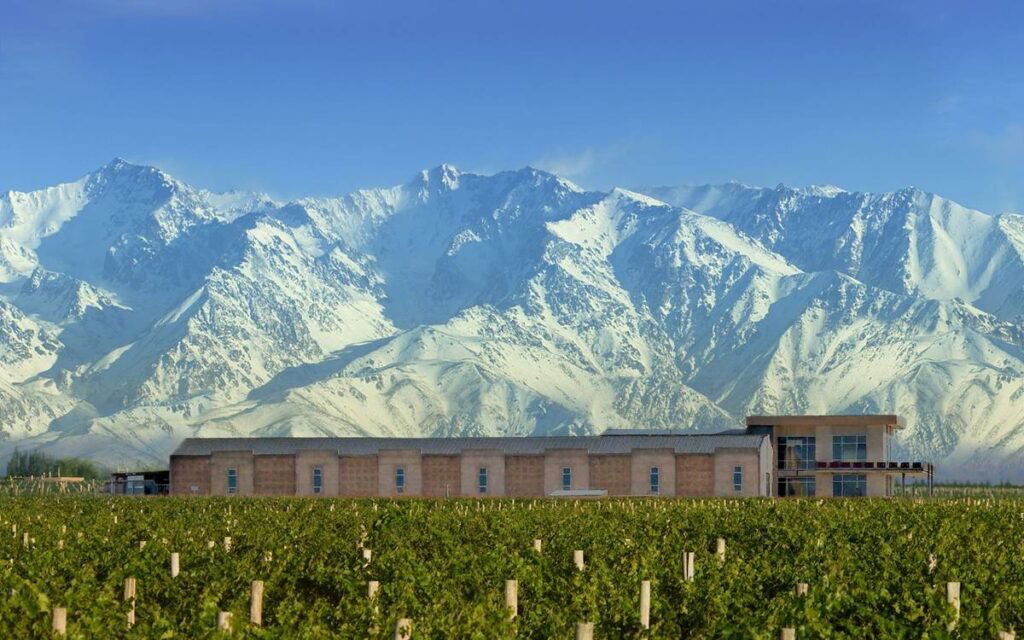
Domaine Bousquet operates in Tupungato's high-altitude Valle de Uco, where Andean snowmelt and significant diurnal temperature swings define the growing conditions. Recognised with a Pearl 2 Star Prestige rating in 2025, the estate produces organic wines that sit within a small cohort of certified producers working at elevation in Argentina's most scrutinised sub-appellation.
High Altitude, Organic Conviction: The Tupungato Context
Tupungato sits at the northern end of the Valle de Uco, a sub-region of Mendoza that has, over the past two decades, separated itself from the broader Mendoza identity by virtue of elevation, temperature differential, and soil composition. Vineyards here operate between 1,000 and 1,500 metres above sea level, where Andean snowmelt feeds irrigation and nightly temperatures can drop sharply even in the middle of summer. That combination produces wines with higher natural acidity and more restrained alcohol than the warmer, lower-altitude blocks around Luján de Cuyo — a structural difference that is now well-documented across the region's peer producers.
Domaine Bousquet occupies a parcel along RP89 in Tupungato, and its positioning within the Valle de Uco organic producer cohort is the most useful lens through which to read it. Organic certification in Mendoza is a minority pursuit — the combination of arid conditions that reduce disease pressure and abundant sunshine that enables farming without conventional interventions makes it technically achievable, but the estate commitment required to formalise and maintain certification narrows the field considerably. Domaine Bousquet sits inside that certified group, which includes a small number of other Tupungato-area estates working to similar agronomic standards.
In 2025, the estate received a Pearl 2 Star Prestige rating, a trust signal that places it within a recognised tier of evaluated producers and is the clearest external benchmark available for positioning within the regional peer set. For travellers planning a Valle de Uco wine itinerary, that rating functions as a reliable entry point for comparison with neighbours such as Andeluna Cellars, Finca Sophenia, Rutini Wines (La Rural), and Sitio La Estocada , all operating within the same appellation and facing similar terroir conditions.
The Organic Position in Argentine Wine
Argentina's organic wine sector occupies an interesting structural position globally. The country's semi-arid climate, low humidity, and high solar radiation reduce the fungal pressure that makes organic viticulture difficult in wetter European appellations. In practical terms, this means that the certification barrier in Mendoza is lower than in, say, Burgundy or the Loire Valley , but it also means that organic certification alone is not a sufficient differentiator. What matters is what the estate does with the agronomic advantage: whether the winemaking approach preserves the natural acidity that high-altitude Tupungato fruit delivers, and whether the production volumes and release strategy signal a quality-first orientation rather than a volume-driven one.
Domaine Bousquet's organic commitment is documented rather than implied, which places it in a more credible sub-group than estates that use sustainability language loosely. Across the broader Mendoza region, the distinction between certified organic, sustainable, and conventionally farmed estates is increasingly a factor that informed buyers use to segment their purchasing , a shift visible at the international export level as much as in local wine tourism. Producers in other Argentine appellations working at a similar organic standard include Bodega Colomé in Molinos and Bodega El Esteco in Cafayate, both of which operate in high-altitude conditions that parallel, though differ climatically from, the Valle de Uco.
Approaching the Estate
The road along RP89 in Tupungato passes through vineyard-dense terrain where the Andes serve as a constant western reference point. At this latitude and elevation, the visual backdrop is unusually clear on most days of the year , the dry atmosphere that benefits the viticulture also limits the haze that obscures mountain views in lower, more populated wine regions. Arriving at the estate, the scale of planting is immediately apparent: the Valle de Uco's flat-to-gently-sloping terrain allows for large contiguous vineyard blocks that are uncommon in European appellations where geological complexity fragments parcels.
That scale matters for understanding Domaine Bousquet's market position. The estate is not operating in a small-production, allocation-only model in the manner of, say, Bodega DiamAndes in Tunuyán or a Burgundy domaine managing a handful of hectares. Instead, it occupies the middle ground that a significant portion of Valle de Uco's export-facing producers have found: organic farming at viable commercial scale, with international distribution that makes the wines accessible outside of Argentina without requiring cellar-door visits to access the portfolio.
Wine Tourism in the Valle de Uco
Wine tourism in the Valle de Uco has developed differently from Luján de Cuyo's more established, hotel-heavy infrastructure. Bodega Lagarde in Luján de Cuyo exemplifies the older, architecturally mature estate model; the Valle de Uco's offering skews newer, with estates that have built visitor infrastructure more recently and in some cases more minimally. For visitors building a multi-day Mendoza itinerary, this creates a useful division: Luján de Cuyo for depth of history and urban proximity, Valle de Uco for altitude-driven wine character and landscape context.
Domaine Bousquet's address along RP89 places it within reach of the cluster of Tupungato producers that form a natural day-route. Combining visits across Tupungato's full winery selection allows for direct comparison of how different estates handle the same raw material , high-altitude Malbec, Cabernet Franc, Chardonnay, and Pinot Noir , under varying farming and winemaking philosophies. The Domaine Bousquet organic approach offers a specific point of contrast within that circuit, particularly against conventionally farmed neighbours producing from similar soil profiles.
For broader regional context beyond the Valle de Uco, the comparison set extends to internationally rated producers in contrasting wine traditions. Abadía Retuerta in Sardón de Duero illustrates how estate-scale organic programs operate within a European appellations framework, while Aberlour in Aberlour provides a reference point for how provenance-led production translates into premium positioning in an entirely different category. The structural parallels , certified production, defined geography, single-estate sourcing , cross regional and categorical lines.
Planning a Visit
Tupungato is accessed from Mendoza city via the RN40 and connecting provincial roads, a journey of roughly 90 minutes by road. The Valle de Uco does not have the same density of accommodation as Mendoza city or even Luján de Cuyo, so most visitors base themselves in Mendoza and make day trips. For those prioritising proximity to the vineyards, Tupungato's hotel options are limited but specific to the wine tourism market. The harvest window (late February through April in this hemisphere) is the period of highest activity at estate level, when vineyard access often accompanies tasting appointments and the winery infrastructure is fully operational.
Beyond the winery circuit, the Valle de Uco's restaurant offering has grown alongside its wine reputation. Tupungato's restaurant guide covers the available options, most of which are tied directly to winery operations rather than operating independently. The bar and experiences segments are correspondingly smaller, reflecting a visitor population that arrives primarily for wine rather than broader hospitality , though the bars guide and experiences guide document what exists for those extending stays.
Frequently Asked Questions
- What wine should I prioritise at Domaine Bousquet?
- The estate's organic certification and Valle de Uco terroir , high altitude, Andean-sourced irrigation, significant diurnal temperature variation , create conditions particularly suited to Malbec and Cabernet Franc with higher natural acidity than warmer Mendoza sub-regions produce. Given the 2025 Pearl 2 Star Prestige recognition, the wines that leading express the organic, high-altitude character of Tupungato are the logical starting point for any tasting. For comparison across the appellation, Andeluna Cellars and Finca Sophenia offer direct regional context from the same Valle de Uco growing conditions.
- What makes Domaine Bousquet worth visiting in Tupungato?
- Tupungato's appeal as a wine destination rests on the altitude advantage and the concentration of estates working at a recognised quality tier. Domaine Bousquet's 2025 Pearl 2 Star Prestige rating confirms its position within that evaluated group, and its organic farming credentials add a specific agronomic angle that not all Valle de Uco producers share. For visitors who have already covered the Luján de Cuyo circuit , or who are building an itinerary around certified sustainable or organic producers specifically , Domaine Bousquet provides a substantive stop within the broader Tupungato winery network.
Booking and Cost Snapshot
A fast peer set for context, pulled from similar venues in our database.
| Venue | Price | Awards | Notes |
|---|---|---|---|
| Domaine Bousquet | Pearl 2 Star Prestige (2025) | This venue | |
| Rutini Wines (La Rural) | |||
| Andeluna Cellars | |||
| Finca Sophenia | |||
| Sitio La Estocada |
Access the Cellar?
Our members enjoy exclusive access to private tastings and priority allocations from the world's most sought-after producers.
Access the Concierge