
Andeluna Cellars sits at high altitude on RP89 in Tupungato, one of the Uco Valley's cooler, more elevation-driven wine corridors. The estate holds a Pearl 2 Star Prestige rating for 2025, placing it among a select group of Argentine producers working at the quality tier where terroir expression and vineyard specificity define the conversation. A serious address for Malbec and Cabernet Franc at altitude.
Altitude as Argument: What Tupungato's Elevation Does to Wine
The Uco Valley's climb toward the Andes is not gradual — it is a series of distinct micro-climates stacked by altitude, each one expressing the same grape varieties through a different temperature register. Tupungato sits at the northern end of this corridor, higher and cooler than Luján de Cuyo, with night-to-day temperature swings that can exceed 20°C during the growing season. That thermal gap is not incidental detail. It is the mechanism behind the structure you find in wines from this elevation: slower ripening, tighter skins, pronounced acidity that survives into the bottle.
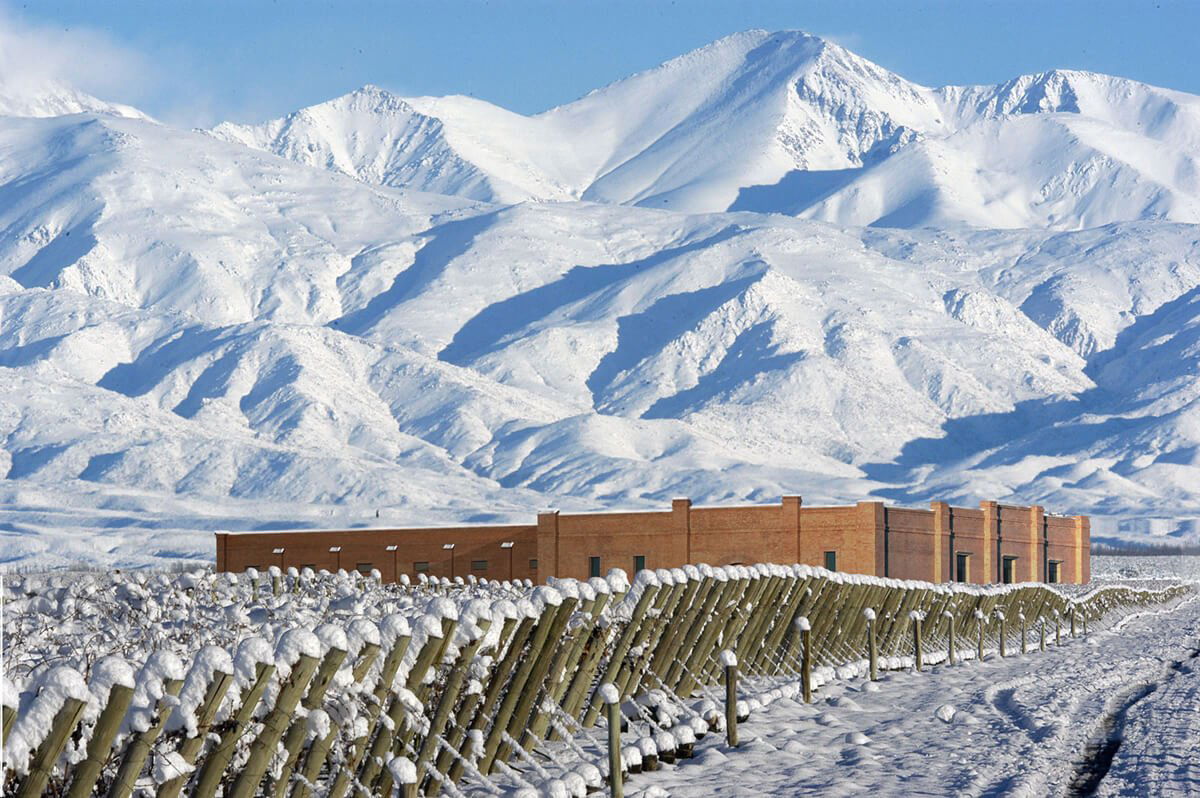
Andeluna Cellars operates within this logic from its address on RP89 Km 11, a route that threads through Tupungato's vine-covered piedmont with the snow-capped Andean wall as a constant reference point on clear days. The estate holds a Pearl 2 Star Prestige rating from EP Club for 2025, a designation that places it in the company of producers for whom altitude is not simply a marketing coordinate but a winemaking condition that shapes decisions from canopy management through to harvest timing. That recognition puts Andeluna in a credible peer set — a category of Tupungato producers that includes Finca Sophenia, Domaine Bousquet, Rutini Wines (La Rural), and Sitio La Estocada , all working within the same climatic argument and competing for the attention of visitors and collectors who arrive with altitude-focused expectations.
The Terroir Case for Tupungato
Understanding Andeluna requires first understanding what separates Tupungato from the broader Mendoza category. Most internationally recognised Mendoza Malbec originates from Luján de Cuyo, a warmer, lower-altitude zone where the variety produces its most fleshy, fruit-saturated expression. Tupungato operates at a meaningfully different register. Vineyards here sit between roughly 1,000 and 1,400 metres above sea level, where solar radiation is intense but ambient temperatures remain cool enough to preserve aromatic freshness. The result is a structural profile that reads differently: higher natural acidity, finer tannin grain, longer hangtime before phenolic maturity, and a resistance to the over-ripe tendencies that can flatten lower-altitude Malbec into a single-note profile.
The soils in this part of the valley add another layer. Alluvial deposits carried from the Andes over millennia have created stony, well-drained profiles with sandy loam characteristics in many parcels. Vine roots in this context must work deeper for water and nutrients, a stress condition that tends to concentrate flavour compounds and limit yields naturally without requiring aggressive green harvesting. For producers committed to terroir expression rather than volume-driven winemaking, these conditions are a foundation, not a constraint.
Across the Uco Valley and beyond into higher-altitude Argentine appellations , from the calchaquí valleys of Cafayate, where Bodega El Esteco works at comparable elevation, to the extreme altitude of Bodega Colomé in Molinos , Argentina has built a sustained case that its wine identity is defined not by a single region but by how altitude modulates expression at every point along its Andean spine.
Approaching the Estate
RP89 is a provincial route, and the drive toward Km 11 reads accordingly: agricultural, unhurried, and framed by views that scale with proximity to the mountains. The approach to Andeluna's address is typical of premium Uco Valley estates in that the setting itself communicates the conditions before a single wine is poured. Vineyard rows stretch toward the Andes, the soil visible between vine trunks has a pale, stony character, and the light at this altitude carries a particular clarity that shifts the visual register from the softer tones of lower Mendoza.
For visitors planning the trip, Tupungato's wine corridor is most accessible from the city of Mendoza, roughly 80 kilometres to the north. The Uco Valley circuit , taking in multiple producers in a single day or over a weekend , has become a structured itinerary for wine-focused travellers, and Tupungato sits at its northern entry point. Those building a fuller regional picture should cross-reference Bodega DiamAndes in Tunuyán and Bodega Lagarde in Luján de Cuyo for comparative altitude and style benchmarks, while visitors extending into broader Uco Valley programming can consult our full Tupungato wineries guide for a comprehensive overview.
What the Pearl 2 Star Prestige Rating Signals
EP Club's Pearl 2 Star Prestige designation for 2025 is not a rating distributed broadly , it marks producers whose quality tier, vineyard approach, and consistency place them in a distinct upper bracket within their regional context. For Andeluna, the 2025 recognition is a data point that aligns with where the estate sits competitively: above the accessible entry-level tier of Argentine wine tourism, in the company of properties that visitors approach with informed expectations about what altitude-driven winemaking in Tupungato can deliver.
Context matters for interpreting this. The producers that typically land at 2 Star Prestige in high-altitude Argentine appellations are ones where vineyard specificity and winemaking restraint have become legible in the bottle , where a tasting shows you the altitude as much as it shows you the variety. That profile fits the conditions Andeluna works with on RP89.
Internationally, comparisons can be drawn with other estate wineries working in high-altitude, cool-climate frames outside their national mainstream: Abadía Retuerta in Sardón de Duero pursues a comparable estate-first approach in a Spanish context, while the model of a single property expressing a defined terroir argument rather than a broad appellation style connects across categories and continents. Even the discipline that defines Scotch whisky's most site-specific producers , Aberlour in Aberlour being one example of a named-place producer with strong recognition signals , maps onto the logic that place-specific production, well-executed, earns a different level of regard than volume-scaled alternatives.
Planning a Visit
Tupungato's wine estates are generally not drop-in destinations. The majority of premium producers in this corridor operate by appointment, and Andeluna's position at the 2 Star Prestige level suggests the visit experience is structured rather than casual. Visitors who arrive having already researched the altitude-versus-style axis , understanding what to expect from a Tupungato Malbec versus a Luján de Cuyo benchmark , will extract more from a tasting session than those arriving without that frame. The comparison between Andeluna's regional peer set and the broader Mendoza category is not academic; it's the context that makes the wine legible.
The broader Tupungato area has built supporting infrastructure around its wine identity. Our full Tupungato hotels guide covers accommodation options for those staying in the area, while our full Tupungato restaurants guide, bars guide, and experiences guide map the wider scene for visitors building a multi-day itinerary around the valley's wine corridor.
Frequently Asked Questions
- What do visitors recommend trying at Andeluna Cellars?
- The estate's EP Club Pearl 2 Star Prestige recognition for 2025 positions it as a producer where altitude-expression wines are the reference point. Tupungato's growing conditions , high elevation, cool nights, stony alluvial soils , make Malbec and Cabernet Franc the varieties that most legibly communicate what this part of the Uco Valley does differently from lower Mendoza appellations. Visitors coming from peer estates like Finca Sophenia or Rutini Wines will find a consistent regional argument in the glass across all of Tupungato's leading producers.
- What's the main draw of Andeluna Cellars?
- The combination of location and recognition is the primary draw. Andeluna sits on RP89 in Tupungato at the heart of the Uco Valley's altitude-driven wine corridor, and its Pearl 2 Star Prestige rating from EP Club for 2025 places it in a peer set defined by quality consistency and terroir specificity. For visitors whose wine interest extends beyond branded Mendoza and into the structural, elevation-shaped tier of Argentine production, Tupungato is the relevant address , and Andeluna is one of the properties that defines what that address means at the prestige end of the market.
Comparable Spots, Quickly
These are the closest comparables we have in our database for quick context.
| Venue | Cuisine | Price | Awards | Notes |
|---|---|---|---|---|
| Andeluna Cellars | Pearl 2 Star Prestige (2025) | This venue | ||
| Rutini Wines (La Rural) | ||||
| Domaine Bousquet | ||||
| Finca Sophenia | ||||
| Sitio La Estocada |
Access the Cellar?
Our members enjoy exclusive access to private tastings and priority allocations from the world's most sought-after producers.
Access the Concierge