

High in Tupungato's Gualtallary zone, where the Andes begin to yield to snow-line elevations, Sitio La Estocada is the working biodynamic estate of winemaker Matías Michelini. The visit moves through soil study, vegetable gardens, and herb drying rooms before arriving at the wines themselves — a ground-level engagement with how altitude and farming philosophy translate directly into the glass. EP Club awarded it Pearl 2 Star Prestige in 2025.
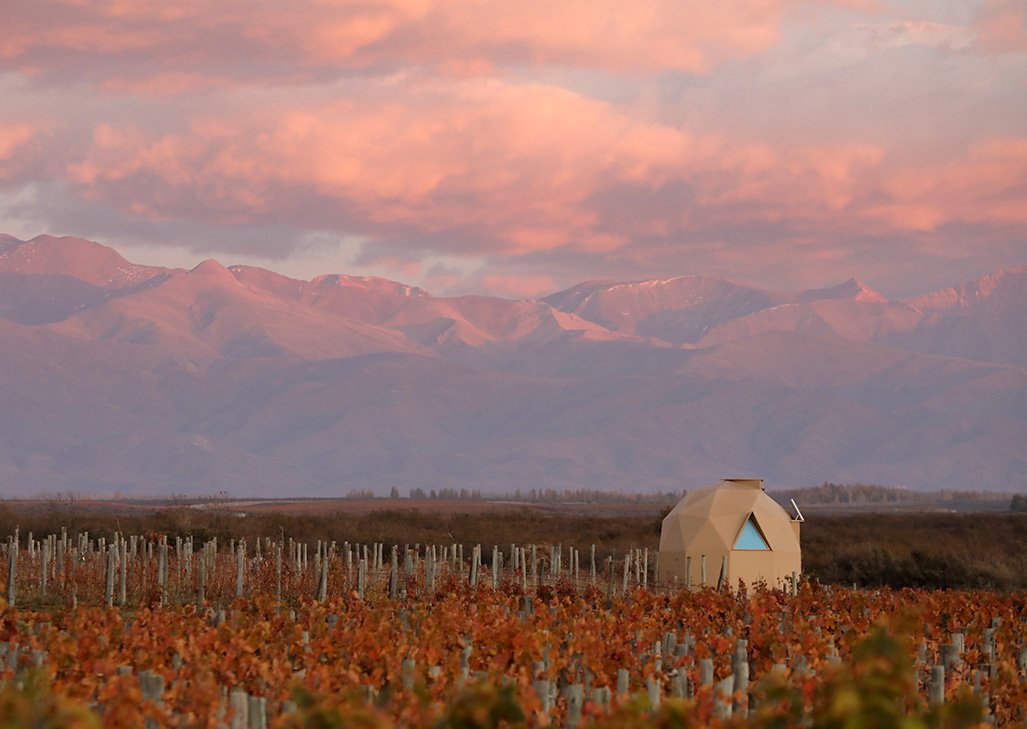
Where the Vineyard Begins at the Soil, Not the Cellar
At around 1,200 metres above sea level in Gualtallary — Tupungato's highest and most discussed sub-zone — the air carries a particular quality: thin, cold at night, intensely bright by midday. The snowpack on the Andes is visible from the vine rows at Sitio La Estocada, close enough that the elevation feels less like a backdrop and more like a working condition. This is the part of Mendoza where diurnal temperature swings routinely exceed 20°C, where volcanic soils sit over limestone, and where a growing number of producers have concluded that conventional viticulture misses what the terroir is actually offering.
Biodynamic farming at altitude is a specific kind of commitment. The calendar governs when soils are worked, when harvests begin, and when nothing happens at all. At Sitio La Estocada, that commitment extends from the vineyard rows into the vegetable gardens, the greenhouse, and the herb drying room that visitors pass through on the estate tour. EP Club awarded the property Pearl 2 Star Prestige in 2025, a recognition that places it in the tier of Mendoza estates where viticulture practice and visitor experience carry roughly equal weight in the overall assessment.
Biodynamic Farming in the Gualtallary Context
Gualtallary has shifted considerably in the past decade. What was once a sub-zone known mainly to growers willing to take risks on extreme altitude has become Mendoza's most closely watched address for high-elevation Malbec, Cabernet Franc, and white varieties. The shift has attracted producers ranging from large international operators to small-batch independents, and the farming philosophies within that group vary considerably. Some pursue organic certification as a floor, not a ceiling; others, including the approach at Sitio La Estocada, treat biodynamics as a complete agricultural system with its own logic and calendar.
The practical difference between organic and biodynamic farming is more than certification. Biodynamic practice integrates lunar and astronomical cycles into soil preparation and harvest decisions, uses specific preparations applied at precise times, and treats the farm as a closed-loop organism rather than an input-managed production unit. At Gualtallary's elevations, where soils are young, volcanic, and relatively poor in organic matter, that approach to building soil biology has direct implications for vine stress, water retention, and ultimately fruit character. The herb drying room and greenhouse that form part of the Sitio La Estocada visit are not decorative features; they are functional components of the farm's preparation cycle.
For comparison, Domaine Bousquet has built an organic and biodynamic program across Tupungato that operates at larger scale, while Finca Sophenia works the valley floor with a different elevation profile and farming model. Sitio La Estocada occupies a position further up the gradient, both literally and in terms of farming intensity.
The Visit: A Ground-Level Reading of Place
The tour format at Sitio La Estocada is structured to move visitors through the farming system before reaching the wines. It begins in the soil, quite literally: guests examine what is under the vineyard before discussing what grows from it. From there the route passes through vegetable gardens integrated into the estate, then the greenhouse and the herb drying room, before arriving at the cellar or tasting space. The sequence is deliberate. By the time you encounter the wines, you have already seen where the compost preparations come from, what companion planting looks like at this altitude, and how the farm manages its inputs without external chemical inputs.
This kind of sequenced visit is becoming more common at serious biodynamic estates across South America, and it marks a genuine departure from the traditional winery tour model where a cellar walk and barrel tasting constituted the full programme. Estates like Bodega Colomé in Molinos have long embedded a sense of place into their visitor experience through landscape and altitude; what distinguishes the Gualtallary approach at sites like Sitio La Estocada is the foregrounding of farming practice itself as the interpretive lens.
Visitors planning the experience should factor in the drive from Tupungato town and the road conditions on Ruta 89 approaching the Gualtallary sector. The address at Los Europeos and Ruta 89 places the property at the upper end of the valley, and the road quality reflects that elevation. Booking in advance is advisable given the estate's scale and the personalised nature of the tour format. Contact details are not publicly listed, so the most reliable approach is through the EP Club concierge or by reaching the property directly via its local network. The experience sits in Tupungato's premium tier, consistent with a Pearl 2 Star Prestige designation, and should be treated as a half-day commitment rather than a quick cellar drop-in.
Matías Michelini and the Maverick Tier of Mendoza
Mendoza's most discussed independent producers over the past decade have often been those willing to work at elevations and with farming approaches that larger commercial operations could not easily replicate. Matías Michelini belongs to a cohort that includes several Uco Valley figures who have pushed biodynamics, natural intervention, and altitude viticulture simultaneously. The descriptor "maverick" that accompanies his name in EP Club's own award citation is not primarily about personality; it describes a production philosophy that sits outside the mainstream Malbec-dominated commercial model that defines most of Mendoza's export volume.
His lineage in Gualtallary is relevant context because it pre-dates much of the current attention on the sub-zone. Working the land and the stars at altitude requires a different kind of patience than managing a conventional production program, and that patience has become part of the estate's standing. For those building a broader picture of Tupungato's serious producers, Andeluna Cellars and Rutini Wines (La Rural) offer complementary perspectives on how different farming philosophies and scales express the same valley.
Placing Sitio La Estocada in the Wider Mendoza Circuit
Tupungato is not the only address in Mendoza where biodynamic and high-elevation work has gained serious traction. Bodega DiamAndes in Tunuyán works the Uco Valley's adjacent zones with its own precision viticulture model, and further north in Cafayate, Bodega El Esteco represents what altitude viticulture looks like at a different latitude. In Luján de Cuyo, Bodega Lagarde occupies the traditional historical tier that predates the Uco Valley's rise. Each of these estates reflects a different chapter in how Argentina's wine geography has developed; Sitio La Estocada reflects the most recent and most radical , a return to pre-industrial farming at the extreme end of the country's altitude range.
For those planning a full Tupungato itinerary, EP Club's Tupungato wineries guide maps the full range of producers in the valley. Supplement it with the Tupungato restaurants guide, the hotels guide, the bars guide, and the experiences guide to build a coherent visit around what is one of South America's most concentrated zones of serious wine production.
Frequently Asked Questions
What wines should I try at Sitio La Estocada?
The estate sits in Gualtallary, Tupungato's highest sub-zone, where volcanic and limestone soils at elevation tend to produce wines with pronounced acidity and aromatic precision , conditions that suit Malbec, Cabernet Franc, and white varieties including Torrontés and Chardonnay. Given Matías Michelini's biodynamic approach and the EP Club Pearl 2 Star Prestige recognition in 2025, the wines to prioritise are those that most directly express the estate's farming philosophy: small-batch, low-intervention releases where soil preparation and harvest timing are the primary winemaking decisions. Specific current releases should be confirmed at the time of booking, as production volumes and availability at the estate level can shift between vintages.
What's the standout thing about Sitio La Estocada?
The combination of Gualtallary's extreme altitude with a rigorous biodynamic farming system makes the estate one of the more singular propositions in Tupungato's visitor circuit. EP Club's Pearl 2 Star Prestige award in 2025 places it at the premium end of the region's winery experiences, and the tour format , which moves through soil, gardens, greenhouse, and herb drying infrastructure before reaching the wines , is structured to explain why farming at this elevation requires a different approach entirely. Pricing information is leading confirmed directly through the estate or EP Club concierge.
How hard is it to get in to Sitio La Estocada?
Estate does not list a public booking page or phone number, which places it in the category of Mendoza properties where access is managed through direct contact or trusted intermediaries. Given the personalised, small-group nature of the biodynamic tour format and the Pearl 2 Star Prestige standing, capacity on any given day is likely limited. Booking well ahead of your travel dates is advisable, and EP Club members can approach access through the concierge channel for the most reliable route in.
Is Sitio La Estocada suitable for visitors without a strong wine background?
Tour is structured around farming practice as much as wine tasting , the soil study, vegetable gardens, and herb drying room that form the first part of the visit require no prior wine knowledge to engage with meaningfully. This makes Sitio La Estocada, with its EP Club Pearl 2 Star Prestige recognition and Matías Michelini's biodynamic stewardship in Gualtallary, one of the more accessible entry points into serious viticulture in Tupungato: the agricultural logic is explained through direct observation rather than assumed knowledge. Visitors with deeper wine backgrounds will find additional layers in the winemaking discussion, but the experience is not gatekept by technical fluency.
Recognition, Side-by-Side
A short peer set to help you calibrate price, style, and recognition.
| Venue | Awards | Cuisine | Notes |
|---|---|---|---|
| Sitio La Estocada | Pearl 2 Star Prestige (2025); High up in Tupungato, Gualtallary, touching the snow-line of the Argentinean Andes lies the winery of maverick, biodynamic winemaker Matías Michelini – a passionate man deeply rooted in the land and stars. Indulge in his fascinating tour; begin on the farm with a soil study, walk through the vegetable gardens, greenhouse and herb drying room. | This venue | |
| Rutini Wines (La Rural) | |||
| Andeluna Cellars | |||
| Domaine Bousquet | |||
| Finca Sophenia |
Access the Cellar?
Our members enjoy exclusive access to private tastings and priority allocations from the world's most sought-after producers.
Access the Concierge