Domaine Arlaud

Domaine Arlaud is a Morey-Saint-Denis producer operating across the Côte de Nuits, where its wines are shaped by the commune's distinctive limestone and clay soils. Holder of a Pearl 3 Star Prestige rating for 2025, the domaine sits in a peer set defined by terroir fidelity and Pinot Noir of genuine village and premier cru depth. Visiting requires advance planning; this is not a walk-in address.
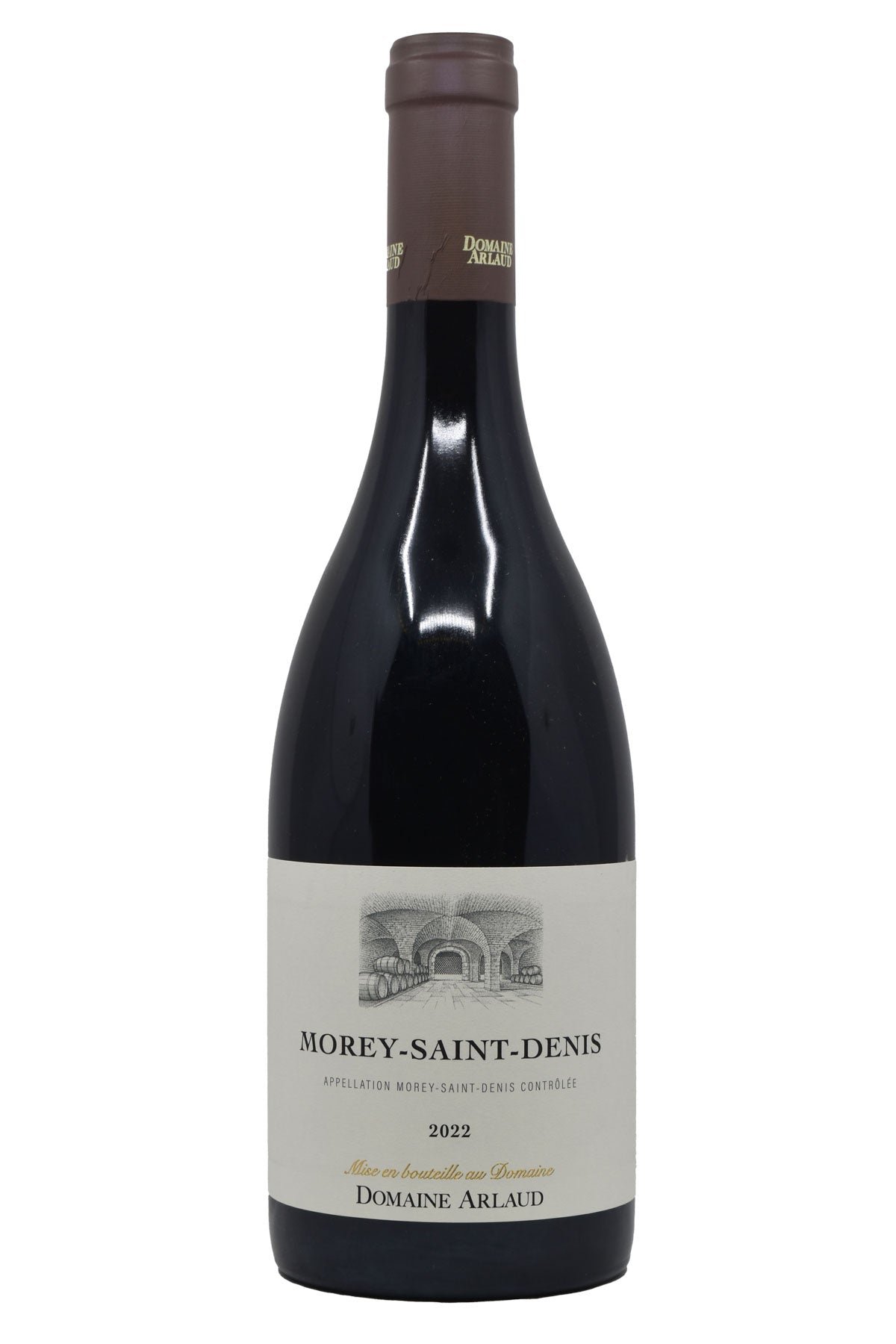
Morey-Saint-Denis and the Geology Beneath the Label
Between Gevrey-Chambertin to the north and Chambolle-Musigny to the south, Morey-Saint-Denis occupies a narrow band of the Côte de Nuits where the geology transitions in ways that are legible in the glass. The commune's soils shift from the harder, iron-rich oolitic limestone of its northern boundary toward a more marl-dominated profile as you move south, and that transition gives Morey wines a character distinct from either neighbour: less austere than a Gevrey from the upper slope, less perfumed and ethereal than a Chambolle. What you get, from growers who work the appellation seriously, is Pinot Noir with structural authority and fruit that reads darker and more precise than the Côte de Beaune norm. Domaine Arlaud, based at 41 Rue d'Epernay in the village, is one of the producers that places it in the conversation about what that character can achieve at its most resolved.
The domaine holds a Pearl 3 Star Prestige rating for 2025, EP Club's marker for producers operating at the highest tier within their appellation context. That rating positions Domaine Arlaud alongside peers such as Domaine Perrot-Minot, Domaine Dujac, and Domaine Hubert Lignier — a cohort defined less by production scale than by the seriousness with which they read and translate specific parcels. The village as a whole produces more premier cru wine per hectare than any other in the Côte de Nuits, and Morey's five grands crus (Clos de la Roche, Clos Saint-Denis, Clos des Lambrays, Clos de Tart, and a slice of Bonnes-Mares) reflect the range of terroir expressions the commune can achieve. Understanding where Domaine Arlaud sits within that grid matters to any serious buyer.
How the Terroir Speaks Through the Range
The Côte de Nuits is a region where the difference between a parcel at 250 metres elevation and one at 280 metres can determine whether you have a village wine or a premier cru, and whether the wine reads tight and mineral or broader and fleshier. Morey's slope is relatively gentle in its mid-section, which allows for good water drainage without the harsh desiccation that affects the uppermost parcels in dry years. The combination of Bathonian and Bajocian limestone subsoils, with varying depths of brown clay on leading, gives producers access to a spectrum of expression even within the one appellation.
Domaine Arlaud's holdings reflect the geological diversity of Morey-Saint-Denis and extend into adjacent appellations across the Côte de Nuits. This kind of multi-commune footprint, common among serious Burgundy négociants and domaines alike, allows a producer to show the same winemaking philosophy applied to different soil profiles, making comparative tasting across the range genuinely instructive. The contrast between a Morey village wine and, say, a Chambolle or a Gevrey from the same producer is one of the better ways to isolate what each appellation's terroir actually contributes, without the variable of different winemaking practices clouding the comparison. Among the domaine's neighbours, Domaine des Lambrays and Domaine du Clos de Tart offer a useful reference for what monopole grand cru Morey looks like at its most concentrated expression.
The Wider Burgundy Framework
Morey-Saint-Denis remains slightly less trafficked by collectors than Gevrey to the north or Vosne-Romanée further south, which has historically meant that village and premier cru wines here offer a more favourable ratio of quality to allocation difficulty. That calculus has shifted in recent years as the appellation attracted more critical attention, but the grand cru and premier cru bottlings from credentialled Morey producers remain meaningfully more accessible than equivalent wines from Chambolle's Amoureuses or Gevrey's Clos Saint-Jacques. For buyers who follow terroir rather than famous commune names, Morey rewards the attention.
The domaine's position in the 2025 EP Club ratings places it at the prestige tier, which in Burgundy context means the wines will be allocated, not available on demand. The protocol across this tier — whether at Domaine Arlaud, Domaine Dujac, or any comparable address , is to establish a relationship before expecting access. Burgundy's allocation culture is not theatre: production volumes from small parcels are genuinely finite, and the domaines that farm them are selective about where the bottles go. Reaching out early in the season and approaching the domaine through established import relationships in your home market are the practical routes. The address on Rue d'Epernay is in the village core, but a visit without prior arrangement is unlikely to yield a tasting.
Placing Domaine Arlaud in its Peer Set
At the prestige tier in Morey, the competitive set is small and well-defined. Domaine Hubert Lignier works similar village and premier cru parcels with a house style oriented toward precision and freshness. Domaine Perrot-Minot operates with greater concentration intensity, reflecting a different approach to extraction and new oak. Domaine Dujac, with its whole-cluster philosophy, produces wines with a distinctly spiced and aromatic profile. Arlaud occupies a position within this peer set characterised by attention to individual parcel character , a style where the soil type of a given climat is the argument, not the winemaker's signature. That orientation aligns it more closely with Lignier than with Perrot-Minot in terms of the signals the wines send.
For producers at a similar prestige tier in other French regions, the approach of letting terroir lead rather than imposing a house signature is a thread that connects serious growers across appellations: you see it at Albert Boxler in Niedermorschwihr with Alsace Riesling, and it's the underlying logic of smaller châteaux in Sauternes such as Château Bastor-Lamontagne in Preignac. The willingness to let a specific place speak, rather than optimise for a standardised flavour target, is the quality signal that tends to separate the prestige tier from the commercial tier across categories. The 2025 Pearl 3 Star Prestige rating for Domaine Arlaud is consistent with that reading.
Planning a Visit to Morey-Saint-Denis
Morey-Saint-Denis sits on the Route des Grands Crus between Gevrey-Chambertin and Chambolle-Musigny, approximately 15 kilometres south of Dijon on the D122. The village itself is compact, and a self-guided walk along the vineyard road gives a clear visual account of how the appellation sits on the slope. The leading periods to visit the Côte de Nuits are late spring, when the vines are flowering and the domaines have finished bottling the prior vintage, and September to October during harvest. Summer visits are workable but the most serious domaines tend to be selective about appointments during the growing season. The region has limited accommodation in the village itself; most visitors base in Beaune, 20 kilometres south, or in Nuits-Saint-Georges, 10 kilometres south, with day trips along the Côte. For further planning, see our full Morey-Saint-Denis restaurants guide, our full Morey-Saint-Denis hotels guide, our full Morey-Saint-Denis bars guide, our full Morey-Saint-Denis wineries guide, and our full Morey-Saint-Denis experiences guide.
Frequently Asked Questions
- What is Domaine Arlaud known for?
- Domaine Arlaud is a Morey-Saint-Denis producer known for wines that express the commune's distinctive limestone and clay terroir across village, premier cru, and grand cru classifications. It holds a Pearl 3 Star Prestige rating from EP Club for 2025, placing it among the leading addresses in the appellation alongside Domaine Dujac and Domaine Hubert Lignier. Pricing for prestige-tier Morey producers reflects allocation scarcity; the most sought bottlings are distributed through import relationships rather than open retail.
- What should I taste at Domaine Arlaud?
- For a clear reading of what Morey-Saint-Denis terroir produces at this level, a comparison between the domaine's village appellation wine and a premier cru from a specific climat is the most instructive starting point. The Côte de Nuits region's variation between parcels at different elevations and soil depths is the story the range tells. The Pearl 3 Star Prestige rating for 2025 signals that the wines reflect the appellation's character at a high level of precision. Access the range through a specialist importer in your home market or through an allocated relationship established directly with the domaine.
- Can I walk in to Domaine Arlaud?
- Morey-Saint-Denis is a working wine village, not a tasting tourism destination, and the domaines that operate at the Pearl 3 Star Prestige tier are allocated producers. Walk-in visits are not standard practice. Contact the domaine at its address on 41 Rue d'Epernay in advance; no phone number or website is listed in our current data, so the most reliable route is through an established import relationship or through a specialist wine travel operator who maintains contact with the domaine. Arriving without an appointment during harvest or bottling periods is particularly unlikely to result in a tasting. For broader context on visiting the commune, see our full Morey-Saint-Denis wineries guide.
Same-City Peers
A quick comparison pulled from similar venues we track in the same category.
| Venue | Classification | Awards | First Vintage | Notes |
|---|---|---|---|---|
| Domaine Arlaud | 1 awards | This venue | ||
| Domaine des Lambrays | 1 awards | 1774 | ||
| Domaine du Clos de Tart | 1 awards | |||
| Domaine Dujac | 1 awards | |||
| Domaine Hubert Lignier | 1 awards | 1943 | ||
| Domaine Ponsot | 1 awards | 1934 |
Access the Cellar?
Our members enjoy exclusive access to private tastings and priority allocations from the world's most sought-after producers.
Access the Concierge