
One of the Cape Winelands' most historically significant estates, Boschendal sits on Helshoogte Road between Franschhoek and Stellenbosch, where the Berg River valley frames a setting that has shaped South African wine culture for over three centuries. Awarded Pearl 3 Star Prestige in 2025, the estate operates across wine, dining, and accommodation in a format that places it among the Franschhoek valley's most complete visitor destinations.
Where the Berg River Valley Does the Work
The approach along Helshoogte Road tells you something before you arrive. The Simonsberg to the north, the Franschhoek Pass to the south, and the flat alluvial floor between them create the kind of terrain that makes Franschhoek legible as a wine region rather than simply a pretty valley. Boschendal sits in this corridor, on land that has been under vine since the late seventeenth century, and the accumulated weight of that history is present in the architecture, the oak tree lines, and the organisation of the estate itself. This is not a winery that has been designed to look old. It is old, and the difference is apparent.
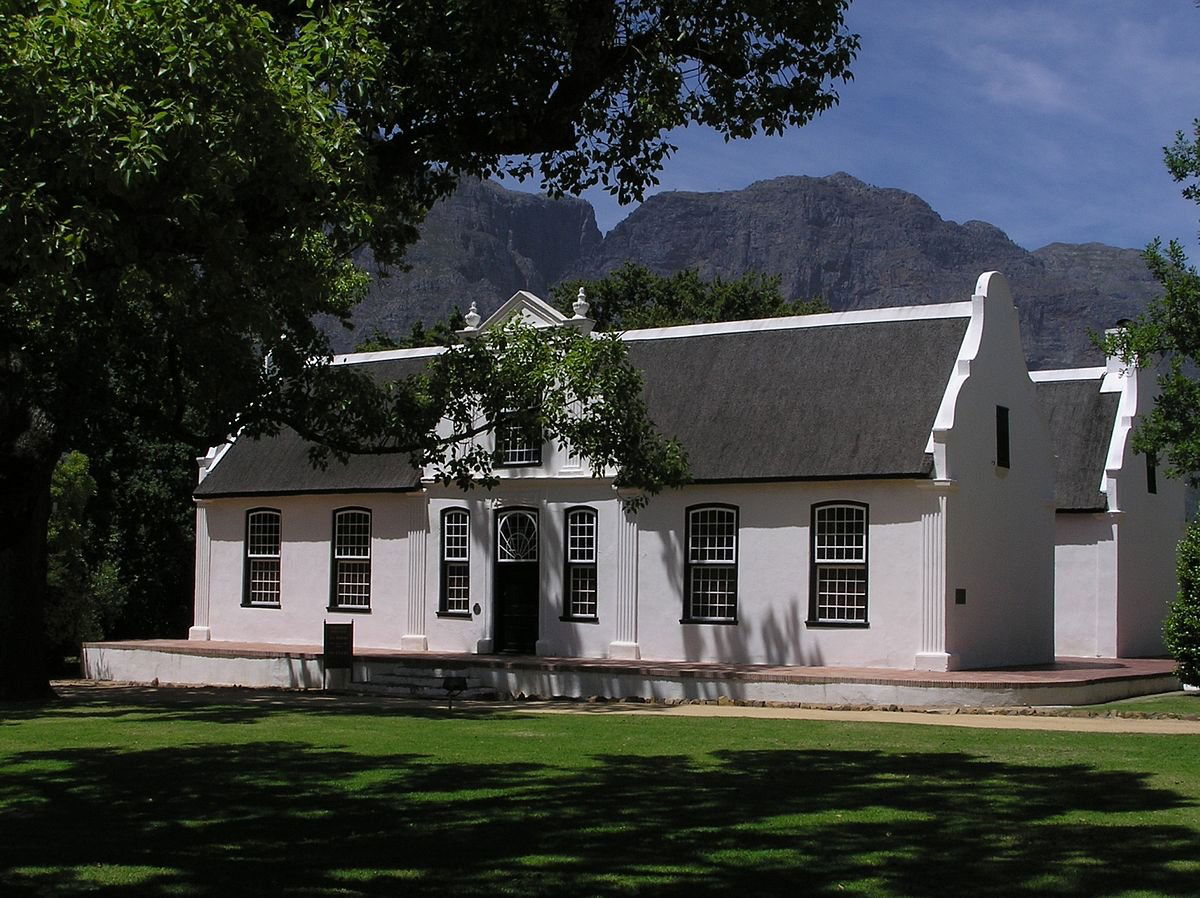
The Cape Dutch manor house at the estate's centre is among the most complete examples of the form surviving in the Winelands. The H-plan gabled structure, whitewashed and dark-thatched, operates within a wider range of lawns, rose gardens, and avenue plantings that were established over successive generations of cultivation. For visitors arriving from Cape Town or from Franschhoek village, the visual shift is immediate: the scale of the estate, the measured geometry of its gardens, and the quality of its vineyard blocks all signal that Boschendal is operating in a different register from smaller, more recently established properties.
The Estate in the Franschhoek Peer Set
Franschhoek's wine estates divide roughly into two camps. There are focused, single-site producers, some boutique in scale, where the winemaking program is the primary draw and the visitor experience is secondary. And there are large, multi-format estates where wine, food, and accommodation are designed to function as an integrated destination. Boschendal belongs firmly to the second category, alongside properties like Babylonstoren and La Motte Wine Estate, which have similarly built out their food and hospitality offer around a core wine identity.
What distinguishes Boschendal within that peer group is the depth of its historical footprint. Babylonstoren draws on a comparable heritage, but its modern identity has been shaped by significant recent investment and a particular design sensibility. La Motte operates with a strong arts and cultural program alongside its wine production. Boschendal's proposition is more rooted in place itself: the combination of agricultural continuity, architectural integrity, and sheer physical scale produces an experience that is harder to replicate through investment alone.
Across a wider regional comparison, estates like Delaire Graff Estate in Stellenbosch and Constantia Glen in Cape Town compete for the premium destination visitor, each with different anchors: Delaire Graff through its art collection and hotel, Constantia Glen through its terraced mountain setting. Boschendal's 2025 Pearl 3 Star Prestige award positions it within the Winelands' top-tier estates, a recognition that reflects the breadth and consistency of the experience rather than a single standout element.
Vineyards Across Multiple Terroirs
Few Cape estates can claim farming across as many distinct zones as Boschendal. The estate's vineyards span the Franschhoek Valley, Elgin, and Groenlandberg, giving the winemaking team access to meaningfully different temperature profiles, soils, and elevations. This multi-origin structure is increasingly common among larger Cape producers, but Boschendal's version of it is among the more geographically spread, allowing the portfolio to include cool-climate expressions alongside warmer valley fruit.
The Franschhoek Valley blocks produce the estate's more immediately recognisable styles, with Cabernet-led Bordeaux blends and Shiraz occupying significant space in the lineup. The Elgin vineyards, at higher elevation and cooler overnight temperatures, contribute to the estate's white wine and lighter red programs. Producers like Creation Wines in Hermanus and Haute Cabrière demonstrate how the southern Cape's cooler zones have reshaped expectations for South African Pinot Noir and Chardonnay. Boschendal's multi-terroir approach allows it to speak to both the warmer-climate tradition and the cooler-elevation shift simultaneously.
For visitors comparing Boschendal to more focused valley producers, Boekenhoutskloof and Anthonij Rupert Wyne (L'Ormarins) represent different expressions of Franschhoek ambition: Boekenhoutskloof built around cult wine status and the Chocolate Block franchise, L'Ormarins operating with considerable scale and a premium Franschhoek designation. Boschendal's wine identity sits alongside rather than in competition with these, appealing to visitors who want breadth of range alongside the estate experience rather than a single iconic label.
Food, Farm, and the Estate Day
Boschendal's food offer has historically been one of its strongest differentiators in the Winelands. The estate operates multiple dining formats across its grounds, reflecting the scale of the property and the different needs of a day visitor versus a longer-stay guest. Farm-to-table has become an overused framework in South African hospitality, but at Boschendal the agricultural context is direct: the estate's kitchen gardens, orchard plantings, and farming operations are visible from the dining spaces and are not decorative.
The combination of outdoor dining, garden settings, and seasonal produce positions Boschendal within a tradition of estate hospitality that is specific to the Cape Winelands and has few equivalents elsewhere in African wine tourism. Visitors planning a full estate day will find the logistics leading managed with a morning wine tasting followed by a long lunch, with the afternoon light across the vineyards and mountain backdrop providing the visual payoff that the estate's eastern orientation delivers. For those planning accommodation, the options on the property allow the mountain views and garden atmosphere to be experienced across different times of day, which changes the estate considerably from its midday visitor-peak character.
Reaching Boschendal and Planning the Visit
The estate address on Helshoogte Road places it at a point roughly equidistant between Franschhoek village and Stellenbosch town, making it accessible from both directions and a natural stop for visitors combining the two areas. The R310 approach from Stellenbosch and the Franschhoek Pass road both deliver to the same junction, and most visitors arrive by private car or organised wine tour. Seasonal demand in the Winelands peaks heavily through December and January, and again over the Western Cape's shoulder season in March and April; booking dining and tasting experiences in advance is advisable for any weekend visit during these periods.
For a broader orientation to what the valley offers, our full Franschhoek wineries guide maps the complete producer set. Those spending more time in the area will find further context in our Franschhoek restaurants guide, our Franschhoek hotels guide, our Franschhoek bars guide, and our Franschhoek experiences guide. For visitors extending their Cape wine itinerary beyond the valley, comparable estate-scale experiences in different regional contexts include Abadía Retuerta in Sardón de Duero and, for a single-malt parallel in heritage distillery tourism, Aberlour in Aberlour.
Frequently Asked Questions
- What's the main draw of Boschendal?
- The combination of historical depth, physical scale, and multi-format hospitality sets Boschendal apart from smaller, more focused Franschhoek producers. The estate's Pearl 3 Star Prestige recognition in 2025 reflects a breadth of quality across wine, food, and setting that few Cape Winelands properties match. Visitors come for a full day rather than a tasting stop.
- What's the must-try wine at Boschendal?
- Boschendal's portfolio spans Franschhoek valley blocks and cooler-climate Elgin and Groenlandberg vineyards, so the range is genuinely varied. The estate's Bordeaux-style red blends and Shiraz represent the warmer-valley tradition; the cooler-elevation whites and lighter reds reflect the newer direction in Cape winemaking. Asking the tasting room staff to walk through the multi-terroir range gives the most useful orientation to how the portfolio is structured.
- Do they take walk-ins at Boschendal?
- Boschendal is a large estate and can absorb visitors across multiple experiences, but weekend and peak-season visits are better managed with advance booking for both dining and tastings. The estate's address is Helshoogte Road, Pniel. For current booking availability and hours, checking the estate's website directly before visiting is advisable, as seasonal formats and capacity can vary.
The Minimal Set
These are the closest comparables we have in our database for quick context.
Access the Cellar?
Our members enjoy exclusive access to private tastings and priority allocations from the world's most sought-after producers.
Access the Concierge